Plot Explained Spoilers guaranteed!
Plot Explained

Browse by genre

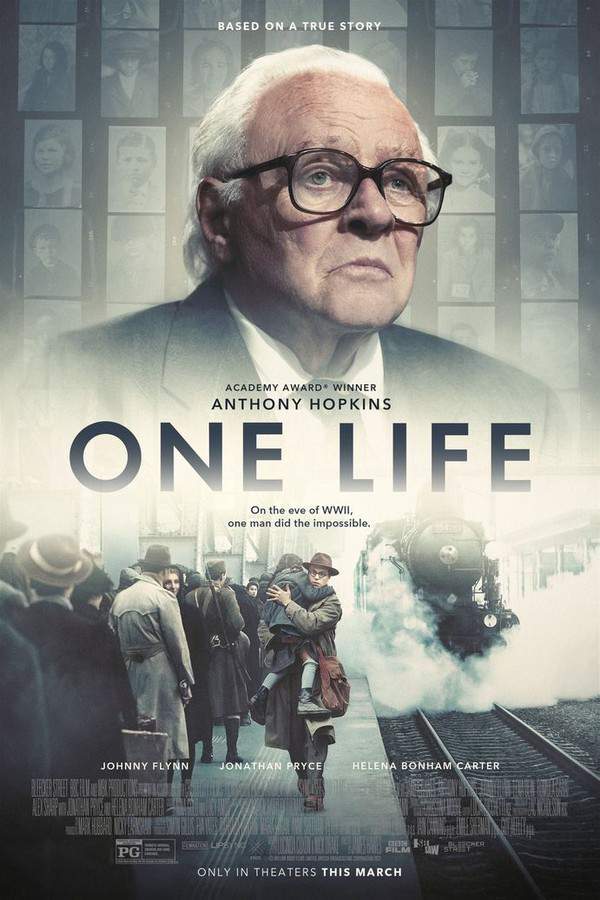
One Life (2024) movie poster

Plot Summary

One Life (2024) Plot Summary & Ending Explained

Release, runtime and language
2024 · 1 h 49 m · English
Echo score 62
Loading streaming availability…
Directed by
James Hawes
Starring
Anthony Hopkins, Helena Bonham Carter, Alex Sharp, Johnny Flynn, Lena Olin, Romola Garai

In the years leading up to World War II, a young broker named Nicholas Winton unexpectedly finds himself in Prague. Moved by the plight of Jewish refugees, he embarks on a remarkable mission to rescue hundreds of children from the threat of Nazi oppression. Through extraordinary courage and unwavering commitment, Winton orchestrates the rescue and safe passage of 669 innocent children, forever changing their lives and offering them a chance at a future.

On this page (7)
  1. 1 Where to watch
  2. 2 What happens: full plot
  3. 3 Plot questions answered
  4. 4 How it ends
  5. 5 Movie threads
  6. 6 Movies like One Life
  7. 7 Every angle
Loading streaming availability…

Full plot summary · contains spoilers

What Happens in One Life: Full Plot Summary

The whole story of One Life (2024) explained, from the opening scene to the final frame: every key event, every twist and what it all adds up to. Read it as a quick recap before the sequel, to check a scene you missed, or to finally understand what really happened.

As the tumultuous year of 1938 unfolded, the ominous shadow of Adolf Hitler loomed over Europe, casting fear and uncertainty among its inhabitants. In September, he executed the annexation of Austria, sending shockwaves throughout the global community. The leaders of Britain, France, and Italy, in a desperate attempt to avert a larger conflict, yielded to his demands, ceding control of the Sudetenland region in Czechoslovakia. Just a day after, Hitler’s forces stormed into Czechoslovakia, sparking a mass exodus of terrified refugees fleeing to the capital, Prague. Among these frightened families were countless children, all seeking safety and solace from the encroaching threat.

Far removed from this chaos, in the quiet English suburbs, Nicholas Winton (Anthony Hopkins) lived a comparatively peaceful life with his wife, Grete (Lena Olin). But beneath the surface of their tranquil existence, tensions brewed. Grete’s mounting frustration with the clutter resulting from Nicholas' humanitarian work had reached a tipping point. As she prepared for an upcoming trip, she insisted he find a home for an old briefcase that had long been neglected in his office. Alone with the memories of his past, Nicholas was about to embark on a journey that would change countless lives.

Transporting us back to 1938, we meet a younger Nicholas, affectionately known as Nicky (Johnny Flynn), living in London with his mother, Babi (Helena Bonham Carter). A stockbroker by profession, Nicky found himself increasingly pulled into the humanitarian crisis unfolding in Prague. His friend, Martin (Ziggy Heath), already active in aiding the flood of refugees, implored him to join the cause, despite the evident dangers.

Upon his arrival in Prague, Nicky connected with Trevor Chadwick (Alex Sharp) and Doreen Warriner (Romola Garai), both members of the British Committee for Refugees. They provided Nicky a grim view of the dire conditions that refugees faced. One maid, Hana Hejdukova (Juliana Moska), graciously guided Nicky through the overcrowded camps, where he was profoundly struck by the sight of ill-equipped children bracing for the harsh winter ahead.

As Nicky investigated further, he stumbled upon a disheartening truth: the British Kindertransport program, which successfully evacuated children from Germany and Austria, had no plans to extend its efforts to Czechoslovakia. This realization only intensified his determination to help. He met with a Rabbi who voiced concerns over Nicky's intentions, fearing they could inadvertently aid Hitler’s extermination plan. Undeterred, Nicky reminded the Rabbi that his Jewish heritage, though significant, had been overshadowed by his upbringing as a Christian. Gradually, the Rabbi came to understand Nicky's intentions, and they began devising a plan to save the children.

When Nicky's cause reached Babi, she sprang into action, gathering vital information from the British Immigration office. She encountered Mr. Leadbetter (Michael Gould), the head of the office, whose dismissiveness did little to deter her resolve. Meanwhile, Nicky paused his plans to join forces with Hana, thoroughly gathering data on the children in desperate need of help. He was especially focused on locating a young girl and her infant sibling that he had encountered during his initial visit.

Years later, a distressing call from his daughter prompted Nicholas to sift through stored memories, leaving behind remnants of his past. Nicky and Trevor worked relentlessly gathering testimonials from Jewish families, while Babi educated them on the arduous process of securing asylum—complete with application submissions, sponsorship, financial backing, medical certifications, and the commitment of foster families.

Not one to back down from a challenge, Nicky proposed using the press to rally public support, and Trevor presented him with a briefcase brimming with essential documents. Babi helped them draft an urgent letter outlining the dire conditions in Prague and their desperation for assistance.

As time's sands slipped through the hourglass, Nicky and Babi paid another visit to Mr. Leadbetter, pleading with him to expedite the necessary processes to facilitate the escape of their first twenty children to Liverpool within a daunting two-week timeframe, especially given the threat of impending invasion. Babi’s heartfelt entreaty resonated with Leadbetter, who agreed to assist provided all paperwork was properly submitted.

In a race against time, Nicky and his team persistently worked alongside Martin to secure the vital documents for the first group. Trevor's news of escalating turmoil in Prague served as a stark reminder of the escalating crisis, yet the first twenty children made their escape to England, and were subsequently assigned to their new foster families.

As Nicholas rifled through the memories of his past, he was determined to reveal and share the noble efforts of their mission. Despite encountering hurdles along the way, his commitment led him to meet Elisabeth "Betty" Maxwell (Marthe Keller), a historian interested in documenting his endeavors during the war. Together, they pored over the pages of a weathered scrapbook, each tale a testament to the countless lives he had affected. By the end, Nicholas proudly shared that he had facilitated the safe passage of 669 children, evoking admiration and heartbreak at the thought of those left behind.

With Christmas nearing, Nicholas and Grete welcomed their daughter, engulfed in holiday joy. However, amidst the celebration, a message from the Sunday Mirror emerged, offering Nicholas a chance to recount his harrowing yet uplifting story on BBC’s “That’s Life!” As he sat and awaited his moment on screen, the host, Esther Rantzen (Samantha Spiro), artfully conveyed Nicholas' narrative, leading to an unexpected emotional reunion with Vera, one of the rescued children.

In the time that followed, Grete had once more received a call, revealing that two more individuals—whose lives had been forever changed due to Nicholas’ deeds—longed to meet him. This lead to another reunion on the show, where Esther revealed that the audience consisted entirely of the now-adult children that Nicholas had saved during the war.

Surrounded by tears of joy and warm cheers, Nicholas stood in awe of the lives he had touched, his heart swelling with fulfillment. In subsequent years, he and Grete continued to nurture relationships with Vera and her family, solidifying bonds of love forged through shared experiences.

In the remarkable epilogue of this journey, Nicholas maintained close ties with those he had rescued until his passing at the incredible age of 106. His legacy endured through the scrapbook, gifted to the Holocaust Museum in Israel as a tribute to his unwavering humanity and selflessness. In recognition of these noble contributions, Queen Elizabeth II honored Nicholas with the title of knighthood, a fitting tribute to a life devoted to uplifting others in their darkest hours.
Last updated: November 17, 2024 at 13:50

Was this helpful?

Plot questions answered

One Life Plot Explained: Your Questions Answered

The questions people ask most about One Life (2024): what happens in the confusing scenes, why the characters do what they do, the twists, hidden details and what the ending means. Each answer contains spoilers.

Q1

Why did Nicholas Winton decide to help rescue children from Czechoslovakia?

Nicholas Winton was moved by the desperate plight of Jewish refugees fleeing to Prague after Nazi forces invaded Czechoslovakia in 1938. When he arrived and witnessed the overcrowded camps and ill-equipped children facing a harsh winter, he learned that the British Kindertransport program, which had successfully evacuated children from Germany and Austria, would not be extended to Czechoslovakia. This realization intensified his determination to take action, despite the dangers involved.

  • nicholas winton
  • czechoslovakia
  • rescue
  • motivation
  • kindertransport
  • refugees
Q2

How did Nicholas Winton manage to get children out when Kindertransport didn't include Czechoslovakia?

Nicky discovered that while the British government operated Kindertransport for Germany and Austria, there was no official program for Czechoslovakia. Rather than waiting for government action, he and his team, including Trevor Chadwick and Doreen Warriner, built their own independent rescue operation. They gathered testimonials from Jewish families, secured sponsorship from British foster families, processed asylum applications, and raised funds to transport children through legal immigration channels.

  • kindertransport
  • czechoslovakia
  • rescue operation
  • british government
  • immigration
Q3

What obstacles did Nicholas Winton face with the British government?

The primary obstacle was bureaucratic delays. Mr. Leadbetter, head of the British Immigration office, was initially dismissive of the rescue efforts. Nicky and his mother Babi had to gather complete paperwork for each child, including asylum applications, sponsorship commitments, financial backing, medical certifications, and foster family agreements, all while facing a two-week deadline to evacuate the first twenty children before potential invasion. Babi's heartfelt plea ultimately convinced Leadbetter to expedite the process.

  • british immigration
  • paperwork
  • bureaucratic obstacles
  • mr leadbetter
  • asylum
Q4

How did Nicholas Winton's mother Babi help with the rescue mission?

Babi played a crucial logistical role by gathering essential information from the British Immigration office and educating Nicky and his team on the complex asylum process. She helped draft urgent letters outlining the dire conditions in Prague to solicit public assistance. Her most impactful contribution was pleading with Mr. Leadbetter to expedite the first twenty children's travel documents, using emotional appeal when bureaucratic processes stalled.

  • babi
  • mother
  • nicholas winton
  • immigration office
  • paperwork
  • rescue mission
Q5

Why was there such urgency to rescue the children in 1938?

The urgency stemmed from Hitler's rapid territorial expansion. In September 1938, Germany annexed Austria and, after the Munich Agreement ceded the Sudetenland, Nazi forces stormed into Czechoslovakia just one day later. This invasion triggered a mass exodus of terrified refugees to Prague. With war appearing imminent and Nazi oppression threatening Jewish families, each passing day increased the danger to children, making rapid evacuation essential.

  • 1938
  • invasion
  • hitler
  • urgency
  • czechoslovakia
  • refugees
  • world war 2
Q6

How did the emotional BBC reunion with the rescued children happen?

Years after the war, Nicholas Winton was invited to share his story on the BBC show "That's Life!" Host Esther Rantzen presented his narrative, leading to an unexpected emotional reunion with Vera, one of the rescued children who was in the audience. Later, it was revealed that the entire audience consisted of the adult children Winton had saved. This staged-but-unscripted moment allowed many of them to meet their rescuer for the first time.

  • bbc
  • thats life
  • reunion
  • vera
  • esther rantzen
  • rescued children
Q7

What was the significance of Nicholas Winton's scrapbook?

The scrapbook contained detailed records of the rescue mission, including documentation, photographs, and stories of the children Winton saved. Years later, historian Elisabeth Maxwell worked with Winton to preserve these records. The scrapbook was eventually donated to the Holocaust Museum in Israel as a tribute to his humanitarian efforts, serving as a permanent historical record of the 669 children who were rescued.

  • scrapbook
  • holocaust museum
  • elisabeth maxwell
  • documentation
  • israel
  • records
Q8

How many children did Nicholas Winton rescue in total?

Nicholas Winton successfully facilitated the safe passage of 669 children from Czechoslovakia to Britain during the months leading up to World War II. The first group of twenty children escaped to Liverpool, with subsequent groups following. Despite this remarkable effort, many more children could not be rescued before the war began, a reality that remained a poignant part of Winton's legacy.

  • 669 children
  • rescued
  • total
  • nicholas winton
  • czechoslovakia
  • britain
Q9

Why was Nicholas Winton knighted by Queen Elizabeth II?

Nicholas Winton was knighted by Queen Elizabeth II in recognition of his extraordinary humanitarian efforts during World War II. HisOperation Kindertransport rescued 669 children from Nazi oppression, giving them the opportunity to survive and build new lives in Britain. His selfless dedication to saving vulnerable children from the Holocaust earned him this prestigious honor as a tribute to a life devoted to uplifting others.

  • knighted
  • queen elizabeth
  • honor
  • recognition
  • humanitarian
  • sir nicholas winton
Q10

What happened to the children who weren't rescued?

While Nicholas Winton managed to save 669 children, many more could not be evacuated before the outbreak of World War II. The film notes the heartbreaking reality that some children were left behind when the borders closed and invasion became imminent. These children and their families faced the full horrors of Nazi persecution, making the successful rescue of the 669 children even more significant in historical context.

  • left behind
  • not rescued
  • war
  • holocaust
  • children
  • fate
  • czechoslovakia

Ending explained

What Happens at the End of One Life?

How One Life (2024) ends, in short: the final scene, the last twist and what it means for the characters. The full ending explained, with every spoiler, lives on its own page.

Read the full ending explained

The ending of One Life is profoundly emotional and underscores the lasting impact of Nicholas Winton’s heroism. After a lifetime of silence about his actions, Winton, now an elderly man, is shown reflecting on his past. As he gives away his old files and scrapbook, it becomes clear that he's haunted by the children he couldn't save, little Vera among them, whose fate remains unknown. When he agrees to share his story on a television program, the true weight of his secret pain is revealed when he finally meets Vera as an adult. The moment is intensely moving—Nicky is overwhelmed with emotion and tears stream down his face, revealing how deeply these memories have affected him.

The film culminates with a heartwarming scene of Vera and others, the children he saved, visiting him at his home. They are now grown, and together they enjoy simple pleasures like swimming and laughter, symbolizing the profound gratitude they feel for his bravery. The final shot features children playing happily in his backyard, which reinforces the movie’s core message: one person’s kindness and determination can save lives and create a ripple effect of hope. In these closing moments, One Life celebrates the extraordinary impact of ordinary people, reminding us that even a single act of courage can resonate across generations and change countless lives forever.

Continue reading the ending (2 more paragraphs)

The ending of One Life is a powerful testament to the enduring legacy of Nicholas Winton’s quiet heroism. As he reminisces in his old age, we see the emotional weight of the unfulfilled part of his story—the children he couldn’t save, including Vera, whose fate remains unknown. When Nicky finally reunites with Vera as an adult on a TV program, the emotional culmination hits home; Hopkins’s character is overwhelmed by feelings he had kept buried, and tears finally flow. This moment reveals that, for Nicky, the true reward lies not in recognition but in knowing that his efforts made a real difference, that he saved lives and gave hope where there was despair.

The film concludes on a heartfelt note, with Vera and other children he saved visiting him at his house, now grown and thriving. They share moments of joy, such as swimming in Nicky’s pool, symbolizing hope, renewal, and the lasting bonds forged through his actions. The scene of children happily playing captures the movie’s core message—an act of kindness, no matter how small, can ignite a ripple that reaches across time. Ultimately, One Life celebrates the extraordinary impact of ordinary individuals, illustrating that courage and compassion can truly change the course of history, leaving a legacy of hope for future generations.

One Life ending explained in full

Movie threads

More Movies Like One Life, by Mood & Story

Curated lists built around what makes One Life tick: the same mood, the same kind of story or the same emotional payoff. Each list explains why these movies belong together.

Uplifting True Stories of Moral Courage like in One Life

Real-life heroes who changed the world through quiet acts of extraordinary decency. If you were inspired by One Life, you'll appreciate these movies like Schindler's List and The Imitation Game. This collection features similar true stories of quiet heroes and inspirational biographies where ordinary people achieve extraordinary humanitarian feats, focusing on moral courage and hopeful historical dramas.

  • inspiring
  • hopeful
  • heartwarming
  • urgent
  • reflective
  • somber
  • Tone: hopeful, inspiring, reflective
  • Pacing: steady, deliberate
Why these movies?

The story pattern: Narratives in this thread typically center on a pivotal moment in history where a person, often initially reluctant or unassuming, discovers a profound injustice and risks their own safety to make a difference. The story structure often involves overcoming immense logistical and political hurdles, culminating in a successful rescue or achievement whose positive legacy is felt for generations.

Why they belong together: These films are grouped together because they share a core focus on verifiable heroism, balancing the gravity of their historical settings with an ultimately uplifting and inspiring tone. They are characterized by a steady pacing that allows for reflection, a heavy emotional weight that respects the subject matter, and a definitively hopeful or happy ending that celebrates the triumph of good.

Somber but Hopeful Historical Dramas like in One Life

Stories that confront difficult history but ultimately find the light in humanity. Find more movies like One Life in this collection of historical dramas with a happy ending. These films explore tragic events like war and humanitarian crises but share a similar hopeful tone and uplifting resolution, focusing on survival and moral courage within heavy, steady-paced dramas.

  • somber
  • hopeful
  • tragic
  • heartwarming
  • urgent
  • reflective
  • Tone: somber, hopeful, heartwarming
  • Pacing: steady, methodical
Why these movies?

The story pattern: The narrative pattern involves immersing the viewer in a somber, high-stakes historical context—often involving war or persecution—where characters face immense danger. The central conflict is a race against time or oppressive systems, but the plot is driven by altruism and resistance. The emotional journey is harrowing yet culminates in a cathartic, joyful resolution that validates the struggle and highlights the positive legacy of the events.

Why they belong together: These films share a specific and powerful emotional mix: they are unafraid to depict sadness and tragedy (high sadness score) but are fundamentally structured to deliver a hopeful, even happy, conclusion. The pacing is often steady, allowing the weight of the situation to settle, while the intensity remains medium to high, creating urgency without relentless bleakness. This creates a coherent experience of emotionally heavy yet ultimately uplifting cinema.

If you liked this

Movies Like One Life

Similar movies to One Life: the same genre, themes or kind of story. Each one comes with its own plot summary, timeline and ending explained.

Browse all movie summaries

Every angle

One Life (2024) Explained: Plot, Ending, Timeline & Characters

Everything about One Life in one place: what happens in the plot summary, the timeline in chronological order, the characters and meaning, the ending explained and a spoiler-free summary. What's After the Movie adds the cast, box office and post-credit scenes.

Coming soon on iOS and Android

The Plot Explained Movie Summary App

Plot summaries, endings explained and timelines on your phone. Catch up on any movie in minutes, save your favorites and never miss a twist again.

Be the first to know when we launch. Your email stays private, always.

Learn more about the app