Plot Explained Spoilers guaranteed!
Plot Explained

Browse by genre

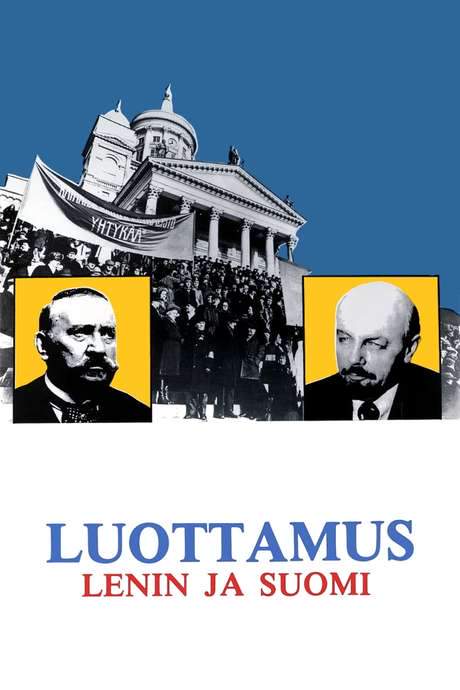
Trust (1976) movie poster

Timeline

Trust (1976) Timeline Explained – Every Event in Order

Release, runtime and language
1976 · 90 mins · Finnish
Loading streaming availability…
Directed by
Viktor Tregubovich, Edvin Laine
Starring
Margarita Terekhova, Oleg Yankovskiy, Grigoriy Gay, Ismo Kallio, Innokentiy Smoktunovskiy, Göran Schauman

In December 1917, a Finnish delegation arrives in St. Petersburg to meet Vladimir Lenin to seek recognition of Finland’s independence.

On this page (6)
  1. 1 Where to watch
  2. 2 Events in order (10)
  3. 3 Timeline questions answered
  4. 4 Movie threads
  5. 5 Movies like Trust
  6. 6 Every angle
Loading streaming availability…

10 events in order · contains spoilers

Trust Timeline: Events in Chronological Order

Every key event of Trust (1976) in order, scene by scene, with when and where it takes place. Use it to untangle flashbacks, time jumps and parallel storylines, to refresh your memory before the sequel or to find the exact scene you are thinking of.

  1. Great Petition rejected in St. Petersburg

    The Finnish delegation travels to St. Petersburg to demand recognition and autonomy. The Great Petition is presented but is rejected by the Tsarist authorities, stalling Finland's autonomy ambitions. The setback marks a turning point that intensifies the Finnish independence movement.

    When
    1899
    Where
    St. Petersburg, Russia
  2. Assassination of Governor General Bobrikov (1904)

    Eugen Schauman shoots Governor General Nikolai Bobrikov in 1904, in an act of nationalist protest. The assassination shocks the empire and escalates the Finnish struggle against Russian rule. The event becomes a symbol of resistance within a tense political climate.

    When
    1904
    Where
    Helsinki, Finland
  3. Lenin's Turku archipelago wanderings (1907)

    Lenin wanders in the Turku archipelago on weak ice after escaping Finland in 1907. This exile experience shapes his views on nationalism and Finland's future status. The episode is portrayed as a formative moment in Lenin's nationality policy.

    When
    1907
    Where
    Turku Archipelago, Finland
  4. Purishkevich proclaims 'Finis Finlandiae!' in the Duma (1910)

    Purishkevich delivers the famous phrase in the Russian Duma, signalling a hostile stance toward Finnish self-rule. The outburst heightens tensions between Finland and the empire. It becomes a notable flashpoint in the struggle for Finnish autonomy.

    When
    1910
    Where
    Russian Duma, Saint Petersburg, Russia
  5. Finnish Parliament rejects national legislation (1910)

    The Finnish Parliament, led by Speaker Svinhufvud, refuses to accept national legislation in 1910. The decision demonstrates the limited autonomy under Russian rule and reinforces the path toward independence. It showcases the persistence of Finnish political leadership against imperial constraints.

    When
    1910
    Where
    Finnish Parliament, Helsinki
  6. Parliament convenes despite dissolution order (Fall 1917)

    In fall 1917, the Finnish Parliament convenes despite an official dissolution order. The assembly presses forward with deliberations that foreshadow a break with Russia as the empire weakens. The move signals the rising readiness of Finland for full independence.

    When
    Fall 1917
    Where
    Helsinki, Finland
  7. Lenin hides in Helsinki with Kustaa Rovio (Fall 1917)

    Lenin hides in Helsinki with Kustaa Rovio during the volatile autumn of 1917. The clandestine arrangement underscores the tumult surrounding the Finnish crisis and the Bolsheviks' interest in the region. It highlights Lenin's close, secret presence in Finland at the time.

    When
    Fall 1917
    Where
    Helsinki, Finland
  8. Finnish leaders attend Lenin's December speeches (1917)

    Kullervo Manner, Yrjö Sirola, and K. H. Wiik attend Lenin's speeches in December 1917. The Finnish delegates listen as Lenin discusses national policy and Finland's future relationship to Russia. The scene illustrates the intersection of Finnish leadership with Lenin's evolving stance on nationality.

    When
    December 1917
    Where
    Helsinki, Finland
  9. Lenin's government recognizes Finland's independence (December 1917)

    Lenin's government recognizes Finland's independence and gives the document to the Svinhufvud delegation in December 1917. This formal recognition solidifies Finland's path to sovereignty as the Bolshevik regime asserts its legitimacy. The moment marks a historic milestone in Nordic independence.

    When
    December 1917
    Where
    St. Petersburg, Russia
  10. Closing OSCE newsreel clip (1975)

    At the film's end, a newsreel clip from the 1975 Helsinki OSCE meeting is shown. The sequence links Finland's revolutionary past to its postwar role in international diplomacy. It emphasizes the long arc from 1917 to present European cooperation.

    When
    1975
    Where
    Helsinki, Finland

Last updated: February 18, 2026 at 23:46

Was this helpful?

Timeline questions answered

Trust Timeline Explained: Your Questions Answered

When does it happen, and why in that order? The questions people ask about the chronology of Trust (1976): time jumps, flashbacks, cause and effect between scenes and the correct order of events, each answered with spoilers.

Q1

Why did Lenin decide to recognize Finland's independence in December 1917?

Lenin granted Finland's independence because the Bolsheviks needed international legitimacy after seizing power. Recognizing Finland's independence served both ideological and strategic purposes, it demonstrated the Bolsheviks' commitment to self-determination while weakening the former Russian Empire's grip on its territories. Additionally, Finland had already declared independence on December 6, 1917, and the Finnish Parliament's bold move created a political reality that Lenin chose to acknowledge rather than oppose.

Foreshadowing: Lenin's earlier experience wandering in the Turku archipelago in 1907 had shaped his thinking about Finland's unique national status.

  • lenin
  • finland independence
  • 1917
  • bolsheviks
  • recognition
Q2

Why did the Finnish Parliament convene despite the dissolution order in fall 1917?

The Finnish Parliament defied the dissolution order because Russia was in chaos following the Bolshevik Revolution and could no longer effectively enforce its authority. With the empire weakening, Finnish leaders saw an opportunity to assert their own sovereignty. Speaker Kullervo Meller led the parliament in convening despite official orders, signaling Finland's determination to break from Russian rule and move toward independence.

  • finnish parliament
  • dissolution
  • 1917
  • independence
  • kullervo manner
Q3

Why did Eugen Schauman shoot Governor General Bobrikov in 1904?

Eugen Schauman shot Governor General Nikolai Bobrikov as an act of nationalist protest against Russian oppression. Bobrikov had been implementing policies to assimilate Finland into the Russian Empire, curtailing Finnish autonomy. Schauman's assassination was a dramatic act of resistance that shocked both Finnish and Russian authorities and became a symbol of the Finnish independence movement.

Foreshadowing: The Great Petition rejection in 1899 had already shown Finland that peaceful negotiation would not secure autonomy.

  • eugen schauman
  • bobrikov
  • assassination
  • 1904
  • nationalism
Q4

What did the phrase 'Finis Finlandiae!' mean and why was it significant?

"Finis Finlandiae!" means "The end of Finland!" and was proclaimed by Russian nationalist Purishkevich in the Duma in 1910. It represented a hostile stance toward Finnish self-rule and signaled that hardliners in Russia wanted to completely abolish Finnish autonomy. The phrase became a notorious flashpoint in the decades-long struggle between Finland and the Russian Empire over national sovereignty.

  • finis finlandiae
  • purishkevich
  • duma
  • 1910
  • russian nationalism
Q5

Why was Lenin wandering in the Turku archipelago in 1907?

Lenin was wandering in the Turku archipelago in 1907 after escaping from Finland, where he had been living in exile. The scene depicts him walking on weak ice during the winter, a dangerous situation that highlights the precarious nature of his exile. This experience reportedly shaped his views on Finland's national question and influenced his later decision to recognize Finnish independence.

Foreshadowing: This formative experience in Finland would later inform Lenin's nationality policy when he gained power.

  • lenin
  • turku archipelago
  • 1907
  • exile
  • finland
Q6

Why did Lenin hide in Helsinki during fall 1917?

Lenin hid in Helsinki with Kustaa Rovio in fall 1917 because St. Petersburg had become dangerous for Bolshevik leaders as the Provisional Government cracked down on revolutionary activity. Helsinki provided a safer refuge while Lenin coordinated the Bolshevik uprising. This clandestine presence in Finland underscores the close ties between Finnish independence movements and Bolshevik revolutionaries during this chaotic period.

  • lenin
  • helsinki
  • kustaa rovio
  • 1917
  • hidden
Q7

Why was the Great Petition rejected in 1899?

The Great Petition was rejected by Tsarist authorities in 1899 because Russia was consolidating its control over Finland and would not consider granting additional autonomy. The petition had sought to restore and confirm Finland's constitutional rights, but the Tsarist regime viewed it as a challenge to imperial authority. The rejection intensified Finnish resentment toward Russian rule and fueled the independence movement.

  • great petition
  • 1899
  • st petersburg
  • autonomy
  • rejected
Q8

Who was P.E. Svinhufvud and what was his role in the independence delegation?

P.E. Svinhufvud led the Finnish delegation that traveled to St. Petersburg in December 1917 to seek recognition of Finland's independence. As Prime Minister of the Finnish Senate, he represented the Finnish government's formal request to Lenin. Svinhufvud had been a prominent political leader throughout the independence movement and had previously led the Finnish Parliament in rejecting Russian-imposed legislation in 1910.

  • p.e. svinhufvud
  • delegation
  • independence
  • prime minister
  • 1917
Q9

Why was it important that the Bolsheviks recognized Finland's independence?

It was crucial because the Bolsheviks' recognition gave Finland international legitimacy at a critical moment. As the successors to the Russian Empire, their acknowledgment meant Finland's independence could not be easily undone by monarchist or counter-revolutionary forces. This recognition also allowed Finland to establish itself as a sovereign nation before other powers could object or interfere.

  • bolshevik recognition
  • international legitimacy
  • independence
  • sovereignty
Q10

Why did Finnish leaders attend Lenin's speeches in December 1917?

Finnish leaders including Kullervo Manner, Yrjö Sirola, and K.H. Wiik attended Lenin's December speeches to understand the Bolshevik leader's position on Finland's future. They needed to gauge whether Lenin would support Finnish independence and what conditions might be attached. This meeting was part of the critical negotiations that led to recognition being granted to the Svinhufvud delegation later that month.

  • kullervo manner
  • yjö sirola
  • lenin speeches
  • december 1917
  • finnish leaders

Movie threads

More Movies Like Trust, by Mood & Story

Curated lists built around what makes Trust tick: the same mood, the same kind of story or the same emotional payoff. Each list explains why these movies belong together.

Political negotiation dramas like Trust

Where tense diplomatic talks determine the fate of nations. Movies like Trust that focus on tense diplomatic encounters shaping history. If you enjoyed the strategic dialogue and political stakes of Trust, you'll find similar stories of high-level negotiations and nation-defining moments here.

  • political
  • tense
  • deliberate
  • urgent
  • strategic
  • significant
  • Tone: tense, deliberate, significant
  • Pacing: variable, deliberate
Why these movies?

The story pattern: Stories typically unfold in closed rooms, where characters with opposing ideologies engage in a battle of wits. The narrative builds tension through dialogue, strategic concessions, and the constant threat of failure, often set against a larger historical conflict or revolution.

Why they belong together: These films are grouped by their shared focus on negotiation as the primary source of drama. They create a specific kind of intellectual suspense, emphasizing the weight of words and decisions made under immense pressure, offering a cerebral alternative to action-driven historical films.

Movies with epic flashback narratives like Trust

Stories where the past intricately shapes a pivotal present. Discover films with narrative structures similar to Trust. If you appreciated how Trust used flashbacks to build its historical drama, these movies also skillfully weave the past and present to tell complex, character-driven stories.

  • contemplative
  • non-linear
  • historical
  • significant
  • character-driven
  • epic
  • Tone: contemplative, tense, significant
  • Pacing: variable, contemplative
Why these movies?

The story pattern: The narrative pattern involves a pivotal present-day event—often a negotiation, trial, or reunion—that is constantly illuminated by extended flashbacks. These past sequences provide crucial context, develop character backstories, and build towards explaining the stakes and tensions of the main timeline.

Why they belong together: These movies are united by their sophisticated storytelling structure. The use of flashbacks isn't just stylistic; it's essential for understanding the narrative's emotional and thematic weight, creating a layered viewing experience that rewards attention to detail.

If you liked this

Movies Like Trust

Similar movies to Trust: the same genre, themes or kind of story. Each one comes with its own plot summary, timeline and ending explained.

Browse all movie summaries

Every angle

Trust (1976) Explained: Plot, Timeline & Characters

Everything about Trust in one place: what happens in the plot summary, the timeline in chronological order, the characters and meaning and a spoiler-free summary. What's After the Movie adds the cast, box office and post-credit scenes.

Coming soon on iOS and Android

The Plot Explained Movie Summary App

Plot summaries, endings explained and timelines on your phone. Catch up on any movie in minutes, save your favorites and never miss a twist again.

Be the first to know when we launch. Your email stays private, always.

Learn more about the app