Plot Explained Spoilers guaranteed!
Plot Explained

Browse by genre

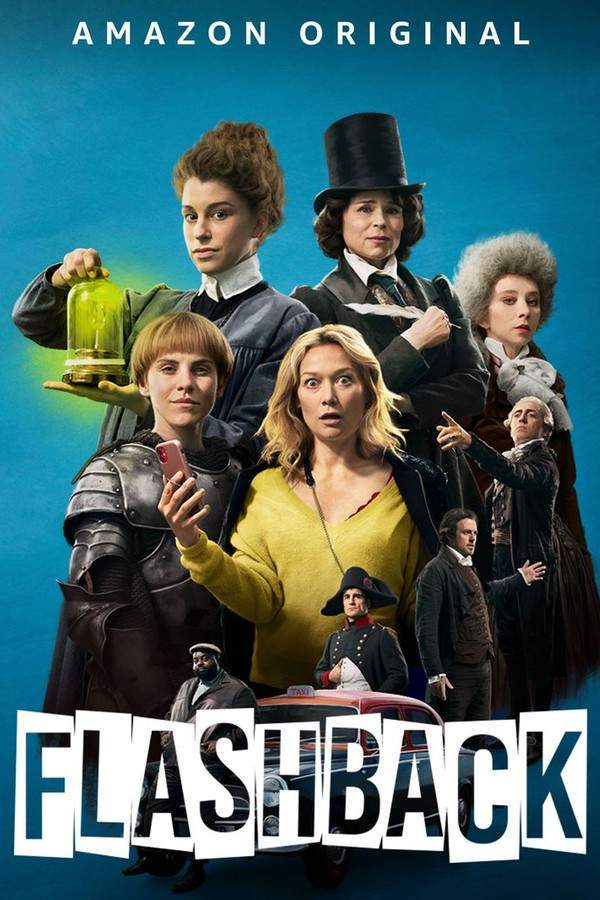
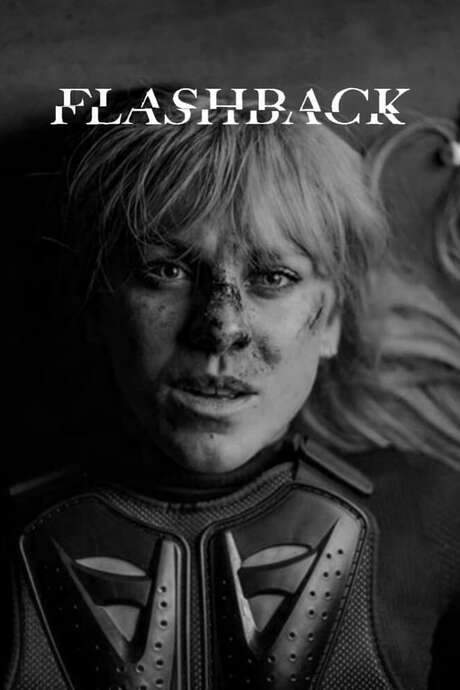
Flashback (2019) movie poster

Plot Summary

Flashback (2019) Plot Summary & Ending Explained

Release, runtime and language
2019 · 15 mins · French
Echo score 74
Directed by
Franck Marchand
Starring
Nicolas Berno, Eléonore Costes, Ibrahim Tsetchoev, Emy LTR

Nika and Helena - sisters and agents - are assigned a new mission that will not come together.

On this page (6)
  1. 1 What happens: full plot
  2. 2 Plot questions answered
  3. 3 How it ends
  4. 4 Movie threads
  5. 5 Categories
  6. 6 Every angle

Full plot summary · contains spoilers

What Happens in Flashback: Full Plot Summary

The whole story of Flashback (2019) explained, from the opening scene to the final frame: every key event, every twist and what it all adds up to. Read it as a quick recap before the sequel, to check a scene you missed, or to finally understand what really happened.

Fred Fitzell and his wife Karen visit Fred’s mother in a hospital where she is slipping into a deep, difficult decline. Fred works at a regular office job, but his days start to unravel as vivid flashbacks pull him back to high school. He recalls a girl named Cindy Williams and, driven by curiosity, he travels to the old high school and asks a librarian about her disappearance. The librarian’s answer hints at a drug that circulated through the school, and Fred’s mind begins to stitch together more fragmented memories. A menacing, scarred homeless man reappears in his life, appearing in his car while he’s parked in a shadowy alley, and the encounter leaves him shaken.

As the memories sharpen, Fred recalls a distinct childhood figure—a boy who seemed to pass by in high school and who bears a striking resemblance to the homeless man. The two form a strange pairing of recollections, each muttering a single word that, when finally assembled, points toward a chilling message: “I’m/in/your/lobby.” This leads Fred to the apartment lobby where he confronts the unknown man with a baseball bat, only to be drawn into a cascade of visions—visions of a mouth, and of being on a floor under others’ gaze. The moment ends with a brutal wake-up call: Fred collapses, his mind splintering from the stress of what he’s witnessed.

The thread of memory refuses to stay tied. Fred reconnects with friends from his high school days, and the flashes return with increased intensity. He remembers the drug, merc ( mercury ), and how it was sought out at a club with friends, a place where the idea of release from confinement—of breaking free from a seemingly fixed timeline—gets discussed. Back in the present, his work performance suffers, and he finds himself scrambling to deliver a crucial presentation. With his high school crew, he returns to the now-abandoned club to uncover what really happened. Inside, Fred’s memories collide with the present as he relives taking uncut merc and encounters homeless squatters and the scarred man again. Cindy returns, insisting that he never truly left the world they shared. The lines blur between the man haunted by the homeless figure and the boy who once lived through merc, as visions of mouths and watchful eyes chase him through each moment.

From these overlapping memories, Fred pieces together a startling story. An invasive lifeform, he discovers, manipulates people to perceive time in a linear fashion, a control mechanism that makes outcomes appear inescapable. The merc drug, he learns, temporarily unlocks the ability to see all possible temporal paths. He grapples with the revelation that, in high school, a violent reaction to merc led him to strike a lamp into the face of the boy, leaving a lasting scar on the past. Awake in his own bed, Fred realizes he has little time to finish the presentation at work, intensifying the pressure of crucial choices he must face in the moment.

As the present and past collide, Fred experiences a fusion of timelines. He slips back to Cindy at the abandoned club, where the two fall in love again and begin to inhabit multiple lifetimes together, roaming from the Middle East to a sunlit Mediterranean villa. They awaken back at the club in the present, still tethered to the possibility of endless routes, yet Fred comes to understand that their journey cannot continue in the same way. He returns to the day of the final exam, where his focus sharpens and he performs well, then meets his wife afterward and delivers a strong presentation, ultimately helping them secure a new home together.

The narrative then threads Fred’s emotional arc into a bittersweet conclusion. He seeks a moment of reconciliation with his mother during a hospital visit, and the recurring vision of a mouth turns out to be the memory of his mother’s voice as she cried out during a frightening moment from his infancy. There, in a rare flash of lucidity, she recognizes him, and they share a fleeting, meaningful connection. But the moment fades as she dies not long after, leaving Fred with a sense of closure tempered by loss. The journey leaves him with a profound awareness of the past’s hold on the present, the power of choice, and the enduring human longing to love across time.

Last updated: February 25, 2026 at 08:14

Was this helpful?

Plot questions answered

Flashback Plot Explained: Your Questions Answered

The questions people ask most about Flashback (2019): what happens in the confusing scenes, why the characters do what they do, the twists, hidden details and what the ending means. Each answer contains spoilers.

Q1

What is the merc drug and what does it do?

Merc is a drug that temporarily unlocks the ability to see all possible temporal paths, allowing users to perceive time non-linearly. The film's reveal shows that an invasive lifeform forces people to perceive time linearly as a control mechanism, and merc counteracts this by revealing the multiple routes through time that actually exist.

Foreshadowing: Earlier scenes at the club rooftop foreshadow this when Cindy explains that merc releases people from being trapped in a fixed timeline.

  • merc
  • drug
  • time perception
  • mercury
  • flashback movie
Q2

Who is the scarred homeless man in the movie?

The scarred homeless man is revealed to be the same child Fred encountered in high school. Years earlier, Fred had a bad reaction to merc and struck the boy in the face with a lamp, leaving him scarred. The man appears throughout Fred's present as a manifestation of his guilt and the lingering effects of his time-bending experiences.

Foreshadowing: The word puzzle reveals the connection - the child and the scarred man both utter single words that combine into 'I'm in your lobby'.

  • scarred man
  • homeless
  • child
  • guilt
  • flashback movie
Q3

What does the hidden message 'I'm in your lobby' mean?

The message 'I'm in your lobby' is assembled from single words spoken by the child in high school and the scarred homeless man. It draws Fred to his apartment lobby where he confronts the unknown threat, triggering visions and ultimately a mental breakdown. The message represents the past literally 'in' his present space - the guilt and memories that have followed him.

Foreshadowing: Fred recalls the child walking past him in high school muttering words, which he later pieces together with the homeless man's utterances.

  • message
  • lobby
  • hidden message
  • flashback movie
Q4

What is the invasive lifeform that manipulates time?

The invasive lifeform is a mysterious entity that forces humans to perceive time in a linear fashion. Fred discovers this entity operates as a control mechanism - by making people see time as linear, it makes outcomes appear inescapable and predetermined. Merc temporarily counteracts this, allowing users to see all possible temporal paths.

Foreshadowing: This revelation comes as Fred pieces together his fragmented memories while in the abandoned club.

  • lifeform
  • time manipulation
  • entity
  • flashback movie
Q5

Why does Fred attack the boy with the lamp in high school?

Fred attacked the boy during a bad reaction to merc in high school. The drug caused him to perceive time differently and react violently when the boy approached him. This incident left a lasting scar on the boy's face and became a source of profound guilt for Fred that echoes throughout his adult life and time-travel experiences.

Foreshadowing: The scene is foreshadowed by Fred's increasingly intense flashbacks and the recurring vision of the scarred man.

  • lamp
  • boy
  • attack
  • high school
  • mercury
  • flashback movie
Q6

What does the recurring vision of the mouth mean?

The recurring vision of a mouth looming over Fred turns out to be a memory from his infancy - his mother yelling at him when he was near a staircase. This childhood memory resurfaces repeatedly as his mind fractures under the stress of recovering his suppressed past. The vision represents both the primal fear and the deeper emotional connection to his mother.

Foreshadowing: This is revealed in the final hospital scene when Fred's mother yells at him as an infant, connecting the visual motif to its true origin.

  • mouth
  • vision
  • memory
  • mother
  • flashback movie
Q7

Does Fred end up with Cindy or choose his present life?

Fred ultimately chooses to return to his present life rather than continue traveling through timelines with Cindy. He goes back to the day of his final exam, performs well, meets his wife Karen afterward, delivers a successful presentation, and they buy a home together. While he had profound experiences with Cindy across multiple timelines, he accepts the more grounded, compromised resolution of his actual life.

Foreshadowing: This choice becomes clear when Fred tells Cindy their journey cannot continue in the same way.

  • Cindy
  • ending
  • choice
  • timeline
  • flashback movie
Q8

How does time travel work in the movie?

Time travel in the film works through the drug merc, which temporarily allows people to see all possible temporal paths instead of just the linear present. Fred discovers he can physically slip between timelines, experiencing moments from his past while also traveling to places like the Middle East and a Mediterranean villa with Cindy. However, the ability has limits - he cannot sustain these journeys indefinitely and must ultimately choose to return to his fixed present timeline.

Foreshadowing: Cindy explains on the club rooftop that merc releases people from being trapped in a fixed timeline.

  • time travel
  • timeline
  • merc
  • flashback movie
Q9

Why do Fred's memories of high school suddenly return?

Fred's memories begin returning because the invasive lifeform's hold on his perception is weakening. His mother's declining health and proximity to death seems to trigger the resurfacing - perhaps representing a moment of existential crisis that breaks through the linear time constraint. The fragmented memories pull him back to understand unresolved guilt and trauma from his past involving Cindy, merc, and the boy he injured.

Foreshadowing: The hospital visit to his dying mother marks the beginning of the vivid flashbacks.

  • memories
  • flashbacks
  • return
  • flashback movie
Q10

What happens to Fred's mother at the end?

Fred's mother dies after a brief moment of lucidity during a hospital visit. In her final recognition, she remembers Fred and they share a meaningful connection before she passes away. This event provides Fred with closure on his relationship with his mother and represents the end of his past tethering him to childhood trauma, allowing him to finally move forward.

Foreshadowing: The recurring mouth vision is revealed to be a memory of his mother yelling at him as an infant.

  • mother
  • death
  • hospital
  • ending
  • flashback movie
Q11

What happened to Cindy Williams and why did she disappear?

Cindy Williams was a girl from Fred's high school who went missing after a drug (merc) circulated through the school. In the present, Fred discovers she never truly left - she was still in the world they shared through the time-bending effects of merc. Cindy tells Fred he never left either, suggesting that their connection through the drug created a bond that transcended linear time and the conventional world.

Foreshadowing: The librarian reveals Cindy went missing after the drug appeared at the school.

  • Cindy Williams
  • disappearance
  • missing
  • flashback movie
Q12

Why does Fred have a breakdown in his apartment lobby?

Fred has a breakdown in his apartment lobby after confronting what he believed was a threat based on the hidden message 'I'm in your lobby.' The encounter triggers cascading visions of mouths and watchers, and his mind splinters from the stress of reconciling his fragmented memories with reality. This marks the turning point where memory and reality begin to actively interact, forcing him to confront his suppressed past.

Foreshadowing: The word puzzle leading to the lobby confrontation builds tension throughout the investigation.

  • breakdown
  • lobby
  • mental
  • collapse
  • flashback movie

Ending explained

What Happens at the End of Flashback?

How Flashback (2019) ends, in short: the final scene, the last twist and what it means for the characters. The full ending explained, with every spoiler, lives on its own page.

Read the full ending explained

Flashback presents a mind-bending journey through memory and possibility, but at its core, the film offers a deeply human resolution. The story follows Fred Fitzell, a man approaching thirty who finds himself haunted by fragmented memories of Cindy, a high school classmate who disappeared after they experimented with a mysterious drug called Merc. Throughout the film, Fred experiences vivid visions of alternate lives he could have lived—lives where he pursued art, adventure, and romance with Cindy instead of settling into corporate work and an engagement to Karen.

The key to understanding the ending lies in the film's exploration of what the Scarred Man calls an "invasive life-form." While the film presents this concept through the lens of a reality-altering drug, the meaning becomes intensely personal for Fred. Throughout his life, Fred has been haunted by a recurring, terrifying image of an open mouth—a fragment of a buried childhood memory. When he finally visits his dying mother in the hospital, the truth crystallizes: that horrifying image belonged to her. As a baby, Fred once wandered off and fell, injuring himself. His mother's terrified yell—her open mouth—became a formative memory that stuck with him, convincing him that the world was dangerous and that he should avoid taking risks.

Continue reading the ending (2 more paragraphs)

This moment of realization transforms Fred's understanding. He sees that his mother wasn't trying to control him or limit his choices—she was trying to protect him. The "invasive life-form" that the Scarred Man described wasn't an alien or a simulation; for Fred, it was his own fear and anxiety, planted in that childhood moment, that had been dictating his decisions and convincing him that his choices led to inescapable outcomes. In making peace with his mother, Fred is finally able to let go of that fear. He returns to his life with Karen, keeping his job and his relationship, but now with a renewed sense of appreciation rather than regret.

The film's conclusion is poignant and quiet. Fred's mother passes away, and in his final memory, he revisits that formative childhood moment—but this time, instead of the trauma of her yelling, he remembers crawling back into her arms. He replaces a painful memory with one of love and safety. Flashback ultimately argues that while it's natural to wonder about the paths we didn't take, the life we're living isn't a mistake to be fixed. Fred ends the film exactly where he started, but he has fundamentally changed. He has learned to stop running from his past and to start accepting his present. In saying a silent, grateful goodbye to Cindy—the embodiment of "what could have been"—Fred chooses what is.

Flashback ending explained in full

Movie threads

More Movies Like Flashback, by Mood & Story

Curated lists built around what makes Flashback tick: the same mood, the same kind of story or the same emotional payoff. Each list explains why these movies belong together.

Disorienting Psychological Explorations like Flashback

Films where reality fractures and characters question their own sanity. Movies like Flashback that delve into fractured psyches and distorted realities. If you enjoyed the disorienting, paranoid feel of Flashback, this thread features similar psychological thrillers where memory and identity are the central mysteries.

  • disorienting
  • paranoid
  • psychological
  • dreamlike
  • anxious
  • unreliable narrator
  • Tone: tense, paranoid, melancholic
  • Pacing: variable, shifting
Why these movies?

The story pattern: These narratives often follow a protagonist witnessing the breakdown of their perceived reality. The plot structure is frequently nonlinear or dreamlike, weaving between memories, hallucinations, and a shaky present. The central conflict is internal—a battle for sanity and a search for a truth that may not exist.

Why they belong together: Movies in this thread share a core focus on psychological unease and subjective reality. They use similar cinematic techniques—like variable pacing, tense tones, and complex structures—to create a disorienting, paranoid viewing experience centered on themes of memory, identity, and mental decline.

Movies with bittersweet endings like Flashback

Stories where characters find stability, but at a profound personal cost. If you appreciated the complex emotional conclusion of Flashback, this thread highlights movies with similarly bittersweet endings. These stories offer resolution that acknowledges both survival and sacrifice, leaving a lasting emotional impact.

  • bittersweet
  • melancholic
  • reflective
  • emotional
  • heavy
  • redemptive
  • Tone: bittersweet, melancholic, reflective
  • Pacing: variable, steady
Why these movies?

The story pattern: The narrative arc involves a protagonist enduring a heavy emotional or psychological ordeal. The resolution provides a form of closure, often with the character achieving a goal or finding safety. However, this outcome is shadowed by irreversible consequences—lost relationships, personal sacrifices, or the sobering acceptance of a changed self.

Why they belong together: These films are grouped by their shared emotional trajectory: a demanding, heavy journey culminating in a resolution that is poignant and layered. They balance a sense of hard-won stability with the melancholic acknowledgment of what was lost along the way, creating a deeply resonant and bittersweet feeling.

Categories

Movie Lists Featuring Flashback

Flashback appears in these hand-built movie categories. Each one groups movies by a specific mood, theme or story type, with their plot summaries and endings explained.

View all movie categories

Every angle

Flashback (2019) Explained: Plot, Ending, Timeline & Characters

Everything about Flashback in one place: what happens in the plot summary, the timeline in chronological order, the characters and meaning, the ending explained and a spoiler-free summary. What's After the Movie adds the cast, box office and post-credit scenes.

Coming soon on iOS and Android

The Plot Explained Movie Summary App

Plot summaries, endings explained and timelines on your phone. Catch up on any movie in minutes, save your favorites and never miss a twist again.

Be the first to know when we launch. Your email stays private, always.

Learn more about the app