Plot Explained Spoilers guaranteed!
Plot Explained

Browse by genre

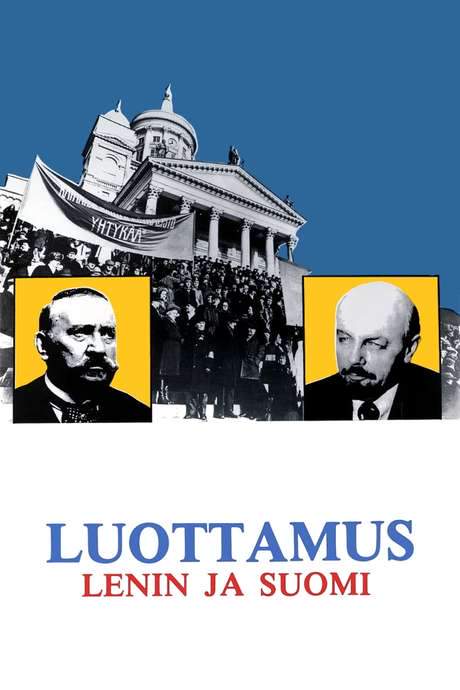
Lenin in Poland (1966) movie poster

Plot Summary

Lenin in Poland (1966) Plot Summary Explained

Release, runtime and language
1966 · 93 mins · Russian
Loading streaming availability…
Directed by
Sergei Yutkevich
Starring
Jerzy Nowak, Krzysztof Kalczyński, Jerzy Moes, Gustaw Lutkiewicz, Andrzej Jurczak, Ryszard Zaorski

The bio‑pic traces the early life of the Bolshevik leader before the Russian Revolution, concentrating on his period of exile in Poland. There he befriends two peasants, including a young girl whose fierce nationalist conviction drives her actions. When she is killed after refusing to divulge any information about Lenin, he learns of her death.

On this page (6)
  1. 1 Where to watch
  2. 2 What happens: full plot
  3. 3 Plot questions answered
  4. 4 Movie threads
  5. 5 Movies like Lenin in Poland
  6. 6 Every angle
Loading streaming availability…

Full plot summary · contains spoilers

What Happens in Lenin in Poland: Full Plot Summary

The whole story of Lenin in Poland (1966) explained, from the opening scene to the final frame: every key event, every twist and what it all adds up to. Read it as a quick recap before the sequel, to check a scene you missed, or to finally understand what really happened.

Set in 1914 at the dawn of World War I, the film follows Vladimir Lenin, Maksim Shtraukh, during his exile in Poronin, a quiet village tucked in the Carpathian foothills on Polish lands within the Austro-Hungarian Empire. Lenin travels there with Nadezhda Krupskaya, Anna Lisyanskaya, and her mother Elizaveta Vasilievna, and they had previously visited Poronin two years earlier before returning in the summer of 1914 after moving from Kraków, drawn by the village’s proximity to the border with the Russian Empire. The setting, bordered by mountains and along a frontier that mattered politically, frames a life that is at once secluded and intensely scrutinized.

As tensions escalate with the onset of war, Lenin becomes a figure of suspicion for the Austrian authorities. Eight days into the hostilities, he is arrested as a subject of a hostile foreign power and imprisoned, a dramatic turn that unsettles the local inhabitants who fear mob justice and the swift reach of imperial power. An Austrian Officer, Jerzy Nowak, embodies the friction between occupation and the fragile rights of a world already tipping toward conflict.

Despite an explicit order to report to the prison in Nowy Targ, Lenin delays his departure in order to dispatch urgent telegrams to influential Austrian social democrats. The plot centers on the maneuvering of these political networks, with one notable advocate among them who works to secure Lenin’s release. Victor Adler, a parliament member who lobbied the Interior Minister, argues that Lenin poses a greater danger to the Russian government than the minister himself, a line of argument that helps tilt the balance toward leniency and eventual freedom. The film portrays how diplomacy and political pressure can collide with rigid state control in a moment when every decision feels like it could alter the course of history.

On August 19, Lenin is freed and heads toward Switzerland, a turning point that concludes a tense chapter of exile, espionage, and wartime politics. The narrative uses Lenin’s arrest and the drawn-out efforts for his release to illuminate the broader drama of the era—how a single arrest in a remote border town can ripple outward, shaping conversations inside cabinets and among activists, and offering a microcosm of the wider battles that defined Europe at the start of World War I. The movie thus remains focused on the central arc of Lenin’s arrest and the hard-fought struggle for his release, presenting a richly detailed portrait of a fragile moment when personal fate and global history intersect.

Last updated: March 05, 2026 at 18:40

Was this helpful?

Plot questions answered

Lenin in Poland Plot Explained: Your Questions Answered

The questions people ask most about Lenin in Poland (1966): what happens in the confusing scenes, why the characters do what they do, the twists, hidden details and what the ending means. Each answer contains spoilers.

Q1

Why was Lenin arrested in Poronin during World War I?

Lenin was arrested eight days after World War I erupted because Austrian authorities suspected him of espionage. As a Russian citizen and prominent Bolshevik leader, he was considered a subject of a hostile foreign power. The Austrian authorities viewed him as a potential security threat in the borderlands near the Russian Empire, particularly given the wartime tensions and his known political activities.

Foreshadowing: Earlier in the film, Austrian suspicions of espionage had been building as tensions escalated with the outbreak of war.

  • lenin arrest
  • espionage
  • world war 1
  • austrian authorities
  • poronin
Q2

What argument did Victor Adler use to secure Lenin's release?

Victor Adler, an Austrian parliament member, argued that Lenin posed a greater danger to the Russian government than to the Austrian state itself. This unusual political calculus convinced the Interior Minister that keeping Lenin imprisoned would harm Russia's interests more than Austria's, tipping the balance toward leniency and ultimately securing his release.

Foreshadowing: The film earlier shows how political networks and diplomatic pressure were mobilised to advocate for Lenin.

  • victor adler
  • interior minister
  • political argument
  • lenin release
  • austrian parliament
Q3

Why did Lenin delay his departure to send telegrams?

Despite explicit orders to report to prison in Nowy Targ, Lenin delayed his departure to dispatch urgent telegrams to influential Austrian social democrats. He aimed to mobilise political support that could secure his release, demonstrating his willingness to use international political networks during the crisis rather than passively accepting imprisonment.

Foreshadowing: The timeline shows that Lenin had already established connections with Austrian political networks during his earlier visits to Poronin.

  • telegrams
  • delay
  • austrian social democrats
  • political network
  • prison
Q4

Why did Lenin go to Switzerland after his release?

After his release on August 19, 1914, Lenin departed for Switzerland because it offered neutral territory during World War I. As a political exile, Switzerland provided safety from both Russian and Austro-Hungarian authorities while allowing him to continue his revolutionary activities and maintain connections with international socialist movements.

Foreshadowing: The film establishes Poronin's precarious position near the Russian border, making escape to neutral ground essential for Lenin's safety.

  • switzerland
  • neutral territory
  • exile
  • escape
  • world war 1
Q5

Why were Austrian authorities suspicious of Lenin in Poronin?

Austrian authorities suspected Lenin of espionage because he was a prominent Russian political figure living in a border village close to the Russian Empire during wartime. His presence in the Carpathian foothills, near the frontier that separated the Austro-Hungarian Empire from Russia, made him a security concern as tensions escalated between the empires.

Foreshadowing: The film establishes Poronin's strategic location along the border, which drew attention to anyone with Russian connections.

  • suspicion
  • espionage
  • border
  • austrian authorities
  • political exile
Q6

How did Lenin's exile in Poronin begin?

Lenin first visited Poronin in 1912 with Nadezhda Krupskaya and her mother Elizaveta Vasilievna, drawn by the village's proximity to the Russian border. They returned in summer 1914 after moving from Kraków, seeking the quiet of the Carpathian foothills as war loomed. The village's location made it an appealing site for political exile away from Russian authorities.

Foreshadowing: The earlier 1912 visit plants the seed for Lenin's extended exile in the region.

  • poronin
  • exile
  • krupskaya
  • border
  • carpathian foothills
Q7

What role did local threats of mob justice play in Lenin's imprisonment?

After Lenin's arrest, the local population grew suspicious and voiced threats of mob action against him. This danger underscored the volatile climate for political exiles in wartime border regions. While security forces monitored the situation, the fear and rumours spreading through Poronin added to the urgency of resolving his case before unrest could escalate.

Foreshadowing: The film builds tension through the local crowd's hostile reactions to Lenin's presence during wartime.

  • mob justice
  • local threats
  • crowd
  • tension
  • poronin
Q8

Why was Lenin's release significant given the espionage charges?

Lenin's release was unusual because he was imprisoned on serious espionage charges during wartime, yet diplomatic pressure from Austrian social democrats and Victor Adler's political argumentation secured his freedom within weeks. The case demonstrates how political calculations during wartime could override security concerns, especially when the prisoner was seen as more useful to one side's enemies than to the detaining power.

Foreshadowing: The political negotiations depicted throughout the film build toward this unexpected outcome.

  • release
  • espionage
  • diplomatic
  • unusual
  • world war 1

Movie threads

More Movies Like Lenin in Poland, by Mood & Story

Curated lists built around what makes Lenin in Poland tick: the same mood, the same kind of story or the same emotional payoff. Each list explains why these movies belong together.

Movies about political paranoia and exile like Lenin in Poland

Tense stories of political fugitives navigating hostile territories. If you enjoyed the tense suspense of Lenin in Poland, explore more movies about political exiles navigating dangerous situations. These films share a serious historical tone and a focus on the paranoia of being a foreign operative in a hostile land.

  • political
  • suspenseful
  • claustrophobic
  • historical
  • urgent
  • serious
  • Tone: tense, serious, suspenseful
  • Pacing: steady, methodical
Why these movies?

The story pattern: Narratives typically follow a political figure or activist isolated in a foreign country, grappling with suspicion, espionage accusations, and the looming threat of imprisonment or mob justice. The plot is often driven by diplomatic efforts and personal allegiances, unfolding in a steady, methodical pace that builds suspense.

Why they belong together: These films are grouped together because they share a core experience of political tension and personal peril. They create a similar claustrophobic and urgent mood, focusing on the psychological weight of exile and the high-stakes game of international relations.

Historical dramas with tense moral courage like Lenin in Poland

Gripping historical episodes where conviction is tested under pressure. Fans of the historical gravity and tense moral stakes in Lenin in Poland will find similar stories here. These films depict serious historical events where characters face imprisonment, mob justice, and must make difficult choices for their principles.

  • historical
  • tense
  • serious
  • urgent
  • political
  • suspenseful
  • Tone: tense, serious, grave
  • Pacing: steady, deliberate
Why these movies?

The story pattern: Stories are often straightforward, focusing on a specific historical incident or period. They follow characters whose strong convictions lead them into direct conflict with authority or societal pressures, resulting in personal sacrifice or a test of will. The emotional journey is weighted but often ends on a note of resolve or hope.

Why they belong together: These movies are connected by their serious exploration of history through the lens of personal risk and moral fortitude. They share a tense atmosphere, a steady narrative pace, and a medium emotional weight that balances grim reality with moments of human resilience.

If you liked this

Movies Like Lenin in Poland

Similar movies to Lenin in Poland: the same genre, themes or kind of story. Each one comes with its own plot summary, timeline and ending explained.

Browse all movie summaries

Every angle

Lenin in Poland (1966) Explained: Plot, Timeline & Characters

Everything about Lenin in Poland in one place: what happens in the plot summary, the timeline in chronological order, the characters and meaning and a spoiler-free summary. What's After the Movie adds the cast, box office and post-credit scenes.

Coming soon on iOS and Android

The Plot Explained Movie Summary App

Plot summaries, endings explained and timelines on your phone. Catch up on any movie in minutes, save your favorites and never miss a twist again.

Be the first to know when we launch. Your email stays private, always.

Learn more about the app