Plot Explained Spoilers guaranteed!
Plot Explained

Browse by genre

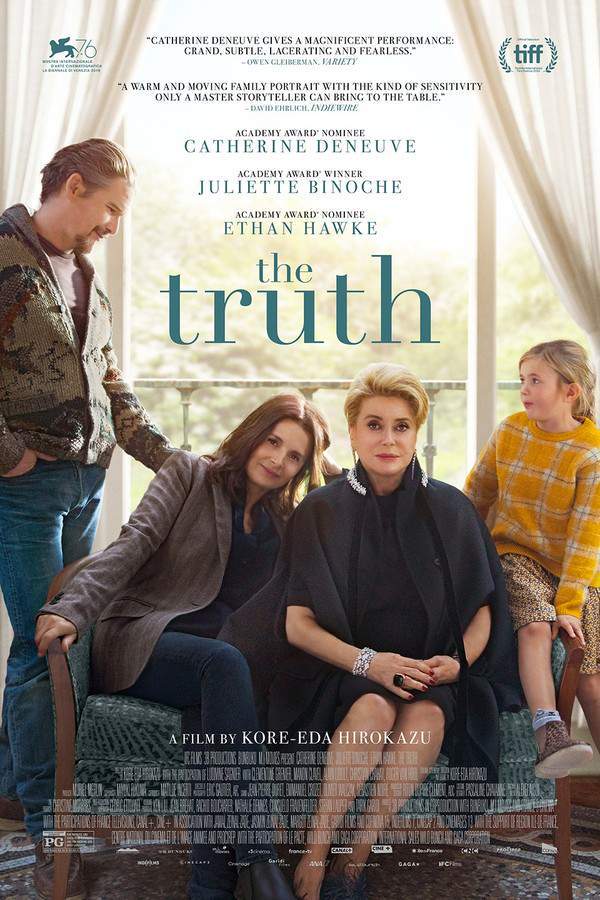
The Truth (2020) movie poster

Ending Explained

The Truth (2020) Ending Explained – Final Scene & Meaning

Release, runtime and language
2020 · 106 min · French
Echo score 78
Loading streaming availability…
Starring
Catherine Deneuve, Alain Libolt, Christian Crahay, Clémentine Grenier
Budget
$5.9M

A renowned French actress, Fabienne Dujardin, finds her life and career scrutinized when her memoirs are published. This sparks a complex and emotionally charged conflict with her daughter, Lumir. As Fabienne revisits her past, her vulnerabilities are exposed, while Lumir grapples with her own uncertainties and reservations. The story explores their intricate relationship and the bittersweet nature of family history and legacy.

On this page (7)
  1. 1 Where to watch
  2. 2 What happens at the end
  3. 3 Final events in order
  4. 4 Ending questions answered
  5. 5 Movie threads
  6. 6 Movies like The Truth
  7. 7 Every angle
Loading streaming availability…

Ending explained · contains spoilers

What Happens at the End of The Truth?

How The Truth (2020) ends, what the final scene means, which earlier moments set it up and how to read the ending if the film leaves it open. The full ending explained, with every spoiler.

The movie reveals that the cursed game of Truth or Dare is linked to a demon named Calax, who was summoned and trapped by a girl named Inez Reyes during a massacre at a church many years ago. The demon's presence is tied to a ritual that involved breaking a pot to free him, and only the person who broke that pot, Sam, has the power to trap Calax again. Throughout the film, we see that the game is not just deadly—it's controlled by Calax, who possesses players and manipulates the rules to keep it going. The main characters, Olivia and her friends, try to break the curse by returning to the original church, where they hope to trap Calax. However, their plan falls apart when Lucas is possessed and forced to kill Sam, who was trying to complete the ritual, meaning Calax remains free. Realizing that ending the curse is impossible without sacrifices, Olivia and Markie decide to upload a viral video explaining the curse to the world, knowing that once the video is watched, anyone who sees it becomes part of the game. In the final moments, Olivia chooses to sacrifice the entire world’s population to save her friend, Markie, and herself. Her decision underscores that she values her close relationships above all else, even if it means condemning millions. The ending starkly shows Olivia's moral complexity—her selfish act of saving herself and her friend at the expense of countless others—highlighting that sometimes, heroism can come with a terrible cost. Some viewers interpret this as a grim commentary on human nature, with Olivia prioritizing her own life over the greater good. Despite the mixed reviews, many find the ending to be a compelling and thought-provoking conclusion to the dark story. It leaves audiences contemplating the moral ambiguity of sacrifice and the lengths one will go to protect loved ones, even if it means unleashing chaos on a global scale.

Last updated: June 25, 2025 at 08:44

Was this helpful?

The last 4 events

How The Truth Ends: The Final Events in Order

The last events of The Truth (2020) in chronological order, the run-up to the ending explained above. The complete timeline has all 15 events, scene by scene.

Open the full timeline
  1. Charlotte's Garden Discovery

    The next day, Charlotte finds a turtle in the garden, prompting a mysterious and cryptic reaction from Fabienne. This moment connects back to past discussions and sets the stage for further complications with Pierre's whereabouts.

    Where
    Garden
  2. A Moment of Closure

    In a heartfelt scene, Fabienne shares her regret with Lumir, hinting at the possibility of revisiting their story in a second edition of her memoir. This moment serves as a pivotal point for both characters as they navigate their complex emotions.

  3. New Beginnings

    Fabienne expresses gratitude towards Luc and contemplates a reshoot of 'Memories of My Mother'. The family dynamics shift as they prepare to face the winter together in Paris, symbolizing a sense of unity and renewed hope.

  4. Charlotte's Aspirations

    Charlotte expresses her desire to become an actress, voicing her wish to share the journey with her family. This moment resonates deeply, bridging generational gaps and connecting the family’s artistic legacy to the future.

Ending questions answered

The Truth Ending: Your Questions Answered

The questions people ask most about the ending of The Truth (2020): what the final scene means, how the twist works, what happens to each character and how to read the ending. Each answer contains spoilers.

Q1

Why does Lumir confront Fabienne about her memoirs?

Lumir confronts her mother because the memoirs reveal painful truths about their family history that Lumir feels were either exaggerated, distorted, or kept hidden from her. The publication forces Lumir to confront years of feeling neglected and secondary to Fabienne's career, exposing the resentment she harbors toward a mother who prioritized her professional legacy over motherhood.

Foreshadowing: Earlier scenes show Lumir's discomfort watching her mother's on-screen performances, hinting at her deeper resentment toward Fabienne's life in the spotlight.

  • lumir
  • fabienne
  • memoirs
  • confrontation
  • family conflict
Q2

What revelations about Fabienne's past affect Lumir the most?

The most damaging revelations involve Fabienne's earlier life and decisions that directly impacted Lumir, including details about Lumir's father and moments when Fabienne chose her career over being present for her daughter. These disclosures shatter Lumir's understanding of her own history and force her to reevaluate everything she believed about her childhood.

Foreshadowing: Lumir's initial unease at the book reading suggests she already suspects uncomfortable truths.

  • revelations
  • past
  • lumir
  • father
  • childhood
Q3

What does the bittersweet ending mean for their relationship?

The ending suggests Fabienne and Lumir have taken the first fragile steps toward reconciliation, but their relationship remains fundamentally changed. The tearful embrace represents acknowledgment of past wounds rather than complete healing, they can now coexist with greater honesty, though the underlying hurts from years of neglect and performance are not fully resolved.

  • reconciliation
  • ending
  • relationship
  • mother
  • daughter
Q4

Why did Fabienne choose to publish such honest memoirs?

Fabienne published the memoirs believing she was finally being truthful about her life, including her failures as a mother. However, her motivation was complex, she wanted to control her legacy while also genuinely believing her version of events. The book represents her attempt to perform honesty even in private, revealing how deeply her identity as an actress permeates her real relationships.

Foreshadowing: Throughout the film, Fabienne repeatedly frames her life through a performative lens, treating even personal moments as scenes to be directed.

  • fabienne
  • memoirs
  • publishing
  • truth
  • legacy
Q5

What does the film-within-a-film structure reveal about Fabienne and Lumir?

The parallel between Fabienne's shooting and their real-life conflict illuminates how both mother and daughter struggle to distinguish between performance and authenticity. Fabienne directs a scene about a mother-daughter reunion while simultaneously avoiding genuine reunion with Lumir, showing how her instinct to perform prevents real emotional connection.

Foreshadowing: The film's production serves as a mirror, with the fictional reconciliation echoing what both characters desperately want but cannot achieve.

  • film within film
  • parallel
  • performance
  • reconciliation
Q6

Why does Lumir struggle to forgive Fabienne?

Lumir cannot easily forgive because Fabienne's neglect was not a single event but a lifetime pattern of prioritizing her career. The memoirs compound this by making Fabienne's choices public rather than private, forcing Lumir to share her pain with the world. Forgiveness is complicated by the fact that Fabienne still does not fully recognize the depth of her failure as a mother.

Foreshadowing: Lumir's initial refusal to read the memoirs signals her protective stance against further emotional harm.

  • forgiveness
  • lumir
  • neglect
  • motherhood
  • trust
Q7

What role does Patricia's death play in the ending?

Patricia's tragic death serves as a catalyst that forces Fabienne and Lumir to set aside their conflict and confront mortality together. In facing the loss of someone close, they find brief unity and are reminded of what matters most, human connection over professional achievement. Her death creates the space for their tentative reconciliation.

Foreshadowing: Patricia's illness was introduced early, establishing her as a figure who bridges both women.

  • patricia
  • death
  • family
  • mortality
  • reconciliation
Q8

What does the film's final scene signify?

The final scene shows Fabienne and Lumir embracing after a moment of raw honesty, but the camera pullback reveals them still on set, this subtle detail suggests their reconciliation is also a kind of performance, a scene they are acting out even as they attempt authenticity. It captures the film's central theme of blurred lines between reality and performance.

Foreshadowing: The entire film takes place during a film production, constantly reminding viewers that nothing is purely spontaneous.

  • final scene
  • embrace
  • set
  • performance
  • reality

Movie threads

More Movies Like The Truth, by Mood & Story

Curated lists built around what makes The Truth tick: the same mood, the same kind of story or the same emotional payoff. Each list explains why these movies belong together.

Quietly intense mother-daughter dramas like The Truth

Stories where family history and unspoken truths fracture the bond between a mother and daughter. For viewers seeking more movies like The Truth, this list features powerful, character-driven dramas exploring the intricate and often strained bonds between mothers and daughters. These films share a focus on emotional truth, family legacy, and the bittersweet journey of reconciliation.

  • family drama
  • confrontational
  • cathartic
  • introspective
  • tense
  • emotional
  • Tone: melancholic, cathartic, confrontational
  • Pacing: slow, reflective, dialogue-driven
Why these movies?

The story pattern: The narrative pattern often involves a catalyst—a reunion, a publication, or a crisis—that forces a mother and daughter to confront their shared but differently remembered past. The story unfolds through intimate conversations and reflective moments, revealing layers of resentment, envy, and love, typically moving toward a cathartic but imperfect resolution.

Why they belong together: These films are grouped together because they share a specific emotional core: the examination of the mother-daughter dynamic with a melancholic yet cathartic tone. They prioritize character depth over plot twists, using a slow, deliberate pace to let the emotional tensions simmer and eventually surface.
Reflective dramas about artists and legacies like The Truth

Films exploring the personal costs of artistic life and the truths hidden behind public personas. If you liked The Truth's exploration of an actress confronting her past, you'll appreciate these movies about artists examining their lives and work. These films delve into the intersection of performance, memory, and personal truth, often with a melancholic and introspective mood.

  • introspective
  • melancholic
  • reflective
  • artistic
  • bittersweet
  • emotional
  • Tone: melancholic, introspective, bittersweet
  • Pacing: slow, steady, contemplative
Why these movies?

The story pattern: The narrative follows an established artist who is prompted to look back on their life and career, often through a memoir, an interview, or a new project. This introspection forces them to confront regrets, rivalries, and the ways their artistry has shaped—or damaged—their closest relationships, leading to a reevaluation of what truly matters.

Why they belong together: Movies in this thread share a focus on the interior life of the artist, blending themes of performance versus reality, professional envy, and the bittersweet nature of looking back. They create a cohesive experience through their melancholic tone, moderate complexity, and emphasis on emotional revelation over external drama.

If you liked this

Movies Like The Truth

Similar movies to The Truth: the same genre, themes or kind of story. Each one comes with its own plot summary, timeline and ending explained.

Browse all movie summaries

Every angle

The Truth (2020) Explained: Plot, Ending, Timeline & Characters

Everything about The Truth in one place: what happens in the plot summary, the timeline in chronological order, the characters and meaning, the ending explained and a spoiler-free summary. What's After the Movie adds the cast, box office and post-credit scenes.

Coming soon on iOS and Android

The Plot Explained Movie Summary App

Plot summaries, endings explained and timelines on your phone. Catch up on any movie in minutes, save your favorites and never miss a twist again.

Be the first to know when we launch. Your email stays private, always.

Learn more about the app