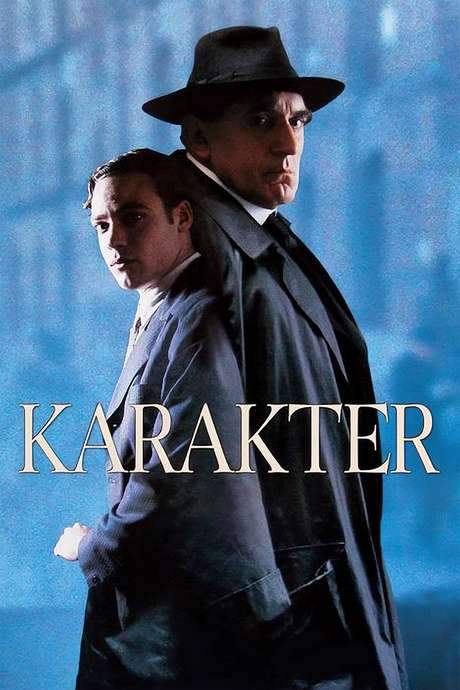
Character

Character

Year: 1997

Runtime: 122 mins

Language: Dutch

Director: Mike van Diem

DramaHistory

In the Netherlands before World War II, the impoverished, illegitimate son of a powerful bailiff aspires to become a lawyer, confronting his father's constant scorn and relentless spite as he spends his life battling to earn his father's respect and prove his own worth.

Where to Watch Character?

Find where to stream, rent, or buy Character (1997) in the US with current JustWatch availability, up-to-date pricing, and platform listings for subscription, rental, and digital purchase options.

Warning: spoilers below!

Haven’t seen Character yet? This summary contains major spoilers. Bookmark the page, watch the movie, and come back for the full breakdown. If you're ready, scroll on and relive the story!

Character (1997) – Full Plot Summary & Ending Explained

Read the complete plot breakdown of Character (1997), including all key story events, major twists, and the ending explained in detail. Discover what really happened, and what it all means.

In 1930s Rotterdam, A.B. Dreverhaven Jan Decleir, a feared bailiff, is found dead with a knife in his stomach, setting off a tense investigation that soon points to Katadreuffe Fedja van Huêt, an ambitious young lawyer who has clawed his way up from poverty. Seen leaving Dreverhaven’s office on the afternoon of the murder, he is arrested and taken to police headquarters, where the narrative unfolds through his memories of a long, fraught relationship with the man who turns out to be his father.

The story begins with Joba Betty Schuurman, Katadreuffe’s taciturn mother, who once worked as a housekeeper for Dreverhaven. Their relationship is marked by silence and distance; after a single, impliedly coercive encounter, she becomes pregnant and chooses independence over the bailiff’s offers of money and marriage, sending a steady stream of refusals by mail. The past casts a long shadow over Katadreuffe’s life, and his path often collides with the formidable Dreverhaven, shaping a dynamic of pursuit and resistance that will define everything that follows.

As a child, Katadreuffe’s world is colored by conflict and survival. When he is arrested for a boyish theft and tells the police that Dreverhaven is his father, the bailiff refuses to acknowledge him. As a young man, Katadreuffe unwittingly borrows from a bank owned by Dreverhaven to buy a failed cigar store, prompting a lawsuit that seeks to strip him of his livelihood. Yet Katadreuffe manages to repay the debt and secures a clerical position within the firm tasked with pursuing him, his education largely self-made: an incomplete English-language encyclopedia found in his mother’s apartment becomes his unlikely tutor, and learning English opens doors in a way no formal schooling ever could.

With the debt repaid, Katadreuffe seeks a second loan from Dreverhaven to finance his education and the long road to a legitimate legal career. Dreverhaven agrees, but only with the binding condition that he can recall the loan at any moment. Against the odds and despite the bailiff’s relentless attempts to stall him, Katadreuffe passes the bar and becomes a lawyer, a victory that promises a new life even as old wounds fester.

The day of the murder—when the firm’s celebration for Katadreuffe’s achievement is said to begin the tale—becomes the moment of truth. Katadreuffe bursts into his father’s office, first overwhelmed by a genuine, almost ceremonial handshake, then swept into a surge of anger that erupts into a brutal clash. He leaves the room in a rage, leaving a scene that feels like the culmination of years of tension.

Yet the timeline tightens the mystery. Police records show Katadreuffe departed the scene at 5:00 p.m., while Dreverhaven’s body reveals a death time near 11:00 p.m. The investigation then reveals a startling truth: Dreverhaven’s death was a suicide, a revelation that reframes the entire feud. In a final twist, a document—left by Dreverhaven’s lawyer—emerges as his will, transferring all of his substantial wealth to Katadreuffe; the will is signed “Vader” (Father), sealing a paradoxical legacy of hatred, longing, and legitimate triumph.

The film unspools with a cool, measured gravity, tracing the competing impulses of a son’s ascent and a father’s domination, and asking whether achievement can ever erase the debt of lineage. Through Katadreuffe’s cautious wit, his self-taught fluency in language, and his relentless pursuit of a rightful place in the world, the narrative questions the price of progress when family loyalty and power intersect, and whether forgiveness can ever fully resolve a history written in conflict.
Last updated: October 07, 2025 at 09:21

Was this helpful?

Character (1997) Plot Questions Answered – Summary FAQ

Explore frequently asked questions about Character (1997) with spoiler-rich answers covering the full plot summary, major story beats, character motivations, hidden details, and ending meaning. This movie summary FAQ helps explain confusing scenes, plot twists, and narrative decisions in clear, searchable detail.

Q1

Why did Dreverhaven commit suicide after Katadreuffe's confrontation?

A.

Dreverhaven took his own life, though the exact psychological motivation remains ambiguous. The film suggests decades of emotional conflict with his unrecognized son had worn him down. The confrontation that afternoon, where Katadreuffe finally confronted him about years of cruelty, appears to have been the breaking point. Dreverhaven had spent his life maintaining power and control, and facing his son's wrath may have shattered his ability to maintain that facade. The suicide reframes their entire relationship as a tragic cycle of pride, denial, and unresolved longing.

Earlier scenes show Dreverhaven repeatedly refusing to acknowledge Katadreuffe, yet oddly continuing to engage with him through legal means, suggesting an inability to fully sever the connection.

dreverhaven suicidemotivationconfrontationfather son conflict
Q2

Why did Dreverhaven leave his inheritance to Katadreuffe?

A.

Dreverhaven's will bequeathed all his wealth to Katadreuffe, signed with the word "Vader" (Father). This posthumous acknowledgment reveals the complexity of their relationship. Despite denying Katadreuffe publicly and tormenting him legally, Dreverhaven apparently wanted his son to inherit his success and status. The gesture suggests that beneath the bailiff's cruelty lay a suppressed desire to provide for his son, but his pride and social standing prevented him from doing so while alive. The inheritance represents both reconciliation and one final act of control from beyond the grave.

Dreverhaven's conditional loan for Katadreuffe's law studies, allowing him to call it back at any moment, reveals his pattern of maintaining power through financial ties.

inheritancewillvaderfatherwealthacknowledgment
Q3

Did Katadreuffe actually kill his father?

A.

No, Katadreuffe did not kill Dreverhaven. The police investigation reveals that Dreverhaven died at 11:00 p.m., but Katadreuffe was seen leaving the office at 5:00 p.m., giving him a clear six-hour alibi. The cause of death was determined to be suicide, not homicide. This revelation completely vindicates Katadreuffe, who had been arrested as the prime suspect. The film uses this twist to reframe the entire narrative, transforming what appears to be a murder mystery into a tragic story of missed connections and emotional destruction.

The investigation begins with Katadreuffe's arrest, but the early timeline details plant seeds of doubt about his guilt.

murderinvestigationalibisuicidecleared
Q4

Why did Katadreuffe confront Dreverhaven on the day he became a lawyer?

A.

Katadreuffe's confrontation was the culmination of decades of emotional abuse and frustration. After passing the bar and becoming a qualified lawyer, a milestone celebrated by his firm that same day, Katadreuffe felt empowered enough to finally confront Dreverhaven about the lifelong cruelty he had endured. The timing was significant: he had achieved the legitimate success his father had always denied him, and the contrast between his celebration and his father's continued hostility became unbearable. What began as what might have been a celebratory handshake quickly escalated into a violent confrontation as years of resentment erupted.

The film builds tension through repeated encounters where Katadreuffe swallows his anger and walks away, hinting that one day his restraint would break.

confrontationlawyerbecoming lawyerangerclimax
Q5

What was the nature of Joba's relationship with Dreverhaven?

A.

Joba worked as Dreverhaven's housekeeper before becoming pregnant with Katadreuffe. The film implies the encounter that led to her pregnancy was coercive, though this is handled obliquely. Afterward, Joba refused Dreverhaven's offers of money and marriage, choosing to raise her son independently as a single mother in Rotterdam. This decision set the foundation for the lifelong conflict: Dreverhaven never acknowledged Katadreuffe as his son, while Joba built her life around protecting her child from the man who had wronged her. Their relationship is marked by silence, refusal, and the resulting damage to everyone involved.

Joba's repeated mail refusals of Dreverhaven's offers establish the pattern of rejection that defined their dynamic.

jobahousekeeperpregnancycoercivesingle mother
Q6

How did Katadreuffe become a lawyer without formal education?

A.

Katadreuffe self-educated using an incomplete English-language encyclopedia he found in his mother's apartment. He taught himself English, a skill that proved invaluable in the legal world. This self-taught fluency impressed his employers at the law firm where he worked clerically after repaying his debt to Dreverhaven. Combined with his determination and practical experience within the legal system, Katadreuffe managed to pass the bar exams despite never completing formal schooling. His story represents a remarkable ascent through pure willpower and intellectual resourcefulness, using the limited tools available to him.

The encyclopedia appears early in the film as a symbolic object in Joba's modest apartment, hinting at Katadreuffe's future path.

self-educationlawyerencyclopediaenglishformal education
Q7

Why did Dreverhaven sue Katadreuffe over the cigar store debt?

A.

Dreverhaven used his ownership of the bank from which Katadreuffe borrowed money to fund a failed cigar store venture as a weapon against his son. When the business failed, Dreverhaven pursued legal action to reclaim the debt, an action that threatened to strip Katadreuffe of everything. This lawsuit represents the perverse intersection of fatherly power and financial control that defined their relationship. Rather than helping his son succeed, Dreverhaven exploited his position to attack Katadreuffe, forcing the young man to fight bankruptcy while working at the very law firm retained to destroy him.

This incident occurs early in their adult relationship, establishing the pattern of Dreverhaven using legal power as a tool of personal warfare.

cigar storedebtlawsuitbankruptcyfinancial control
Q8

What did Katadreuffe learn about his father after Dreverhaven's death?

A.

After Dreverhaven's suicide, Katadreuffe learned two startling truths: first, that his father had killed himself rather than being murdered, and second, that Dreverhaven had secretly named him heir to all his wealth. The will, signed "Vader," represented a posthumous acknowledgment of their relationship that Dreverhaven could never make while alive. This discovery transformed Katadreuffe's understanding of their conflict, revealing that beneath the bailiff's cruelty lay a complicated, twisted form of recognition. The inheritance gave him material wealth but also left him with the painful irony of receiving love only in death.

Dreverhaven's earlier conditional loan, agreeing to fund Katadreuffe's education but retaining power to recall it, hints at his inability to give unconditional support.

willdiscoverytruthheirposthumous
Q9

Why did Katadreuffe work at the law firm that was suing him?

A.

After repaying the cigar-store debt, Katadreuffe took a clerical position at the very law firm Dreverhaven had retained to pursue him. This ironic position gave Katadreuffe insider access to legal knowledge and documents that would help his future career. Working within the system that was legally attacking him represented both a pragmatic survival strategy and a form of defiance. It allowed him to learn the law from the inside while simultaneously thumbing his nose at the bailiff who sought to destroy him. The job became the foundation for his eventual path to becoming a lawyer.

The film's title "Character" hints at the psychological complexity required for someone to work alongside their own prosecutors.

law firmjobclerklegal careeropportunity
Q10

Why did Dreverhaven refuse to acknowledge Katadreuffe as his son?

A.

Dreverhaven consistently denied paternity despite clear evidence, driven by pride and social standing. As a powerful bailiff in Rotterdam, acknowledging an illegitimate child would have damaged his reputation and authority. His refusal to recognize Katadreuffe publicly, while simultaneously engaging with him through legal conflicts, represents a twisted form of connection, he could not accept his son openly but could not fully abandon him either. This denial shaped Katadreuffe's entire life, fueling his determination to prove himself worthy of acknowledgment through achievement.

When young Katadreuffe tells police Dreverhaven is his father, the bailiff's immediate denial sets the template for decades of rejection.

paternitydenialillegitimatesocial standingpride
Mobile App Preview

Coming soon on iOS and Android

The Plot Explained Mobile App

From blockbusters to hidden gems - dive into movie stories anytime, anywhere. Save your favorites, discover plots faster, and never miss a twist again.

Sign up to be the first to know when we launch. Your email stays private, always.

Explore Movie Threads

Discover curated groups of movies connected by mood, themes, and story style. Browse collections built around emotion, atmosphere, and narrative focus to easily find films that match what you feel like watching right now.

Movies about lifelong parent conflicts like Character

Stories of protagonists battling a toxic parental figure across decades.If you liked the intense father-son feud in Character, explore more movies about lifelong struggles against oppressive parents. These dramas and family sagas feature protagonists whose entire lives are defined by a battle for respect and identity against a powerful, scornful parental force.

oppressivedrivensombertensemelancholicfamilial strifepsychologicalaustere

Narrative Summary

The narrative typically spans a significant portion of the protagonist's life, charting their persistent, often solitary, struggle against a parent who embodies rejection and scorn. The conflict is the central engine of the plot, driving the protagonist's ambitions and personal failures, with resolutions that are often ambivalent or bittersweet, rarely offering clean victories.

Why These Movies?

Movies are grouped here based on their deep exploration of a specific, enduring familial conflict. They share a heavy emotional weight, a melancholic or tense tone, and a focus on how parental rejection fuels a character's entire life trajectory.

Slow burn melancholic period dramas like Character

Deliberate, somber historical tales focused on personal hardship.Fans of the grim, pre-war atmosphere and slow, sorrowful pace of Character will appreciate these melancholic period dramas. These films use historical settings to explore intimate stories of struggle, class, and personal hardship with a heavy, deliberate tone.

melancholicsombergrittyaustereatmospherichistoricalslow burnreflective

Narrative Summary

Stories in this thread unfold methodically, often over an extended timeframe. They prioritize mood and character development over complex plotting, immersing the viewer in a somber world where social constraints and personal demons lead to a bittersweet or deeply felt conclusion.

Why These Movies?

These movies share a specific combination of a historical setting, a slow, contemplative pacing, and a consistently melancholic or somber tone. The experience is defined by a gritty, atmospheric immersion into a character's hard-fought journey.

Unlock the Full Story of Character

Don't stop at just watching - explore Character in full detail. From the complete plot summary and scene-by-scene timeline to character breakdowns, thematic analysis, and a deep dive into the ending - every page helps you truly understand what Character is all about. Plus, discover what's next after the movie.

Character Timeline

Track the full timeline of Character with every major event arranged chronologically. Perfect for decoding non-linear storytelling, flashbacks, or parallel narratives with a clear scene-by-scene breakdown.

Character Timeline

Characters, Settings & Themes in Character

Discover the characters, locations, and core themes that shape Character. Get insights into symbolic elements, setting significance, and deeper narrative meaning - ideal for thematic analysis and movie breakdowns.

Characters, Settings & Themes in Character

Character Spoiler-Free Summary

Get a quick, spoiler-free overview of Character that covers the main plot points and key details without revealing any major twists or spoilers. Perfect for those who want to know what to expect before diving in.

Character Spoiler-Free Summary

More About Character

Visit What's After the Movie to explore more about Character: box office results, cast and crew info, production details, post-credit scenes, and external links - all in one place for movie fans and researchers.

More About Character

Similar Movies to Character

Discover movies like Character that share similar genres, themes, and storytelling elements. Whether you’re drawn to the atmosphere, character arcs, or plot structure, these curated recommendations will help you explore more films you’ll love.