Plot Explained Spoilers guaranteed!
Plot Explained

Browse by genre

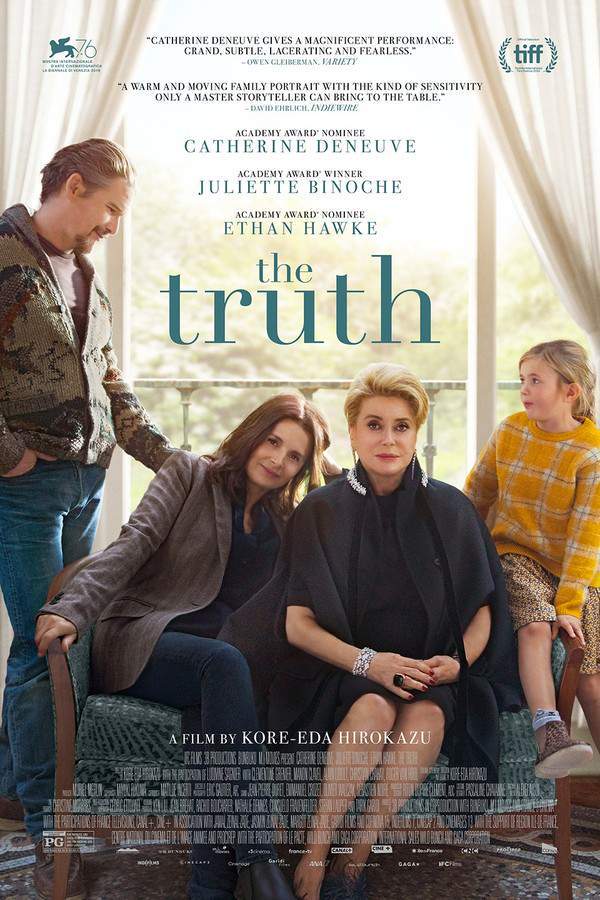
The Truth (2020) movie poster

Plot Summary

The Truth (2020) Plot Summary & Ending Explained

Release, runtime and language
2020 · 106 min · French
Echo score 78
Loading streaming availability…
Starring
Catherine Deneuve, Alain Libolt, Christian Crahay, Clémentine Grenier
Budget
$5.9M

A renowned French actress, Fabienne Dujardin, finds her life and career scrutinized when her memoirs are published. This sparks a complex and emotionally charged conflict with her daughter, Lumir. As Fabienne revisits her past, her vulnerabilities are exposed, while Lumir grapples with her own uncertainties and reservations. The story explores their intricate relationship and the bittersweet nature of family history and legacy.

On this page (7)
  1. 1 Where to watch
  2. 2 What happens: full plot
  3. 3 Plot questions answered
  4. 4 How it ends
  5. 5 Movie threads
  6. 6 Movies like The Truth
  7. 7 Every angle
Loading streaming availability…

Full plot summary · contains spoilers

What Happens in The Truth: Full Plot Summary

The whole story of The Truth (2020) explained, from the opening scene to the final frame: every key event, every twist and what it all adds up to. Read it as a quick recap before the sequel, to check a scene you missed, or to finally understand what really happened.

As the celebrated French actress Fabienne Dangeville (Catherine Deneuve) sits down for a revealing interview to promote her upcoming literary work, a vibrant family reunion quietly unfolds. Her daughter, Lumir (Juliette Binoche), a gifted screenwriter, arrives with her husband, Hank (Ethan Hawke), a charming actor, accompanied by their inquisitive granddaughter, Charlotte (Clémentine Grenier). Anticipation hangs in the air, heightened further when Luc (Alain Libolt), Fabienne's manager, shares an influx of film opportunities that have come her way.

However, as the evening progresses, Lumir uncovers a disconcerting truth: her mother has already printed multiple copies of her forthcoming book—an oversight that Fabienne brushes aside, insisting she must have overlooked the manuscript. Later that night, as Lumir delves into the book, she is struck by the stark contradictions between its narrative and her recollections of their shared past. The following day, Fabienne entertains Charlotte's fascination with magic by weaving a whimsical story about transforming someone into a turtle.

As tension mounts, Lumir's concern deepens during an intense rehearsal where she confronts Fabienne about the book, which she views as a whitewashed portrayal of their complicated bond. The absence of Sarah from the narrative heightens her frustration. When Luc later mentions that Fabienne's latest project, "Memories of My Mother," features the up-and-coming actress Manon Lenoir (Manon Clavel), Lumir is taken aback by the unsettling similarities to her own life.

In a bold move, Lumir positions herself as Fabienne's assistant on set, keenly observing the filming of this sci-fi drama, which depicts a mother who defies death by venturing into space, returning to Earth intermittently, leaving her daughter behind to age. Fabienne portrays the mother in this poignant narrative that intricately explores themes of time and memory. As rehearsals unfold, the production team is captivated by Manon's performance, but Fabienne's expression reveals her skepticism towards Manon's interpretation of her role.

In a shocking twist, Luc shares his plans to retire and move in with his son’s family, revealing an extensive, previously unknown family tree filled with grandchildren. Lumir’s probing question about this sudden shift leads Luc to express his feelings of being erased from Fabienne's memoirs, urging Lumir to manage her effectively, suggesting their partnership could relieve some of the emotional weight they carry.

Suddenly, Pierre (Roger Van Hool), Fabienne's ex-husband, makes an unexpected appearance at the family gathering, raising eyebrows with suspicions of ulterior motives. His sudden arrival stirs Lumir’s sharp observation regarding Pierre’s belief that he deserves compensation for Fabienne's publication about him—a misconception quickly dispelled by Lumir’s revelation that the book absurdly states Pierre has passed.

As production begins on Fabienne's memoir, Lumir witnesses poignant moments where she assumes the role of mother to her daughter, reflecting their tumultuous dynamic. An impromptu suggestion from Manon draws a sardonic remark from Fabienne about their familial bond. This sentiment resonates as Manon collaborates with Ludivine Sagnier, portraying her younger character, ultimately striving for emotional depth in their performances.

Tensions rise as Fabienne downplays Pierre’s involvement, while Lumir persistently confronts her about stories she had shared from her childhood with Manon, which Fabienne adamantly denies. Amidst family fray, Jacques (Christian Crahay), Fabienne’s current husband, steps in to prepare dinner for the family, including Pierre.

Navigating this emotional landscape, Fabienne confides in Charlotte that Pierre was metaphorically the "turtle" in her life—a role that carries weight in their discourse. When Pierre offers his congratulations to Hank for his acting endeavors, Fabienne interprets this as an opportunity to trivialize Hank's television success in an attempt to maintain control over her narrative. Lumir capitalizes on the moment to confront Fabienne about her acclaimed César-winning performance, alleging that it was wrongfully appropriated from Sarah—an assertion backed by Pierre, who produced the film in question.

As Lumir ventures to suggest that Sarah's tragic drowning was indirectly linked to Fabienne's actions, Fabienne vehemently contests this, insisting it was an accident while simultaneously acknowledging her flaws as a mother and friend—a notion she cannot seem to escape, despite her prowess as an actress. Overwhelmed by Lumir’s words, Fabienne finds herself in tears, prompting Hank to retreat, grappling with his own struggles, which includes seeking solace in alcohol during this emotional upheaval.

The next day, Charlotte surprises everyone with a discovery in the garden—a turtle, just as Pierre mysteriously vanishes. Curious, Charlotte approaches Fabienne, who cryptically reveals that Pierre has been returned to his rightful owner. However, when Jacques probes about this truth, Fabienne fabricates a story, attributing the blame to Lumir for divulging information to Charlotte. As filming for Manon progresses, Fabienne becomes increasingly distracted, her focus wavering amidst interruptions, evident in her stumbling during a take, yet ultimately delivering a stunning performance.

In the midst of this chaos, Fabienne expresses her desire for Luc’s return while grappling with uncertainty about their relationship. Lumir offers insight, suggesting an apology may be in order to mend their bond. As the family gathers for dinner, Fabienne candidly expresses Lumir's longing for reconciliation, yet falters when it comes to taking the initiative to apologize. Faced with mounting frustrations, Fabienne declares her intent to retire from acting, depressed by Manon's perceived mockery.

In a last-ditch effort, Lumir implores Fabienne to confront her insecurity and acknowledge Manon’s exceptional talent. Instead of succumbing to despair, Fabienne rallies herself to return to set, where she intensifies her dedication and successfully completes her scenes. Lumir praises her in a significant moment, prompting Fabienne to contemplate the similarities between her life's narrative and that of Sarah, an artist whose legacy cast a long shadow over her career.

In a moment of profound realization, Fabienne praises Manon, only to recognize she is reflecting on qualities she once admired in Sarah. As a testament to this connection, Fabienne gifts Manon with Sarah's cherished dress—a gesture rich with history. Their conversation unfolds with Manon inquiring about Sarah's character and talent, prompting Fabienne to regale her with tales of Sarah’s unique gift and allure.

Sharing poignant revelations with Lumir, Fabienne confides that while she did attend Lumir’s school play, she chose to keep it a secret to avoid burdening her daughter. Unveiling her emotions, Fabienne admits her envy over Sarah's ability to capture Lumir's admiration—a sentiment that lingers. Sensing an opportunity for closure, Lumir inquires why this vital chapter was omitted from their shared history. Fabienne hints at a potential second edition while Lumir seizes the moment, embracing her mother with tears, proclaiming that she must indeed possess magical powers to be on the verge of forgiveness.

Meanwhile, Charlotte shares her dreams of becoming an actress, expressing a heartfelt hope to witness her journey from beyond—a notion that resonates deeply with Fabienne. Returning to Lumir, it becomes apparent that this heartfelt moment may have been sculpted by Lumir herself, leaving her to reflect on its authenticity.

As Luc reenters the narrative, Fabienne chooses to present him with a homemade medal, symbolizing her newfound appreciation for his role in her life. In a wave of inspiration, she requests a reshoot of "Memories of My Mother," convinced that she can breathe new life into the scene. Lumir, ever-curious, questions Luc about his intentions to leave their lives, but he remains just as cryptic as before. Together, the family sets forth once more, with Fabienne cherishing the Parisian winters that seem to draw them all closer together.

Last updated: October 24, 2024 at 07:37

Was this helpful?

Plot questions answered

The Truth Plot Explained: Your Questions Answered

The questions people ask most about The Truth (2020): what happens in the confusing scenes, why the characters do what they do, the twists, hidden details and what the ending means. Each answer contains spoilers.

Q1

Why does Lumir confront Fabienne about her book?

Lumir discovers that her mother has already printed multiple copies of the memoir without her knowledge, which she sees as a betrayal. More importantly, Lumir finds stark contradictions between the book's narrative and her own recollections of their shared past, particularly the absence of Sarah from the story.

Foreshadowing: Earlier, Lumir notices the manuscript was already printed despite Fabienne claiming to have overlooked it.

  • Lumir
  • Fabienne
  • memoir
  • confrontation
  • book discrepancy
Q2

What is the movie within the movie about?

"Memories of My Mother" is a sci-fi drama Fabienne is filming, about a mother who defies death by traveling into space and returning to Earth periodically, leaving her daughter behind to age. The narrative mirrors the real relationship between Fabienne and Lumir, exploring themes of time, memory, and abandonment.

  • sci-fi film
  • space mother
  • film within film
  • Manon Lenoir
Q3

Who was Sarah and what happened to her?

Sarah was Fabienne's close friend and an actress whose tragic drowning forms a dark chapter in their shared history. Lumir believes Fabienne's actions indirectly contributed to Sarah's death, though Fabienne insists it was an accident while acknowledging her flaws as both a mother and friend.

Foreshadowing: The tension builds when Luc mentions the film's up-and-coming star Manon has similarities to Lumir's life, triggering Lumir's frustration about Sarah's omission.

  • Sarah
  • drowning
  • death
  • Fabienne
  • Lumir
  • tragedy
Q4

Why does Lumir say Fabienne's César-winning performance was stolen?

Lumir accuses Fabienne of appropriating Sarah's story and performance for her acclaimed César-winning film, which Pierre produced. This allegation intensifies the family conflict during dinner, as Lumir connects this appropriation to the broader pattern of Fabienne rewriting their shared history.

Foreshadowing: Pierre's arrival at the gathering sets up this confrontation, as he produced the film in question.

  • César award
  • Sarah
  • stolen performance
  • Pierre
  • Lumir accusation
Q5

Why does Pierre come to the family gathering?

Pierre, Fabienne's ex-husband, makes a sudden appearance raising suspicions of ulterior motives. Lumir quickly dispels any notion of compensation by revealing the book absurdly states Pierre has passed away. His presence reignites family tensions and connects to the ongoing conflict about the memoir's accuracy.

Foreshadowing: The turtle story Fabienne tells Charlotte earlier relates metaphorically to Pierre, whom she describes as the "turtle" in her life.

  • Pierre
  • ex-husband
  • family gathering
  • surprise visit
Q6

What does Fabienne mean when she calls Pierre the "turtle"?

Fabienne tells Charlotte that Pierre was metaphorically the "turtle" in her life, a role that carries symbolic weight in their family discourse. When Charlotte later finds an actual turtle in the garden, Fabienne cryptically reveals Pierre has been "returned to his rightful owner," adding mystery to his sudden departure.

Foreshadowing: Earlier, Fabienne entertains Charlotte with a whimsical story about transforming someone into a turtle.

  • turtle metaphor
  • Pierre
  • Charlotte
  • Fabienne secret
Q7

Why does Fabienne give Manon Sarah's dress?

In a moment of profound realization, Fabienne gifts Manon Sarah's cherished dress, a gesture rich with history. She recognizes qualities in Manon that she once admired in Sarah, creating a symbolic connection between the past and present while acknowledging Sarah's enduring influence on her career.

Foreshadowing: This moment occurs after Fabienne praises Manon's exceptional talent and reflects on similarities between her life narrative and Sarah's legacy.

  • Sarah dress
  • Manon
  • gift
  • legacy
  • reflection
Q8

Did Fabienne attend Lumir's school play?

Fabienne confides in Lumir that she did indeed attend her daughter's school play but chose to keep it secret to avoid burdening Lumir. This revelation surprises Lumir and touches on Fabienne's conflicted nature, wanting to be present while also protecting her daughter from the complexities of fame.

  • school play
  • secret
  • Fabienne
  • Lumir
  • attendance
Q9

Why does Luc reveal his family tree to Lumir?

Luc shares his plans to retire and move in with his son's family, revealing an extensive, previously unknown family tree filled with grandchildren. When Lumir asks about this sudden shift, Luc expresses feeling erased from Fabienne's memoirs, urging Lumir to manage Fabienne effectively, suggesting their partnership could relieve some emotional weight.

Foreshadowing: This revelation comes during a period when Lumir is already grappling with discrepancies in her mother's memoir.

  • Luc
  • retirement
  • family tree
  • manager
  • emotional burden
Q10

Does Fabienne really want to retire from acting?

Amid frustrations with Manon's perceived mockery and mounting family tensions, Fabienne declares her intent to retire from acting, depressed by the younger actress's interpretation. However, she ultimately rallies herself to return to set, where she intensifies her dedication and successfully completes her scenes.

Foreshadowing: This breakdown occurs after intense confrontations about the memoir and Sarah's legacy.

  • retirement
  • acting
  • depression
  • Fabienne
  • Manon conflict
Q11

What does Charlotte want to become?

Charlotte expresses her dreams of becoming an actress, voicing a heartfelt wish for her family to witness her journey. This moment resonates deeply with Fabienne, bridging generational gaps and connecting the family's artistic legacy to the future, though Lumir later questions whether this heartfelt moment was authentic or crafted.

Foreshadowing: Earlier, Fabienne tells Charlotte whimsical stories about magic and transformation.

  • Charlotte
  • actress dream
  • family legacy
  • Fabienne
  • wish

Ending explained

What Happens at the End of The Truth?

How The Truth (2020) ends, in short: the final scene, the last twist and what it means for the characters. The full ending explained, with every spoiler, lives on its own page.

Read the full ending explained

The movie reveals that the cursed game of Truth or Dare is linked to a demon named Calax, who was summoned and trapped by a girl named Inez Reyes during a massacre at a church many years ago. The demon's presence is tied to a ritual that involved breaking a pot to free him, and only the person who broke that pot, Sam, has the power to trap Calax again. Throughout the film, we see that the game is not just deadly—it's controlled by Calax, who possesses players and manipulates the rules to keep it going. The main characters, Olivia and her friends, try to break the curse by returning to the original church, where they hope to trap Calax. However, their plan falls apart when Lucas is possessed and forced to kill Sam, who was trying to complete the ritual, meaning Calax remains free. Realizing that ending the curse is impossible without sacrifices, Olivia and Markie decide to upload a viral video explaining the curse to the world, knowing that once the video is watched, anyone who sees it becomes part of the game. In the final moments, Olivia chooses to sacrifice the entire world’s population to save her friend, Markie, and herself. Her decision underscores that she values her close relationships above all else, even if it means condemning millions. The ending starkly shows Olivia's moral complexity—her selfish act of saving herself and her friend at the expense of countless others—highlighting that sometimes, heroism can come with a terrible cost. Some viewers interpret this as a grim commentary on human nature, with Olivia prioritizing her own life over the greater good. Despite the mixed reviews, many find the ending to be a compelling and thought-provoking conclusion to the dark story. It leaves audiences contemplating the moral ambiguity of sacrifice and the lengths one will go to protect loved ones, even if it means unleashing chaos on a global scale.

The Truth ending explained in full

Movie threads

More Movies Like The Truth, by Mood & Story

Curated lists built around what makes The Truth tick: the same mood, the same kind of story or the same emotional payoff. Each list explains why these movies belong together.

Quietly intense mother-daughter dramas like The Truth

Stories where family history and unspoken truths fracture the bond between a mother and daughter. For viewers seeking more movies like The Truth, this list features powerful, character-driven dramas exploring the intricate and often strained bonds between mothers and daughters. These films share a focus on emotional truth, family legacy, and the bittersweet journey of reconciliation.

  • family drama
  • confrontational
  • cathartic
  • introspective
  • tense
  • emotional
  • Tone: melancholic, cathartic, confrontational
  • Pacing: slow, reflective, dialogue-driven
Why these movies?

The story pattern: The narrative pattern often involves a catalyst—a reunion, a publication, or a crisis—that forces a mother and daughter to confront their shared but differently remembered past. The story unfolds through intimate conversations and reflective moments, revealing layers of resentment, envy, and love, typically moving toward a cathartic but imperfect resolution.

Why they belong together: These films are grouped together because they share a specific emotional core: the examination of the mother-daughter dynamic with a melancholic yet cathartic tone. They prioritize character depth over plot twists, using a slow, deliberate pace to let the emotional tensions simmer and eventually surface.

Reflective dramas about artists and legacies like The Truth

Films exploring the personal costs of artistic life and the truths hidden behind public personas. If you liked The Truth's exploration of an actress confronting her past, you'll appreciate these movies about artists examining their lives and work. These films delve into the intersection of performance, memory, and personal truth, often with a melancholic and introspective mood.

  • introspective
  • melancholic
  • reflective
  • artistic
  • bittersweet
  • emotional
  • Tone: melancholic, introspective, bittersweet
  • Pacing: slow, steady, contemplative
Why these movies?

The story pattern: The narrative follows an established artist who is prompted to look back on their life and career, often through a memoir, an interview, or a new project. This introspection forces them to confront regrets, rivalries, and the ways their artistry has shaped—or damaged—their closest relationships, leading to a reevaluation of what truly matters.

Why they belong together: Movies in this thread share a focus on the interior life of the artist, blending themes of performance versus reality, professional envy, and the bittersweet nature of looking back. They create a cohesive experience through their melancholic tone, moderate complexity, and emphasis on emotional revelation over external drama.

If you liked this

Movies Like The Truth

Similar movies to The Truth: the same genre, themes or kind of story. Each one comes with its own plot summary, timeline and ending explained.

Browse all movie summaries

Every angle

The Truth (2020) Explained: Plot, Ending, Timeline & Characters

Everything about The Truth in one place: what happens in the plot summary, the timeline in chronological order, the characters and meaning, the ending explained and a spoiler-free summary. What's After the Movie adds the cast, box office and post-credit scenes.

Coming soon on iOS and Android

The Plot Explained Movie Summary App

Plot summaries, endings explained and timelines on your phone. Catch up on any movie in minutes, save your favorites and never miss a twist again.

Be the first to know when we launch. Your email stays private, always.

Learn more about the app