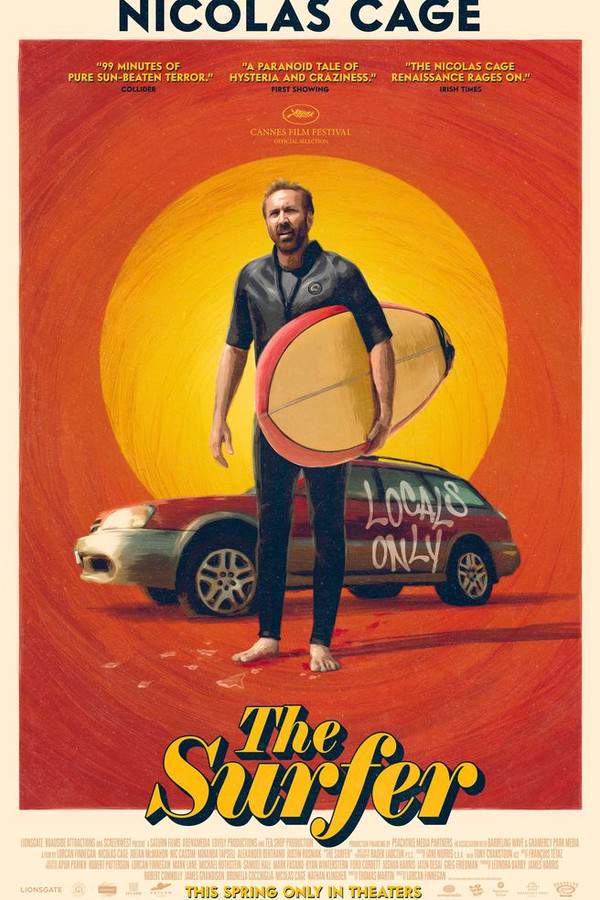
In this compelling story, a Nicolas Cage stars as a surfer driven by a deep desire to reconnect with his past and his family. The film opens with the Surfer introducing his teenage son to the beautiful and rugged Luna Bay, a place rich with memories and personal history. His goal is to show his son the beach house that once belonged to his father — a house where he learned to surf and thrive before tragedy struck with his father's untimely death. He hopes to purchase this house, which holds sentimental value, and share it with his son, creating new memories and perhaps healing old wounds.
However, their plans are abruptly thwarted when they encounter a gang of local surfers led by Julian McMahon's character, Scally. This self-styled surf guru is fiercely protective of his turf and is determined to keep outsiders away, especially non-residents like the Surfer and his son. The gang members rudely turn the Surfer and his son away from the beach, leaving the boy Finn Little visibly mortified and disappointed. The Surfer’s hopes are dashed as they return disappointedly to the parking lot, with the fragile dream of reclaiming the house slipping further from reach.
Determined to make the deal happen before Christmas, the Surfer relentlessly pesters his real estate agent for info on how to secure the necessary over a million dollars to outbid another potential buyer. Amid these struggles, he receives distressing news from a colleague at his investment firm, indicating a need to return to work swiftly to handle an urgent issue. Meanwhile, his estranged wife drops another blow—she is engaged and expecting a child, crushing the Surfer's hopes of reuniting and establishing a family life by the beach house for his son. She, along with the agent, suggests he should let go of his obsession, but he remains fixated on his goal.
Throughout this, the Surfer observes Rahel Romahn’s character, known as the Bum, who lives marginally in a broken-down station wagon in the parking lot. The Bum becomes a poignant figure as he recounts the tragic story of his surfing son, a victim posthumously murdered by Scally, and his beloved dog. His sad tale deepens the film's themes of loss and longing, emphasizing the harsh realities beneath the surf culture.
As tensions rise, the Surfer's surfboard goes missing one evening, prompting him to confront the gang at their secluded beach retreat. He demands its return but is met with hostility. After a brief but fierce fight, he is forced to retreat and calls the police. Unfortunately, the officer assigned to help him turns out to be another loyal disciple of Scally, dismissing the Surfer’s concerns and warning him to stay away from trouble. This leaves him feeling more isolated and desolate.
In his desperate attempt to reclaim his belongings, the Surfer befriends a photographer who helps him jump-start his car. However, when she charges his phone in exchange for taking photos, he is left without access to funds and unable to buy food from the nearby food hut. As a collateral, he is forced to leave his father's watch behind. Later, he experiences additional misfortune when his shoes and coat disappear, and he finds himself stranded, starving, and suffering from exhaustion. His reality becomes increasingly fractured as he encounters disturbing visions—including dead surfers in the surf and menacing desert creatures—highlighting his mental deterioration.
His attempts to re-enter the surf world lead him to a confrontation with Alexander Bertrand's character, Pitbull. After nearly drowning him in a tense showdown, the truth is revealed: the entire ordeal was a test orchestrated by Scally. The goal was to see if the Surfer was worthy of purchasing the house to reunite with his family and become part of their community. This revelation rekindles his resolve.
In a climactic moment, the Surfer is forced to burn his station wagon—the symbol of his struggle—while his son appears on his bike, and the Lexus finally reappears in the parking lot. With newfound hope, the family is reunited, and they return to the beach to finally surf together. Yet, their peace is shattered when the Bum, now armed with a gun, reappears, threatening everyone. In a tense negotiation, the Surfer manages to convince him to lower his guard by returning his shark-tooth necklace, a prized memento that signifies his connection to the surf world.
As they paddle out into the surf to embrace the joy of finally being together, the Bum tragically executes Scally and then takes his own life, lying motionless in the surf just as the Surfer’s father did before him. The film ends on this somber but poetic note, emphasizing themes of sacrifice, redemption, and the relentless pursuit of meaning through the waves of life.
Throughout the film, rich visuals and deep symbolic moments depict the struggles against external threats and inner demons, weaving a story of hope, loss, and the enduring power of connection.