Plot Explained Spoilers guaranteed!
Plot Explained

Browse by genre

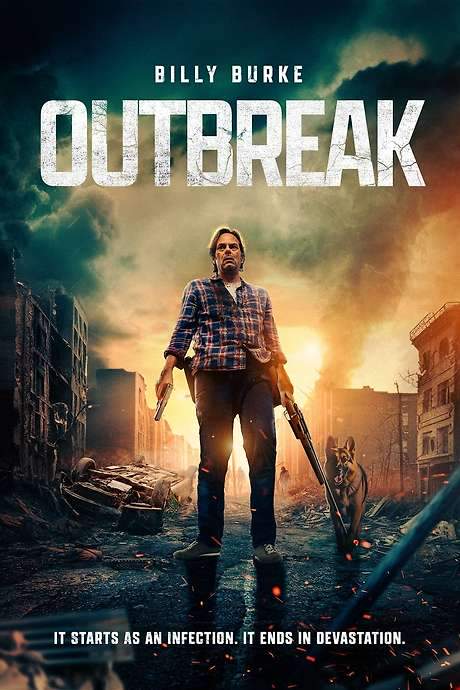
Outbreak (2024) movie poster

Plot Summary

Outbreak (2024) Plot Summary & Ending Explained

Release, runtime and language
2024 · 87 mins · English
Echo score 30
JustWatch #13,040 11
Directed by
Jeff Wolfe
Starring
Billy Burke, Taylor Handley, Alyshia Ochse, Jessica Frances Dukes, Dani Oliveros, Raoul Max Trujillo

A State Park Ranger and his wife struggle with the disappearance of their son when a mysterious outbreak begins to affect their community. As the situation escalates, they must confront not only the growing threat but also the strain it puts on their relationship and their perception of what is real. The outbreak quickly spreads, leading to devastation and testing the limits of their sanity.

On this page (6)
  1. 1 Where to watch
  2. 2 What happens: full plot
  3. 3 Plot questions answered
  4. 4 How it ends
  5. 5 Movie threads
  6. 6 Every angle

Where to watch

Where to Watch Outbreak (2024)

Where can you watch Outbreak? Stream, rent or buy it in the US, including on Hulu, Amazon Video and Apple TV Store: current JustWatch availability with up-to-date prices.

Streaming availability powered by JustWatch

Full plot summary · contains spoilers

What Happens in Outbreak: Full Plot Summary

The whole story of Outbreak (2024) explained, from the opening scene to the final frame: every key event, every twist and what it all adds up to. Read it as a quick recap before the sequel, to check a scene you missed, or to finally understand what really happened.

In this tense psychological thriller, a state park ranger Neil Morris and his wife Abby Morris wrestle with the unresolved disappearance of their teenage son, Ben, stretching over two long months and casting a shadow over their once-routine lives.

A 911 call reports a rabid dog attack at a construction site, and Neil, along with fellow rangers John Gibson and Chief Mike Cortez, rush to the scene. The ranger’s hesitation to shoot the aggressive animal hints at something deeper fraying his nerves as the situation spirals beyond a simple injury or danger.

As the town grows restless, strange events escalate. Reports of violent attacks and erratic behavior hint at the spread of an unknown illness, while those who fall under its influence transform in disturbing, grotesque ways. The fear isn’t limited to the outside world; at home, the pressure tightens around Abby, whose struggle with substance abuse makes her increasingly detached from reality. Neil’s mounting worry deepens when Abby begins to show signs of infection, amplifying a sense of impending collapse.

In a harrowing sequence, Neil rescues a drowning woman, only to discover she is infected and intends to attack him. He is forced to defend himself, taking a life in the line of duty and fear. The line between reality and nightmare becomes increasingly blurred as the infected display shocking, aggressive transformations, and the town’s fear gives way to a suffocating paranoia.

Driven by a need to understand what is happening, Neil delves deeper into the mystery. The more he investigates, the more the boundaries between mind and world loosen, until a provocative possibility takes shape: the outbreak could be a manifestation of his fractured psyche. The film suggests that his guilt over Ben’s disappearance, combined with Abby’s condition, has shaped a reality where a viral outbreak explains the chaos surrounding him—and maybe even excuses his possible role in his son's fate.

As the narrative unfolds, the atmosphere remains grounded and intimate, using quiet settings, subdued colors, and sound design to press on the audience’s nerves. The performances carry the weight of uncertainty, making every ordinary moment feel suspicious, every gesture a potential clue. Beneath the surface, the story invites reflection on guilt, denial, and the fragile barrier between truth and a constructed narrative, leaving viewers to question who is truly responsible for the family’s unraveling—and what hideous secrets might still lie just beneath the surface.
Last updated: February 05, 2026 at 07:36

Was this helpful?

Plot questions answered

Outbreak Plot Explained: Your Questions Answered

The questions people ask most about Outbreak (2024): what happens in the confusing scenes, why the characters do what they do, the twists, hidden details and what the ending means. Each answer contains spoilers.

Q1

Why does Neil hesitate to shoot the rabid dog at the construction site?

Neil's hesitation stems from his fractured mental state due to his son's disappearance two months earlier. His hands shake as he aims at the animal, and this moment foreshadows his psychological unraveling. The incident signals that his confidence has been deeply compromised by the unresolved trauma of Ben's vanishing.

Foreshadowing: This moment occurs early and hints at Neil's guilt-ridden mental state that will later manifest as the outbreak itself.

  • neil morris
  • hesitates
  • rabid dog
  • guilt
  • son ben
  • trauma
  • ranger
Q2

Is the outbreak in Outbreak real or a hallucination?

The film deliberately leaves this ambiguous, but the narrative suggests the outbreak may be a manifestation of Neil's fractured psyche. As he investigates, he begins to suspect that the viral outbreak is a constructed explanation for the chaos in his life, a way to externalize and justify his guilt over Ben's disappearance. The infected displays grotesque transformations that become more vivid as Neil's perceptions distort.

Foreshadowing: Early signs of confusion between reality and nightmare appear as soon as Neil returns home from the dog incident.

  • outbreak
  • real
  • hallucination
  • psychological
  • neil guilt
  • ambiguous
Q3

What happened to Ben, Neil's missing son?

Ben Morris disappeared two months before the story begins, and his fate remains a central mystery. The film gradually reveals that Neil may have had some responsibility for Ben's disappearance. The ending suggests Neil must confront the possibility that his actions or inaction contributed to his son's fate, though the exact details are left ambiguous.

Foreshadowing: The entire narrative is colored by the absence of Ben, whose disappearance drives Neil's guilt and potentially his psychological break.

  • ben morris
  • missing son
  • disappeared
  • neil responsibility
  • fate
Q4

Why does Abby start showing signs of infection?

Abby's decline stems from two intertwined factors: her substance abuse and the psychological toll of Ben's disappearance. As the outbreak escalates, Abby begins displaying symptoms that could indicate infection, but the film suggests these may represent a psychotic break rather than a physical illness. Her detachment from reality mirrors the larger uncertainty about what is real versus imagined.

Foreshadowing: Abby's substance abuse is established early, paralleling the town's descent into chaos.

  • abby morris
  • infection signs
  • substance abuse
  • mental breakdown
  • psychosis
Q5

Why is Neil forced to kill the drowning woman he rescues?

Neil attempts to rescue a drowning woman at the riverside, only to discover she is infected and attacks him. He is forced to defend himself and kills her in self-defense. This harrowing moment marks a turning point where the danger becomes deeply personal, and the line between mercy and survival collapses.

Foreshadowing: This violent encounter follows the escalation of reports about infected individuals displaying aggressive behavior.

  • neil kills
  • drowning woman
  • self-defense
  • infected
  • riverside
  • turning point
Q6

How is the outbreak connected to Neil's guilt over Ben?

As Neil investigates the outbreak, he uncovers hints that his own guilt is driving the crisis. The film suggests his fractured psyche has manifested the outbreak as an external explanation for the chaos in his life. This psychological mechanism allows Neil to avoid directly confronting his possible role in Ben's disappearance while processing overwhelming guilt through a collective external threat.

Foreshadowing: Neil's investigation deepens and past memories resurface, connecting his personal trauma to the larger mystery.

  • neil guilt
  • outbreak manifestation
  • ben disappearance
  • psychological
  • psyche
  • denial
Q7

Does Neil have responsibility for Ben's disappearance?

The film heavily implies that Neil bears some responsibility for Ben's fate. As the narrative approaches its climax, the seeds of responsibility surface, forcing Neil to face the possibility that his actions or failure to act contributed to his son's disappearance. This confrontation represents the emotional core of the crisis and drives the ambiguous, bleak conclusion.

Foreshadowing: The investigation reveals clues about Neil's past and Ben's disappearance that point toward Neil's potential involvement.

  • neil responsibility
  • ben fate
  • son's disappearance
  • guilt
  • blame
Q8

What does the ambiguous ending of Outbreak mean?

The ending leaves the nature of the outbreak unresolved while showing Neil confronting the consequences of his mind's creation. He must live with the outcome of his family's tragedy, whether real or imagined. The final image lingers on a man who cannot escape his guilt, suggesting that the distinction between real and imagined may no longer matter, only the emotional truth remains.

Foreshadowing: Throughout the film, reality and illusion progressively collapse until they become indistinguishable.

  • ambiguous ending
  • conclusion
  • guilt
  • reality
  • illusion
  • resolution
Q9

Why is Abby's substance abuse significant to the story?

Abby's substance abuse serves as both a parallel to the town's infection and a catalyst for the blurred reality. As she sinks deeper into addiction, she loses touch with what is real, making her increasingly detached from Neil and unable to cope with Ben's disappearance. Her decline mirrors the external outbreak, suggesting that both represent forms of deterioration that spread quietly within a family and community.

Foreshadowing: Abby's struggle with substance abuse is introduced early and directly parallels the town's mysterious health crisis.

  • abby substance abuse
  • addiction
  • detachment
  • reality
  • deterioration
  • parallel
Q10

How does Outbreak blur the line between reality and hallucination?

The film uses increasingly distorted sound design, subdued colors, and quiet settings to create uncertainty about what Neil perceives. As the outbreak progresses, the infected's transformations become more grotesque and vivid, while Neil's questions about whether what he sees is real or projected guilt intensify. By the final act, the physical outbreak and Neil's mental unraveling collide, collapsing the narrative into a merger of fear, guilt, and perception.

Foreshadowing: The rabid dog incident itself begins the pattern of Neil questioning his own perceptions.

  • reality hallucination
  • perception
  • distorted
  • psychological
  • blurred line
  • unreliable narrator

Ending explained

What Happens at the End of Outbreak?

How Outbreak (2024) ends, in short: the final scene, the last twist and what it means for the characters. The full ending explained, with every spoiler, lives on its own page.

Read the full ending explained

Neil’s desperate search for his missing son turns out to be a desperate attempt to escape a far more painful truth. After an argument with Ben, the boy runs away and falls from a cliff; he dies, and Neil, unable to accept his son’s death, constructs a nightmarish reality in which a deadly virus turns people into zombie‑like predators. In this imagined outbreak, he fights through hordes, sees his wife Abby infected, and witnesses friends such as Mike and Gibson either dead or transformed. Each violent encounter is a projection of his own guilt and self‑destruction.

The film’s climax strips away the illusion. When the police finally corner Neil, he looks into a mirror and sees his own face warped in the same way as the “infected” victims—a visual metaphor that his mind has become the true contagion. The officers order him to drop his weapon, but he cannot relinquish the delusion that he is still fighting to survive. In a final, fatal misunderstanding, they shoot him, ending the self‑inflicted nightmare.

Continue reading the ending (1 more paragraphs)

In essence, Outbreak reveals that the zombie apocalypse never existed; it was a hallucination born of grief. Neil’s inability to confront the accident that claimed Ben—combined with Abby’s own denial—drives him into a psychotic break. His death marks the moment his mind can no longer shield him from the reality he tried so fiercely to rewrite.

Outbreak ending explained in full

Movie threads

More Movies Like Outbreak, by Mood & Story

Curated lists built around what makes Outbreak tick: the same mood, the same kind of story or the same emotional payoff. Each list explains why these movies belong together.

Mind-bending horror movies like Outbreak

Stories where the horror comes from within, blurring reality and inner trauma. If the psychological torment and blurred reality of Outbreak gripped you, explore these movies where internal trauma fuels the horror. These films focus on characters confronting threats that may be as internal as they are external, creating a uniquely claustrophobic and paranoid viewing experience.

  • psychological
  • paranoid
  • unsettling
  • claustrophobic
  • mind-bending
  • despairing
  • Tone: tense, paranoid, bleak
  • Pacing: steady, escalating
Why these movies?

The story pattern: These narratives typically follow a protagonist, often already burdened by trauma like grief or guilt, who faces a growing crisis that mirrors or amplifies their internal state. The plot deliberately blurs the line between a tangible threat and a psychological breakdown, leading the character and the audience to question the nature of the horror.

Why they belong together: Movies in this thread are grouped by their shared focus on the psychological dimension of horror. They prioritize a tense, paranoid mood and often feature a bleak outlook, united by the central theme of reality becoming unstable under the weight of a character's internal struggles.

Family survival thrillers like Outbreak

Personal relationships fracture as society unravels around them. If you were captivated by how Outbreak used a community-wide outbreak to test a marriage strained by grief, these movies offer similar gripping tales. They explore how catastrophic events push familial bonds to the breaking point, blending high-stakes survival with heavy emotional drama.

  • grieving
  • anxious
  • harrowing
  • despairing
  • claustrophobic
  • unsettling
  • Tone: tense, harrowing, despairing
  • Pacing: steady, relentless
Why these movies?

The story pattern: The narrative pattern involves a family or couple already dealing with a private trauma or conflict. An escalating external catastrophe—be it an outbreak, invasion, or natural disaster—forces them into isolation and survival mode. The true conflict becomes internal, as the threat outside magnifies their personal struggles, testing their sanity and the foundations of their relationship.

Why they belong together: These films are grouped by their dual focus on a large-scale societal breakdown and a small-scale interpersonal collapse. They share a heavy emotional weight, a steady or fast pacing driven by continuous escalation, and a tone that balances intense external threat with profound internal despair.

Every angle

Outbreak (2024) Explained: Plot, Ending, Timeline & Characters

Everything about Outbreak in one place: what happens in the plot summary, the timeline in chronological order, the characters and meaning, the ending explained and a spoiler-free summary. What's After the Movie adds the cast, box office and post-credit scenes.

Coming soon on iOS and Android

The Plot Explained Movie Summary App

Plot summaries, endings explained and timelines on your phone. Catch up on any movie in minutes, save your favorites and never miss a twist again.

Be the first to know when we launch. Your email stays private, always.

Learn more about the app