Plot Explained Spoilers guaranteed!
Plot Explained

Browse by genre

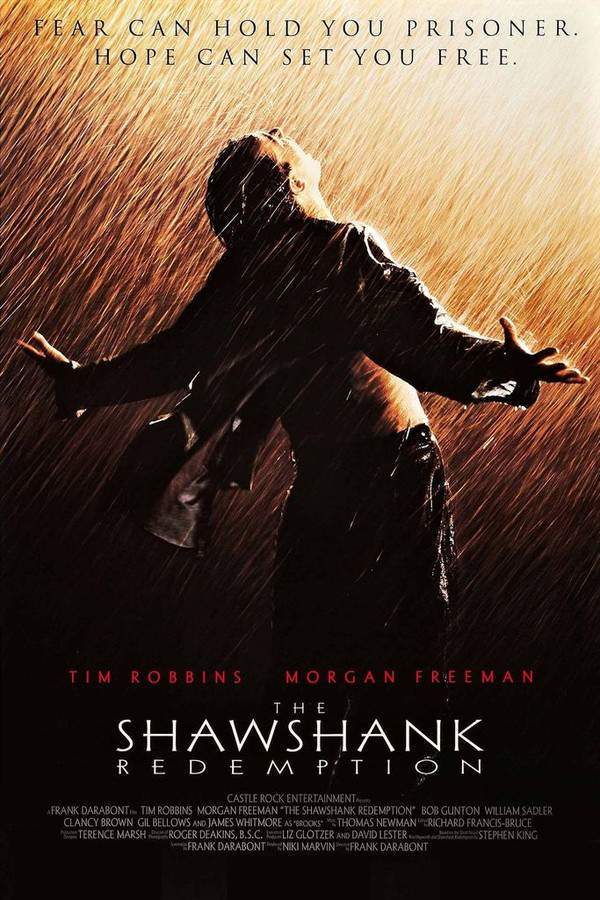
The Shawshank Redemption (1994) movie poster

Plot Summary

The Shawshank Redemption (1994) Plot Summary Explained

Release, runtime and language
1994 · 142 min · English
Loading streaming availability…
Starring
Morgan Freeman, Tim Robbins
Budget
$25M

In 1940s Maine, banker Andy Dufresne is sentenced to two life terms at Shawshank Penitentiary for the murder of his wife and her lover, a crime he insists he did not commit. While navigating the brutal prison environment, he forms an unlikely friendship with Red, a fellow inmate known for his ability to procure goods. Over two decades, Andy’s quiet resilience and subtle acts of defiance inspire hope among the prisoners, while he secretly harbors his own long-term plans.

On this page (7)
  1. 1 Where to watch
  2. 2 What happens: full plot
  3. 3 Plot questions answered
  4. 4 The book behind the movie
  5. 5 Movie threads
  6. 6 Movies like The Shawshank Redemption
  7. 7 Every angle
Loading streaming availability…

Full plot summary · contains spoilers

What Happens in The Shawshank Redemption: Full Plot Summary

The whole story of The Shawshank Redemption (1994) explained, from the opening scene to the final frame: every key event, every twist and what it all adds up to. Read it as a quick recap before the sequel, to check a scene you missed, or to finally understand what really happened.

In 1947, the story begins as Andy Dufresne, a former banker, arrives at Shawshank State Prison to serve two consecutive life sentences for the shocking murder of his wife and her lover. This scandalous crime sends ripples through his community and deeply haunts him throughout the grim years ahead. Within the prison's walls, Andy forges an unexpected bond with Ellis "Red" Redding, a seasoned inmate who has mastered the shady art of obtaining contraband. Among his prized possessions, Andy receives a rock hammer and a poster of Rita Hayworth, which becomes a symbol of hope for him.

As Andy acclimatizes to his new environment, he finds himself working in the laundry, quickly becoming a target for a vicious gang known as the Sisters, led by the brutal Bogs Diamond. Their relentless bullying tests Andy's resilience, but he refuses to be crushed.

In 1949, Andy's financial savvy comes to light when he helps Captain Byron Hadley, the prison's top enforcer, avoid taxes on an inheritance. This clever maneuver earns him respect and protection, resulting in Hadley decisively dealing with Bogs, crippling him in the process. Soon, Warden Samuel Norton notices Andy's rising status, transferring him to the library, where he aids elderly inmate Brooks Hatlen.

Determined to improve the dismal library conditions, Andy starts writing letters to the state legislature, a small yet courageous act against the institution designed to suppress hope. He forms a deep friendship with Red, sharing their stories of perseverance and survival amidst despair.

However, tragedy strikes in 1954 when Brooks is released after 50 years. Struggling in the outside world, Brooks ultimately takes his own life, sending shockwaves through Andy and Red. Undeterred, Andy's advocacy results in state funding for the library, which brings Mozart's The Marriage of Figaro to Shawshank. When he plays this piece over the public address system, the warden punishes him by placing him in solitary confinement.

Though faced with numerous challenges, Andy remains steadfast. In 1963, Warden Norton capitalizes on prison labor for personal gain. Here, Andy hatches a scheme to launder money using the alias Randall Stephens. He mentors Tommy Williams, a young inmate, helping him pursue an education and foster new dreams. However, when Tommy learns that someone else may be responsible for Andy's conviction, the warden's violent reaction is swift and deadly.

Confronted with rampant corruption and brutality, Andy reflects on his life in isolation, ultimately unveiling his vision of a peaceful future in Zihuatanejo, a beautiful coastal town in Mexico. During an emotional conversation, he implores Red to promise that he will dig up a package Andy buried in a hayfield near Buxton after his release.

The next day, during roll call, something is amiss. Andy's cell lies empty, and in a burst of anger, the warden inadvertently reveals a tunnel Andy had painstakingly dug over nearly two decades. With cunning and resolve, Andy utilizes a rope for his escape through the tunnel and a prison sewage pipe, taking with him Norton's suits, shoes, and a ledger containing incriminating evidence.

While the guards are thrown into chaos searching for him, Andy, now Randall Stephens, withdraws over $370,000 from various banks, simultaneously mailing out the ledger to expose the corruption at Shawshank. In swift retaliation, the authorities apprehend Hadley, while Norton is left cornered, ultimately choosing to end his own life.

Fast forward a year, Red finally receives parole after enduring 40 years within Shawshank's confines. Struggling to adjust to the world outside, he recalls his promise to Andy and embarks on a journey to Buxton. What he discovers there is a hidden treasure and a heartfelt letter from his dear friend, urging him to find his way to Zihuatanejo.

Ignoring the odds and the terms of his parole, Red ventures into Mexico, eventually finding Andy on a sun-drenched beach. Their reunion is imbued with warmth and a rekindled spirit of hope, marking a poignant conclusion to both their harrowing journeys.
Last updated: November 19, 2024 at 19:05

Was this helpful?

Plot questions answered

The Shawshank Redemption Plot Explained: Your Questions Answered

The questions people ask most about The Shawshank Redemption (1994): what happens in the confusing scenes, why the characters do what they do, the twists, hidden details and what the ending means. Each answer contains spoilers.

Q1

Why was Andy convicted for killing his wife and her lover if he was innocent?

Andy was at the scene of the crime but maintained his innocence throughout. The prosecution presented circumstantial evidence suggesting motive - Andy knew about his wife's affair and had recently purchased a pistol. No physical evidence definitively tied Andy to the murders, but the circumstantial case combined with his silence during the trial led to his conviction. The real killer was never identified during the original trial.

Foreshadowing: Early in the film, Andy does not explain or defend himself to Red or others, which plants doubt about his guilt.

  • andy dufresne
  • conviction
  • innocent
  • wife murder
  • trial evidence
Q2

How did Andy escape from Shawshank Prison?

Andy escaped by digging a tunnel through his cell wall over nearly two decades using a small rock hammer. He hid the tunnel behind a poster of Rita Hayworth. On the night of his escape, Andy crawled through the tunnel and traveled through the prison's sewage pipe to reach freedom. He left his cell during roll call by using a rope and timing his escape when guards were distracted.

Foreshadowing: Andy requested the rock hammer early in his sentence, claiming it was for hobby work, and continuously asked Red about the aliased identity Randall Stephens.

  • escape
  • tunnel
  • sewage pipe
  • rock hammer
  • Rita Hayworth poster
  • Randall Stephens
Q3

Why did Brooks Hatlen commit suicide after being released from prison?

Brooks spent 50 years in Shawshank and became institutionalized - the prison was his entire identity and support system. Upon release, he found the outside world completely foreign: cars were unfamiliar, the pace of life was overwhelming, and he had no family or job prospects at his age. The brutal contrast between his confined but structured existence and the chaotic freedom of the modern world left him unable to cope, leading to his tragic decision.

Foreshadowing: Brooks had carved his name into the wooden beam and left his bird outside - symbols of his deep attachment to the prison.

  • brooks hatlen
  • suicide
  • institutionalized
  • parole
  • 50 years
Q4

Why did Warden Norton kill Tommy Williams?

Warden Norton killed Tommy because Tommy had information that could prove Andy was innocent. Tommy learned from another inmate that a man named Tommy (the same name) had actually committed the murders Andy was convicted for. If Andy were proven innocent, he would leave the prison and take with him the knowledge of Norton's corruption and money laundering scheme. To protect both his crimes and his scheme, Norton had Tommy shot in the yard, framing it as an escape attempt.

Foreshadowing: Norton had previously silenced Andy by putting him in solitary and threatening to cut library funding - he consistently suppressed anything threatening his operation.

  • tommy williams
  • warden norton
  • murder
  • innocent
  • cover-up
Q5

What happened to the money Andy laundered for Warden Norton?

Andy took all the laundered money for himself during his escape. He withdrew over $370,000 from various banks using the alias Randall Stephens, which he had created years earlier. He also took Norton's suits, shoes, and the ledger containing evidence of the warden's corruption. Andy mailed the ledger to newspaper reporters, exposing the corruption and leading to Hadley's arrest and Norton's suicide.

Foreshadowing: Andy created the alias Randall Stephens years before his escape, suggesting he had been planning to take the money from the beginning.

  • money laundering
  • randall stephens
  • $370000
  • warden norton
  • corruption
Q6

Why did Andy choose Zihuatanejo as his destination?

Andy chose Zihuatanejo, a small coastal town in Mexico, because he had dreamed of living there since before his imprisonment. In his conversation with Red, Andy described it as a place with no memory - a fresh start where he could live a peaceful life by the ocean. The location represented his ultimate hope and freedom, contrasting the oppression of Shawshank.

Foreshadowing: Andy first mentions Zihuatanejo to Red in the prison yard, describing it as a place 'you cannot imagine' with blue water and warm sand.

  • zihuatanejo
  • mexico
  • freedom
  • hope
  • beach
  • dreams
Q7

What did Red find buried in Buxton?

Red found a cache of money Andy had hidden - the laundered funds Andy had accumulated over years of working for Norton. Along with the money, there was a letter from Andy addressed to Red, encouraging him to find hope and either come to Zihuatanejo or move on to find his own peace. The letter read 'Remember, Red, hope is a good thing, maybe the best of things, and no good thing ever dies.'

Foreshadowing: Andy asked Red to find the package in a hayfield near Buxton after his release, a promise they made years earlier.

  • buxton
  • treasure
  • buried money
  • andy letter
  • hope
Q8

Why did Warden Norton commit suicide?

Warden Norton committed suicide when faced with exposure of his corruption. After Andy escaped and mailed the ledger containing evidence of Norton's money laundering, extortion, and murder of Tommy Williams to newspapers, the authorities closed in. With Hadley arrested and no way out, Norton shot himself in his office rather than face arrest and prosecution.

Foreshadowing: Norton had spent years destroying evidence and silencing anyone who threatened his scheme, showing his desperation to protect his crimes.

  • warden norton
  • suicide
  • corruption exposed
  • ledger
  • arrest
Q9

Why was Andy put in solitary confinement for playing Mozart?

Andy was placed in solitary confinement for playing classical music over the prison's public address system without permission. After securing funding for the library, Andy played Mozart's 'The Marriage of Figaro' to share something beautiful with the other prisoners. Warden Norton viewed this act as a violation of prison rules and defiance of authority, punishing him with solitary confinement. Andy considered the punishment worthwhile for having given the prisoners that moment of beauty and hope.

Foreshadowing: This act demonstrated Andy's willingness to sacrifice his own comfort for the sake of hope and humanity, foreshadowing his later escape.

  • mozart
  • solitary confinement
  • marriage of figaro
  • warden norton
  • hope
Q10

How long did it take Andy to dig his escape tunnel?

It took Andy nearly two decades to dig his escape tunnel. He arrived at Shawshank in 1947 and escaped in 1963, meaning he spent approximately 16 years secretly tunneling through the concrete wall behind his poster. Despite using only a small rock hammer and working at night, Andy's patience and determination allowed him to complete what seemed impossible.

Foreshadowing: Andy's consistent requests for the rock hammer and his quiet, routine nature allowed him to work undetected for years.

  • tunnel
  • 19 years
  • rock hammer
  • escape timeline
  • patience
Q11

How did Andy gain protection from the Sisters gang?

Andy gained protection after helping Captain Hadley with a tax problem on his inheritance in 1949. His financial expertise impressed Hadley, who became grateful and offered Andy protection in return. When Bogs and the Sisters confronted Andy afterward, Hadley intervened and beat Bogs severely, breaking his spine and effectively ending the gang's dominance over Andy. This event marked Andy's transition from victim to protected prisoner.

Foreshadowing: This moment established Andy's value to the prison staff and his ability to leverage his skills for protection.

  • sisters
  • bogs diamond
  • captain hadley
  • protection
  • tax help
Q12

Why did Red struggle to adjust after being paroled from Shawshank?

Red struggled with parole because he had become institutionalized after 40 years in prison, similar to Brooks. He knew how to survive in Shawshank but felt useless in the outside world. His job at a grocery store felt meaningless, and he began to fear he would end up like Brooks. Red's breakthrough came when he violated his parole conditions to travel to Buxton, realizing that hope and breaking his old mindset were necessary for true freedom.

Foreshadowing: Red had told Andy about the institutionalization concept earlier, suggesting he understood the danger but could not escape it until his journey.

  • red
  • parole
  • institutionalization
  • adjustment
  • buxton
  • hope
Q13

What was Andy's relationship with his wife and why was he at the crime scene?

Andy's wife was having an affair with a man named Glenn Quentin. On the night of the murders, Andy had planned to confront his wife about the affair but instead went to a bar and got drunk. When he returned home, he found both his wife and Quentin dead. Andy maintains he didn't commit the murders, though he acknowledges he had motive and means. The prosecution used his silence and the circumstantial evidence against him.

Foreshadowing: This backstory explains why Andy never actively protested his innocence - he may have felt guilt about his own role in the events that led to his wife's death.

  • wife
  • affair
  • glenn quentin
  • crime scene
  • motive
Q14

Why did Andy help corrupt guards and Warden Norton with their crimes?

Andy helped the guards and warden primarily to secure his own survival and create the alias he would need for escape. By becoming indispensable to their money laundering operation, Andy gained protection, better living conditions, and access to resources. He also used the position to improve the library and help fellow prisoners, but his long-term goal was to create a completely new identity that would allow him to escape with money and start fresh in Mexico.

Foreshadowing: Andy asked Red not about the alias for years, then suddenly inquired about it - a clue that he was preparing for escape.

  • money laundering
  • warden norton
  • alias
  • protection
  • survival
  • randall stephens
Q15

What was the significance of the rock hammer and Rita Hayworth poster?

The rock hammer was Andy's tool for digging his escape tunnel over nearly two decades - a near-impossible task made possible through patience. The Rita Hayworth poster served as the perfect cover, hiding the tunnel entrance in plain sight. Together, these items symbolize Andy's hope and resourcefulness: the rock hammer represented his determination and the poster represented his humanity and beauty, as he kept it throughout his entire sentence as a source of inspiration.

Foreshadowing: Red initially wondered why Andy wanted a poster that would be 'better in a gallery,' not realizing its true purpose.

  • rock hammer
  • rita hayworth poster
  • tunnel
  • escape
  • hope
  • symbolism

Movie threads

More Movies Like The Shawshank Redemption, by Mood & Story

Curated lists built around what makes The Shawshank Redemption tick: the same mood, the same kind of story or the same emotional payoff. Each list explains why these movies belong together.

Movies about endurance and redemption like The Shawshank Redemption

Stories of quiet resilience and personal triumph against oppressive systems. If you were moved by the themes of patience and hope in The Shawshank Redemption, this collection features films where characters endure harsh, confined environments. Find similar stories of quiet resilience and ultimate triumph against overwhelming odds.

  • hopeful
  • oppressive
  • resilient
  • triumphant
  • somber
  • reflective
  • Tone: hopeful, oppressive, triumphant
  • Pacing: steady, methodical
Why these movies?

The story pattern: The narrative follows characters trapped in a rigid, often unjust system, such as a prison, a totalitarian state, or a personal predicament. Through patience, intelligence, and steadfast hope, they execute a long-term plan for freedom, often inspiring others along the way and achieving a morally satisfying victory.

Why they belong together: These movies are grouped by their shared focus on the psychological journey of enduring hardship. They balance oppressive atmospheres with a persistent, uplifting undercurrent of hope, leading to a cathartic and triumphant conclusion that affirms the power of the human spirit.

Heavy dramas with a hopeful core like The Shawshank Redemption

Emotionally weighty stories that ultimately lead to a sense of hope and liberation. For viewers who appreciate the emotional depth of The Shawshank Redemption but value its ultimately hopeful message. Discover movies that tackle serious, heavy themes but are fundamentally uplifting, balancing sadness with a powerful sense of triumph.

  • hopeful
  • melancholic
  • somber
  • triumphant
  • reflective
  • emotional
  • Tone: hopeful, melancholic, somber
  • Pacing: steady, character-driven
Why these movies?

The story pattern: The emotional journey is a central pillar, beginning with profound hardship, injustice, or tragedy. The story navigates these dark waters without shying away from their impact, but a key character or theme acts as a beacon of hope, guiding the narrative toward a positive and emotionally resonant resolution.

Why they belong together: They share a unique and powerful emotional mix: the experience is deeply affecting and serious, yet the dominant feeling leaving the film is one of hope and inspiration. This balance between heavy subject matter and a positive, liberating payoff creates a distinct and memorable viewing experience.

If you liked this

Movies Like The Shawshank Redemption

Similar movies to The Shawshank Redemption: the same genre, themes or kind of story. Each one comes with its own plot summary, timeline and ending explained.

Browse all movie summaries

Every angle

The Shawshank Redemption (1994) Explained: Plot, Timeline & Characters

Everything about The Shawshank Redemption in one place: what happens in the plot summary, the timeline in chronological order, the characters and meaning and a spoiler-free summary. What's After the Movie adds the cast, box office and post-credit scenes.

Coming soon on iOS and Android

The Plot Explained Movie Summary App

Plot summaries, endings explained and timelines on your phone. Catch up on any movie in minutes, save your favorites and never miss a twist again.

Be the first to know when we launch. Your email stays private, always.

Learn more about the app