Plot Explained Spoilers guaranteed!
Plot Explained

Browse by genre

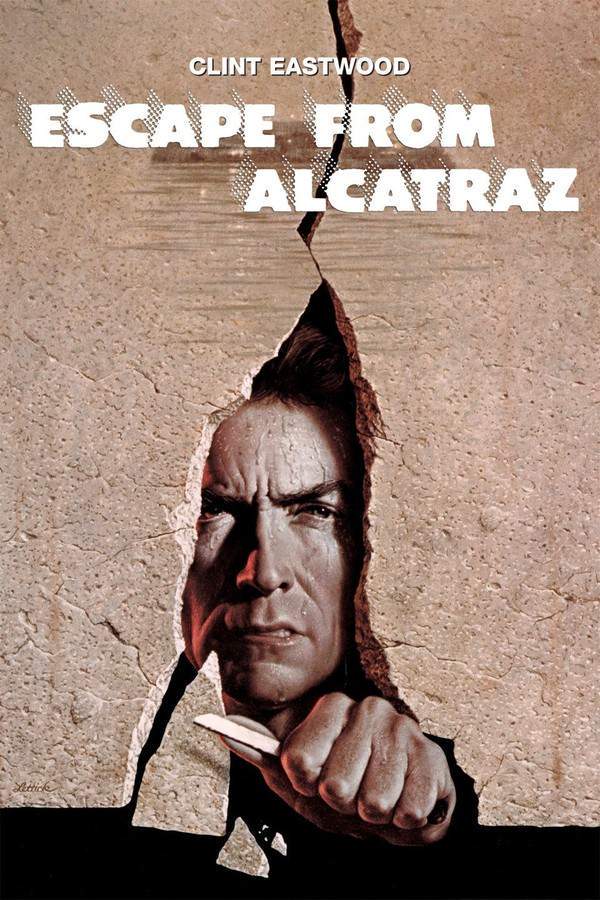
Escape from Alcatraz (1979) movie poster

Plot Summary

Escape from Alcatraz (1979) Plot Summary Explained

Release, runtime and language
1979 · 112 min · English
JustWatch #27,089 5
Starring
Clint Eastwood, Fred Ward, Roberts Blossom, Larry Hankin, Jack Thibeau, Bruce M. Fischer

Frank Morris, a cunning criminal, is sent to Alcatraz, a notorious and inescapable prison. Confronted with the harsh realities of life within the fortress and the oppressive rule of the warden, he resolves to attempt the impossible: escape. He cautiously forms an alliance with other inmates, meticulously planning a daring and elaborate scheme to breach the seemingly impenetrable security of America’s most infamous maximum-security prison.

On this page (7)
  1. 1 Where to watch
  2. 2 What happens: full plot
  3. 3 Plot questions answered
  4. 4 The book behind the movie
  5. 5 Movie threads
  6. 6 Movies like Escape from Alcatraz
  7. 7 Every angle

Where to watch

Where to Watch Escape from Alcatraz (1979)

Where can you watch Escape from Alcatraz? Stream, rent or buy it in the US, including on fuboTV, History Vault and MGM Plus: current JustWatch availability with up-to-date prices.

Streaming availability powered by JustWatch

Full plot summary · contains spoilers

What Happens in Escape from Alcatraz: Full Plot Summary

The whole story of Escape from Alcatraz (1979) explained, from the opening scene to the final frame: every key event, every twist and what it all adds up to. Read it as a quick recap before the sequel, to check a scene you missed, or to finally understand what really happened.

On the night of January 18, 1960, Frank Morris (Clint Eastwood) arrives at the notorious Alcatraz Federal Penitentiary, an isolated fortress nestled in San Francisco Bay, California. After undergoing a strip search and donning a somber blue prison uniform, Frank is led, stark naked, to his cell, where a guard mockingly greets him with, > "Welcome to Alcatraz." Shortly after, Frank meets with the warden (Patrick McGoohan), who emphasizes that Alcatraz is unlike any other U.S. prison due to its unparalleled security. Though his file reveals that Frank possesses a remarkable I.Q. and has previously escaped from other facilities, the warden grimly informs him that no inmate has ever broken free from Alcatraz. Unbeknownst to the warden, Frank discreetly pilfers a nail clipper from his desk.

In the days that follow, Frank forms connections with fellow inmates, including "Litmus" (Frank Ronzio), a lifer with a pet mouse; "English" (Paul Benjamin), an African American man serving two consecutive 99-year sentences for double murder and the prison's librarian; and Chester "Doc" Dalton (Roberts Blossom), an elderly artist who once nurtured chrysanthemums at Alcatraz. However, he also encounters a hostile inmate named Wolf (Bruce M. Fischer), who harasses him in the showers and later assaults him in the yard, leading them both to solitary confinement in D block, despite Frank acting in self-defense.

Weeks later, after adapting to the harsh routines of Alcatraz and settling into a carpentry job while running books for English, Frank earns respect among the inmates, particularly from English, who reigns with authority in the yard. Frank befriends a new inmate in the adjoining cell, Charley Butts (Larry Hankin), who’s incarcerated for grand theft auto that escalated into a federal offense due to crossing state lines. One day, the warden unexpectedly inspects Doc’s cell, discovering an impressively detailed portrait of himself. Initially pleased, he cruelly revokes Doc's painting privileges, leading the distraught inmate to mutilate himself in despair.

While in his cell, Frank notices a roach crawling into the vent beneath his sink. Utilizing the stolen nail file, he begins to chip away at the concrete surrounding the vent. Together with brothers John and Clarence Anglin (Fred Ward and Jack Thibeau), who are familiar faces from Frank's previous incarceration, as well as Charley, he devises a cunning escape plan. Observing how the salty air and moisture have weakened the concrete over decades, Frank believes they can create an opening large enough to maneuver through and access the shafts leading to the roof.

To distract the guards during head counts, Frank cleverly proposes the creation of papier-mâché dummy heads, complete with realistic skin tones and hair obtained from the prison barbershop. Since John is employed in the clothing shop, he can easily obtain raincoats to craft into flotation devices. Charley picks up painting to reproduce the colors required for the dummies and to make cell vent covers. As the nights pass, with Charley on watch, Frank diligently works on the escape route using the nail file, disguising his efforts with an accordion. He then manages to steal a spoon from the cafeteria and rigs it to the file for better leverage, learning this trick from English through small favors exchanged for desserts shared during mealtime.

With a sneaked wedge from the carpentry shop, he successfully removes the metal grill, granting him his first glimpse into the shaft. While the Anglin brothers labor to chisel their openings, Frank meticulously creates his dummy head. After finishing it, he places the decoy on his cot to give the illusion of sleeping, successfully fooling the guard—at least for a while. However, suspicion soon arises when the guard realizes Frank has not moved. Nevertheless, Frank cleverly manages to return to his cot just in time.

The following day, Frank discovers the Anglin brothers are making headway with their dummies, but Charley is lagging behind. During a subsequent excursion into the passage, John brings the assembled raincoats, and preparations for their flotation devices commence. Moreover, Frank assesses the iron rods and hood blocking their exit to the roof, devising a makeshift drill using a fan for extraction. With the passages ready and flotation gear nearly complete, they set their escape for the evening of June 11, 1962.

On the day of the escape, during mealtime, Frank places a chrysanthemum on the table to honor Doc's plight. Disregarding the sentiment, the warden crushes the flower and reminds Frank of the rules. Litmus, enraged by the act, attempts to retaliate but sadly suffers a fatal heart attack instead. Later, the warden orders a shakedown of Frank’s cell, but nothing amiss is uncovered. However, after hearing that Frank and Charley have been staying up late talking, the warden insists they be relocated without delay. Meanwhile, the vindictive Wolf is released from solitary and plans to attack Frank, though English intervenes just in time.

That fateful night, when Frank, John, Clarence, and Charley gather in the passage for their escape, Charley panics and fails to join them. With the flotation gear in hand, Frank and the Anglin brothers access the roof, skillfully evading searchlights. They then descend into the prison yard, climb over a barbed-wire fence, and reach the island shore where they begin inflating their raft. Together, they plunge into the water, kicking furiously to swim.

The next day, a guard calls for Frank to rise and prepare for a cell relocation. When silence follows, he approaches the cot to find the decoy head rolling on the floor. As alarms blare, English shares a knowing smile—Frank has indeed escaped. As law enforcement canvasses the area, they find no traces confirming the inmates' survival. The warden, eager to safeguard his impeccable record, asserts that they must have drowned. In a moment of sorrow, he spots the chrysanthemum left on the rocks and tosses it into the water, leaving the fates of Frank, Clarence, and John shrouded in mystery, even after an exhaustive FBI investigation.
Last updated: November 03, 2024 at 12:40

Was this helpful?

Plot questions answered

Escape from Alcatraz Plot Explained: Your Questions Answered

The questions people ask most about Escape from Alcatraz (1979): what happens in the confusing scenes, why the characters do what they do, the twists, hidden details and what the ending means. Each answer contains spoilers.

Q1

Why did Frank Morris decide to escape from Alcatraz?

Frank Morris was determined to escape Alcatraz because the warden made it explicitly clear that no inmate had ever broken free from the prison, challenging Frank's confidence in his own abilities. His criminal file revealed he had an exceptionally high IQ and had successfully escaped from other facilities before, making the warden's claim a personal challenge. Additionally, Frank resented the oppressive atmosphere and harsh conditions of the prison, which motivated him to prove that Alcatraz was not truly inescapable.

  • frank morris motivation
  • escape attempt
  • alcatraz prison
  • warden challenge
Q2

How did Frank manage to steal a nail clipper from the warden's desk?

During his initial meeting with the warden, Frank discreetly took a nail clipper from the warden's desk while the warden was focused on emphasizing Alcatraz's security. This small act demonstrated Frank's cunning and ability to remain observant even in stressful situations, establishing him as a skilled criminal capable of executing complex plans.

Foreshadowing: This nail clipper becomes the essential tool Frank uses to chip away at the concrete around his cell vent, making the entire escape possible.

  • nail clipper theft
  • warden office
  • frank morris tools
  • escape preparation
Q3

Why did Doc self-mutilate after the warden revoked his painting privileges?

Doc had been painting a detailed portrait of the warden, which the warden initially praised, leading Doc to believe he had found a way to maintain his dignity through art. When the warden cruelly revoked Doc's painting privileges without explanation, the inmate was devastated and responded by mutilating himself in despair. This tragic event demonstrated the severe psychological toll of incarceration and how the slightest hope could be stripped away.

  • doc dalton
  • self-mutilation
  • painting privileges
  • prison brutality
  • warden cruelty
Q4

How did the papier-mâché dummy heads help Frank's escape plan?

Frank created realistic dummy heads from papier-mâché, complete with skin tones and real hair obtained from the prison barbershop, to fool guards during nighttime head counts. The dummies were placed on bunks to create the illusion that inmates were sleeping in their cells while the actual escapees worked in the vents and passages. This clever ruse bought Frank and the Anglin brothers enough time to move through the prison undetected during their escape night.

Foreshadowing: The dummy heads are what allowed Frank to leave his cell undetected on the night of June 11, 1962, giving him access to the roof and ultimately the water.

  • dummy heads
  • papier-mâché
  • head count trick
  • escape plan
  • decoy
Q5

Why didn't Charley Butts go through with the escape?

Charley Butts was part of the escape planning and helped create vent covers and paint the dummy heads, but when the actual escape moment arrived, he panicked and could not bring himself to follow Frank and the Anglin brothers through the passage. Charley remained in his cell while Frank, John, and Clarence proceeded without him, leaving his fate tied to the prison rather than the uncertain freedom of the open water.

  • charley butts
  • failed escape
  • panic
  • alcatraz escapees
Q6

Did Frank Morris and the Anglin brothers survive the escape from Alcatraz?

The ultimate fate of Frank Morris and the Anglin brothers remains unknown and is one of the most famous unsolved mysteries in American criminal history. Law enforcement canvassed the area but found no traces confirming their survival, while the warden insisted they must have drowned, partly to protect his flawless record. The film ends with their fates shrouded in mystery, leaving the ambiguous ending as a powerful statement about defying impossible odds.

  • frank morris fate
  • anglin brothers
  • did they survive
  • alcatraz escape mystery
  • unsolved case
Q7

Why was the warden so insistent that the escapees drowned?

The warden was desperate to protect his impeccable record and maintain Alcatraz's reputation as an inescapable prison. If the inmates had successfully escaped and survived, it would have directly contradicted his core argument about the prison's invincibility. By asserting they must have drowned, the warden sought to preserve both his personal reputation and the psychological deterrent that Alcatraz represented.

  • warden motive
  • alcatraz reputation
  • prison record
  • cover up
Q8

What happened to Litmus and why did he die?

Litmus was a lifer inmate who kept a pet mouse in his cell and became a friend to Frank during his time in Alcatraz. When Frank placed a chrysanthemum on the table in honor of Doc's plight, the warden cruelly crushed the flower in front of the inmates, disregarding the symbolic gesture. Enraged by this act, Litmus attempted to retaliate against the warden but tragically suffered a fatal heart attack instead, dying on the spot.

  • litmus death
  • heart attack
  • chrysanthemum
  • warden cruelty
Q9

How were the Anglin brothers involved in the escape plan?

John and Clarence Anglin were fellow inmates who had known Frank Morris from a previous incarceration, giving them an existing level of trust. They were already working on their own vent openings and were part of the core escape team from the beginning. The Anglin brothers participated in creating the dummy heads and prepared their own flotation devices from raincoats stolen from the clothing shop where John worked.

Foreshadowing: The Anglin brothers were essential to the escape, accompanying Frank on the night of June 11, 1962, making the journey with him toward the shore.

  • anglin brothers
  • john anglin
  • clarence anglin
  • escape team
  • raincoats
Q10

What role did English play in the escape plan?

English was an African American inmate serving two consecutive 99-year sentences for double murder who served as the prison's librarian and wielded significant authority in the prison yard. Frank earned English's respect through his actions, and English helped Frank by sharing information and tricks, such as how to rig a spoon to a file for better leverage. English was also aware of the escape plan and showed a knowing smile when the guards discovered Frank's empty cell.

  • english inmate
  • prison authority
  • librarian
  • escape support
  • charles marsh
Q11

How did Frank create an opening in his cell wall to access the vent?

Frank discovered a roach entering the vent beneath his sink and realized the old concrete had been weakened by decades of salty air and moisture. Using the stolen nail clipper, he began chipping away at the concrete surrounding the vent, later adding a sneaked wedge from the carpentry shop to remove the metal grill. This painstaking work, done mostly at night while Charley kept watch and Frank disguised his efforts by playing the accordion, created a passage large enough for a person to crawl through.

Foreshadowing: This opening was the gateway to the elaborate escape route that led Frank and his companions through ventilation shafts to the roof.

  • cell vent
  • concrete chipping
  • nail file
  • vent passage
  • escape tunnel
Q12

What was the significance of the chrysanthemum in the movie?

The chrysanthemum belonged to Doc Dalton, who had once been permitted to grow them in the prison garden and considered them his connection to beauty and freedom. When Frank placed a chrysanthemum on the table during mealtime on the day of the escape to honor Doc's tragedy, the warden crushed it in front of everyone, demonstrating his cruel control over even the smallest pleasures. After the escape, the warden found a chrysanthemum on the rocks and tossed it into the water, symbolizing both his lingering doubt about the escapees' fate and the fleeting nature of hope in Alcatraz.

Foreshadowing: The chrysanthemum represents Doc's lost hope and serves as the final image connecting Frank's escape to the emotional core of the film.

  • chrysanthemum
  • doc dalton
  • symbol
  • hope
  • warden cruelty
Q13

How did the inmates create flotation devices for the water escape?

John Anglin worked in the prison's clothing shop, which allowed him to easily obtain raincoats that could be converted into flotation devices. The escapees used these raincoats to craft inflatable rafts and life vests, preparing for the dangerous swim across San Francisco Bay. These homemade flotation devices were essential for their survival in the cold, turbulent waters surrounding Alcatraz.

Foreshadowing: These flotation devices were used during the final phase of the escape as Frank, John, and Clarence inflatable their raft before plunging into the bay.

  • raincoats
  • flotation devices
  • swim escape
  • alcatraz bay
  • inflatable raft

Movie threads

More Movies Like Escape from Alcatraz, by Mood & Story

Curated lists built around what makes Escape from Alcatraz tick: the same mood, the same kind of story or the same emotional payoff. Each list explains why these movies belong together.

Movies about Meticulous Prison Escapes like Escape from Alcatraz

Stories where meticulous planning and ingenuity overcome a seemingly impenetrable prison. If you enjoyed the careful, step-by-step breakout in Escape from Alcatraz, you'll like these movies. This collection features similar thrillers where characters use cunning and patience to plan an escape from a maximum-security facility, focusing on the methodical process against overwhelming odds.

  • methodical
  • suspenseful
  • cunning
  • claustrophobic
  • oppressive
  • tense
  • Tone: tense, focused
  • Pacing: steady, methodical
Why these movies?

The story pattern: These narratives follow a linear, process-oriented structure where the primary conflict is between human ingenuity and a fortified system. The plot revolves around observation, alliance-building, and the slow, risky execution of a detailed plan, often with an uncertain outcome.

Why they belong together: They are grouped by their shared focus on the mechanics of escape, the oppressive setting, and the steady pacing that builds suspense through careful planning rather than chaotic action.
Claustrophobic Survival Dramas like Escape from Alcatraz

Confronting the soul-crushing weight of an inescapable, authoritarian institution. For viewers who appreciated the oppressive feel of Alcatraz in Escape from Alcatraz, this list features movies with a similar tense, claustrophobic atmosphere. These stories are set in harsh institutions where characters fight for survival and sanity against authoritarian rule.
  • oppressive
  • claustrophobic
  • gritty
  • suspenseful
  • anxious
  • harsh
  • Tone: oppressive, gritty
  • Pacing: steady, building dread
Why these movies?

The story pattern: The narrative centers on characters adapting to or rebelling against a rigid, often cruel system. The journey involves forming fragile alliances, enduring psychological warfare, and navigating the constant threat of violence from both authorities and fellow inhabitants, all within a confined setting.

Why they belong together: They share a powerful, claustrophobic mood, a tense tone derived from oppressive settings, and themes of survival, resilience, and the loss of personal freedom under an unyielding system.

If you liked this

Movies Like Escape from Alcatraz

Similar movies to Escape from Alcatraz: the same genre, themes or kind of story. Each one comes with its own plot summary, timeline and ending explained.

Browse all movie summaries

Every angle

Escape from Alcatraz (1979) Explained: Plot, Timeline & Characters

Everything about Escape from Alcatraz in one place: what happens in the plot summary, the timeline in chronological order, the characters and meaning and a spoiler-free summary. What's After the Movie adds the cast, box office and post-credit scenes.

Coming soon on iOS and Android

The Plot Explained Movie Summary App

Plot summaries, endings explained and timelines on your phone. Catch up on any movie in minutes, save your favorites and never miss a twist again.

Be the first to know when we launch. Your email stays private, always.

Learn more about the app