Plot Explained Spoilers guaranteed!
Plot Explained

Browse by genre

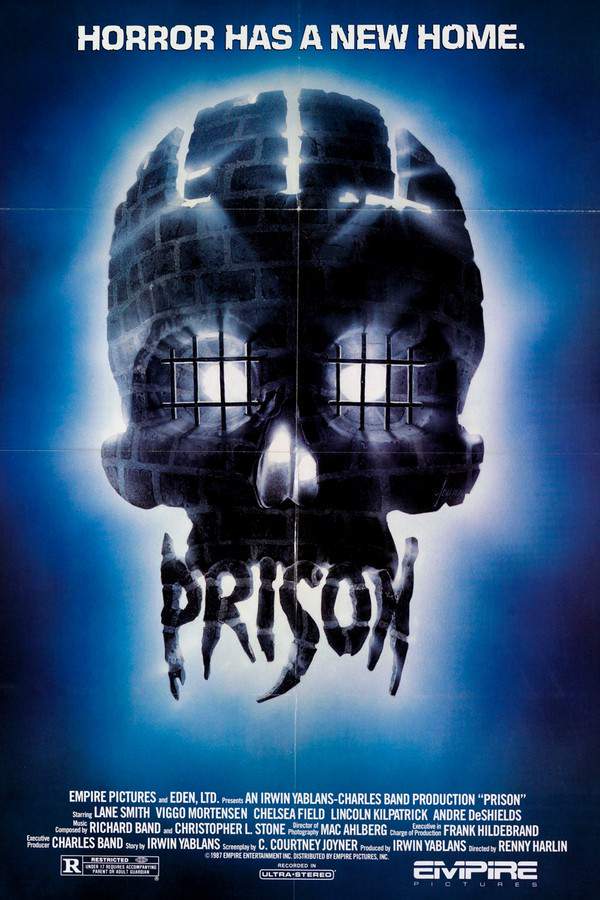
Prison (1988) movie poster

Plot Summary

Prison (1988) Plot Summary Explained

Release, runtime and language
1988 · 102 min · English
Directed by
Renny Harlin
Starring
Viggo Mortensen, Lane Smith, Chelsea Field, Lincoln Kilpatrick, Tom Everett, Tommy 'Tiny' Lister
Budget
$4M

After being wrongly executed, an inmate mysteriously returns from the dead seeking vengeance against the corrupt warden responsible for his demise twenty-five years earlier. The film is a tense thriller exploring themes of justice, morality, and the complex relationship between life and death, as the vengeful prisoner confronts the warden and his dark secrets.

On this page (5)
  1. 1 What happens: full plot
  2. 2 Plot questions answered
  3. 3 Movie threads
  4. 4 Movies like Prison
  5. 5 Every angle

Full plot summary · contains spoilers

What Happens in Prison: Full Plot Summary

The whole story of Prison (1988) explained, from the opening scene to the final frame: every key event, every twist and what it all adds up to. Read it as a quick recap before the sequel, to check a scene you missed, or to finally understand what really happened.

In Wyoming, the atmosphere at Creedmore Penitentiary shifts from cold routine to something far more ominous when a dark past resurfaces. Eaton Sharpe, [Lane Smith], a corrupt prison guard turned warden, oversees Creedmore as it reopens to house roughly 300 inmates from other facilities. The reopening comes with a tight, punishing regime that mirrors Sharpe’s harsh beliefs about discipline, leaving both staff and inmates on edge. On the outside, Katherine Walker, [Chelsea Field], a reform-minded member of the Department Of Corrections, speaks out against Sharpe’s appointment not only because of his old-fashioned methods but also because she senses he’s hiding more than he reveals. Her concerns resonate with Cresus, [Lincoln Kilpatrick], a wary inmate who has memories of Creedmore from years past and whose reasons for mistrust align with the ghosts of the prison’s history.

Across the newly arrived population, fear and survival instinct reign. Among the newcomers, Burke, [Viggo Mortensen], a professional car thief, and Joe “Lasagna” Lazano, [Ivan Kane], a proud Italian-American, adjust to the brutal realities of life behind Creedmore’s walls. A hulking figure known simply as Tiny, [Tommy 'Tiny' Lister], also arrives, his presence casting a long shadow over the cell blocks. These men, along with others, grapple with the stern, unforgiving discipline that Sharpe enforces, even as the old walls seem to creak with memories of a different era.

A fateful order from Sharpe sets off a chain of supernatural consequences. He sends Burke and another inmate to the basement to break down the wall leading to the execution chamber, unwittingly releasing the vengeful spirit of Charles Forsyth, the innocent man who was executed in 1964 for a murder he did not commit. From that moment, a string of grisly deaths erupts, spreading fear through both inmates and staff. The warden, in denial, blames the rising carnage on troublesome inmates, yet his own guilty conscience fuels a growing pattern of sadistic and erratic behavior.

As terror spreads, Burke, [Viggo Mortensen], along with his fellow prisoners, realizes they are all targets unless the ghostly debt of Forsyth can be settled. The spectral vengeance presses the living to confront the hidden injustices of Creedmore’s past and the consequences of a system that allowed an innocent man to pay the ultimate price. The grip of Forsyth’s anger tightens, and the living must decide whether to restore a long-ignored balance or face a reckoning that could claim them all.
Last updated: November 22, 2025 at 15:58

Was this helpful?

Plot questions answered

Prison Plot Explained: Your Questions Answered

The questions people ask most about Prison (1988): what happens in the confusing scenes, why the characters do what they do, the twists, hidden details and what the ending means. Each answer contains spoilers.

Q1

Why does Warden Sharpe order the basement wall to be broken down?

Warden Sharpe sends Burke and another inmate to the basement to break down the wall leading to the old execution chamber. This order appears to be motivated by his cruel, old-fashioned views on discipline, he wants to reclaim and possibly reuse the execution area. However, this act unknowingly releases the vengeful spirit of Charles Forsyth, who was executed there in 1964. The breaking of the wall is the catalyst that unleashes the supernatural vengeance upon the prison.

Foreshadowing: Earlier in the timeline, Cresus warns that Forsyth's debt may still linger, hinting at the danger locked within the prison's walls.

  • warden sharpe
  • basement wall
  • execution chamber
  • burke
  • charles forsyth
Q2

How does Charles Forsyth's spirit return from the dead?

Charles Forsyth's spirit is released when Burke and another inmate break down the wall to the old execution chamber. The act of destroying the physical barrier that once held the electric chair apparently frees Forsyth's angry spirit, which has been trapped or lingering since his wrongful execution in 1964. The supernatural entity then begins its campaign of vengeance against those it holds responsible for its death.

Foreshadowing: The timeline notes that Forsyth's execution 'plants the seeds of vengeance that echo through Creedmore's history,' establishing that his spirit was waiting to be released.

  • charles forsyth
  • spirit
  • ghost
  • execution
  • supernatural
  • revenge
Q3

Why is Warden Sharpe targeted by the vengeful ghost?

Warden Sharpe is the primary target because he was the corrupt prison guard in 1964 who oversaw Charles Forsyth's wrongful execution. Sharpe profited from and championed the brutal regime that killed an innocent man. His guilt fuels his denial when the killings begin, and his behavior becomes increasingly sadistic and erratic as he tries to maintain control. The ghost seeks vengeance specifically against Sharpe for orchestrating the injustice that led to Forsyth's death.

Foreshadowing: Katherine Walker senses Sharpe is 'hiding more than he reveals' when she opposes his appointment, suggesting his past wrongdoing is visible to those who look closely.

  • warden sharpe
  • corrupt
  • revenge
  • charles forsyth
  • execution 1964
  • target
Q4

What is "Forsyth's debt" that needs to be repaid?

Forsyth's debt refers to the unpaid moral and spiritual balance created by his wrongful execution. Since he was an innocent man killed for a crime he didn't commit, the debt is the justice he was denied while alive. The ghost demands that this imbalance be corrected, meaning Sharpe must face consequences for the murder. The inmates realize their survival depends on allowing this debt to be settled, forcing them to choose between helping the ghost or facing its wrath.

Foreshadowing: Cresus hints that 'Forsyth's debt may still linger' when he arrives at the prison, foreshadowing the supernatural reckoning to come.

  • forsyth debt
  • justice
  • wrongful execution
  • revenge
  • spiritual balance
Q5

Why does the ghost kill inmates if it wants revenge on Sharpe?

While Sharpe is the primary target, the ghost's vengeance extends to anyone within Creedmore because the prison represents the corrupt system that allowed Forsyth's execution to happen. The spirit appears to kill indiscriminately among both staff and inmates, creating widespread terror. This forces the inmates to confront the hidden injustices of Creedmore's past and pressures them to help stop the ghost by addressing the underlying debt, essentially compelling them to ensure Sharpe faces justice.

Foreshadowing: The timeline shows a 'wave of grisly deaths' affecting both inmates and staff, indicating the ghost's reach extends beyond just the warden.

  • ghost kills
  • inmates
  • deaths
  • supernatural
  • vengeance
  • creadmore
Q6

How did Charles Forsyth die and why was his execution wrongful?

Charles Forsyth was executed by electric chair at Creedmore Penitentiary in 1964 for a murder he did not commit. The execution occurred under the corrupt watch of guard Eaton Sharpe, who profited from and championed the brutal regime. Forsyth's innocent death, enabled by a system that valued expedience over justice, planted the seeds of the supernatural vengeance that later consumes the prison.

Foreshadowing: The timeline establishes that Forsyth's case 'contributes to its tarnished reputation' leading to the prison's closure in 1968, showing his death had lasting consequences.

  • charles forsyth
  • wrongful execution
  • electric chair
  • 1964
  • innocent
  • murder
Q7

What role does Katherine Walker play in the story?

Katherine Walker is a reform-minded member of the Department of Corrections who opposes Sharpe's appointment as warden. She suspects Sharpe is hiding wrongdoing and is wary of his brutal methods. As the supernatural killings escalate, Walker intensifies her investigation into Sharpe's actions, seeking evidence of corruption and witnesses to the murders. She represents the external force of accountability that contrasts with Sharpe's tyranny.

Foreshadowing: Walker 'speaks out against Sharpe's appointment not only because of his old-fashioned methods but also because she senses he's hiding more than he reveals,' establishing her as an opposing force from the beginning.

  • katherine walker
  • department of corrections
  • investigation
  • sharpe
  • reform
Q8

What role does Burke play in the prison events?

Burke, played by Viggo Mortensen, is a professional car thief who arrives at Creedmore among the new inmates. He is the specific prisoner whom Sharpe orders to break down the basement wall leading to the execution chamber, making Burke the unwitting instrument that releases Forsyth's spirit. Along with other inmates, Burke later realizes they must help settle Forsyth's debt to survive the ghostly onslaught.

Foreshadowing: The timeline notes that Sharpe sends 'Burke and another inmate to the basement,' directly connecting him to the pivotal moment of release.

  • burke
  • viggo mortensen
  • car thief
  • inmate
  • basement
  • execution chamber
Q9

Why does the prison reopening trigger the supernatural events?

The reopening of Creedmore Penitentiary in 1968 triggers the events because it brings both the corrupt warden Sharpe back to power and a new population of inmates into the space where Forsyth was killed. Sharpe's harsh regime and his decision to access the execution chamber create the specific conditions, physical and spiritual, that free Forsyth's spirit. The combination of Sharpe's return and the disturbance of the execution site is what ultimately unleashes the vengeance.

Foreshadowing: Cresus warns that Sharpe's appointment 'brings a troubling sense that Creedmore's past will repeat itself,' indicating the reopening carries inherent danger.

  • prison reopening
  • creadmore penitentiary
  • 1968
  • sharpe
  • supernatural
  • trigger
Q10

Why does Cresus warn about Forsyth's lingering debt?

Cresus is a wary inmate who previously knew Sharpe and has memories of Creedmore from years past. He warns that Forsyth's debt may still linger and that Sharpe is hiding more than he reveals. His warnings stem from firsthand knowledge of the prison's corrupt history and the injustice of Forsyth's execution. Cresus represents those who remember the past and understand the danger it poses when the prison reopens under the same corrupt leadership.

Foreshadowing: The timeline shows Cresus arriving 'with ominous warnings' shortly after the prison reopens, establishing his role as a prophet of doom.

  • cresus
  • warning
  • forsyth debt
  • memories
  • prison history
  • sharpe

Movie threads

More Movies Like Prison, by Mood & Story

Curated lists built around what makes Prison tick: the same mood, the same kind of story or the same emotional payoff. Each list explains why these movies belong together.

Supernatural prison revenge movies like Prison

Wronged spirits return to exact vengeance within oppressive institutional walls. If you liked the vengeful ghost and oppressive setting of Prison, you'll find similar thrills here. This list features movies where supernatural forces deliver justice within the claustrophobic confines of prisons, asylums, and other institutions, creating a tense mix of horror and revenge.

  • supernatural
  • vengeful
  • claustrophobic
  • oppressive
  • grim
  • tense
  • Tone: dark, vengeful, grim
  • Pacing: steady, methodical
Why these movies?

The story pattern: The narrative typically begins with a historical wrong committed within an institution. Years later, the reopening or continued use of the location unleashes a vengeful supernatural presence. The story unfolds as a series of confrontations, where the ghost systematically targets those responsible, forcing a reckoning with past sins.

Why they belong together: These movies are grouped by their shared core premise: a confined setting becomes a stage for supernatural retribution. They blend horror and thriller elements with themes of institutional corruption and delayed justice, resulting in a consistently tense and grim viewing experience.

Institutional horror and corruption thrillers like Prison

Stories where the true monster is the cruelty of the system itself. Fans of Prison's themes of wrongful execution and systemic cruelty will appreciate these movies. Discover similar stories where the horror is rooted in institutional corruption, featuring bleak settings, heavy themes, and confrontations between the oppressed and their powerful, morally bankrupt oppressors.

  • grim
  • tense
  • oppressive
  • corruption
  • injustice
  • bleak
  • Tone: dark, bleak, tense
  • Pacing: steady, building dread
Why these movies?

The story pattern: These stories often follow a protagonist, either an inmate, patient, or employee, who uncovers the deep-seated corruption of the institution that confines them. The conflict is a battle against an almost monolithic evil system, where survival or achieving justice comes at a great personal cost, often leaving the core problem only partially solved.

Why they belong together: They share a focus on the horror of institutional power and the moral ambiguity of fighting it. The tone is consistently dark and intense, with a heavy emotional weight derived from themes of injustice, cruelty, and the complex nature of retribution within a broken system.

If you liked this

Movies Like Prison

Similar movies to Prison: the same genre, themes or kind of story. Each one comes with its own plot summary, timeline and ending explained.

Browse all movie summaries

Every angle

Prison (1988) Explained: Plot, Timeline & Characters

Everything about Prison in one place: what happens in the plot summary, the timeline in chronological order, the characters and meaning and a spoiler-free summary. What's After the Movie adds the cast, box office and post-credit scenes.

Coming soon on iOS and Android

The Plot Explained Movie Summary App

Plot summaries, endings explained and timelines on your phone. Catch up on any movie in minutes, save your favorites and never miss a twist again.

Be the first to know when we launch. Your email stays private, always.

Learn more about the app