Plot Explained Spoilers guaranteed!
Plot Explained

Browse by genre

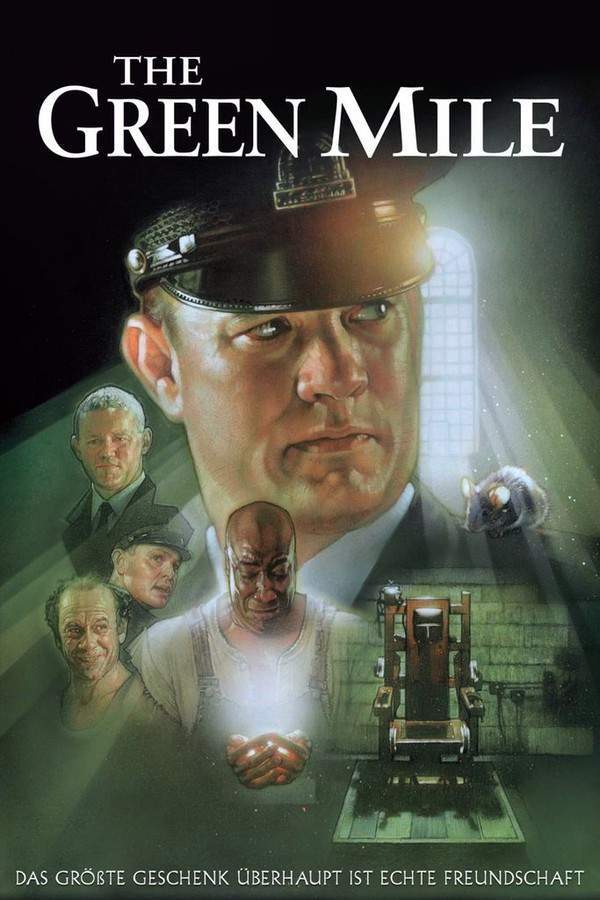
The Green Mile (1999) movie poster

Plot Summary

The Green Mile (1999) Plot Summary Explained

Release, runtime and language
1999 · 189 min · English
Loading streaming availability…
Starring
Tom Hanks, Michael Clarke Duncan
Budget
$60M

In 1932, Louisiana prison warden Paul Edgecomb oversees death row, where he encounters John Coffey, a massive inmate convicted of a terrible crime. Despite his imposing size, Coffey possesses a childlike innocence and displays inexplicable, almost supernatural abilities. As Paul and the other officers interact with Coffey, they question his guilt and confront their own beliefs about justice and morality. The warden finds himself increasingly drawn to the enigmatic prisoner and struggles with the profound impact Coffey has on him and those around him.

On this page (7)
  1. 1 Where to watch
  2. 2 What happens: full plot
  3. 3 Plot questions answered
  4. 4 The book behind the movie
  5. 5 Movie threads
  6. 6 Movies like The Green Mile
  7. 7 Every angle
Loading streaming availability…

Full plot summary · contains spoilers

What Happens in The Green Mile: Full Plot Summary

The whole story of The Green Mile (1999) explained, from the opening scene to the final frame: every key event, every twist and what it all adds up to. Read it as a quick recap before the sequel, to check a scene you missed, or to finally understand what really happened.

As Paul Edgecomb sits in a Louisiana assisted-living facility, a wave of nostalgia washes over him while he watches Top Hat. His companion, Elaine, becomes alarmed upon seeing the tears streaming down his face. He confides in her that the classic film has reopened a floodgate of memories from his time as an officer on the infamous "Green Mile" death row at Cold Mountain Penitentiary.

Back in 1935, Paul supervised a team of corrections officers, which included Brutus "Brutal" Howell, Dean Stanton, Harry Terwilliger, and Percy Wetmore, who was a direct report to Warden Hal Moores. Percy, leveraging his connection as the nephew of the governor's wife, relished his power to inflict suffering on the inmates, notably targeting Eduard "Del" Delacroix. He thrived on the sadistic pleasure derived from his cruel punishments.

The officers also faced the unending turmoil caused by William "Wild Bill" Wharton, a volatile inmate who frequently assailed them and hurled racial slurs at John Coffey, a gigantic yet kind-hearted black man wrongfully sentenced for the violent crime of murdering two white girls. However, as Paul learns more about John, he is astounded to discover the extraordinary healing abilities hidden within this seemingly ordinary man. After John effortlessly cures Paul's painful bladder infection with just a touch and brings Del's cherished pet mouse, Mr. Jingles, back to life, Paul begins to reconsider the possibility that someone capable of such miraculous acts might not be guilty after all.

As the story progresses, it becomes evident that Percy’s malicious behavior exposes itself through his treatment of Del during his execution, forcing John to endure the trauma alongside him. In retaliation to Percy's barbaric conduct, the officers confine him in a padded cell to reflect upon his transgressions. Under the veil of night, they slip John out of the prison, allowing him to use his gifts to heal Warden Moores’ wife, Melinda, of her brain tumor, thus saving her life. When Percy eventually emerges from confinement, the other officers warn him that any further misconduct will expose him and his many wrongdoings.

As John channels his extraordinary powers, he unwittingly transfers Melinda’s affliction into Percy's psyche, resulting in a surreal series of events that leads to Wharton’s death at the hands of the oblivious warden. In a turning point, John reveals a prophetic vision to Paul, disclosing that Wharton was the true perpetrator behind the heinous crimes, and in that process, gifts Paul with a piece of his supernatural essence. This realization sends Percy spiraling into a catatonic state, ultimately resulting in his institutionalization at the asylum where he had envisioned working after resigning from his position.

A wave of grief washes over Paul as he grapples with the revelations of John's innocence, and he ultimately presents John with a chance at liberation. Despite the sorrow that fills both their hearts, John perceives his impending execution as a merciful act, acknowledging the harshness of existence where suffering appears to be an inescapable constant. In his final moments, John requests one last wish—to watch Top Hat with his fellow officers—before he faces the electric chair.

As he is led to his execution, John is met with the contempt of the parents of the two young girls who still harbor doubts about his guilt. He expresses an irrational fear of darkness, requesting that the hood not be placed over his head. Paul complies with this request, while John's fellow officers—Brutal, Dean, Harry, and others—look on with heavy hearts as Paul carries out his duty, their tears mirroring the deep impact John's story has had on their lives.

In the present, Paul recounts this harrowing tale of John's execution to Elaine, noting that it was the last one he and Brutal witnessed before they chose to leave their positions and devote their lives to the juvenile justice system. He reveals that Mr. Jingles continues to thrive, enjoying an extended life due to John’s remarkable healing powers. Paul also confides in Elaine that he himself has been cursed with an abnormally long lifespan, aging from 44 to 108 years old since that fateful day.

As Elaine departs from this world, Paul grapples with his own mortality, forced to confront the tragedy of outliving those he cherishes as a divine consequence of John’s wrongful execution. At Elaine's funeral, he reflects on the cruel fate that has befallen him, lamenting, > "We each owe a death. There are no exceptions. But, oh, God... sometimes, the Green Mile seems so long."
Last updated: November 19, 2024 at 18:41

Was this helpful?

Plot questions answered

The Green Mile Plot Explained: Your Questions Answered

The questions people ask most about The Green Mile (1999): what happens in the confusing scenes, why the characters do what they do, the twists, hidden details and what the ending means. Each answer contains spoilers.

Q1

Why was John Coffey executed if he was innocent?

John Coffey was executed because the legal system convicted him based on circumstantial evidence and his imposing physical appearance. Despite Paul and the guards discovering his innocence and supernatural healing abilities, the execution proceeded. John himself chose not to fight the system, viewing his death as a merciful release from the suffering he endured in the world.

Foreshadowing: Early in the film, John tells Paul that he tries to find the good in people but sometimes there's too much pain to bear, hinting at his willingness to accept death.

  • john coffey
  • innocent execution
  • death row
  • wrongful conviction
Q2

How could John Coffey heal people?

John Coffey possessed a miraculous healing gift that allowed him to cure illnesses and even resurrect the dead through touch. He cured Paul Edgecomb's painful bladder infection, brought Mr. Jingles back to life, and healed Warden Moores' wife Melinda of a brain tumor. These powers were tied to his psychic abilities, which also allowed him to share visions and transfer his essence to others.

Foreshadowing: John's ability was first hinted at when he effortlessly cured Paul's bladder infection with a simple touch, surprising everyone on the Green Mile.

  • healing powers
  • supernatural ability
  • magic gifts
  • touch healing
Q3

What caused Percy Wetmore to become catatonic?

When John healed Melinda Moores' brain tumor, he absorbed the disease into himself but then deliberately transferred it into Percy Wetmore as punishment for his cruelty. This caused Percy to suffer a complete mental breakdown, leaving him institutionalized in a mental asylum for the rest of his life, exactly where he had wanted to work after leaving the prison.

Foreshadowing: Earlier, Percy had taunted John and participated in Del's brutal execution, showing the officers the extent of his sadism.

  • percy wetmore
  • catatonic state
  • mental asylum
  • brain tumor transfer
Q4

Why did John Coffey ask for the hood to be removed before execution?

John had a deep, irrational fear of darkness and enclosed spaces. When led to the electric chair, he pleaded for the hood not to be placed over his head. Paul Edgecomb granted this final wish, allowing John to face his death without the covering. This moment highlighted John's childlike innocence and the tragic injustice of executing such a gentle man.

Foreshadowing: Throughout his time on death row, John often expressed discomfort in dark or confined spaces, preferring to be in open areas.

  • execution hood
  • fear of darkness
  • electric chair
  • final wish
Q5

Who actually killed the two girls John Coffey was convicted of murdering?

Wild Bill Wharton was the true perpetrator of the murders. John Coffey had received a prophetic vision showing Wharton committing the crime and attempted to stop him, but was too late. John shared this vision with Paul before his execution, revealing that Wharton had forcibly taken the girls and killed them, pinning the blame on John who was found at the scene.

Foreshadowing: Wharton's violent nature and presence at the crime scene were established early, with his constant threats and racial slurs toward John.

  • wild bill wharton
  • true killer
  • murder conviction
  • vision revelation
Q6

Why did Paul Edgecomb live over 100 years?

When John shared his prophetic vision with Paul revealing Wharton's guilt, he also transferred a piece of his supernatural essence to Paul. This gift cursed Paul with an abnormally long lifespan, aging from 44 to 108 years old while everyone he loved grew old and died around him. Paul describes this as a divine punishment for executing an innocent man.

Foreshadowing: John's ability to transfer his essence was first shown when he gave Paul a portion of his power through touch.

  • paul edgecomb
  • long lifespan
  • cursed life
  • supernatural transfer
Q7

Did Mr. Jingles the mouse live a long life?

Yes, Mr. Jingles continued to thrive for many years after John's execution. When John revived the mouse with his healing touch, he unknowingly granted it an extended lifespan. Paul mentions to Elaine that Mr. Jingles lived much longer than an ordinary mouse, serving as a living reminder of John's miraculous gift.

Foreshadowing: John brought Mr. Jingles back to life in front of the guards, demonstrating his power over death itself.

  • mr jingles
  • mouse longevity
  • john's healing
  • pet mouse
Q8

Why did John Coffey accept his execution willingly?

John viewed his execution as a merciful release from the painful world. Despite being innocent, he believed his supernatural gift was a curse that caused him to absorb the suffering of others. He told Paul that he was tired of the pain and saw death as an escape. His childlike faith told him that God would take care of him after death, making his final moments one of peace rather than resistance.

Foreshadowing: John often expressed that the world was too painful and that he wanted to stop feeling other people's emotions.

  • execution acceptance
  • merciful death
  • john's sacrifice
  • innocent execution
Q9

How did the guards help John escape to heal Melinda?

The guards orchestrated a secret nighttime operation to smuggle John out of Cold Mountain Penitentiary. They slipped him out under the cover of darkness, allowing him to enter the warden's house and heal Melinda Moores of her brain tumor. This was the guards' way of repaying John's goodness and testing whether his healing powers were real. The operation was successful, and Melinda made a full recovery.

Foreshadowing: Earlier, the guards had seen John cure Paul and revive Mr. Jingles, giving them faith in his abilities.

  • night escape
  • heal melinda
  • warden's house
  • secret operation
Q10

Why did Paul and Brutal leave their positions at Cold Mountain?

After witnessing John's execution, Paul and Brutal could no longer work on death row. John's story deeply traumatized them, and they felt they could no longer participate in the justice system that had killed an innocent man. Both men left their positions and devoted the rest of their lives to the juvenile justice system, trying to help young people instead of executing them.

Foreshadowing: Paul's final conversation with John about the weight of their roles hinted at their impending departure.

  • paul resigns
  • brutal howell
  • juvenile justice
  • quit death row
Q11

Why did the other guards tolerate Percy's cruelty?

Percy Wetmore was protected because he was the nephew of the governor's wife, giving him political connections. This shielding allowed him to behave sadistically toward inmates without consequence. The other guards despised his behavior but could not directly fire or punish him. They eventually confined him in a padded cell as punishment for his actions during Del's execution, but his connections ultimately protected him from serious repercussions until John's intervention.

Foreshadowing: Percy's political connection was mentioned when he first arrived, warning the officers that he could have them fired.

  • percy wetmore
  • nephew governor
  • political connection
  • sadistic guard
Q12

What did John Coffey's prophetic vision show?

John's prophetic vision revealed the true events of the girls' murder. He saw Wild Bill Wharton attacking the two girls, trying to sexually assault them, and ultimately killing them when they fought back. John arrived too late to save them and was wrongfully arrested at the scene. Before his execution, John shared this vision with Paul, providing closure and proof of his innocence.

Foreshadowing: John occasionally received visions throughout the film but struggled to communicate them effectively.

  • prophetic vision
  • wild bill crime
  • true events
  • vision revelation

Movie threads

More Movies Like The Green Mile, by Mood & Story

Curated lists built around what makes The Green Mile tick: the same mood, the same kind of story or the same emotional payoff. Each list explains why these movies belong together.

Movies with moral dilemmas like in The Green Mile

Stories where characters confront impossible ethical choices within rigid, brutal systems. Find similar movies that explore heavy moral questions and personal crises within institutional settings. If you liked the ethical struggles in The Green Mile, these serious dramas delve into justice, guilt, and the human cost of operating within a rigid system.

  • morally conflicted
  • somber
  • oppressive
  • grieving
  • brutal
  • reflective
  • Tone: somber, morally conflicted, reflective
  • Pacing: slow, deliberate
Why these movies?

The story pattern: Narratives in this thread typically center on a protagonist who must navigate a strict, often cruel system, facing choices that pit their duties against their conscience. The journey involves a growing awareness of the system's flaws, leading to a climactic moral decision with significant personal and emotional fallout.

Why they belong together: Movies are grouped here for their intense focus on ethical conflicts within confined settings like prisons, hospitals, or the military. They share a somber, reflective tone and a structure that builds towards a pivotal, morally charged decision.

Bittersweet supernatural dramas like The Green Mile

Bittersweet stories where otherworldly grace intersects with profound human suffering. Discover movies that mix magical or unexplained events with heavy emotional human drama. If you were moved by the supernatural elements and tragic beauty of The Green Mile, these films offer a similar blend of the miraculous and the melancholic.

  • melancholic
  • miraculous
  • bittersweet
  • grieving
  • reflective
  • tragic
  • Tone: melancholic, bittersweet, miraculous
  • Pacing: slow, contemplative
Why these movies?

The story pattern: The narrative pattern involves a character burdened by sorrow or circumstance who encounters something inexplicable—a person, event, or power. This encounter brings moments of healing or clarity but is ultimately framed within a larger, unavoidable tragedy, leaving a lasting impression of sorrow intertwined with grace.

Why they belong together: These films are united by their unique emotional blend: the awe of the supernatural or miraculous set against a backdrop of deep sadness. They share a melancholic tone, slow pacing to let emotions resonate, and endings that feel bittersweet rather than purely happy or sad.

If you liked this

Movies Like The Green Mile

Similar movies to The Green Mile: the same genre, themes or kind of story. Each one comes with its own plot summary, timeline and ending explained.

Browse all movie summaries

Every angle

The Green Mile (1999) Explained: Plot, Timeline & Characters

Everything about The Green Mile in one place: what happens in the plot summary, the timeline in chronological order, the characters and meaning and a spoiler-free summary. What's After the Movie adds the cast, box office and post-credit scenes.

Coming soon on iOS and Android

The Plot Explained Movie Summary App

Plot summaries, endings explained and timelines on your phone. Catch up on any movie in minutes, save your favorites and never miss a twist again.

Be the first to know when we launch. Your email stays private, always.

Learn more about the app