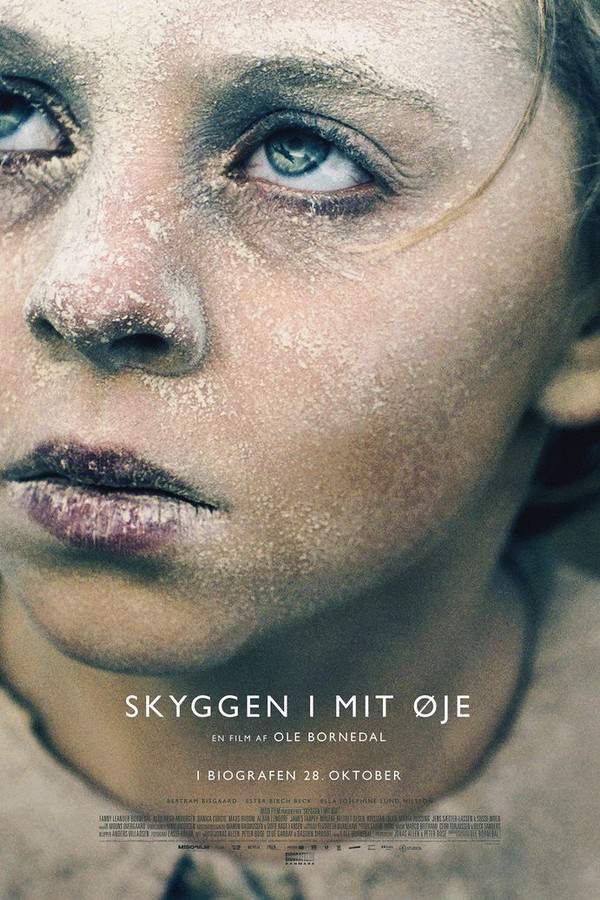
In 1945, over German-occupied Denmark, a Royal Air Force de Havilland Mosquito misidentifies a car carrying several bridesmaids as a German staff vehicle and strafes it with devastating consequences. The pilots on the mission—including Bateson—receive the grim news about civilian losses from the Danish SOE agent Major Truelson, a revelation that threads through the lives of those touched by the raid.
The violence of that moment leaves a teenage boy, Henry, deeply traumatized and unable to speak. His parents decide to move him to Copenhagen, hoping distance and care will mend the wound. There, Henry stays with his cousin and her family and gradually forms a bond with Eva. The pair, along with Rigmor, enroll in the Institut Jeanne d'Arc, a French-language Catholic school run by nuns led by Sister Hanna. In this sheltered yet bustling environment, Henry begins to rediscover his voice as his new friends draw him into small, hopeful acts of courage and solidarity.
The school’s world also houses a young novice, Teresa, who wrestles with her faith. In a dangerous turn of longing, she engages in a hidden romance with Frederik, a HIPO officer working for the occupiers. Teresa’s relationship tests the boundaries of the convent’s rules, and she becomes a catalyst for conflict within the community, even as she continues to teach Eva and Rigmor.
At the heart of the Danish resistance’s hopes, the RAF agrees to a high-stakes bombing raid aimed at flushing out Gestapo documents and freeing imprisoned resistance members by attacking the Shellhus in Copenhagen. The plan, known as Operation Carthage, calls for several Mosquito fighter-bombers from the RAF, joined by crews from the Royal Australian Air Force and the Royal New Zealand Air Force, all escorted by P-51 Mustangs. The operation is complex and perilous, balancing the imperative to strike a strategic target with the civilians who might be harmed in the process.
On the day of the raid, tensions in Eva’s family rise as a quarrel over porridge mirrors the larger questions of loyalty and duty. Frederik, swayed by Teresa, reveals his intention to desert the service, a decision that reverberates through the school and its tensions between faith, duty, and love. In the classroom, Sister Hanna confronts Teresa about her risky liaison and contemplates her removal from the order, highlighting the personal cost of war on those who try to live by their beliefs.
As the air raid unfolds, Peter’s Mosquito collides with a searchlight tower, causing it to crash near the Institut Jeanne d'Arc. Miscommunication among the raiders leads several planes to misidentify the school as the Shellhus, and the building is bombed, with many students and teachers wounded or killed. Yet other Mosquitoes do reach Shellhus, destroying Gestapo documents and delivering a measure of relief to the resistance. In the chaos, Danish resistance prisoners seize the moment to escape, adding a thread of fragile hope to a night of devastation.
Amid the rubble, Henry’s courage comes into clearer focus: he gradually regains his speech and helps firefighters identify injured children. Rigmor and Teresa become trapped under rising water from firefighting hoses, while Frederik attempts to reach Teresa in the rubble. She jumps into the floodwaters, perhaps in an act meant to reach Rigmor, a moment that accelerates the collapse of the basement and intensifies the tragedy. Eva’s parents grapple with their distress and sorrow, their earlier disagreement weighing on them as they search for their daughter.
In the aftermath, Eva’s mother returns to the house and finds her daughter there, calmly eating cold porridge, a stark, quiet counterpoint to the chaos that enveloped the city and the school. The film closes on the intertwined fates of these children and their families, the quiet resilience of those who endure, and the stark costs of war that ripple through a community long after the bombs fall.
- Eva’s mother: Eva's Mother
- Eva’s father: Eva's Father
- Peter: Peter