












Plot Explained Spoilers guaranteed!
Plot Explained

Browse by genre

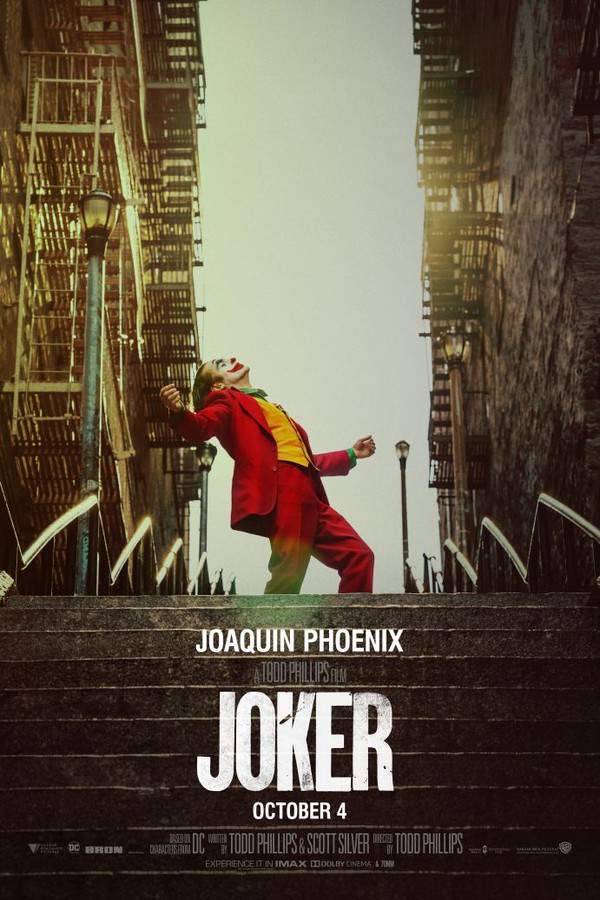
Joker (2019) movie poster

Ending Explained

Joker (2019) Ending Explained – Final Scene & Meaning

Release, runtime and language
2019 · 122 min · English
Echo score 82
JustWatch #1,469 66
Directed by
Todd Phillips
Starring
Robert De Niro, Brian Tyree Henry, Zazie Beetz, Shea Whigham, Alec Baldwin, Bill Camp
Budget
$55M

In a decaying Gotham City, Arthur Fleck, portrayed by Joaquin Phoenix, struggles with poverty and isolation while aspiring to be a successful comedian. Working as a party clown to make ends meet, he dreams of bringing laughter to others but finds himself facing constant rejection and despair. A series of tragic events and a pivotal decision trigger a downward spiral, ultimately leading to a shocking transformation and unleashing chaos upon the city.

On this page (8)
  1. 1 Where to watch
  2. 2 What happens at the end
  3. 3 Final events in order
  4. 4 Ending questions answered
  5. 5 The book behind the movie
  6. 6 Movie threads
  7. 7 Movies like Joker
  8. 8 Every angle

Where to watch

Where to Watch Joker (2019)

Where can you watch Joker? Stream, rent or buy it in the US, including on HBO Max, TBS and TNT: current JustWatch availability with up-to-date prices.

Streaming availability powered by JustWatch

Ending explained · contains spoilers

What Happens at the End of Joker?

How Joker (2019) ends, what the final scene means, which earlier moments set it up and how to read the ending if the film leaves it open. The full ending explained, with every spoiler.

At the climax of the film, Arthur Fleck, fully embracing his transformation into the Joker, arrives at Murray Franklin’s show dressed in full clown makeup. Throughout the film, Arthur's descent into madness has been fueled by a lifetime of social alienation, mental illness, and the corrupt, indifferent city around him. When he takes the stage, he begins by performing morbid jokes and confesses to the subway murders—acts motivated by his anger at societal neglect and the rich elite who feed off Gotham’s suffering. His breakdown intensifies as he blames Murray for mocking him and reflects his feelings of being misunderstood and discarded by society. In a violent outburst, Arthur shoots Murray on live television, turning the show into a scene of chaos and slaughter. This act sparks a riot across Gotham, as the city erupts into an outright rebellion; mobs loot, burn, and kill, embodying the chaos that Arthur's actions have incited. During this chaos, the young Bruce Wayne witnesses the murder of his parents, Thomas and Martha, in Crime Alley, an event that establishes the origin story of Batman. Arthur is eventually captured but is seemingly unbothered as he relishes in the chaos he’s caused, dancing freely in the streets with a bloody smile painted on his face, symbolizing his complete embrace of his identity as the Joker. The film ends with Arthur in a psychiatric facility, laughing uncontrollably when questioned by a psychiatrist, indicating that his sense of madness and violence remains unchecked. His joy in the destruction and his refusal to share the reasons for his laughter suggest that he has found a twisted sense of liberation in his nihilistic worldview, leaving his future actions and the chaos he’s unleashed open to interpretation.

Last updated: June 25, 2025 at 08:44

Was this helpful?

The last 4 events

How Joker Ends: The Final Events in Order

The last events of Joker (2019) in chronological order, the run-up to the ending explained above. The complete timeline has all 15 events, scene by scene.

Open the full timeline
  1. Tragic Confrontation with His Mother

    Faced with revelations about his mother's abusive history, Arthur experiences a profound sense of betrayal. This culminates in a drastic and tragic confrontation with her, marking a critical point in his descent into madness.

    Where
    Gotham City
  2. Murray's Show Appearance

    Arthur prepares for his appearance on Murray Franklin's show, painting his face as a symbolic gesture of his full transformation into the Joker. His on-stage appearance escalates into violence, shocking both the audience and the city.

    Where
    Murray's Show
  3. Gotham in Chaos

    Following Arthur's explosive confession on the show, Gotham descends into chaos as his violent actions inspire rebellion. The city becomes a battleground of conflicting ideologies and symbols of hope and despair.

    Where
    Gotham City
  4. Final Moments in Arkham

    The film concludes with Arthur in an Arkham Asylum office, sharing a dark laugh with a new social worker. This moment underscores the cyclical nature of his existence and the chaos he leaves in his wake.

    Where
    Arkham Asylum

Ending questions answered

Joker Ending: Your Questions Answered

The questions people ask most about the ending of Joker (2019): what the final scene means, how the twist works, what happens to each character and how to read the ending. Each answer contains spoilers.

Q1

Why does Arthur kill Murray Franklin on live TV?

Arthur kills Murray because he's been pushed to the brink by society's relentless cruelty. Murray's talk show had previously mocked Arthur by showing a video of him as a child having a meltdown, which felt like a final betrayal. On the show, Arthur confesses to the subway murders but frames them as righteous anger toward the wealthy elite who ignore Gotham's suffering. When Murray dismisses Arthur's pain as a joke, Arthur shoots him, turning the broadcast into violent chaos.

Foreshadowing: Earlier scenes show Arthur watching Murray's show and fantasizing about being on it, establishing his fragile connection to this figure of success.

  • arthur fleck
  • murray franklin
  • kill
  • shooting
  • live tv
  • motive
Q2

What causes the Gotham riot in Joker?

The riot erupts immediately after Arthur kills Murray on live television. His murder of a celebrity on a mainstream talk show becomes the spark that ignites Gotham's simmering tensions between the wealthy elite and the struggling poor. Mobs begin looting, burning cars, and attacking people across the city. The clown-mask-wearing rebels see Arthur as a symbol of their own uprising against a corrupt system that has abandoned them.

Foreshadowing: Gotham is shown as a city on the brink throughout the film, with garbage strikes, protests, and growing resentment toward the rich.

  • gotham
  • riot
  • chaos
  • uprising
  • mob
  • city
Q3

Does Bruce Wayne become Batman in Joker?

The film shows young Bruce Wayne witnessing the murder of his parents, Thomas and Martha Wayne, in Crime Alley during the chaotic riots. This traumatic event directly sets up Batman's origin story, the moment that will eventually drive Bruce to become the Dark Knight. However, at this point in the film, Bruce is still a child and does not become Batman; the ending simply plants the seed for his future transformation.

Foreshadowing: Arthur's subway killings echo the Waynes' later murder, both involving violence in Gotham's subway system.

  • bruce wayne
  • batman
  • parents murder
  • crime alley
  • origin
Q4

Why is Arthur dancing after being arrested in Joker?

Arthur dances freely in the streets because he has fully shed his former identity as the marginalized Arthur Fleck. Covered in blood with a smile painted on his face, he moves joyfully through the chaos he's created. This dance symbolizes his complete transformation into the Joker, embracing his new identity as an agent of pure chaos rather than a victim of society. He's no longer pretending to be normal; he's finally being his "true self."

Foreshadowing: Arthur dances throughout the film in moments of supposed happiness, establishing his physical expression of emotion.

  • arthur dancing
  • blood
  • smile
  • transformation
  • joker identity
Q5

What does the ending of Joker mean?

The ending suggests that Arthur has found a twisted sense of freedom through embracing chaos and violence. By triggering the city's collapse, he has "succeeded" in his goal to make the world acknowledge his pain. However, he's still institutionalized, the system that failed him continues to contain him. His final uncontrollable laughter in the asylum indicates his madness remains unchecked, and his refusal to explain his laughter implies his philosophy cannot be rationalized or defeated through conventional understanding.

Foreshadowing: Arthur's journal contains the phrase "the worst thing about mental illness is that people expect you to behave like you're not," hinting at his final rejection of performance.

  • ending meaning
  • freedom
  • chaos
  • asylum
  • mental illness
  • nihilism
Q6

Why is Joker laughing at the end in the asylum?

Arthur laughs uncontrollably when the psychiatrist asks him what's funny, but he never explains. This laughter represents his complete detachment from rational society, he finds genuine humor in the chaos he's created and the absurdity of his situation. The laughter could stem from genuine joy at the destruction he's caused, or it could be the involuntary laughing from his neurological condition that he's now weaponized. Either way, his refusal to share the joke suggests his worldview is fundamentally incomprehensible to others.

Foreshadowing: His pathological laughter has appeared throughout the film as both a symptom and a defense mechanism.

  • laughing
  • asylum
  • psychiatrist
  • laughter
  • madness
Q7

Is Arthur Fleck really free at the end of Joker?

Arthur experiences a paradoxical form of freedom. He's physically imprisoned in a psychiatric facility, yet psychologically he has broken free from the constraints of trying to conform to a society that rejected him. He no longer performs normalcy or suppresses his impulses. The freedom he achieves is nihilistic, he's freed himself from caring about morality, consequences, or others. This creates a disturbing question: is his "liberation" truly freedom, or just a different kind of captivity to his own broken worldview?

Foreshadowing: Thomas Wayne's speech about kindness being a distraction foreshadows Arthur's rejection of social bonds.

  • freedom
  • arthur fleck
  • asylum
  • psychiatric facility
  • confinement
Q8

What happens to Arthur Fleck at the end of Joker?

Arthur is arrested and taken to a psychiatric facility after the citywide chaos he incited. He's no longer the struggling party clown trying to survive Gotham's brutal system, he's now the infamous Joker, a figure of legend to the rebels who've taken to wearing clown masks. In the asylum, he's asked routine questions by a psychiatrist, but his uncontrollable laughter suggests he's beyond any conventional treatment or rehabilitation.

Foreshadowing: The film opens with Arthur in therapy, establishing the cycle that continues at the end.

  • arthur fleck
  • arrest
  • asylum
  • psychiatric facility
  • fate
Q9

How does Joker connect to the Batman origin story?

Joker directly sets up Batman's origin by showing the Wayne murder through young Bruce's eyes during the riots. The film implies that Arthur's citywide chaos creates the conditions for the Waynes' death, chaos that Arthur himself celebrates. This establishes the iconic adversarial relationship: Batman fights to restore order in a city that produced the Joker. The film suggests both figures emerge from Gotham's broken system, making them two sides of the same coin.

Foreshadowing: Thomas Wayne's mayoral campaign and dismissive attitude toward "clowns" foreshadow his disconnection from the city's problems.

  • batman
  • joker connection
  • wayne murders
  • gotham
  • origin story

Movie threads

More Movies Like Joker, by Mood & Story

Curated lists built around what makes Joker tick: the same mood, the same kind of story or the same emotional payoff. Each list explains why these movies belong together.

Descent into Villainy Movies like Joker

Psychological portraits exploring the tragic circumstances that create a monster. If you were fascinated by the tragic origin story in Joker, explore more movies about the creation of a villain. These films are intense character studies that examine societal decay, personal trauma, and the psychological breaking point that leads to a dark rebirth.

  • tragic
  • unsettling
  • despairing
  • psychological
  • dark
  • oppressive
  • Tone: dark, bleak, tragic
  • Pacing: steady, methodical
Why these movies?

The story pattern: The narrative follows a linear or cause-and-effect structure where the protagonist, often suffering from mental illness or extreme social alienation, endures a series of humiliations and tragedies. These events systematically break down their humanity, leading to a pivotal moment where they embrace a new, violent identity, resulting in a bleak or chaotic conclusion.

Why they belong together: Movies are grouped here for their shared focus on the 'villain's' perspective, heavy emotional weight from themes of neglect and madness, and a consistently dark tone that makes the descent feel both inevitable and disturbing.

Movies about Urban Decay like Joker

Stories set in decaying metropolises where social tension boils over into chaos. For viewers who appreciated the gritty backdrop of Gotham City in Joker, this collection highlights movies where a decaying urban environment is central to the story. These films share a tense, anxious mood and explore themes of class struggle and social collapse in a dystopian cityscape.

  • oppressive
  • anxious
  • chaotic
  • gritty
  • dystopian
  • unsettling
  • Tone: oppressive, anxious, chaotic
  • Pacing: steady, building tension
Why these movies?

The story pattern: The narrative unfolds within a visually and socially crumbling urban landscape. The city's decay mirrors the protagonist's internal state and fuels a broader narrative of class resentment. Personal rebellion often ignites a spark that leads to widespread societal chaos, intertwining the individual's fate with the city's collapse.

Why they belong together: These movies are connected by their quintessential 'crumbling city' aesthetic, the use of the setting to create an oppressive mood, and the thematic exploration of how social neglect and inequality lead to inevitable violence and anarchy.

If you liked this

Movies Like Joker

Similar movies to Joker: the same genre, themes or kind of story. Each one comes with its own plot summary, timeline and ending explained.

Browse all movie summaries

Every angle

Joker (2019) Explained: Plot, Ending, Timeline & Characters

Everything about Joker in one place: what happens in the plot summary, the timeline in chronological order, the characters and meaning, the ending explained and a spoiler-free summary. What's After the Movie adds the cast, box office and post-credit scenes.

Coming soon on iOS and Android

The Plot Explained Movie Summary App

Plot summaries, endings explained and timelines on your phone. Catch up on any movie in minutes, save your favorites and never miss a twist again.

Be the first to know when we launch. Your email stays private, always.

Learn more about the app