Plot Explained Spoilers guaranteed!
Plot Explained

Browse by genre

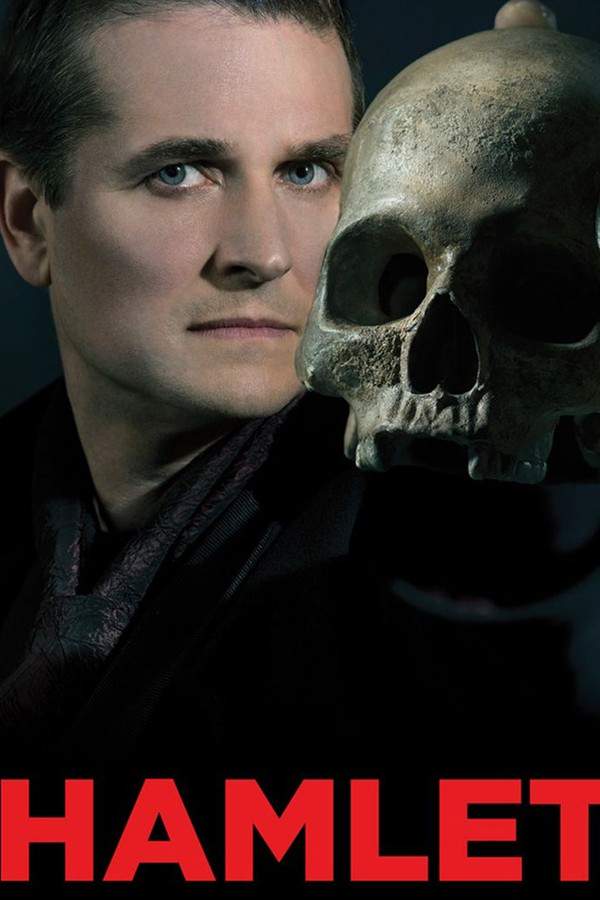
Hamlet (1948) movie poster

Plot Summary

Hamlet (1948) Plot Summary Explained

Release, runtime and language
1948 · 154 min · English
JustWatch #23,505 5
Starring
John Laurie, Esmond Knight, Anthony Quayle, Harcourt Williams, Laurence Olivier, Niall MacGinnis

Following his father’s sudden death, Prince Hamlet grapples with grief and suspicion surrounding his mother’s swift marriage to his uncle. Consumed by a desire for revenge and haunted by his father's ghost, Hamlet feigns madness while investigating a dark secret. He must confront a court rife with deception, betrayal, and the weighty questions of life and death.

On this page (7)
  1. 1 Where to watch
  2. 2 What happens: full plot
  3. 3 Plot questions answered
  4. 4 The book behind the movie
  5. 5 Movie threads
  6. 6 Movies like Hamlet
  7. 7 Every angle

Where to watch

Where to Watch Hamlet (1948)

Where can you watch Hamlet? Stream, rent or buy it in the US, including on fuboTV, HBO Max and Plex: current JustWatch availability with up-to-date prices.

Streaming availability powered by JustWatch

Full plot summary · contains spoilers

What Happens in Hamlet: Full Plot Summary

The whole story of Hamlet (1948) explained, from the opening scene to the final frame: every key event, every twist and what it all adds up to. Read it as a quick recap before the sequel, to check a scene you missed, or to finally understand what really happened.

This film adapts the essence of the original play while significantly trimming the dialogue and omitting two key characters.

Set against the backdrop of 15th Century Denmark, the narrative unfolds on the battlements of the imposing Elsinore Castle, home to the Danish royal family. As the action begins, sentry Francisco is relieved from his watch by fellow sentry Bernardo. Joining them is Marcellus, who, alongside Bernardo, has witnessed the spectral figure of King Hamlet on two prior occasions. Their conversation is soon interrupted when Horatio (played by Norman Wooland) arrives, expressing skepticism about the ghost's existence. As if to prove them wrong, all three sentries suddenly lay eyes on the ghost, prompting Horatio to demand that it speaks, but the apparition vanishes silently.

Inside the castle's Great Hall, the court is in a festive mood, celebrating the marriage between Gertrude (Eileen Herlie) and King Claudius (Basil Sydney). The recent tragedy of King Hamlet's death, which supposedly resulted from an accidental snakebite, has barely faded from memory, leading to Gertrude's hasty marriage to her late husband's brother. The brooding Prince Hamlet sits apart, discontented with the swift union despite Claudius's attempts to coax him into joining the festivities. Alone and filled with bitterness, Hamlet mutters to himself, > "and yet, within a month!"

Before long, Horatio and the sentinels inform Hamlet about the ghostly sighting of his father. Driven by a need for answers, Hamlet ascends to the battlements with them. There, the ghost beckons him, leading him up to a tower and revealing itself as the spirit of his deceased father. The ghost discloses the details of his murder and the identity of the culprit. The audience is shown a shocking flashback depicting the heinous act where Claudius poisons King Hamlet's ear, leading to his death. Initially skeptical, Hamlet resolves to feign madness to probe Claudius’s conscience without drawing premature conclusions about his guilt.

This facade of insanity captures the attention of Polonius (Felix Aylmer), Claudius' chief advisor, who mistakenly attributes Hamlet’s behavior to his love for Ophelia (Jean Simmons), Polonius' own daughter. Although Claudius remains uncertain about Hamlet's state of mind, he instructs Polonius to orchestrate a meeting between Hamlet and Ophelia. During this encounter, Hamlet’s erratic behavior continues to fuel Claudius’s suspicions.

To further his plot, Hamlet invites a group of traveling actors to perform The Murder of Gonzago, subtly altering the script to echo the circumstances of his father's death. The performance profoundly affects Claudius, who becomes visibly distressed and abruptly leaves the theater, affirming Hamlet's suspicions of his guilt. Hamlet then encounters Claudius alone and contemplates avenging his father's death, yet he hesitates when he finds Claudius praying, unwilling to condemn him to heaven.

Confronting Gertrude about the conspiracy surrounding his father's demise, Hamlet mistakenly stabs through a curtain, believing Claudius is eavesdropping. To his shock, he discovers he has killed Polonius, which elicits only a mild reaction from Hamlet as he presses on with the confrontation. In a moment of surrealism, he converses with the ghost of his father, unseen by Gertrude, who concludes that her son has indeed lost his sanity.

Fearing for Hamlet's life, Claudius plots to send him to England under the guise of safety, but orders his execution upon arrival. However, fortune intervenes as pirates attack Hamlet's ship, leading to his safe return to Denmark. Meanwhile, the devastation of Hamlet’s rejection drives Ophelia to the brink of madness, resulting in her tragic off-screen drowning, presumed a suicide. This event ignites her brother Laertes (Terence Morgan) to seek revenge for her death and for their father's murder.

As Hamlet returns, Claudius and Laertes conspire to kill him, planning it to appear as an unfortunate accident. Claudius persuades Laertes to challenge Hamlet to a duel, equipping Laertes with a poisoned blade meant to kill upon contact. In the midst of the fight, Gertrude, unaware of the scheme, mistakenly drinks from a poisoned cup, leading to her demise. She manages to warn Hamlet just before succumbing, casting her death as a self-sacrificial act to protect her son rather than an accident, a notable deviation from Shakespeare's original text.

In the heat of the duel, Laertes wounds Hamlet with the poisoned blade, which ultimately seals both their fates. As they fight, Hamlet disarms Laertes, using the same poisoned weapon to strike back. Gertrude’s tragic end serves as a chilling reminder of the chaos that envelops the royal family. With Laertes dying, he reveals the full malicious scheme to Hamlet, who then confronts and kills Claudius in a rage.

As the dust settles, with Horatio distraught over the catastrophe and the entirety of the Danish royal family extinguished, he ensures that Hamlet receives a royal farewell. The film concludes with Hamlet's body being taken away amid the solemnity of a cannon salute, while the court mourns, and a few women are seen quietly weeping in the shadows.
Last updated: November 15, 2024 at 20:12

Was this helpful?

Plot questions answered

Hamlet Plot Explained: Your Questions Answered

The questions people ask most about Hamlet (1948): what happens in the confusing scenes, why the characters do what they do, the twists, hidden details and what the ending means. Each answer contains spoilers.
Q1

Why does Hamlet pretend to be mad?

Hamlet decides to feign madness after learning from his father's ghost that Claudius poisoned him to death. He uses this facade as a strategic cover to investigate Claudius's guilt without drawing suspicion. By appearing insane, Hamlet can test Claudius's conscience and gather evidence while protecting himself from retaliation, since outright accusation would be dangerous in the corrupt court of Elsinore.

Foreshadowing: Earlier, the ghost explicitly warns Hamlet not to let his mother’s marriage to Claudius 'soil your mind', hinting at the deception Hamlet must navigate.

  • feigned madness
  • sanity
  • Claudius
  • investigation
  • revenge plan
Q2

Why does Claudius marry Gertrude so soon after King Hamlet's death?

Claudius marries Gertrude within a month of King Hamlet's death, a marriage that serves both his political ambition and personal desire. As King Hamlet's brother, Claudius had immediate access to the throne through this union. The hasty marriage also allows him to consolidate power quickly and legitimize his claim to the Danish crown, while appearing to the court as a natural continuation of the royal line.

Foreshadowing: The ghost of King Hamlet explicitly condemns this marriage as a sinful act that 'soil'd' his marriage bed, revealing the unnatural speed of the union.

  • Gertrude
  • Claudius
  • marriage
  • throne
  • ambition
  • power grab
Q3

What does the ghost reveal to Hamlet about his death?

The ghost of King Hamlet reveals to Hamlet that he was murdered by his own brother Claudius, who poured poison into his ear while he slept in his garden. This regicide was committed so Claudius could seize the throne and marry Gertrude. The ghost demands Hamlet avenge this murder but instructs him not to harm his mother, leaving Hamlet with the沉重的 burden of vengeance.

Foreshadowing: The sentries and Horatio's earlier sighting of the ghost establishes its credibility before the revelation occurs.

  • ghost
  • poisoning
  • Claudius
  • murder
  • ear
  • revenge
  • throne
Q4

Why doesn't Hamlet kill Claudius while he's praying?

Hamlet encounters Claudius alone and has the perfect opportunity to avenge his father, but he hesitates when he finds Claudius praying. Hamlet reasons that killing Claudius while at prayer would send his soul to heaven, which he believes would be an insufficient punishment for his father's murder. Hamlet wants to kill Claudius at a moment when he is sinning or unprepared, so his soul would face damnation instead.

Foreshadowing: This moment reveals Hamlet's deep commitment to his father's justice, as the ghost had specifically demanded 'vengeance' rather than simple killing.

  • prayer
  • Claudius
  • heaven
  • revenge
  • opportunity
  • hesitation
Q5

Why does Hamlet kill Polonius?

Hamlet kills Polonius during a confrontation with Gertrude in her chamber. Believing the voice behind the curtain is Claudius eavesdropping on their conversation, Hamlet draws his sword and strikes. Instead of Claudius, he discovers he has killed Polonius, the king's chief advisor. Hamlet shows little reaction to this accidental killing, dismissing Polonius as a 'wretched, rash, intruding fool' and continuing his confrontation with Gertrude.

Foreshadowing: Hamlet's earlier rage toward Claudius for corrupting Gertrude foreshadows his violent impulse in her chambers.

  • Polonius
  • kill
  • Gertrude
  • curtain
  • mistake
  • violence
Q6

What happens to Ophelia in the film?

Ophelia descends into madness and dies tragically in the film. Her breakdown is driven by Hamlet's rejection of her and the violent death of her father Polonius. While the exact circumstances of her death are left off-screen, it is presented as a drowning, presumed to be suicide. This tragic end transforms her from a passive character into a victim of the court's corruption and Hamlet's crusade against Claudius.

Foreshadowing: Polonius's earlier warning to Ophelia to reject Hamlet's advances plant the seeds of her emotional vulnerability.

  • Ophelia
  • madness
  • drowning
  • suicide
  • death
  • Polonius
  • rejection
Q7

Why does Claudius send Hamlet to England?

Claudius orchestrates Hamlet's journey to England under the false pretense of protecting him from the political backlash after Polonius's death. In reality, Claudius arranges for Hamlet to be executed upon arrival, sending secret letters with his seals ordering the English king to kill Hamlet. This plot demonstrates Claudius's cunning, he eliminates a threat to his throne while appearing to act in Hamlet's best interest.

Foreshadowing: Claudius's earlier prayers, where he admits his guilt but refuses to surrender his crown, reveals his willingness to commit further evils to keep power.

  • England
  • execution
  • letters
  • Claudius
  • plot
  • death
  • pirates
Q8

How does Hamlet escape from England and return to Denmark?

Hamlet's execution is averted when pirates attack his ship during the journey to England. During the battle, Hamlet discovers Claudius's sealed letters ordering his death and cleverly rewrites them to order the deaths of Rosencrantz and Guildenstern instead. The pirates, recognizing Hamlet as a man of value, return him safely to Denmark, where he arrives just in time for the tragic final confrontation.

Foreshadowing: This turn of fortune allows Hamlet to complete his vengeance, fulfilling the ghost's demand.

  • pirates
  • ship
  • escape
  • England
  • Rosencrantz
  • Guildenstern
  • return
  • Denmark
Q9

How does Gertrude die in the duel?

During the rigged duel between Hamlet and Laertes, Gertrude unknowingly drinks from a poisoned cup that Claudius had prepared for Hamlet. Claudius had intended the poison for Hamlet's wine, hoping to kill him during the match. Gertrude's death is immediate, and in her final moments, she warns Hamlet about the poisoned drink, portraying her sacrifice as an attempt to protect her son, a notable deviation from Shakespeare's original text where her death is accidental.

Foreshadowing: Claudius's earlier planning with Laertes, where he promises to ensure Hamlet gets the poisoned wine, sets up this tragic mistake.

  • Gertrude
  • poison
  • duel
  • cup
  • drink
  • death
  • Laertes
  • Claudius
Q10

What is the purpose of the play within the play?

Hamlet stages a performance of 'The Murder of Gonzago' as a strategic trap to confirm Claudius's guilt. He inserts a scene that mirrors exactly how the ghost described King Hamlet's murder, poison poured into the ear. By carefully watching Claudius's reaction, Hamlet hopes to observe his conscience and confirm whether the ghost told the truth. Claudius's visible distress and abrupt departure from the theater confirms Hamlet's suspicions.

Foreshadowing: Hamlet had told Horatio he would 'put an antic disposition on' and observe Claudius carefully during the play, preparing the audience for this test.

  • play
  • Gonzago
  • trap
  • Claudius
  • reaction
  • confession
  • murder
  • proof
Q11

Why does Hamlet accept the duel with Laertes?

Hamlet accepts the duel challenge despite his suspicions because his honor as a prince requires him to defend his reputation. When Laertes returns to Elseek Castle, Hamlet immediately offers a respectful confrontation, even acknowledging Laertes's skill with a sword. Additionally, Hamlet may sense an opportunity to finally achieve the vengeance his father demanded, though he remains unaware of the full treachery planned against him.

Foreshadowing: The earlier arrival of Hamlet's coffin during the play's beginning establishes the importance of honor and proper combat in Danish royalty.

  • duel
  • Laertes
  • honor
  • challenge
  • fight
  • revenge
  • Claudius
  • trap
Q12

Why does Laertes want to kill Hamlet?

Laertes seeks revenge against Hamlet for two reasons: the death of his father Polonius and the death of his sister Ophelia. When Laertes returns from France, he learns that Polonius was killed by Hamlet during a confrontation in Gertrude's chamber. More devastatingly, Ophelia's madness and subsequent drowning (which Laertes believes Hamlet is responsible for) drives him to join Claudius's conspiracy to kill Hamlet during the duel.

Foreshadowing: Ophelia's earlier distribution of flowers, including rosemary and daisies, signals her mental deterioration before her death.

  • Laertes
  • revenge
  • Polonius
  • Ophelia
  • death
  • sister
  • father
  • Claudius
Q13

How does Hamlet finally kill Claudius?

In the final confrontation, the poisoned blade trickery reverses against Claudius. During the duel, Laertes wounds Hamlet with the poisoned sword, simultaneously revealing the plot and sealing both their fates. Dying, Laertes tells Hamlet the entire scheme. Enraged, Hamlet turns his attention to Claudius and strikes him with the poisoned sword, then forces him to drink the remaining poisoned wine. Claudius dies, fulfilling Hamlet's vengeance but at the cost of nearly everyone in the royal family.

Foreshadowing: The ghost's earlier command that Hamlet 'revenge his foul and most unnatural murder' finds its completion in this final moment.

  • Claudius
  • death
  • poison
  • sword
  • duel
  • Laertes
  • final confrontation
  • revenge
  • killed

Movie threads

More Movies Like Hamlet, by Mood & Story

Curated lists built around what makes Hamlet tick: the same mood, the same kind of story or the same emotional payoff. Each list explains why these movies belong together.

Courtly Tragedies of Revenge and Moral Decay like in Hamlet

Stories of political intrigue, betrayal, and inevitable doom within a corrupt court. Discover movies like Hamlet that explore themes of revenge and corruption within powerful institutions. If you enjoyed the political intrigue and fatal consequences of Hamlet, this thread features similar stories of betrayal, moral dilemmas, and tragic downfalls in closed, high-society settings.

  • somber
  • brooding
  • claustrophobic
  • oppressive
  • anxious
  • political
  • Tone: dark, bleak, oppressive
  • Pacing: steady, deliberate
Why these movies?

The story pattern: Stories in this thread follow a central character, often of high status, who uncovers a profound betrayal, usually a murder or usurpation of power. Their quest for vengeance is complicated by the political web they are entangled in, forcing them to navigate deception, feign madness, or make heavy moral choices. The plot typically unfolds with a sense of inevitability, culminating in a bleak finale where the corruption consumes both the guilty and the innocent.

Why they belong together: Movies are grouped here for their shared atmosphere of claustrophobic power dynamics, their focus on revenge as a destructive force, and their bleak examination of how moral decay within a ruling class leads to widespread tragedy. The tone is consistently dark and intense, with a steady, deliberate pacing that builds towards doom.

Psychological Descent Fueled by Grief and Vengeance like in Hamlet

Protagonists pushed to the psychological brink by loss and the need for retribution. Find movies like Hamlet where a character's grief leads to a psychological unraveling and a quest for revenge. If you were captivated by Hamlet's internal struggle and feigned madness, this collection features intense character studies about loss, moral anguish, and the heavy cost of vengeance.

  • somber
  • brooding
  • melancholic
  • anxious
  • existential
  • tormented
  • Tone: dark, melancholic, somber
  • Pacing: steady, character-driven
Why these movies?

The story pattern: The narrative pattern revolves around a traumatic event, such as the murder of a loved one, that shatters the protagonist's world. Their grief manifests as obsessive behavior, existential doubt, and often a performance of or genuine descent into madness as they plot their revenge. The story is less about the action of revenge and more about the psychological toll it takes, exploring themes of life, death, and morality through the character's deteriorating mental state.

Why they belong together: These films are connected by their deep focus on a protagonist's internal psychological landscape. They share a heavy emotional weight, high intensity derived from character torment, and a dark, somber tone. The pacing is often steady, allowing for a meticulous exploration of the character's unraveling mind and the existential questions their situation raises.

If you liked this

Movies Like Hamlet

Similar movies to Hamlet: the same genre, themes or kind of story. Each one comes with its own plot summary, timeline and ending explained.

Browse all movie summaries

Every angle

Hamlet (1948) Explained: Plot, Timeline & Characters

Everything about Hamlet in one place: what happens in the plot summary, the timeline in chronological order, the characters and meaning and a spoiler-free summary. What's After the Movie adds the cast, box office and post-credit scenes.

Coming soon on iOS and Android

The Plot Explained Movie Summary App

Plot summaries, endings explained and timelines on your phone. Catch up on any movie in minutes, save your favorites and never miss a twist again.

Be the first to know when we launch. Your email stays private, always.

Learn more about the app