









Plot Explained Spoilers guaranteed!
Plot Explained

Browse by genre

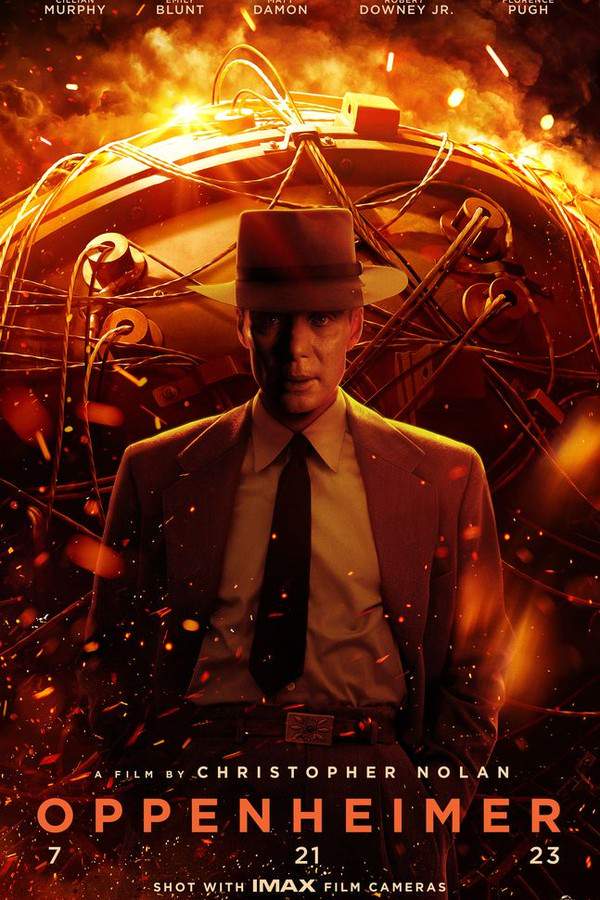
Oppenheimer (2023) movie poster

Ending Explained

Oppenheimer (2023) Ending Explained – Final Scene & Meaning

Release, runtime and language
2023 · 180 min · English
Echo score 83
JustWatch #59 16
Starring
Florence Pugh, Gary Oldman, Alden Ehrenreich, Emily Blunt, James Remar, Jason Clarke
Budget
$100M

Drawing from Kai Bird and Martin J. Sherwin’s biography, American Prometheus, this film explores the life of J. Robert Oppenheimer, the brilliant theoretical physicist who spearheaded the Manhattan Project's development of the first nuclear weapons. His work ushered in the Atomic Age, forever changing the world and grappling with the profound moral and political implications of his creation.

On this page (9)
  1. 1 Where to watch
  2. 2 What happens at the end
  3. 3 Final events in order
  4. 4 Ending questions answered
  5. 5 The book behind the movie
  6. 6 Movie threads
  7. 7 Movies like Oppenheimer
  8. 8 Categories
  9. 9 Every angle

Where to watch

Where to Watch Oppenheimer (2023)

Where can you watch Oppenheimer? Stream, rent or buy it in the US, including on Peacock Premium, Peacock Premium Plus and YouTube TV: current JustWatch availability with up-to-date prices.

Streaming availability powered by JustWatch

Ending explained · contains spoilers

What Happens at the End of Oppenheimer?

How Oppenheimer (2023) ends, what the final scene means, which earlier moments set it up and how to read the ending if the film leaves it open. The full ending explained, with every spoiler.

Oppenheimer’s story centers on the complex psychological and moral struggles of J. Robert Oppenheimer, the physicist who developed the first atomic bomb. By the end of the film, it’s clear that Oppenheimer is haunted by the consequences of his creation. After helping test and deploy the bomb in Hiroshima and Nagasaki, he begins to grapple with immense guilt, knowing that his work has unleashed unparalleled destruction. Despite not being a spy or deliberately betraying his country, he is targeted by those who see him as a threat to national security, especially Lewis Strauss. Strauss resents Oppenheimer for challenging authority and publicly criticizing the use of nuclear weapons, and he seeks to strip him of his security clearance to destroy his reputation.

The film culminates in a tense hearing where Oppenheimer’s loyalty and integrity are questioned. Throughout, Nolan emphasizes that Robert’s internal conflict is at the core of his character—he wanted to do good but was pulled into a devastating cycle of moral regret. Although he is ultimately denied clearance, this rejection symbolizes the broader condemnation of his moral ambivalence and the difficulty of reconciling scientific achievement with its consequences. In the end, Oppenheimer walks away having lost much of his status but gaining a profound awareness of the personal and ethical toll his work has exacted. As he faces the ghosts of his past, he embodies the tragic figure of a man who helped create a weapon of mass destruction but also understood the profound weight of his actions, forever marked by the devastating power he helped unleash. His story closes with a haunting reflection on the moral costs of scientific progress and the relentless pursuit of knowledge, leaving viewers to ponder the true meaning of responsibility in the face of such destructive innovation.

Last updated: June 25, 2025 at 08:59

Was this helpful?

The last 4 events

How Oppenheimer Ends: The Final Events in Order

The last events of Oppenheimer (2023) in chronological order, the run-up to the ending explained above. The complete timeline has all 12 events, scene by scene.

Open the full timeline
  1. Manipulation in the Hearing

    The hearing is dominated by manipulation and the actions of Roger Robb, who is appointed as special counsel. While Robb has full access to Oppenheimer's security files, Oppenheimer's legal team finds themselves at a disadvantage, further skewing the outcome.

  2. Senate Hearing Against Strauss

    In 1959, Strauss faces accusations regarding his motivations for Oppenheimer's public disgrace during his Senate confirmation hearing for the Secretary of Commerce. The fallout from these allegations leads to a Senate vote against Strauss's nomination.

    When
    1959
  3. Award from President Johnson

    In 1963, President Lyndon B. Johnson gives Oppenheimer the Enrico Fermi Award, signaling a notable shift in public perception towards him. This award also represents a degree of redemption for Oppenheimer after years of vilification.

    When
    1963
  4. Reflection with Einstein

    In reflective flashbacks, Oppenheimer engages in a pivotal conversation with Albert Einstein. This discussion reveals Oppenheimer's ongoing belief that their scientific advancements have created a precarious future marked by the threat of nuclear destruction.

Ending questions answered

Oppenheimer Ending: Your Questions Answered

The questions people ask most about the ending of Oppenheimer (2023): what the final scene means, how the twist works, what happens to each character and how to read the ending. Each answer contains spoilers.

Q1

Why does Oppenheimer lose his security clearance?

Oppenheimer loses his security clearance because Lewis Strauss, who resents him for publicly criticizing nuclear weapons and challenging authority, orchestrates a hearing to question his loyalty and integrity. Although Oppenheimer is not accused of being a spy, his past associations with communists and his vocal opposition to the hydrogen bomb make him vulnerable to political attack. The denial of his clearance symbolizes the broader condemnation of his moral ambivalence and represents his professional and personal destruction.

Foreshadowing: Earlier scenes show Oppenheimer's left-leaning political associations and his public disagreements with government officials, which provide the ammunition Strauss later uses against him.

  • security clearance
  • hearing
  • lewis strauss
  • loyalty
  • politics
Q2

Who is Lewis Strauss and why does he target Oppenheimer?

Lewis Strauss is a former member of the Atomic Energy Commission who becomes the main antagonist against Oppenheimer. He resents Oppenheimer for publicly embarrassing him during Senate hearings and for challenging the development of the hydrogen bomb. Strauss sees Oppenheimer as a threat to national security and a symbol of scientific elitism, so he deliberately works to strip away his security clearance to destroy his reputation and credibility.

Foreshadowing: Strauss's hostility is established early when Oppenheimer testifies against him during Senate hearings, setting up their later confrontation.

  • lewis strauss
  • enemy
  • atomic energy commission
  • senate hearing
Q3

Why does Oppenheimer feel guilty about Hiroshima and Nagasaki?

Oppenheimer feels intense guilt because he spearheaded the development of the atomic bomb, knowing it would cause unprecedented mass destruction. After witnessing the successful Trinity test, he famously quoted the Bhagavad Gita, 'Now I am become Death, the destroyer of worlds.' The realization that his scientific achievement has been used to kill hundreds of thousands of civilians haunts him throughout the rest of his life.

Foreshadowing: The Trinity test sequence shows Oppenheimer's initial awe turning to horror as he grapples with what he has created.

  • guilt
  • hiroshima
  • nagasaki
  • bhagavad gita
  • destruction
Q4

What does the ending of Oppenheimer mean?

The ending represents a bittersweet resolution where Oppenheimer achieves partial redemption through the Enrico Fermi Award, but the film makes clear this does not erase his legacy of guilt or the ongoing nuclear threat he helped create. He walks away having lost his status and security clearance but gains a profound awareness of the personal and ethical toll his work has exacted. The final image of him with children symbolizes both hope and the沉重的 burden of the nuclear future he bequeathed to humanity.

Foreshadowing: The recurring motif of Oppenheimer's interaction with children throughout the film foreshadows this thematic conclusion about legacy and responsibility.

  • meaning
  • ending
  • legacy
  • responsibility
  • children
Q5

What is the significance of the Enrico Fermi Award scene?

The Enrico Fermi Award scene represents Oppenheimer's partial political rehabilitation. In 1963, President Kennedy secretly offers him the award as a way to restore his reputation, though Kennedy is assassinated before the ceremony. The scene is tinged with irony, Oppenheimer receives this honor years after being publicly humiliated and stripped of his clearance, but the award cannot undo the damage to his career or alleviate his personal guilt over the bomb's devastation.

Foreshadowing: Earlier references to Fermi and other scientists who received government honors contrast with Oppenheimer's political exile.

  • enrico fermi award
  • 1963
  • redemption
  • kennedy
Q6

Does Oppenheimer regret creating the atomic bomb?

Yes, Oppenheimer deeply regrets creating the atomic bomb, though his feelings are complex. He did not regret the work itself during the war, believing Germany would develop it first. His regret emerges after witnessing the destruction wrought on Hiroshima and Nagasaki and realizing the bomb has ushered in an era of nuclear threat. Throughout the film's ending, he is consumed by guilt and haunted by the lives his creation destroyed.

Foreshadowing: The contrast between Oppenheimer's initial scientific excitement during the Manhattan Project and his later moral anguish establishes this trajectory of regret.

  • regret
  • remorse
  • scientific achievement
  • moral conflict
Q7

What is the final scene with the children in Oppenheimer about?

The final scene shows Oppenheimer at a celebration with his family, where children run around him in slow motion while he looks on. This image represents the dual nature of his legacy, the children symbolize the future generations who will live with the nuclear threat he helped create. It is both a moment of personal peace and a haunting reminder of the responsibility he bears for bequeathing weapons of mass destruction to humanity.

Foreshadowing: Throughout the film, Oppenheimer's interactions with his own children and other young people highlight his awareness of the generational impact of his work.

  • children
  • future
  • legacy
  • nuclear threat
  • family
Q8

Why is Oppenheimer shown as haunted in the ending?

Oppenheimer is shown as haunted because he must confront the consequences of his actions throughout the film. The ghostly figures of those who died in Hiroshima and Nagasaki appear in his visions, representing his psychological torment. The film uses these haunting images to convey the overwhelming guilt and moral weight that consumes him, a man who helped create a weapon of unprecedented destruction and must live with that knowledge for the rest of his life.

Foreshadowing: The Trinity test sequence introduces the visual motif of fire and destruction that recurs as Oppenheimer's psychological torment.

  • ghosts
  • guilt
  • psychological torment
  • vision
  • hiroshima
Q9

What does the ending say about scientific responsibility?

The ending presents a somber reflection on the moral costs of scientific progress and the responsibility scientists bear for their creations. Oppenheimer's story illustrates the tension between pure scientific pursuit and the real-world consequences of discovery. The film suggests that knowledge without ethical consideration can lead to catastrophic outcomes, and that scientists cannot escape accountability for how their work is ultimately used.

Foreshadowing: Debates throughout the Manhattan Project about whether to build the bomb and whether to use it establish this theme of scientific ethics.

  • scientific responsibility
  • ethics
  • progress
  • accountability
  • moral cost
Q10

Is the ending of Oppenheimer based on a true story?

Yes, the ending of Oppenheimer is based on real historical events. The security clearance hearing did occur in 1954, and Oppenheimer was denied clearance. He was later awarded the Enrico Fermi Award in 1963 by President Kennedy's administration as a form of rehabilitation. The film dramatizes these events but remains largely faithful to the historical record, drawing from Kai Bird and Martin J. Sherwin's biography American Prometheus.

Foreshadowing: The film's use of real historical figures and documented events establishes its basis in truth throughout.

  • true story
  • real events
  • history
  • american prometheus
Q11

Why does Lewis Strauss want to destroy Oppenheimer's reputation?

Lewis Strauss wants to destroy Oppenheimer's reputation primarily due to personal resentment and political ideology. Strauss harbors anger toward Oppenheimer for publicly humiliating him during Senate hearings when Oppenheimer testified against Strauss's nomination. Additionally, Strauss views Oppenheimer's opposition to the hydrogen bomb as unpatriotic and sees scientific intellectuals as threats to his political agenda. Using McCarthy-era fears of communism, Strauss manipulates the system to bring down his former rival.

Foreshadowing: The Senate hearing scene early in the film establishes the personal animosity between Strauss and Oppenheimer.

  • motivation
  • revenge
  • politics
  • reputation
  • senate

Movie threads

More Movies Like Oppenheimer, by Mood & Story

Curated lists built around what makes Oppenheimer tick: the same mood, the same kind of story or the same emotional payoff. Each list explains why these movies belong together.

Movies about the moral weight of creation like Oppenheimer

Stories of brilliant minds grappling with the devastating consequences of their own inventions. If you were captivated by Oppenheimer's exploration of scientific genius and moral consequence, this list is for you. Discover other movies that delve into the heavy responsibility of creators and innovators, featuring similar tales of world-changing discoveries and the profound ethical dilemmas they unleash.

  • weighty
  • reflective
  • anxious
  • somber
  • ethically complex
  • psychological
  • Tone: tense, somber, morally complex
  • Pacing: variable, reflective
Why these movies?

The story pattern: These narratives typically follow a genius protagonist through their ambitious journey of creation, culminating in a moment of triumph that is immediately undercut by dread. The story then shifts to a deep, personal reckoning with the unintended, often catastrophic, consequences of their work, leading to a crisis of conscience and legacy.

Why they belong together: Movies in this thread share a core focus on the 'Frankenstein' dilemma, where creation turns into a curse. They blend high-stakes intellectual drama with deep, character-driven explorations of guilt, hubris, and the irreversible impact of a single idea, resulting in a heavy, thought-provoking viewing experience.

Tense political paranoia thrillers like Oppenheimer

High-stakes stories where institutions turn against the individual in a climate of suspicion. For viewers who appreciated the intense, anxiety-driven hearings and political betrayals in Oppenheimer. This collection highlights movies with similar themes of institutional persecution, where a character's loyalty and legacy are dismantled in a high-stakes, tense atmosphere of suspicion and intrigue.

  • tense
  • paranoid
  • claustrophobic
  • anxious
  • suspenseful
  • psychological
  • Tone: tense, anxious, paranoid
  • Pacing: variable, deliberate
Why these movies?

The story pattern: These films often use a non-linear or framed narrative, intercutting between the protagonist's past achievements and their present-day ordeal within a hostile judicial or political system. The conflict is less about physical action and more about psychological warfare, wordplay, and the dismantling of a reputation, leading to a personal and professional downfall.

Why they belong together: These movies are grouped by their masterful building of tension through dialogue, editing, and a pervasive sense of institutional distrust. They share a specific vibe of anxiety and claustrophobia, driven by thematic focuses on betrayal, the abuse of power, and the fragility of truth in the face of political agendas.

If you liked this

Movies Like Oppenheimer

Similar movies to Oppenheimer: the same genre, themes or kind of story. Each one comes with its own plot summary, timeline and ending explained.

Browse all movie summaries

Categories

Movie Lists Featuring Oppenheimer

Oppenheimer appears in these hand-built movie categories. Each one groups movies by a specific mood, theme or story type, with their plot summaries and endings explained.

View all movie categories

Every angle

Oppenheimer (2023) Explained: Plot, Ending, Timeline & Characters

Everything about Oppenheimer in one place: what happens in the plot summary, the timeline in chronological order, the characters and meaning, the ending explained and a spoiler-free summary. What's After the Movie adds the cast, box office and post-credit scenes.

Coming soon on iOS and Android

The Plot Explained Movie Summary App

Plot summaries, endings explained and timelines on your phone. Catch up on any movie in minutes, save your favorites and never miss a twist again.

Be the first to know when we launch. Your email stays private, always.

Learn more about the app