Plot Explained Spoilers guaranteed!
Plot Explained

Browse by genre

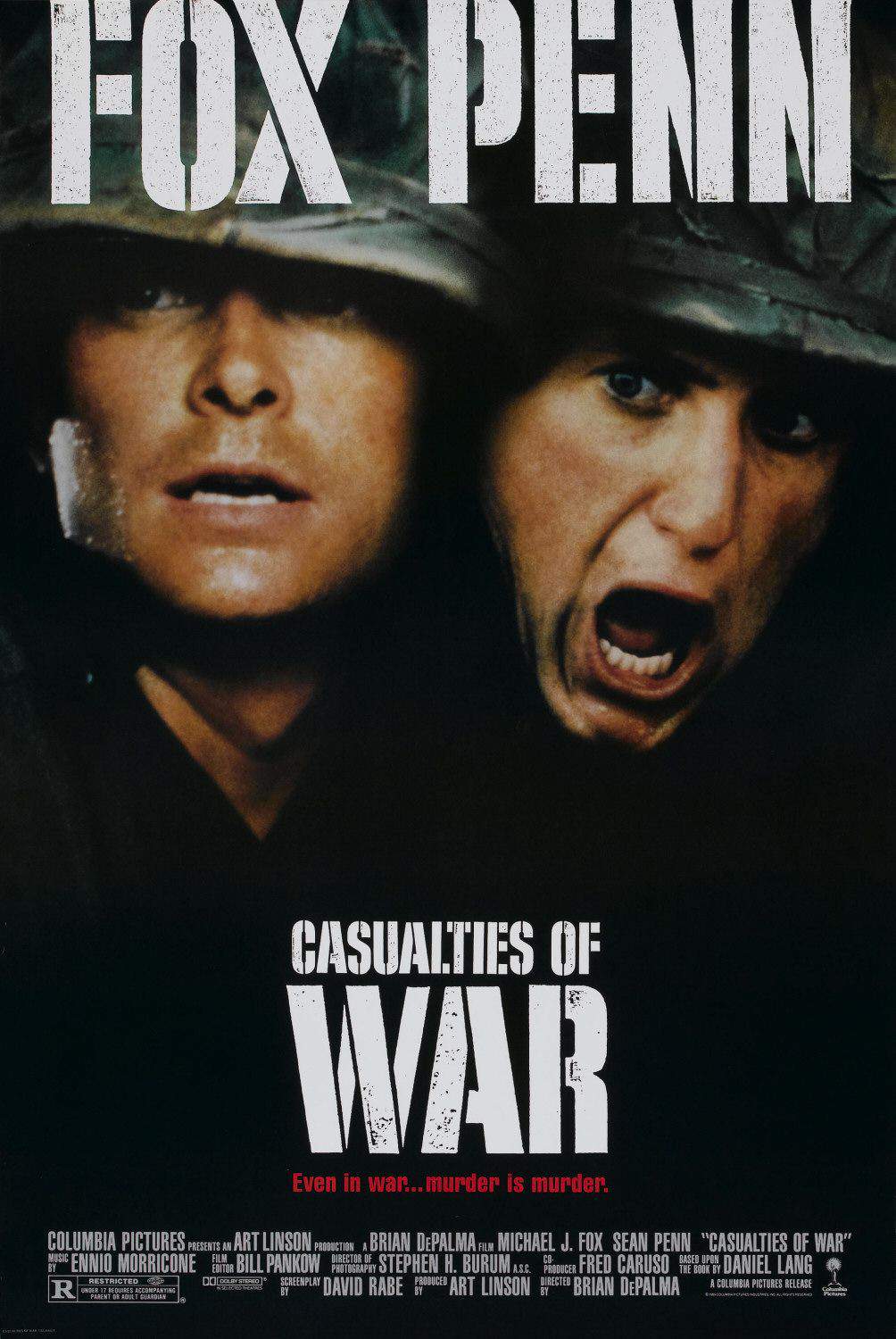
Casualties of War (1989) movie poster

Plot Summary

Casualties of War (1989) Plot Summary Explained

Release, runtime and language
1989 · 113 min · English
Loading streaming availability…
Directed by
Brian De Palma
Starring
John Leguizamo, John C. Reilly, Ving Rhames, Sean Penn, Michael J. Fox, Erik King

Amidst a war zone, a family's stability unravels within the tense environment of domestic relations court. As the adults' disagreements intensify, vulnerable children are caught in a difficult battle for power, their futures irrevocably altered by the conflict and systemic failures. The experience leaves a lasting impact on everyone involved, highlighting the devastating consequences of fractured relationships and the fragility of innocence.

On this page (6)
  1. 1 Where to watch
  2. 2 What happens: full plot
  3. 3 Plot questions answered
  4. 4 Movie threads
  5. 5 Movies like Casualties of War
  6. 6 Every angle
Loading streaming availability…

Full plot summary · contains spoilers

What Happens in Casualties of War: Full Plot Summary

The whole story of Casualties of War (1989) explained, from the opening scene to the final frame: every key event, every twist and what it all adds up to. Read it as a quick recap before the sequel, to check a scene you missed, or to finally understand what really happened.

The story unfolds through the reflective memories of Max Eriksson, a seasoned Vietnam veteran grappling with the ghosts of his past. In a haunting flashback, we accompany Lieutenant John C. Reilly as he leads a group of American soldiers on a dangerous nighttime patrol. Their mission goes awry when an anxious comrade inadvertently exposes their location to the Viet Cong (VC). In the chaos that ensues, Sergeant Tony Meserve, portrayed by Ving Rhames, heroically saves Eriksson from a collapsing tunnel. The platoon regroups by a serene river village in the Central Highlands, where light-hearted banter temporarily shields them from the looming horrors of war.

Tragically, their brief moment of peace is abruptly disrupted by the discovery of Specialist 4 "Brownie" Brown's lifeless body, a grim victim of an unexpected VC ambush. This severe loss weighs heavily on Meserve, echoing throughout the platoon. Shortly after, Private First Class Antonio Dìaz arrives to fill the void left by a fallen comrade, bringing a fresh perspective into the squad's dynamics.

As the days progress, Eriksson's pent-up frustration concerning the squad's ongoing leave denial begins to fester, leading him to express concerns that are largely ignored. Meserve, alongside Corporal Thomas E. Clark and Private First Class Herbert Hatcher, concocts a plan to abduct a Vietnamese girl named Tran Thi Oanh, disregarding Eriksson's entreaties for discretion. This reckless nocturnal expedition marks the beginning of a profound moral quandary that will haunt the men.

Days into their tortured existence, Dìaz starts to grapple with his conscience concerning the escalating violence, ultimately seeking Eriksson's counsel to resist the pressure perpetuated by the platoon. However, his resolve is put to the test when Meserve's tyrannical grip forces Eriksson to assume a guard role outside a dilapidated structure while the others engage in horrific acts against Tran. Eriksson's internal struggle escalates as he wrestles with the stark contrast between humanity and the brutal realities of combat.

As dawn breaks, Eriksson is burdened with the duty of guarding Tran while the squad sets its sights on a crucial railroad bridge that overlooks a strategically vital Viet Cong supply depot. Through simple acts of kindness, Eriksson gradually earns Tran's trust, secretly planning an escape to return her to her family. Just when it seems hope may return, Meserve sends Clark to retrieve them, crushing Eriksson's aspirations for salvation. The narrative races toward its climax as Eriksson finds himself increasingly ensnared in the web of chaos and despair.

In a devastating turn of events, Meserve orders Dìaz to call in air support for an attack on the depot and chillingly commands the execution of Tran. Before the execution can commence, Eriksson rebels, firing his rifle into the air and inadvertently revealing their position to the nearby VC. In the ensuing firefight, Tran attempts to flee, enduring brutal attacks from Clark. Eriksson's desperate effort to save her is cut short when Meserve mercilessly strikes him down. Helpless, he watches as his entire squad fires upon Tran, who ultimately succumbs to her injuries, falling from the bridge to her tragic demise.

After this harrowing ordeal, Eriksson finds himself recovering in a makeshift military hospital, where he recounts the harrowing events to Rowan. Rowan encourages him to seek guidance from John C. Reilly and Captain Hill, the company commander. Both men, however, prefer to ignore the incident until Eriksson’s unwavering quest for the truth ignites Hill's fury. Determined to silence Eriksson, Hill conspires to transfer him to a tunnel rat unit alongside Meserve's squad.

In a tense turn of events, Eriksson narrowly survives an assassination attempt from Clark while in the latrine, forcing him to confront the reality of their actions. Driven by anger and defiance, Eriksson storms a tent to confront Meserve, reminding him that eliminating him would change nothing, as no one cares about their vile acts. Meserve, taken aback, dismisses Eriksson's concerns, but the confrontation marks a pivotal moment in Eriksson's struggle.

With nowhere else to turn, Eriksson confides in an Army chaplain, recounting the dreadful patrol. The chaplain’s report triggers an investigation that culminates in the court-martial of the squad members. Meserve is sentenced to 10 years of hard labor, while Clark faces life imprisonment, and Hatcher and Dìaz receive 15 and 8 years, respectively.

As the film closes, Eriksson awakens from a distressing nightmare on a J-Church transit line in San Francisco, sitting close to a Vietnamese-American student who bears an uncanny resemblance to Tran. When she gets off at Dolores Park, she leaves behind a scarf, prompting Eriksson to chase after her to return it. Their brief exchange leaves Eriksson with a poignant sense that justice has been served, as she unknowingly stirs memories of a haunting past.
Last updated: November 19, 2024 at 18:08

Was this helpful?

Plot questions answered

Casualties of War Plot Explained: Your Questions Answered

The questions people ask most about Casualties of War (1989): what happens in the confusing scenes, why the characters do what they do, the twists, hidden details and what the ending means. Each answer contains spoilers.

Q1

Why does Sergeant Meserve order Tran's execution?

Meserve orders Tran's execution to silence her as a witness after the squad's attack on the VC supply depot. He recognizes that if she survives and reports what happened, their crime of abduction and assault will be exposed, leading to serious consequences. The order represents his attempt to cover up the atrocity and eliminate incriminating evidence, though the murder ultimately becomes the pivotal act that triggers Eriksson's decision to report the entire incident.

Foreshadowing: Earlier, Meserve dismisses Eriksson's concerns about the abduction, showing his willingness to protect the squad through any means necessary.

  • meserve
  • tran execution
  • cover up
  • witness
  • war crime
Q2

Why does Eriksson fire his rifle into the air instead of stopping the execution directly?

Eriksson fires into the air as a desperate act of rebellion when he cannot bring himself to directly confront his squadmates. He hopes that the sound will alert nearby Viet Cong to their position, creating a distraction that might save Tran. While this choice inadvertently puts everyone in danger, it demonstrates his moral refusal to passively witness the execution. The chaotic firefight that follows represents his final attempt to intervene, even though it ultimately fails to save her.

Foreshadowing: Eriksson has been wrestling with his conscience throughout the film, increasingly unable to reconcile his role as guard with his moral beliefs.

  • eriksson
  • warning shot
  • rebellion
  • execution
  • distraction
Q3

Why do Meserve, Clark, and Hatcher kidnap Tran Thi Oanh?

The three soldiers kidnap Tran purely for sexual exploitation, using her as a captive to satisfy their desires during deployment. This act of desperation and cruelty reflects the moral degradation that has taken hold of certain members of the platoon. Their decision disregards any consideration of the harm it will cause or the war crimes they are committing. Eriksson's warnings about discretion fall on deaf ears, highlighting the trio's reckless disregard for consequences.

Foreshadowing: The squad's frustration over leave denial and the mounting pressures of war create an environment where rational restraints break down.

  • meserve
  • clark
  • hatcher
  • kidnap
  • tran
  • violation
Q4

Why is Eriksson forced to guard Tran while the others assault her?

Meserve assigns Eriksson the guard role specifically to ensure his complicity in the crime. By making him responsible for preventing Tran's escape, Meserve forces Eriksson into a position where he cannot claim ignorance of what is happening. Eriksson is caught between his loyalty to the squad and his growing horror at the acts being committed. This deliberate placement creates the central moral dilemma that haunts Eriksson throughout the film.

Foreshadowing: Eriksson's earlier concerns about the squad's actions have been noted by Meserve, who ensures he cannot distancing himself from the crime.

  • eriksson
  • guard
  • tran
  • complicity
  • moral dilemma
Q5

Why does Eriksson decide to report the crime despite the risks?

Eriksson reports the crime because he cannot live with the guilt of silence. After recovering in the hospital and recounting the events to Rowan, he attempts to seek justice through official channels, first approaching Reilly and then Captain Hill. When Hill attempts to cover up the incident and transfer Eriksson to a dangerous tunnel rat unit, the attempt on his life by Clark in the latrine convinces him that the truth must be exposed. He ultimately confides in an Army chaplain, triggering the investigation that leads to the court-martial.

Foreshadowing: Eriksson's internal struggle intensifies from the moment he is forced to guard Tran, suggesting he was always headed toward this moment of conscience.

  • eriksson
  • report
  • crime
  • chaplain
  • court-martial
  • justice
Q6

Why does Private Dìaz go along with the plan despite his moral objections?

Dìaz initially tries to resist the escalating violence and even seeks Eriksson's counsel for support against the platoon's pressure. However, Meserve's tyrannical control over the squad makes defection extremely dangerous. When ordered to call in the air support and witness the execution, Dìaz complies out of fear and peer pressure rather than genuine willingness. His participation illustrates how hierarchical military structures and group dynamics can force otherwise decent soldiers into committing atrocities they would otherwise reject.

Foreshadowing: Dìaz's arrival after Brownie's death initially brings a fresh perspective, suggesting he might be a positive influence on the squad.

  • diaz
  • moral conflict
  • peer pressure
  • complicity
  • obey orders
Q7

Why does Captain Hill try to cover up the incident instead of investigating?

Captain Hill prioritizes maintaining unit cohesion and avoiding scandal over justice. He knows that exposing the crime would reflect poorly on his command and potentially damage the platoon's morale during a critical period of the war. Hill's solution is to transfer Eriksson to the dangerous tunnel rat unit alongside Meserve's squad, effectively silencing him through reassignment rather than addressing the underlying crime. This institutional failure drives Eriksson to seek justice through external channels.

Foreshadowing: Hill's immediate dismissal of Eriksson's concerns foreshadows his willingness to protect the chain of command over individual morality.

  • captain hill
  • cover up
  • transfer
  • military justice
  • chain of command
Q8

What is the significance of Eriksson encountering a Vietnamese student in San Francisco?

The Vietnamese-American student who resembles Tran represents Eriksson's unresolved guilt and the lasting psychological impact of his failure to save her. Her incidental presence in his life triggers a flood of memories, forcing him to confront the trauma he has carried since the war. By chasing after her to return the forgotten scarf, Eriksson experiences a moment of tentative redemption, though it remains ambiguous whether this encounter offers genuine closure or simply reinforces his ongoing haunted state.

Foreshadowing: The film opens with Eriksson grappling with the ghosts of his past, establishing that he has never fully processed the traumatic events.

  • san francisco
  • student
  • tran
  • scarf
  • closure
  • redemption
  • haunted
Q9

Why does Meserve save Eriksson from the collapsing tunnel?

Meserve heroically saves Eriksson from being crushed in a collapsing tunnel during the early patrol, demonstrating his capability as a soldier and establishing a bond with Eriksson. This act of bravery makes Eriksson's later moral conflict with Meserve even more devastating, as he must reconcile the man who saved his life with the man who ordered an innocent girl's murder. The initial heroic characterization makes Meserve's subsequent descent into criminality more shocking and tragic.

Foreshadowing: The narrative immediately establishes Meserve as a capable, trustworthy leader before revealing his darker capabilities.

  • meserve
  • eriksson
  • tunnel rescue
  • heroism
  • bravery
Q10

Why does Clark try to kill Eriksson in the latrine?

Clark attempts to assassinate Eriksson because he is terrified that Eriksson will expose their crimes. After the court-martial proceedings begin, Clark views Eriksson as the primary threat to his freedom and life. The latrine attack represents the final attempt to silence the only witness willing to testify against the squad. This violent action also demonstrates the extent to which the perpetrators will go to protect themselves, reinforcing the moral corruption that has taken hold of these soldiers.

Foreshadowing: Clark was the one who physically carried out the shooting of Tran, making him equally guilty and desperate to avoid consequences.

  • clark
  • assassination
  • latrine
  • witness
  • freedom
  • desperation
Q11

Why is the squad repeatedly denied leave, and how does this contribute to the story?

The squad's continuous denial of leave creates mounting frustration that contributes to the deterioration of their moral restraint. Eriksson's pent-up anger about the leave denial is one of the early indicators of growing unrest within the platoon. This institutional stress, combined with the traumatic loss of Brownie and the pressures of combat, creates an environment where Meserve's criminal plan can gain traction. The denial of leave acts as a pressure cooker element that gradually breaks down the soldiers' resistance to immoral actions.

Foreshadowing: The frustration over leave denial is mentioned early in the narrative, establishing the psychological strain that铺垫s the later atrocities.

  • leave denial
  • frustration
  • stress
  • morale
  • pressure
Q12

What sentences do the soldiers receive at court-martial?

The court-martial delivers significant sentences to all involved. Meserve receives 10 years of hard labor for his role as the mastermind behind the abduction and ordering of Tran's execution. Clark faces life imprisonment for his direct role in Tran's murder. Hatcher receives 15 years, and Dìaz receives 8 years for their participation. These sentences demonstrate that the military justice system ultimately holds the soldiers accountable, though Eriksson is left permanently traumatized by the experience, suggesting that legal justice cannot undo psychological damage.

Foreshadowing: The investigation only occurs because Eriksson confides in the chaplain, without which the crime might have remained hidden.

  • court-martial
  • meserve
  • clark
  • hatcher
  • diaz
  • sentences
  • prison
Q13

Why does Eriksson trust the Army chaplain with his story instead of continuing to pursue official channels?

Eriksson turns to the chaplain after exhausting other options. Reilly dismisses his concerns, Hill actively works to silence him, and the latrine assassination attempt by Clark makes clear that the official chain of command will not protect him. The chaplain represents a safe, confidential space where Eriksson can unburden himself of the traumatic events without fear of retaliation. This act of confession ultimately triggers the formal investigation that leads to justice, suggesting that moral authority outside the military hierarchy is necessary to achieve accountability.

Foreshadowing: Eriksson's earlier attempts to report through official channels all fail, making the chaplain the last resort.

  • chaplain
  • confession
  • investigation
  • official channels
  • justice

Movie threads

More Movies Like Casualties of War, by Mood & Story

Curated lists built around what makes Casualties of War tick: the same mood, the same kind of story or the same emotional payoff. Each list explains why these movies belong together.

War crime witness stories like Casualties of War

Stories of individuals forced to confront horrific crimes committed by their own side. If you were captivated by the moral struggle in Casualties of War, this section features movies about individuals witnessing wartime atrocities. Discover similar dramas of conscience versus duty, military justice, and the heavy burden of being the sole voice against brutality.

  • morally conflicted
  • guilt-ridden
  • tense
  • harrowing
  • somber
  • disturbing
  • Tone: dark, morally conflicted
  • Pacing: steady, inevitable
Why these movies?

The story pattern: Narratives typically follow a protagonist who is part of a group that commits a heinous act. Their journey involves the immediate horror of the event, followed by a period of moral isolation and internal conflict, culminating in a difficult attempt to expose the truth, often at great personal risk. The focus is on the psychological disintegration of the witness rather than the perpetrators.

Why they belong together: These films are grouped by their shared exploration of survivor's guilt and the intense moral dilemma of confronting one's own team. They create a specific, claustrophobic mood of being trapped between duty and conscience, with a pacing that builds from tense normalcy to unbearable ethical pressure.

Heavy moral burden dramas similar to Casualties of War

Character-driven dramas where a single moral failure haunts a protagonist forever. For viewers who appreciated the lasting emotional impact of Casualties of War, this list gathers movies where a character is destroyed by the weight of a moral failure. Explore similar stories with heavy emotional weight, dark tones, and bittersweet or bleak endings that emphasize lasting trauma.

  • somber
  • guilt-ridden
  • tragic
  • heavy
  • disturbing
  • nightmarish
  • Tone: dark, somber, tragic
  • Pacing: steady, methodical
Why these movies?

The story pattern: The narrative pattern involves a pivotal event that shatters the protagonist's moral compass. The plot then follows the aftermath, detailing their psychological descent, attempts at atonement that often fail, and the permanent stain on their life. The structure is often linear, focusing on the cause and the long-term effect rather than a traditional resolution.

Why they belong together: Movies in this thread share a specific emotional mix: high sadness, high tension, and zero humor. They are united by a focus on the irreversible psychological damage caused by a traumatic moral event, creating a consistently dark and oppressive viewing experience defined by its heavy emotional weight.

If you liked this

Movies Like Casualties of War

Similar movies to Casualties of War: the same genre, themes or kind of story. Each one comes with its own plot summary, timeline and ending explained.

Browse all movie summaries

Every angle

Casualties of War (1989) Explained: Plot, Timeline & Characters

Everything about Casualties of War in one place: what happens in the plot summary, the timeline in chronological order, the characters and meaning and a spoiler-free summary. What's After the Movie adds the cast, box office and post-credit scenes.

Coming soon on iOS and Android

The Plot Explained Movie Summary App

Plot summaries, endings explained and timelines on your phone. Catch up on any movie in minutes, save your favorites and never miss a twist again.

Be the first to know when we launch. Your email stays private, always.

Learn more about the app