Year: 2004
Runtime: 121 min
Language: English
Director: Terry George
During the Rwandan genocide, hotel manager Paul Rusesabagina risks everything to shelter and protect over a thousand Tutsi refugees within the hotel he manages. Facing immense pressure and escalating violence, he must use all his courage and ingenuity to shield those seeking safety, defying the authorities and confronting the horrific reality of the ethnic cleansing unfolding around him. The lives of the refugees, and Paul's own, are in constant peril as he fights to maintain hope amidst the chaos.
Warning: spoilers below!
Haven’t seen Hotel Rwanda yet? This summary contains major spoilers. Bookmark the page, watch the movie, and come back for the full breakdown. If you're ready, scroll on and relive the story!
Read the complete plot breakdown of Hotel Rwanda (2004), including all key story events, major twists, and the ending explained in detail. Discover what really happened—and what it all means.
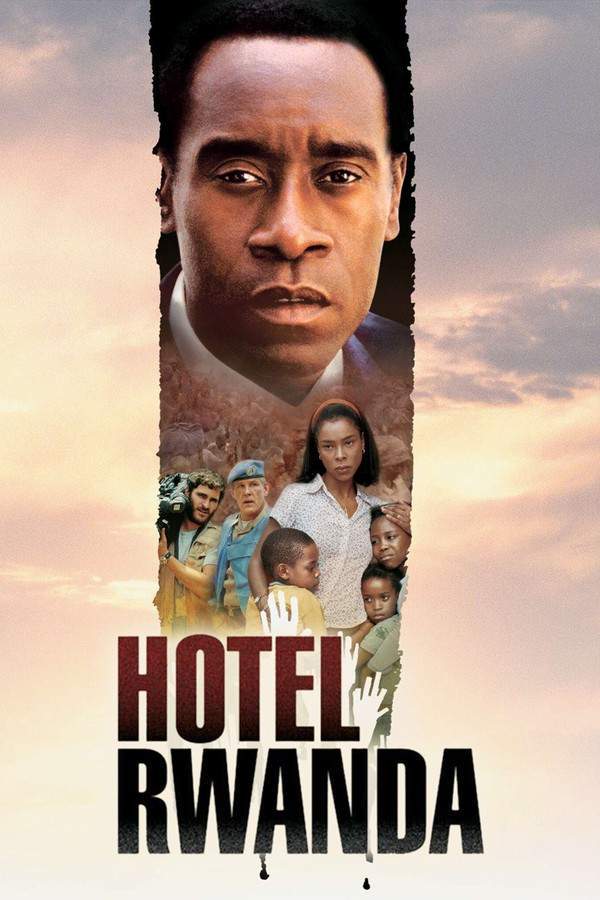
In the heart-wrenching backdrop of 1994 Rwanda, a catastrophic genocide saw nearly one million Tutsi people systematically slaughtered by Hutu soldiers amid a struggle for land ownership. A sanctuary emerged when approximately 1,000 Tutsi refugees found refuge in a luxurious hotel in central Kigali, owned by Sabena Airlines. At the forefront of this desperate plight was Paul Rusesabagina, played by Don Cheadle, who took on the monumental responsibility of safeguarding these vulnerable lives during the relentless assaults by Hutu forces.
“The Tutsi were collaborators for the Belgian colonists, they stole our Hutu land…”
Paul, a Hutu himself and husband to a Tutsi woman named Tatiana portrayed by Sophie Okonedo, struggles with the dangerous privilege of his position as the hotel manager. Upon arriving home one evening, Paul finds his wife’s brother and his family visiting. However, the tranquility is shattered when their son runs in with dreadful news: armed soldiers are wreaking havoc outside.
As chaos consumes the streets, Hutu soldiers target Tutsi homes, indiscriminately killing inhabitants and abducting women to serve as sex slaves. Paul discovers that Tatiana is hiding their Tutsi neighbors in their house, desperately seeking protection. The next day, confronted by Hutu soldiers demanding money and supplies, Paul cleverly negotiates for the refugees’ lives by posing them as family members. He uses his resources—$1,000 and jewelry—to secure their safety, a temporary reprieve amidst the rising tension.
In the shadows of this turmoil, David, a Scottish journalist, and his American cameraman, Jack, bear witness to the horrific brutality, documenting the atrocities inflicted upon the Tutsi population. Colonel Oliver, a Canadian UN official, bravely attempts to offer some measure of protection by placing guards at the hotel gates. Meanwhile, Pat Archer, an Australian Red Cross worker, seeks to bring the remaining children from a Tutsi orphanage, revealing the dire situation for Tutsi children, who are at risk of annihilation.
As the situation escalates, the hotel transforms into a makeshift refugee camp, where supplies dwindle, and despair looms. Desperate for aid, Paul and another hotel employee, Gregoire, venture into Hutu territory to procure essential supplies. The horrors continue to unfold when they encounter a road littered with the bodies of the slain, a stark reminder of the genocide’s brutality.
In a dramatic turn of events, a Hutu Lieutenant demands Paul evacuate all the refugees. However, a timely radio communication regarding Belgian soldiers en route elicits a hasty retreat from the Hutu forces, allowing Paul to arrange for some refugees to escape. When Pat returns, she shares harrowing news about many being unaccounted for, propelling Paul to make a heart-wrenching decision to send his family away without him.
As their escape unfolds, danger escalates, with Hutu soldiers surrounding the convoy, leading to a frantic standoff. Paul musters courage, reaching out to General Augustin Bizimungo, a Hutu General complicit in the genocide, for assistance—a choice that highlights the depths of his desperation. Amidst ongoing chaos, their survival hangs by a thread, with supplies rapidly depleting as they resort to drinking pool water.
Eventually, Colonel Oliver orchestrates an escape, exuding hope as they leave the hotel, but not without fierce resistance from Hutu soldiers. In a moment of unyielding determination, Paul, Tatiana, and their children rally with some orphaned children, signifying resilience against the tide of tragedy.
As the film draws to a close, the aftermath reveals the enduring scars left by the genocide. Paul, Tatiana, and the children ultimately forge a new life in Belgium, and the world learns the sobering truth behind the journey of survival against overwhelming odds. Paul managed to protect over one thousand refugees, a testament to the strength of human spirit amidst despair.
Last Updated: November 03, 2024 at 23:41
Discover curated groups of movies connected by mood, themes, and story style. Browse collections built around emotion, atmosphere, and narrative focus to easily find films that match what you feel like watching right now.
Ordinary individuals finding extraordinary bravery to protect others against systemic evil.If you were moved by the profound moral courage in Hotel Rwanda, explore these movies. This thread gathers powerful dramas where ordinary people face impossible choices during times of crisis, highlighting the resilience of the human spirit in the darkest of hours.
The narrative pattern follows an initially ordinary protagonist who becomes the last line of defense for a vulnerable group against a powerful, often state-sanctioned, threat. Their journey is not about winning a war, but about preserving humanity and making small, defiant stands that carry immense risk. The stakes are life and death, and the conflict is a desperate battle of wits and will against overwhelming force.
Movies in this thread are grouped by their shared focus on a specific type of heroism—one that is pragmatic, desperate, and morally anchored. They share a dark, tense tone, high emotional intensity, and a central theme of personal sacrifice for the greater good, creating a cohesive viewing experience centered on ethical resilience.
Gripping, fact-based accounts of individuals enduring and overcoming real-world atrocities.For viewers seeking more harrowing true stories like Hotel Rwanda, this collection features films based on real events of survival and resilience. These dramas are emotionally heavy, tense, and offer a sobering look at human history while celebrating the indomitable will to live.
These narratives are typically linear and straightforward, following a real-life protagonist or group through a well-documented historical tragedy. The plot is driven by the escalating threats of their environment, focusing on pragmatic survival strategies, moments of extreme peril, and the psychological toll of the experience. The ending is often bittersweet, acknowledging survival while never letting the audience forget the immense tragedy that occurred.
These films are united by their foundation in true events, which lends an additional layer of gravity and realism to the viewing experience. They share a high-intensity, dark tone, a heavy emotional weight, and a common goal of bearing witness to history through a personal, survival-focused lens.
Don't stop at just watching — explore Hotel Rwanda in full detail. From the complete plot summary and scene-by-scene timeline to character breakdowns, thematic analysis, and a deep dive into the ending — every page helps you truly understand what Hotel Rwanda is all about. Plus, discover what's next after the movie.
Track the full timeline of Hotel Rwanda with every major event arranged chronologically. Perfect for decoding non-linear storytelling, flashbacks, or parallel narratives with a clear scene-by-scene breakdown.
Discover the characters, locations, and core themes that shape Hotel Rwanda. Get insights into symbolic elements, setting significance, and deeper narrative meaning — ideal for thematic analysis and movie breakdowns.
Get a quick, spoiler-free overview of Hotel Rwanda that covers the main plot points and key details without revealing any major twists or spoilers. Perfect for those who want to know what to expect before diving in.
Visit What's After the Movie to explore more about Hotel Rwanda: box office results, cast and crew info, production details, post-credit scenes, and external links — all in one place for movie fans and researchers.
Discover movies like Hotel Rwanda that share similar genres, themes, and storytelling elements. Whether you’re drawn to the atmosphere, character arcs, or plot structure, these curated recommendations will help you explore more films you’ll love.
Hotel Rwanda (2004) Scene-by-Scene Movie Timeline
Hotel Rwanda (2004) Movie Characters, Themes & Settings
Hotel Rwanda (2004) Spoiler-Free Summary & Key Flow
Movies Like Hotel Rwanda – Similar Titles You’ll Enjoy
The Killing Fields (1985) Story Summary & Characters
Kinyarwanda (2011) Full Movie Breakdown
Shake Hands with the Devil: The Journey of Roméo Dallaire (2005) Movie Recap & Themes
Hotel (2003) Spoiler-Packed Plot Recap
Munyurangabo (2009) Spoiler-Packed Plot Recap
Birds Are Singing in Kigali (2017) Detailed Story Recap
Ghosts of Rwanda (2004) Movie Recap & Themes
Sometimes in April (2005) Complete Plot Breakdown
A Sunday in Kigali (2006) Full Summary & Key Details
Shake Hands with the Devil (2007) Complete Plot Breakdown
God Sleeps in Rwanda (2005) Spoiler-Packed Plot Recap
Hotel Fear (1978) Full Movie Breakdown
Hotel (1967) Spoiler-Packed Plot Recap
The Day God Walked Away (2009) Film Overview & Timeline
Attack On Darfur (2009) Detailed Story Recap