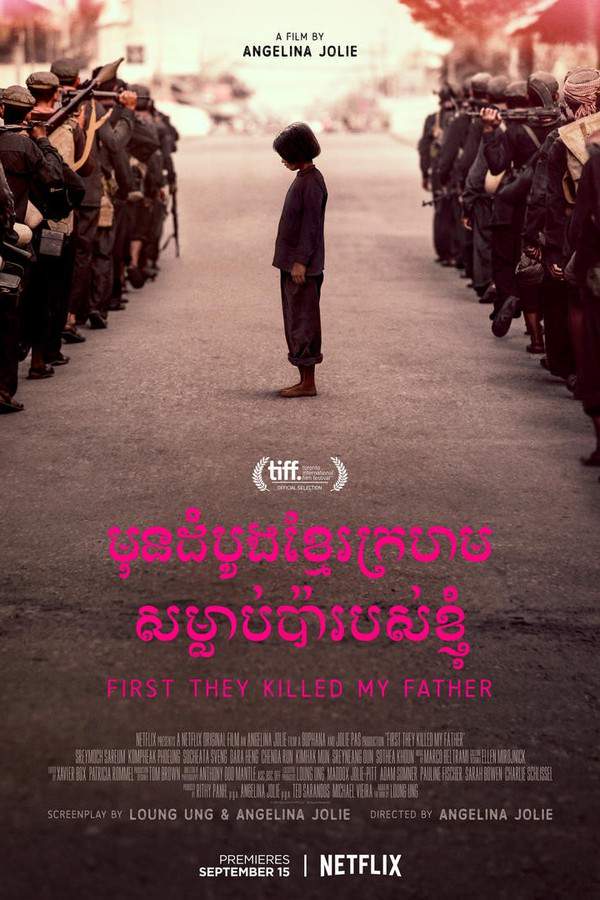
During Cambodia's horrific Khmer Rouge regime, a young girl experiences unimaginable trauma. Based on Loung Ung’s memoir, the film depicts her desperate struggle for survival from age five to nine. She and her family are torn apart, facing the brutal realities of war, forced labor, and the devastating effects of genocide as they fight to stay alive.
Warning: spoilers below!
Haven’t seen First They Killed My Father yet? This summary contains major spoilers. Bookmark the page, watch the movie, and come back for the full breakdown. If you're ready, scroll on and relive the story!
Read the complete plot breakdown of First They Killed My Father (2017), including all key story events, major twists, and the ending explained in detail. Discover what really happened—and what it all means.
In the turbulent year of 1975, amidst the chaos of the Khmer Republic, we meet Loung Ung, a five-year-old girl and the daughter of a dedicated officer known affectionately as Pa to his seven children. The backdrop of the narrative unfolds during the Vietnam War, where the conflict spills over into tranquil Cambodia as the U.S. military starts targeting North Vietnamese forces seeking refuge within the country’s borders. This tumultuous situation ignites the Cambodian Civil War, leading to a severe evacuation of the U.S. embassy in the area.
As the oppressive grip of the Khmer Rouge tightens, they seize control of Phnom Penh, forcefully expelling families under the guise of impending bombings by the Americans. In a desperate bid for survival, Pa Ung maintains that he does not work for the government when confronted by Khmer Rouge soldiers, fully aware that the truth would cost him his life. They are able to find temporary shelter with Uncle (Loung’s maternal uncle), who provides refuge until Aunt’s nagging fear of repercussions for harboring them drives Loung’s family into a perilous journey.
Days of grueling travel ensue, culminating in their capture by the Khmer Rouge soldiers who transport them to a labor camp. Here, families are subjected to forced labor while they must construct their own shelters amidst dire living conditions. The oppressive regime confiscates their belongings, and with scant food available—most of which is redirected to sustenance for soldiers—desperation sets in, leading to brutal punishments for those seeking additional nourishment. Tragically, Loung is forced to bear witness to the horrific beatings of her siblings in their struggle for survival.
The labor camp becomes a breeding ground for propaganda, with foreign items—including life-saving medications—strictly forbidden and punishable by death. Loung’s world becomes even bleaker when her two oldest brothers, along with her sister Keav, are moved to different camps, ultimately receiving the devastating news of Keav’s death from dysentery.
In a heart-wrenching farewell, Loung witnesses her father being taken by Khmer Rouge officials under the pretense of repairing a bridge. His grim prediction looms over their family as he bids goodbye to his beloved wife and children. This haunting moment plunges Loung into a nightmare where she envisions her father meeting a tragic end, buried within the cruel confines of a mass grave. It isn’t long before Ma instructs Loung, her brothers Kim and Chou, to flee in disparate directions, adopting false identities as orphans. Together, Loung and Chou manage to escape to a different camp, separated from Kim.
At the new camp, Loung finds herself enlisted as a child soldier for the Khmer Rouge, amid ongoing border skirmishes with the Vietnamese, where she is trained in hand-to-hand combat and the preparations for laying minefields against the opposing forces. Although the conditions are less harsh than in the labor camps—where children are nourished and treated with slightly more compassion—the indoctrination into bitterness and hatred against the Vietnamese is relentless. In a moment of fleeting reprieve, Loung receives permission to visit her sister in the labor camp, but instead, she travels to the site where her mother and youngest sister Geak are believed to be. To her horror, she discovers their hut empty, left only with the chilling news from an elderly woman: her family has been taken by the Khmer Rouge soldiers. That night, her dreams torment her with visions of her mother and Geak meeting tragic fates in mass graves.
The turmoil escalates further as Loung’s camp falls victim to Vietnamese shelling, compelling her to flee alongside fellow civilians. During this harrowing escape, she reunites with her siblings at a temporary refugee camp managed by Vietnamese forces. As they settle in, the calm is shattered when Khmer Rouge forces launch an attack the following morning, forcing the children to slip behind the protective Vietnamese lines and into the perilous depths of the jungle. There, Loung finds herself isolated from her beloved siblings, haunted by the horrors of seeing fellow refugees mutilated by landmines she had helped to set up.
Eventually, the three siblings are joyfully reunited at another Red Cross-run refugee camp. However, the scars of violence linger; Loung is shaken when she witnesses the public beating of a captured Khmer Rouge soldier, triggering a flood of memories and flashbacks to her tumultuous past. As the war draws to a close, the siblings are joyously reunited with their surviving brothers, who have also withstood the harrowing experiences of the camps. The movie reaches its poignant conclusion with the adult Loung and her siblings, united once more, kneeling in prayer with the monks amidst the ruins of a Buddhist temple, honoring the memory of their lost family members.
Last Updated: November 16, 2024 at 11:25
Discover curated groups of movies connected by mood, themes, and story style. Browse collections built around emotion, atmosphere, and narrative focus to easily find films that match what you feel like watching right now.
Powerful stories of political terror seen through a child's innocent eyes.If you were moved by the child's-eye view of the Khmer Rouge in First They Killed My Father, explore more movies like it. This collection features powerful historical dramas and survival stories where young protagonists endure political terror, family separation, and the trauma of war, offering a uniquely poignant perspective on devastating events.
Stories in this thread are typically chronological journeys following a child as their world is shattered by political forces beyond their control. The narrative arc is often one of survival, marked by traumatic events, loss of family, and a forced maturation. The emotional journey is defined by the contrast between a child's simple understanding and the incomprehensible cruelty they witness.
Movies are grouped here because they share the specific narrative device of using a child's perspective to explore historical trauma. This creates a distinct emotional tone—one of innocence lost and profound sorrow—that resonates across different settings and conflicts, making the vast scale of tragedy feel intimately personal.
Grim narratives of endurance in the face of systematic oppression and terror.For viewers seeking movies with a similar feel of desperate survival like First They Killed My Father. This section highlights films characterized by a bleak tone, high emotional intensity, and narratives of individuals or groups fighting to stay alive against genocidal regimes, extreme environments, or inescapable dystopian societies.
The narrative pattern involves protagonists being stripped of their identity and safety, then forced into a relentless fight for existence. The plot is a series of escalating hardships with minimal respite, focusing on the daily grind of survival under a brutal authority. Endings are often bittersweet or bleak, emphasizing the immense cost of enduring rather than a clear victory.
These films are united by their uncompromisingly bleak atmosphere, high emotional intensity, and a central theme of existential survival. They share a steady, grim pacing that methodically builds a sense of inescapable dread and a tone that is deeply somber and traumatic, creating a cohesive viewing experience for those seeking emotionally heavy stories.
Don't stop at just watching — explore First They Killed My Father in full detail. From the complete plot summary and scene-by-scene timeline to character breakdowns, thematic analysis, and a deep dive into the ending — every page helps you truly understand what First They Killed My Father is all about. Plus, discover what's next after the movie.
Track the full timeline of First They Killed My Father with every major event arranged chronologically. Perfect for decoding non-linear storytelling, flashbacks, or parallel narratives with a clear scene-by-scene breakdown.
Discover the characters, locations, and core themes that shape First They Killed My Father. Get insights into symbolic elements, setting significance, and deeper narrative meaning — ideal for thematic analysis and movie breakdowns.
Get a quick, spoiler-free overview of First They Killed My Father that covers the main plot points and key details without revealing any major twists or spoilers. Perfect for those who want to know what to expect before diving in.
Visit What's After the Movie to explore more about First They Killed My Father: box office results, cast and crew info, production details, post-credit scenes, and external links — all in one place for movie fans and researchers.
Discover movies like First They Killed My Father that share similar genres, themes, and storytelling elements. Whether you’re drawn to the atmosphere, character arcs, or plot structure, these curated recommendations will help you explore more films you’ll love.
First They Killed My Father (2017) Scene-by-Scene Movie Timeline
First They Killed My Father (2017) Movie Characters, Themes & Settings
First They Killed My Father (2017) Spoiler-Free Summary & Key Flow
Movies Like First They Killed My Father – Similar Titles You’ll Enjoy
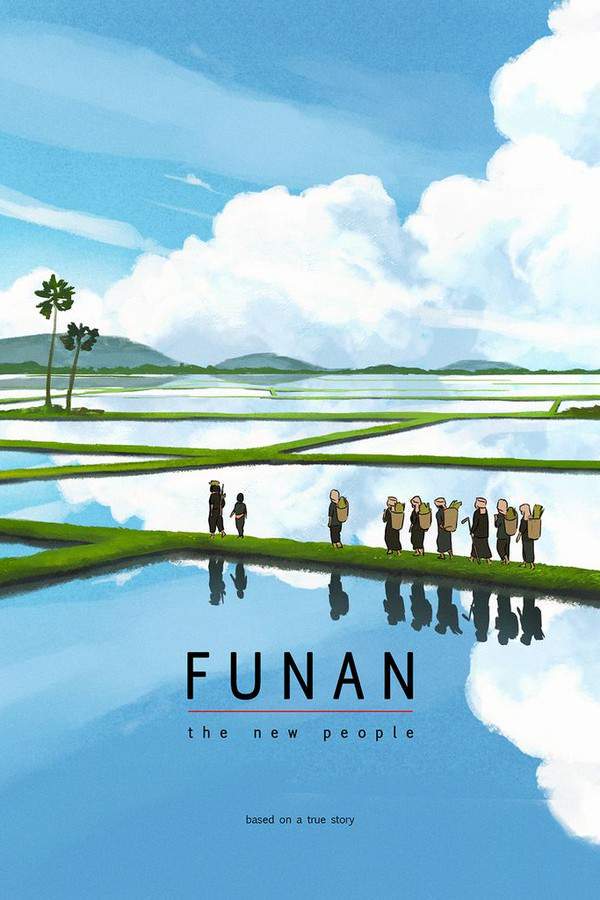
Funan (2019) Complete Plot Breakdown
The Missing Picture (2013) Full Movie Breakdown
Golden Slumbers (2013) Film Overview & Timeline
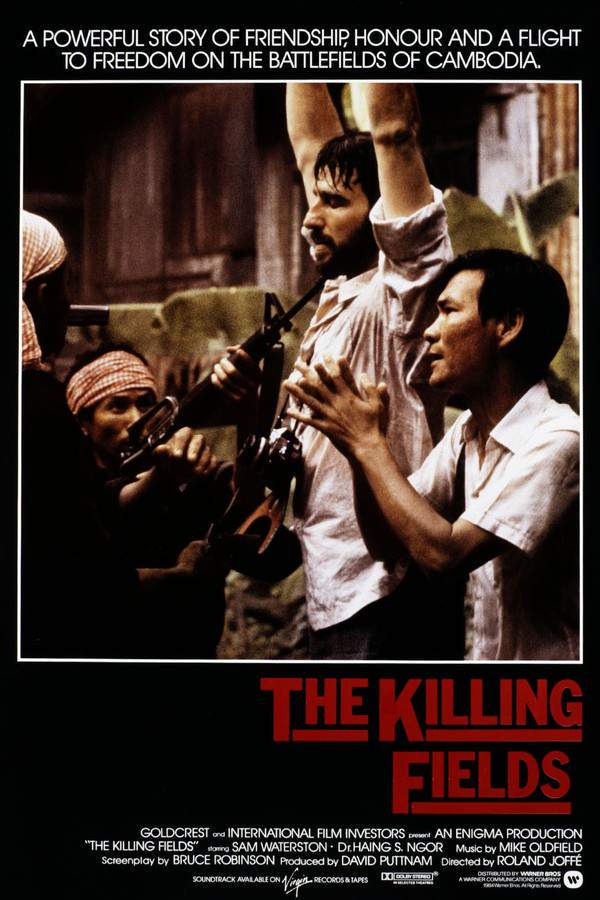
The Killing Fields (1985) Plot Summary & Ending Explained
Swimming to Cambodia (1987) Movie Recap & Themes
How I Killed My Father (2002) Full Movie Breakdown
Trade of Innocents (2012) Ending Explained & Film Insights
Still I Strive (2014) Detailed Story Recap
First Kill (2001) Plot Summary & Ending Explained
In the Life of Music (2019) Ending Explained & Film Insights
The Girl Who Spelled Freedom (1986) Full Movie Breakdown
Heaven & Earth (1993) Spoiler-Packed Plot Recap
This Angry Age (1957) Film Overview & Timeline
Rice People (1994) Plot Summary & Ending Explained
Year Zero: The Silent Death of Cambodia (1979) Movie Recap & Themes