

















Plot Explained Spoilers guaranteed!
Plot Explained

Browse by genre

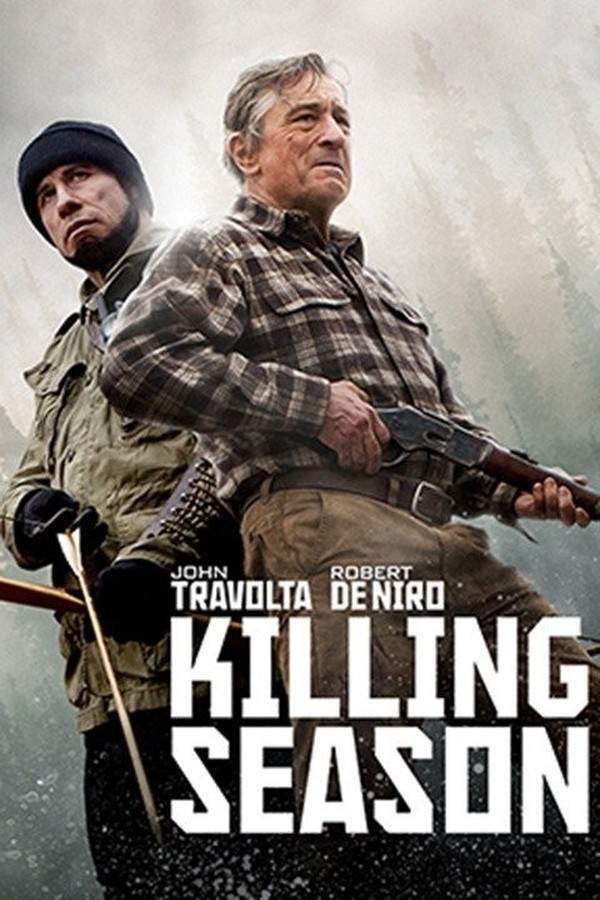
Killing Season (2013) movie poster

Plot Summary

Killing Season (2013) Plot Summary Explained

Release, runtime and language
2013 · 91 min · English
JustWatch #16,005 7
Directed by
Mark Steven Johnson
Starring
Robert De Niro, John Travolta, Milo Ventimiglia, Elizabeth Olin

Two veterans, a seasoned American and a resourceful ex-Yugoslav soldier, find themselves pitted against each other in a brutal contest of survival. Robert De Niro and John Travolta portray these battle-hardened men as they navigate the harsh wilderness, testing their skills and resolve in a deadly game of wits. The unforgiving landscape becomes their arena in this intense thriller.

On this page (6)
  1. 1 Where to watch
  2. 2 What happens: full plot
  3. 3 Plot questions answered
  4. 4 Movie threads
  5. 5 Movies like Killing Season
  6. 6 Every angle

Where to watch

Where to Watch Killing Season (2013)

Where can you watch Killing Season? Stream, rent or buy it in the US, including on Amazon Prime Video, fuboTV and Fawesome: current JustWatch availability with up-to-date prices.

Streaming availability powered by JustWatch

Full plot summary · contains spoilers

What Happens in Killing Season: Full Plot Summary

The whole story of Killing Season (2013) explained, from the opening scene to the final frame: every key event, every twist and what it all adds up to. Read it as a quick recap before the sequel, to check a scene you missed, or to finally understand what really happened.

As the echoes of war continue to reverberate across the Balkans, a grim realization takes hold: American forces have been compelled to confront the harrowing realities they faced during the Bosnian War, ultimately bringing justice to the Serb soldiers responsible for their atrocious acts.

In contemporary Belgrade, Serbia, Emil Kovač (John Travolta), a former Scorpions soldier who remarkably survived the carnage, arranges a secret meeting with his informant. His objective? To acquire classified intel related to Colonel Benjamin Ford (Robert De Niro), an American military veteran and ex-NATO operative. This elusive Colonel Ford has retreated from society, choosing to find solace in a secluded cabin deep within the Appalachian Mountains of Tennessee. He seeks not just physical distance from the war's atrocities, but the chance to reclaim his peace of mind.

In an unexpected turn of events, Kovač encounters Ford during a hunting expedition, presenting himself as a mere European tourist, hoping to blend into the background. Initially, the two men develop a friendly rapport, but their connection is short-lived as Kovač's true intentions come to light.

Fueled by a deep-seated grudge, Kovač embarks on a gruesome game of cat-and-mouse with Ford, who is mnotivated by an unwavering will to overcome the psychological scars left by war. As their confrontation escalates, it becomes apparent that Ford has more than just his own survival to consider; he is haunted by memories of shooting Kovač in the back during their time on the battlefield, a deed that left Kovač crippled for years.

After a harrowing face-off, Kovač finds himself at the mercy of Ford's unyielding resolve. However, as tensions ease, both men experience a surprising moment of understanding, leading them toward closure. Kovač ultimately returns to Serbia, quietly claiming he is "healing" in response to inquiries about his wounds. Meanwhile, Ford seizes the opportunity to reconcile with his son, ensuring he takes part in his grandson’s baptism, thus finding a pathway to redemption for the years that nearly slipped away from him.

Last updated: November 19, 2024 at 12:10

Was this helpful?

Plot questions answered

Killing Season Plot Explained: Your Questions Answered

The questions people ask most about Killing Season (2013): what happens in the confusing scenes, why the characters do what they do, the twists, hidden details and what the ending means. Each answer contains spoilers.

Q1

Why does Emil Kovač want revenge against Colonel Ford?

Kovač seeks revenge because during the Bosnian War, Ford shot him in the back, leaving him physically crippled for years. This act haunted both men, Kovač with his injury and grudge, Ford with guilt over the dishonorable way he wounded a former enemy combatant.

Foreshadowing: The film establishes early on that both men carry deep scars from their wartime encounter, hinting at the personal stakes behind their conflict.

  • emil kovac
  • colonel ford
  • revenge
  • bosnian war
  • shot in back
Q2

Why does Colonel Ford live alone in the Appalachian Mountains?

Ford retreated to a remote cabin to escape the psychological trauma of the Bosnian War. He suffers from PTSD and nightmares related to his actions during the conflict, including the moment he shot Kovač. The isolation represents his attempt to find peace away from society.

Foreshadowing: The opening scenes establish Ford's desire for solitude as a coping mechanism for his troubled past.

  • colonel ford
  • isolation
  • appalachian mountains
  • ptsd
  • war trauma
Q3

What were the Scorpions and what is their connection to Kovač?

The Scorpions were a Serbian paramilitary unit active during the Bosnian War, known for committing war crimes. Kovač was a former soldier in this unit, which connects him to the atrocities mentioned in the film's opening and explains his history with NATO forces like Ford.

Foreshadowing: The film references the Scorpions early in the context of war crimes and justice, establishing Kovač's military background.

  • scorpions
  • serbian paramilitary
  • bosnian war
  • kovac soldier
Q4

How do Kovač and Ford actually meet in the film?

Kovač finds Ford during a hunting trip in the Appalachian Mountains. He approaches Ford under the pretense of being a European tourist, establishing a friendly rapport before his true intentions become clear. This calculated approach was part of Kovač's plan to confront Ford about their past.

Foreshadowing: The initial friendly encounter is marked by subtle tension, as Ford seems uneasy about the stranger's presence.

  • hunting trip
  • appalachian mountains
  • first meeting
  • tourist disguise
Q5

When does Kovač reveal his true intentions to Ford?

Kovač's true motives surface as the two spend more time together. Once Ford learns Kovač's identity and past connection, the friendly facade dissolves into the cat-and-mouse confrontation that defines the film's second half.

Foreshadowing: The shift from friendly conversation to hostility occurs gradually, marked by Kovač's probing questions about Ford's war memories.

  • true intentions revealed
  • confrontation
  • identity reveal
Q6

What is Ford's guilt regarding Kovač?

Ford feels guilty specifically for shooting Kovač in the back during their battlefield encounter in the Bosnian War. This dishonorable act, not a clean combat kill, haunts him psychologically. He views his survival and subsequent retreat as escape from the moral weight of wounding a crippled soldier.

Foreshadowing: Ford's reluctance to discuss his war experiences and his nightmares hint at a traumatic act he regrets.

  • ford guilt
  • shot in back
  • bosnian war
  • moral guilt
  • psychological scars
Q7

How does the confrontation between Kovač and Ford escalate?

Once Kovač reveals his identity and motive, the confrontation escalates into a violent cat-and-mouse game across the wilderness. Both men use their military training to hunt each other, with Kovač seeking revenge and Ford fighting to survive while confronting his past guilt.

Foreshadowing: The early scenes of hunting and survival skills establish the men as evenly matched opponents.

  • confrontation escalation
  • cat and mouse
  • survival game
  • wilderness hunt
Q8

Why do Kovač and Ford reach an understanding at the end?

After intense confrontation, both men recognize the shared trauma of their wartime experiences. They understand that both were shaped and damaged by the Bosnian War, leading to a moment of mutual empathy. This understanding allows them to release their grudge rather than continue the cycle of violence.

Foreshadowing: The film builds toward this moment through dialogue that reveals each man's perspective on the war.

  • understanding
  • closure
  • mutual recognition
  • trauma shared
  • empathy
Q9

What does Kovač mean when he says he is 'healing'?

When Kovač returns to Serbia and says he is healing, he refers to emotional and psychological recovery rather than physical wounds. After confronting Ford and finding some closure, he chooses to move forward rather than be defined by his grudge. The statement represents his path toward inner peace.

Foreshadowing: Kovač's decision to spare Ford and seek understanding rather than murder sets up this conclusion.

  • healing
  • kovac return
  • emotional recovery
  • closure
  • serbia
Q10

What is the significance of Ford reconciling with his son?

Ford's reconciliation with his estranged son and commitment to attend his grandson's baptism represents his redemption arc. After years of isolating himself due to war trauma, Ford chooses to reconnect with family, symbolizing his return to civilian life and hope for healing through human connection.

Foreshadowing: Ford's initial isolation from family is established early, making this reconciliation a meaningful turning point.

  • ford son
  • reconciliation
  • redemption
  • grandson baptism
  • family healing
Q11

Is the ending of the movie happy or sad?

The ending is bittersweet. Both men find a degree of personal closure, Kovač claims to be healing and Ford reconciles with his family. However, this resolution comes after extreme violence and acknowledges that the psychological damage from war is permanent. Neither character returns to an innocent state; they simply find ways to move forward.

Foreshadowing: The film's tone throughout is tense and dark, foreshadowing that any resolution would carry this weight.

  • bittersweet ending
  • resolution
  • war damage
  • closure
  • permanent trauma

Movie threads

More Movies Like Killing Season, by Mood & Story

Curated lists built around what makes Killing Season tick: the same mood, the same kind of story or the same emotional payoff. Each list explains why these movies belong together.

Intense Dual-Protagonist Thrillers like Killing Season

Intense confrontations where two opposing forces are locked in a psychological duel. If you liked the high-stakes cat-and-mouse game between Robert De Niro and John Travolta in Killing Season, you'll find similar tension in these movies. This thread collects films built around a central, intense confrontation between two formidable characters locked in a psychological and physical struggle for survival or dominance.

  • tense
  • claustrophobic
  • confrontational
  • psychological duel
  • brutal
  • strategic
  • Tone: tense, confrontational, brutal
  • Pacing: fast, relentless
Why these movies?

The story pattern: The narrative structure is defined by a central, escalating conflict between two well-matched characters. The plot unfolds through their strategic moves and counter-moves, often in an isolated setting that heightens the sense of inevitability and claustrophobia, leading to a final, decisive confrontation.

Why they belong together: These movies are grouped together because they share a core structure of a dual-protagonist power struggle. They deliver a specific, tense experience where character dynamics and the escalating game of strategy are the primary drivers of suspense and drama.

Movies about Post-War Trauma like Killing Season

Stories exploring the heavy psychological scars and moral ambiguity left by conflict. For viewers who appreciated Killing Season's exploration of veterans haunted by past atrocities, this thread features films focused on the heavy emotional weight of war's aftermath. Discover similar stories about survivalist guilt, the futility of revenge, and the difficult path toward personal redemption after immense violence.

  • somber
  • vengeful
  • heavy
  • moral ambiguity
  • survivalist
  • trauma
  • Tone: somber, heavy, bittersweet
  • Pacing: steady, character-driven
Why these movies?

The story pattern: The emotional journey follows characters haunted by a violent past, forcing them to confront their actions and the person war made them become. The plot often involves a physical and psychological test that serves as a crucible for working through trauma, leading to a resolution that is seldom purely happy but offers a degree of somber closure.

Why they belong together: These films are united by their thematic focus on the psychological residue of war. They share a heavy emotional weight, a somber tone, and a preoccupation with themes like survival, revenge, moral ambiguity, and the possibility of healing from profound trauma.

If you liked this

Movies Like Killing Season

Similar movies to Killing Season: the same genre, themes or kind of story. Each one comes with its own plot summary, timeline and ending explained.

Browse all movie summaries

Every angle

Killing Season (2013) Explained: Plot, Timeline & Characters

Everything about Killing Season in one place: what happens in the plot summary, the timeline in chronological order, the characters and meaning and a spoiler-free summary. What's After the Movie adds the cast, box office and post-credit scenes.

Coming soon on iOS and Android

The Plot Explained Movie Summary App

Plot summaries, endings explained and timelines on your phone. Catch up on any movie in minutes, save your favorites and never miss a twist again.

Be the first to know when we launch. Your email stays private, always.

Learn more about the app