Plot Explained Spoilers guaranteed!
Plot Explained

Browse by genre

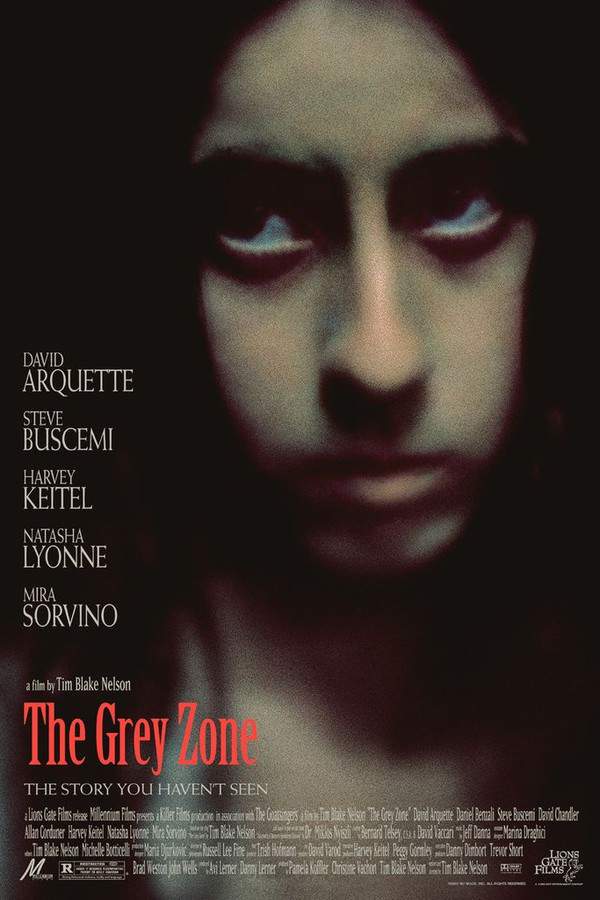
The Grey Zone (2002) movie poster

Plot Summary

The Grey Zone (2002) Plot Summary Explained

Release, runtime and language
2002 · 108 min · English
JustWatch #15,162 12

Within the grim walls of Auschwitz, "The Grey Zone" portrays the harrowing experiences of a Sonderkommando, Jewish prisoners compelled to work in the camp’s death machinery. The film explores the agonizing moral dilemmas they face as they struggle to survive, forced to confront unbearable choices that test the limits of their humanity. It’s a powerful and unflinching drama examining resilience and the devastating price of survival in the darkest of times.

On this page (6)
  1. 1 Where to watch
  2. 2 What happens: full plot
  3. 3 Plot questions answered
  4. 4 Movie threads
  5. 5 Movies like The Grey Zone
  6. 6 Every angle

Where to watch

Where to Watch The Grey Zone (2002)

Where can you watch The Grey Zone? Stream, rent or buy it in the US, including on Amazon Prime Video, fuboTV and Fawesome: current JustWatch availability with up-to-date prices.

Streaming availability powered by JustWatch

Full plot summary · contains spoilers

What Happens in The Grey Zone: Full Plot Summary

The whole story of The Grey Zone (2002) explained, from the opening scene to the final frame: every key event, every twist and what it all adds up to. Read it as a quick recap before the sequel, to check a scene you missed, or to finally understand what really happened.

In the chilling autumn of 1944, a determined group of prisoners from the Sonderkommando unit at the Auschwitz-Birkenau extermination camp was secretly plotting a daring rebellion aimed at sabotaging one of the camp's infamous crematoria and gas chambers. With the support of firearms provided by Polish sympathizers from a nearby village and gunpowder cunningly smuggled from the UNIO munitions factory by resourceful female prisoners, these brave souls clung to a flicker of hope for freedom. Despite their best efforts at discretion, the German authorities became aware of their plans, leading to brutal torture for the women involved. Nevertheless, their spirit remained unbroken.

Amidst this turmoil, Dr. Miklós Nyiszli, a Hungarian-Jewish doctor, grappled with his dual existence; he was bound by his obligation to work in Josef Mengele’s notorious medical laboratory while being deeply concerned for the safety of his wife and daughter held in the women’s labor camp. He finally gained a chance to see his family when Mengele permitted him to visit, fully aware that this would ensure their protection from the gas chambers.

The arrival of a new group of Hungarian Jewish prisoners introduced an overwhelming sense of despair. As they were herded toward the gas chambers, one particularly disruptive individual began vehemently criticizing Hoffman, a Sonderkommando tasked with directing them under the guise of “delousing.” The ensuing uproar pushed Hoffman to the brink, and he violently silenced the man with a flurry of blows.

Disturbed by the brutality, Hoffman later discovered a young girl miraculously alive beneath a heap of corpses in one of the gas chambers. He hurriedly rescued her and, after consulting with Schlermer, the insurgency leader, entrusted her care to Nyiszli, who managed to bring her back to life. The prisoners resolved to hide her within the confines of the children’s camp, cleverly concealing her in a dressing room. However, their plan quickly unraveled when SS-Oberscharführer Eric Muhsfeldt unexpectedly appeared. Upon noticing young Abramowics’s unauthorized presence, he executed him coldly, causing the girl to scream in fear, inadvertently exposing her hiding place. As Nyiszli attempted to speak with Muhsfeldt about the looming rebellion, he received an unexpected proposition: Muhsfeldt offered to safeguard the girl following the rebellion’s suppression.

As the rebellion erupted, Crematorium IV was engulfed in flames, courtesy of the insurgents wielding smuggled explosives. In the ensuing chaos and gunfire, those Sonderkommando prisoners who managed to evade the initial explosions found themselves rounded up by their SS captors. Held in a precarious state as the crematorium's blaze raged on, these prisoners faced a grim fate: execution. In this environment of ruthless finality, both Hoffman and fellow prisoner Rosenthal recognized that the young girl was not likely to escape the brutal outcome faced by her fellow captives.

After the massacre of all those detained, the girl found a fleeting opportunity to flee towards the camp's main gate. However, the moment was tragically short-lived. With unwavering vigilance, Muhsfeldt leveled his pistol and delivered a fatal shot, extinguishing her desperate hopes for escape. The film concludes with a haunting voice-over from the deceased girl, whose heart-wrenching story stands as a poignant testament to the horrific events that have transpired within the camp's brutal confines.
Last updated: November 22, 2024 at 10:46

Was this helpful?

Plot questions answered

The Grey Zone Plot Explained: Your Questions Answered

The questions people ask most about The Grey Zone (2002): what happens in the confusing scenes, why the characters do what they do, the twists, hidden details and what the ending means. Each answer contains spoilers.

Q1

Why did Hoffman save the girl from the gas chamber?

Hoffman discovered the young girl alive while working inside the gas chamber after a mass killing. Overcome by a moment of compassion amid the brutality of his forced work, he chose to rescue her rather than leave her to die. He consulted with Schlermer, the insurgency leader, and entrusted the girl to Dr. Nyiszli, who managed to revive her.

Foreshadowing: Earlier scenes establish the psychological toll on the Sonderkommando, showing how some maintained their humanity despite forced complicity in the killings.

  • hoffman
  • gas chamber
  • young girl
  • rescue
  • compassion
  • auschwitz
Q2

What happened to the young girl at the end?

The girl was ultimately killed by SS-Oberscharführer Muhsfeldt. After the failed rebellion, she attempted to escape by running toward the main camp gate, but Muhsfeldt spotted her and shot her dead, extinguishing her brief hope of freedom.

Foreshadowing: The film repeatedly shows the futility of survival in Auschwitz, with the girl's hiding place already discovered earlier when Abramowics was executed.

  • young girl
  • muhsfeldt
  • death
  • escape
  • ending
  • crematorium iv
Q3

Why did Muhsfeldt offer to protect the girl after the rebellion?

Muhsfeldt learned of the impending rebellion and made a calculated offer to Nyiszli to protect the girl after the uprising was suppressed. This was likely a calculated move to gain the prisoners' trust or gather intelligence, though his motivations remain ambiguously sinister, he later proves his loyalty to the SS by killing the girl himself.

Foreshadowing: Muhsfeldt's earlier execution of Abramowics demonstrates his ruthless adherence to SS authority despite his offer of help.

  • muhsfeldt
  • girl
  • protection
  • offer
  • ss officer
  • rebellion
Q4

Why did the rebellion fail?

The rebellion at Crematorium IV was quickly suppressed despite the prisoners' desperate attempt. They managed to set the crematorium ablaze using smuggled explosives, but the SS rounded up surviving Sonderkommando prisoners and executed them. The rebellion achieved symbolic significance but could not overcome the overwhelming military power of the SS.

Foreshadowing: The timeline shows the rebellion was poorly timed and under-resourced compared to the German forces stationed at the camp.

  • rebellion
  • failure
  • crematorium iv
  • explosives
  • ss
  • uprising
  • auschwitz
Q5

Why was Dr. Nyiszli working for Josef Mengele?

Nyiszli, a Hungarian-Jewish doctor, was selected by the SS to work in Mengele's medical laboratory because of his medical expertise. He had no choice in the matter, refusal would mean immediate execution. His position gave him certain privileges but also forced him to participate in Mengele's horrific experiments while secretly working to protect his wife and daughter imprisoned in the women's camp.

Foreshadowing: Earlier in the film, Nyiszli's dual existence is established as he balances his forced cooperation with his concern for his family's survival.

  • nyiszli
  • mengele
  • doctor
  • laboratory
  • forced labor
  • auschwitz
Q6

Why did Hoffman attack the man who criticized him?

Hoffman, a Sonderkommando tasked with directing new prisoners to the gas chambers under the pretense of delousing, was pushed to his breaking point when a newly arrived Hungarian Jewish prisoner publicly condemned him. The man's vocal criticism of Hoffman as an accomplice to murder triggered an explosive reaction, and Hoffman violently silenced him with repeated blows.

Foreshadowing: The scene demonstrates the constant psychological pressure on Sonderkommando prisoners, who were forced to participate in the killing process while being despised by other victims.

  • hoffman
  • violence
  • prisoner
  • criticism
  • Sonderkommando
  • gas chambers
Q7

Why did the prisoners hide the girl in the children's camp?

After rescuing the girl from the gas chamber, the Sonderkommando decided to conceal her in the children's camp dressing room as their only chance to keep her alive. They hoped she would be safe from discovery among the children's barracks, though this plan ultimately failed when Muhsfeldt unexpectedly arrived and found her.

Foreshadowing: The prisoners' decision to risk their lives for the girl represents their final act of resistance and humanity.

  • girl
  • hiding
  • children camp
  • dressing room
  • concealment
  • plan
Q8

Why were the women who helped smuggle gunpowder tortured?

The German authorities discovered the secret rebellion plans and captured the female prisoners who had been smuggling gunpowder from the UNIO munitions factory. They subjected these women to brutal torture in an attempt to extract information about the full extent of the conspiracy. Despite the torture, their resolve remained unbroken.

Foreshadowing: The timeline shows this as a pivotal moment that heightened tensions before the rebellion.

  • women
  • torture
  • gunpowder
  • rebellion
  • interrogation
  • auschwitz
Q9

Why did Nyiszli get to visit his family?

Mengele deliberately permitted Nyiszli to visit his wife and daughter in the women's labor camp. This was not an act of mercy, Mengele knew that allowing Nyiszli to see his family would ensure their protection from selection for the gas chambers, effectively using his family as leverage to keep Nyiszli obedient and working in his laboratory.

Foreshadowing: This scene reveals Mengele's manipulative nature and his understanding of how to control his subjects.

  • nyiszli
  • family
  • visit
  • mengele
  • wife
  • daughter
  • protection
Q10

What is the significance of the girl's voice-over at the end?

The film ends with a haunting voice-over from the dead girl, providing a chilling first-person reflection on the horrors she witnessed. This narrative choice serves as a tragic testimonial, giving a voice to the countless victims whose stories were never told and reinforcing the film's message about the atrocities of the Holocaust.

Foreshadowing: Earlier moments establish the girl's perspective as innocent and observant, making her voice-over a powerful narrative device.

  • voice-over
  • ending
  • narration
  • testimony
  • girl
  • Holocaust
  • memory
Q11

Who was Schlermer's role in the rebellion?

Schlermer was the leader of the Sonderkommando insurgency. He coordinated with Hoffman and other prisoners planning the rebellion, and it was to him that Hoffman turned when deciding what to do with the rescued girl. Schlermer authorized Nyiszli to take the girl and attempt to save her life.

Foreshadowing: Schlermer's leadership position is established early in the timeline as he organizes the rebellion efforts.

  • schlermer
  • rebellion leader
  • Sonderkommando
  • insurgency
  • underground

Movie threads

More Movies Like The Grey Zone, by Mood & Story

Curated lists built around what makes The Grey Zone tick: the same mood, the same kind of story or the same emotional payoff. Each list explains why these movies belong together.

Movies about extreme moral dilemmas like The Grey Zone

Stories where survival forces characters into impossible, soul-corroding choices. If you were captivated by the harrowing ethical choices in The Grey Zone, explore these similar movies. This list features powerful dramas where characters face impossible decisions for survival, testing their humanity in systems of overwhelming oppression.

  • harrowing
  • desperate
  • somber
  • tragic
  • unflinching
  • psychological
  • Tone: dark, tragic, oppressive
  • Pacing: steady, methodical
Why these movies?

The story pattern: Narratives in this thread often follow characters who are systematically broken down by an oppressive system. They are forced into complicity with evil, leading to internal conflict and agonizing decisions that prioritize survival over conscience, typically culminating in a profound examination of guilt and the cost of living.

Why they belong together: These films are grouped together for their shared focus on high-stakes moral ambiguity. They share a dark, intense tone, heavy emotional weight, and a central theme of exploring how far people will go when pushed to their absolute limits, creating a consistently challenging and thought-provoking viewing experience.

Claustrophobic movies about oppressive systems like The Grey Zone

Films that trap you inside inescapable, dehumanizing institutional machinery. For viewers who appreciated the grim, confined setting of The Grey Zone, this list features other movies set within powerful, dehumanizing systems. Discover similar stories of rebellion and resilience against overwhelming institutional force, capturing a feeling of inescapable dread.

  • oppressive
  • claustrophobic
  • grim
  • desperate
  • tense
  • institutional
  • Tone: grim, bleak, tense
  • Pacing: steady, deliberate
Why these movies?

The story pattern: The story unfolds within the rigid confines of a prison, camp, or totalitarian institution. Characters navigate the brutal rules of the system, often plotting a desperate, likely doomed rebellion. The plot is less about escape and more about the symbolic act of defiance within an inescapable structure, leading to a bleak but powerful conclusion.

Why they belong together: These films share a specific, oppressive atmosphere. They are united by a grim, hopeless tone, high tension, and a setting that acts as a primary antagonist. The viewing experience is defined by a feeling of claustrophobia and the systematic destruction of individual will, making the emotional journey consistently intense and sobering.

If you liked this

Movies Like The Grey Zone

Similar movies to The Grey Zone: the same genre, themes or kind of story. Each one comes with its own plot summary, timeline and ending explained.

Browse all movie summaries

Every angle

The Grey Zone (2002) Explained: Plot, Timeline & Characters

Everything about The Grey Zone in one place: what happens in the plot summary, the timeline in chronological order, the characters and meaning and a spoiler-free summary. What's After the Movie adds the cast, box office and post-credit scenes.
Coming soon on iOS and Android

The Plot Explained Movie Summary App

Plot summaries, endings explained and timelines on your phone. Catch up on any movie in minutes, save your favorites and never miss a twist again.

Be the first to know when we launch. Your email stays private, always.
Learn more about the app