Year: 2023
Runtime: 1 h 45 m
Language: English
Director: Jonathan Glazer
Echo Score: 84Budget: $15M
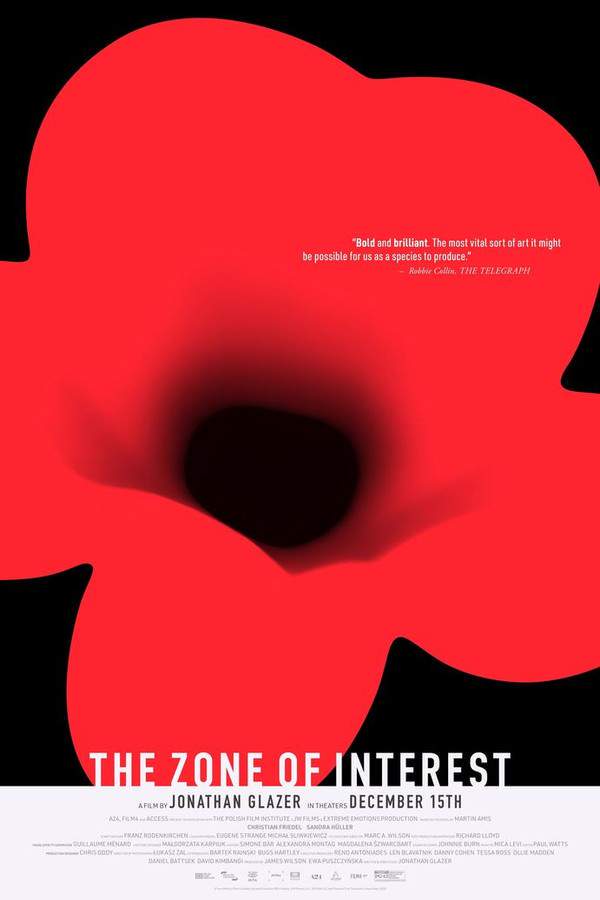
Rudolf Höss, the commandant of Auschwitz, and his wife Hedwig strive to build a life of domestic tranquility in a house adjacent to the concentration camp. They cultivate a garden, raise their children, and entertain guests, all while living in the shadow of unimaginable atrocities occurring within the camp’s walls. The film explores the chilling contrast between their seemingly ordinary existence and the horrors happening just beyond their garden.
Find where to stream, rent, or buy The Zone of Interest (2023) in the US with current JustWatch availability, up-to-date pricing, and platform listings for subscription, rental, and digital purchase options.
Warning: spoilers below!
Haven’t seen The Zone of Interest yet? This summary contains major spoilers. Bookmark the page, watch the movie, and come back for the full breakdown. If you're ready, scroll on and relive the story!
Read the complete plot breakdown of The Zone of Interest (2023), including all key story events, major twists, and the ending explained in detail. Discover what really happened, and what it all means.
In 1943, the commandant of the Auschwitz concentration camp, Rudolf Höss, resides in a seemingly tranquil home with his wife, Hedwig, and their five children. Their idyllic life contrasts sharply with the terrifying reality outside their garden walls, where the chilling sounds of gunfire, shouts, and the grueling operations of the camp reverberate through the air. While Rudolf enjoys moments of leisure with his children, fishing and swimming, and Hedwig finds solace in nurturing their garden, the servants attend to household chores, often utilizing personal belongings of the camp’s prisoners.
As the family enjoys their otherwise peaceful existence, the grim details of their reality begin to seep in. Rudolf plays a pivotal role in approving the construction of a new crematorium, a facility that symbolizes the depths of inhumanity just beyond their home. A disturbing scene unfolds when he discovers human remains floating in the nearby river, prompting him to hastily remove his children from the water and issue a stern reprimand to his staff about their negligence.
Simultaneously, a courageous Polish girl in the vicinity acts to resist this brutality, sneaking out under cover of darkness to deliver food to the prisoners, providing them with a glimmer of hope. Amidst this turmoil, Rudolf is taken aback when he learns of his promotion to deputy inspector of all concentration camps, necessitating a move to Oranienburg, near Berlin. Reluctant to leave their home, he remains silent about the change for several days. When he finally shares the news, Hedwig pleads fervently to remain in their beloved home.
After some negotiation, the request is granted, and Rudolf relocates the family. The arrival of Hedwig's mother introduces more tension as she is horrified by the sight of crematorium flames at night, ultimately leaving and penning a scathing note which Hedwig angrily destroys.
Months later, in Berlin, Rudolf gains notoriety for selecting him to orchestrate a grim operation that will forcibly transport 700,000 Hungarian Jews to Auschwitz for extermination. This horrifying task allows him to return to Auschwitz, where he reunites with his family.
In a moment of stark reality, he finds himself at a celebratory gathering for this operation, reflecting on the grotesque efficiency of his work – thinking how best to gas a room filled with helpless victims. This moment culminates in him descending the stairs of his Berlin office, where the weight of his actions overwhelms him, inducing nausea as he stares into the abyss.
In the present day, a team of janitors diligently cleans the Auschwitz-Birkenau State Museum, a haunting reminder of the past. Meanwhile, in 1943, Rudolf continues to descend into the bowels of the camp, where the line between his family life and the horrors of his occupation becomes increasingly blurred.
Last updated: October 24, 2024 at 09:04
Explore frequently asked questions about The Zone of Interest (2023) with spoiler-rich answers covering the full plot summary, major story beats, character motivations, hidden details, and ending meaning. This movie summary FAQ helps explain confusing scenes, plot twists, and narrative decisions in clear, searchable detail.
Rudolf discovers human remains floating in the river near his home because the camp's waste disposal methods were rudimentary. The bodies were being dumped into water sources that eventually connected to areas where his children swam. This disturbing moment forces Rudolf to confront the reality of the camp's operations, though his response is to protect his family from exposure rather than question his own complicity.
Earlier scenes show the family fishing and swimming in the same waters, establishing the proximity of the camp's atrocities to their leisure activities.
Hedwig is desperate to stay because she has built an idealized life there - a large home, a garden she tends lovingly, status as the commandant's wife, and a sense of domestic normalcy she has cultivated despite the camp's proximity. The house represents her identity and accomplishments, and the thought of leaving this comfortable existence terrifies her more than any moral concern.
The opening scenes establish Hedwig's deep investment in the garden and household, showing her deriving genuine pleasure from cultivating this space.
Rudolf is promoted to deputy inspector of all concentration camps because of his proven organizational skills and efficiency in managing Auschwitz. His ability to streamline operations and maintain productivity made him valuable to the Nazi hierarchy. This promotion requires him to relocate to Oranienburg near Berlin, which creates tension with his family's desire to remain at Auschwitz.
Rudolf's role in approving the new crematorium demonstrates his increasing importance and competence in the camp's operations.
Hedwig's mother visits the family and is horrified when she sees the crematorium flames burning at night from the house. This visual evidence of the killings disturbs her deeply, and she leaves shortly after, writing a scathing note condemning what she witnessed. Hedwig reacts with anger and destroys the note, refusing to acknowledge her mother's moral perspective.
The flames are visible from the house throughout the film, establishing the ever-present nature of the camp's operations.
This refers to the Sonderkommando operation, where Rudolf was selected to orchestrate the mass deportation and extermination of 700,000 Hungarian Jews. This was one of the largest single massacres during the Holocaust, and the operation's "success" in terms of efficiency is what made Rudolf notorious and allowed him to return to Auschwitz after his time in Berlin.
Rudolf's earlier approval of the new crematorium prepares for this massive scaling up of extermination operations.
After attending a celebratory gathering for his role in the Hungarian Jewish operation, Rudolf descends the stairs of his Berlin office and becomes overwhelmed by nausea and despair. This physical reaction represents the psychological weight of his complicity - even a man capable of orchestrating mass murder cannot completely suppress his humanity, and the magnitude of what he has done momentarily breaks through his psychological defenses.
This moment follows his earlier reflection on how to most efficiently gas a room of victims, showing his thoughts consumed by the mechanics of murder.
The Polish girl sneaks out under cover of darkness to deliver food to prisoners as an act of resistance. However, the summary does not detail her ultimate fate - her story serves as a contrast to the Höss family's complicity, showing that some individuals chose to resist even at great personal risk, while the commandant's family simply ignores the horrors surrounding them.
Her courageous actions appear early in the narrative, setting up the moral contrast that defines the film.
Rudolf approves the new crematorium because it represents an upgrade in the camp's operational capacity. As commandant, he was responsible for the efficient functioning of Auschwitz, and the new facility would allow for higher throughput in processing the increasing number of victims. His approval demonstrates his direct involvement in the mechanics of genocide and his prioritization of efficiency over humanity.
This decision directly enables the later operation involving 700,000 Hungarian Jews, establishing the scale of extermination he would later orchestrate.
The present-day scenes showing janitors cleaning the Auschwitz-Birkenau State Museum serve as a haunting reminder that the site now functions as a memorial and educational space. Their mundane cleaning work contrasts powerfully with the historical horrors that occurred there, creating a temporal bridge between the 1943 events and modern memory. This juxtaposition emphasizes that the atrocities were real and that the world now grapples with how to remember and honor the victims.
The film opens with these present-day scenes, establishing the documentary-like framing that connects past to present.
The film deliberately avoids giving Rudolf any redemptive arc because his story represents the "banality of evil" - the terrifying normalcy of a man who can commit atrocities while living a conventional family life. His final moments show him planning mass murder with clinical precision, not remorse. The film forces viewers to sit with this uncomfortable reality rather than offering psychological resolution, reflecting the actual historical record of a man who never expressed genuine remorse.
From the opening, the film establishes Rudolf as a man who compartmentalizes his family life from his work, a pattern that continues unbroken throughout.
The children swim in the river without awareness of what contaminates it because Rudolf and Hedwig have deliberately kept them ignorant of the camp's operations. The adults maintain a strict separation between domestic life and the atrocities outside their garden walls. When Rudolf discovers the remains, his primary concern is protecting his children from knowing the truth, not questioning why such contamination exists.
The opening scenes establish the children's innocent leisure activities as a deliberate contrast to the camp's reality.
Still wondering what the ending of The Zone of Interest (2023) really means? Here’s a spoiler-heavy breakdown of the final scene, major twists, and the deeper themes that shape the film’s conclusion.
The ending of The Zone of Interest is both haunting and thought-provoking. Throughout the film, Rudolf Hoss, the infamous Auschwitz commandant, is portrayed as someone who, outwardly, seems to be deeply engaged in his work, proud of the new innovations in extermination he oversees, and seemingly unaffected by the horrors happening just outside his home. However, towards the end, a change occurs. Rudolf is shown in his Berlin office, excitedly discussing the construction of new gas chambers and the future killings of Hungarian Jews, but suddenly, he is struck with violent bouts of retching. This physical reaction suggests that even the most hardened perpetrator harbors a conscience—or at least, an awareness of the monstrous act he commits. The scene shifts briefly to modern times, where the Auschwitz museum openly displays the horrifying evidence of the Holocaust, like shoes and torn uniforms, reminding viewers of the scale of the atrocities. Rudolf’s discomfort in the final scenes hints at his inner guilt and the acknowledgment, deep down, that his legacy is one of evil. The film leaves viewers with a sobering contrast: there was considerable indifference and normalcy around the Holocaust for most people, but ultimately, the evidence remains and the conscience of even the most committed killers cannot be fully silenced. Rudolf's sense of unease at the end suggests that, despite his participation and pride, he can never fully escape the horror of his actions or the judgment of history.
Last updated: June 25, 2025 at 08:44
Discover curated groups of movies connected by mood, themes, and story style. Browse collections built around emotion, atmosphere, and narrative focus to easily find films that match what you feel like watching right now.
Mundane lives set against a backdrop of profound moral horror and complicity.If you were fascinated by the chilling disconnect in The Zone of Interest, explore more movies that examine the banality of evil. These films showcase mundane lives intertwined with moral horror, creating deeply unsettling stories that question our capacity for denial and complicity in the face of atrocity.
These narratives often present a stark, deliberate contrast between a seemingly normal, even banal, existence and a horrifying reality that is either ignored, accepted, or actively facilitated by the characters. The story unfolds not through explosive action, but through the quiet accumulation of details that highlight this moral and psychological disconnect.
Movies are grouped here because they share a core thematic exploration of moral complacency and the normalization of horror. They use a deliberately paced, observational style to create a profound sense of unease, focusing on the psychology of characters who live in the shadow of evil without being overtly monstrous themselves.
Films where a creeping sense of unease and horror builds with deliberate pacing.For viewers who appreciated the methodical pacing and mounting psychological horror of The Zone of Interest, this collection features similar slow burn dramas. These films masterfully build an atmosphere of profound dread and tension, often exploring dark themes through an unsettling and immersive lens.
The narrative pattern involves a steady, often quiet, accumulation of details and atmosphere that leads to an overwhelming sense of psychological unease. The conflict is internal or atmospheric rather than action-driven, focusing on the characters' (and audience's) gradual realization of a horrifying truth. The endings are typically bleak or ambiguous, emphasizing the lasting impact of the experience.
These films are grouped by their shared approach to pacing and mood. They all utilize a slow, deliberate rhythm to create a powerful, immersive sense of dread. The viewing experience is defined by a heavy emotional weight and a tense, often dark tone that gets under your skin.
Don't stop at just watching - explore The Zone of Interest in full detail. From the complete plot summary and scene-by-scene timeline to character breakdowns, thematic analysis, and a deep dive into the ending - every page helps you truly understand what The Zone of Interest is all about. Plus, discover what's next after the movie.
Track the full timeline of The Zone of Interest with every major event arranged chronologically. Perfect for decoding non-linear storytelling, flashbacks, or parallel narratives with a clear scene-by-scene breakdown.
Discover the characters, locations, and core themes that shape The Zone of Interest. Get insights into symbolic elements, setting significance, and deeper narrative meaning - ideal for thematic analysis and movie breakdowns.
What really happened at the end of The Zone of Interest? This detailed ending explained page breaks down final scenes, hidden clues, and alternate interpretations with expert analysis and viewer theories.
Discover movies like The Zone of Interest that share similar genres, themes, and storytelling elements. Whether you’re drawn to the atmosphere, character arcs, or plot structure, these curated recommendations will help you explore more films you’ll love.
The Zone of Interest (2023) Scene-by-Scene Movie Timeline
The Zone of Interest (2023) Movie Characters, Themes & Settings
The Zone of Interest (2023) Ending Explained & Theories
The Zone of Interest (2023) Spoiler-Free Summary & Key Flow
Movies Like The Zone of Interest – Similar Titles You’ll Enjoy
Amen. (2003) Full Summary & Key Details
The Auschwitz Report (2021) Complete Plot Breakdown
The Zookeeper's Wife (2017) Complete Plot Breakdown
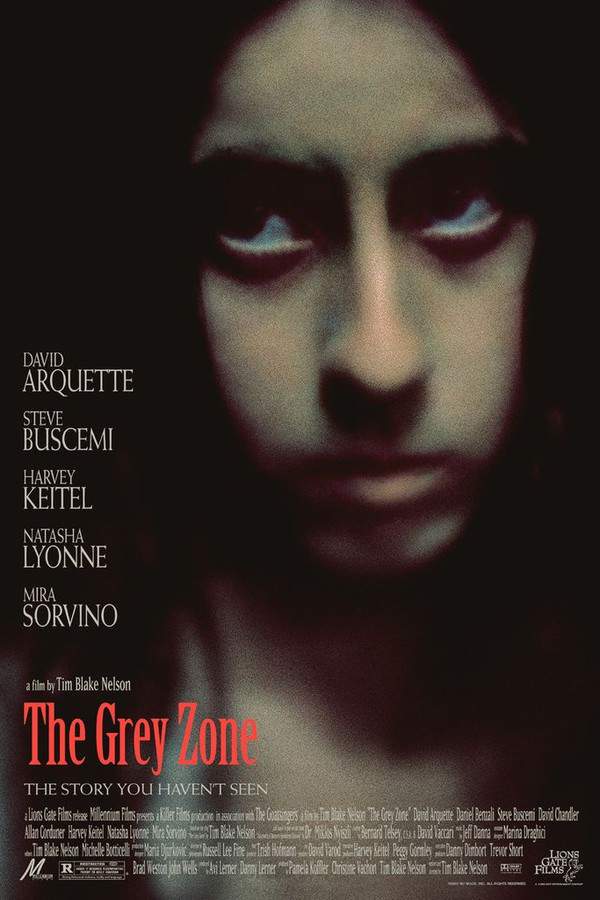
The Grey Zone (2002) Spoiler-Packed Plot Recap
The Aryan Couple (2004) Full Movie Breakdown
Sobibor (2019) Detailed Story Recap
The Commandant's Shadow (2024) Detailed Story Recap
The Guard of Auschwitz (2018) Movie Recap & Themes
Born in Auschwitz (2019) Full Movie Breakdown
Shoah (1985) Full Summary & Key Details
Wundkanal (1984) Detailed Story Recap
Death Is My Trade (1977) Story Summary & Characters
Holocaust (1000) Movie Recap & Themes
Theresienstadt (1944) Spoiler-Packed Plot Recap
The Tattooist of Auschwitz (1000) Complete Plot Breakdown