Plot Explained Spoilers guaranteed!
Plot Explained

Browse by genre

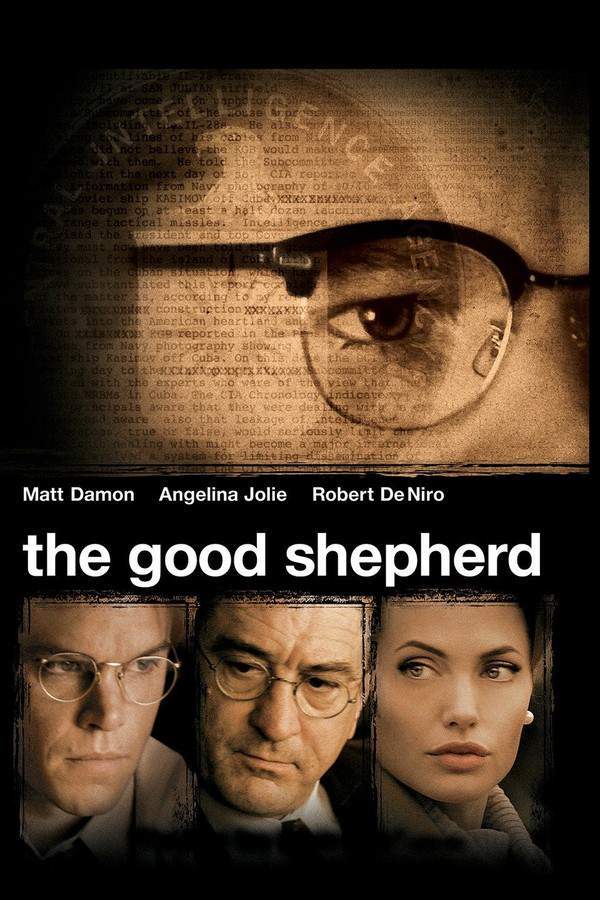
The Good Shepherd (2006) movie poster

Plot Summary

The Good Shepherd (2006) Plot Summary Explained

Release, runtime and language
2006 · 167 min · English
JustWatch #1,815 12
Starring
Robert De Niro, Matt Damon, Angelina Jolie

A man's unwavering dedication to the Central Intelligence Agency shapes his life as he rises through the ranks of the OSS and CIA during the Cold War. Matt Damon portrays Edward Wilson, whose loyalty and sense of duty demand a significant sacrifice, profoundly impacting his personal relationships and forcing him to grapple with the hidden costs of his profession amidst a climate of secrecy and suspicion.

On this page (6)
  1. 1 Where to watch
  2. 2 What happens: full plot
  3. 3 Plot questions answered
  4. 4 Movie threads
  5. 5 Movies like The Good Shepherd
  6. 6 Every angle

Where to watch

Where to Watch The Good Shepherd (2006)

Where can you watch The Good Shepherd? Stream, rent or buy it in the US, including on Netflix, Netflix Standard and Amazon Video: current JustWatch availability with up-to-date prices.

Streaming availability powered by JustWatch

Full plot summary · contains spoilers

What Happens in The Good Shepherd: Full Plot Summary

The whole story of The Good Shepherd (2006) explained, from the opening scene to the final frame: every key event, every twist and what it all adds up to. Read it as a quick recap before the sequel, to check a scene you missed, or to finally understand what really happened.

In 1961, the catastrophic Bay of Pigs invasion leaves a lingering shadow. Senior CIA officer Edward Wilson is alerted to rumors of a suspected "mole" within his ranks. Upon returning home, he stumbles upon a picture of a man and woman entwined in bed, alongside altered audio tapes that obscure key truths.

Reflecting back to 1939, we find Wilson at Yale University, where he is invited to become a member of the exclusive Skull and Bones fraternity. During this initiation, he reveals the existence of a suicide note penned by his father, Thomas, an admiral whose loyalty was questioned, preventing him from ascending to the position of Secretary of the Navy.

The plot thickens when FBI agent Sam Murach recruits Wilson to scrutinize his poetry professor, Frederick, rumored to have Nazi sympathies. After he is outed, Frederick resigns. Soon, Wilson becomes romantically involved with Laura, a fellow Yale student who cannot hear. As the outbreak of World War II becomes imminent in Europe, Laura proposes intimacy but halts at the last moment.

In 1940, a social gathering introduces Wilson to Margaret "Clover" Russell, sister of fellow Bonesman John. He also meets General Bill Sullivan, who informs him that the U.S. will need to enter the war, offering Wilson a role within foreign intelligence. Captivated by Clover’s aggressive allure, despite her family's isolationist background, Wilson finds himself unable to resist her advances.

As tensions rise, Wilson has a fateful encounter with John, who reveals that Clover is pregnant, suggesting responsibility falls upon Wilson to marry her. This revelation leads Laura, who reads their lips, to walk away in despair. On the day of Wilson and Clover's wedding, he receives orders to report to London.

Upon arrival in London, Wilson reunites with Dr. Fredericks, a covert British intelligence operative who initially recommended him for counter-espionage training. Here, Arch Cummings of the Special Operations Executive warns Wilson that Fredericks poses a security risk due to his indiscreet relationships and ultimately meets a tragic end through assassination when he refuses to cooperate.

In the post-war chaos of Berlin, Wilson collaborates with a Soviet agent known as "Ulysses" during the exchange of captured scientists. In a twist of fate, he learns from a phone call that Clover is unfaithful. A brief affair with his interpreter, Hanna Schiller, ends tragically when he discovers she is also a Soviet operative, resulting in her death.

By 1946, Wilson returns to a colder home, where Clover resumes her birth name, Margaret. Each confesses to infidelities, including the sorrowful news of John's demise in war. General Sullivan approaches once more, this time to aid in the formation of the CIA alongside colleague Richard Hayes, under the directorship of Phillip Allen.

Despite the genuine bond he shares with his son, Edward Jr., Wilson finds Margaret's growing discontent due to his work-first attitude increasingly unbearable. A high-ranking KGB defector, Valentin Mironov, presents concerning intelligence about "Ulysses," warning of others impersonating him seeking refuge. In an unexpected reunion at a play, Wilson reconnects with Laura, sparking an affair that ends when Margaret discovers incriminating photographs and confronts him publicly.

Chaos ensues when another defector challenges the reputation of Mironov, revealing deep layers of deception and double agents. During a nightmarish interrogation, Mironov manages to escape by launching himself out a window, while others get ensnared in this web of deceit, including Edward Jr.

As Edward Jr. follows in his father’s footsteps to Yale, he expresses an interest in the CIA, prompting an emotional confrontation between him and Wilson where he admits he married Margaret begrudgingly, merely out of obligation. When relations with Cuba destabilize due to Fidel Castro's rise, Edward Jr. learns of the Bay of Pigs operation, instilling concern in Wilson over his son's silence and Margaret's decision to leave him.

In 1961, after the Bay of Pigs debacle, the CIA meticulously analyzes the dubious recordings entrusted to Wilson. An investigation in Léopoldville, Congo, uncovers unsettling truths about his son. When "Ulysses" presents an unfiltered recording with Edward Jr. disclosing critical information to his girlfriend, Miriam, the stakes escalate, leading to tragedy when she is ultimately assassinated, unbeknownst to Wilson.

As Edward processes the chaos, he visits the new CIA headquarters, where he contemplates the Biblical inscription that decorates the lobby: "And ye shall know the truth, and the truth shall make you free (John 8:32)." Meanwhile, internal corruption comes to light with Philip Allen's disgraceful resignation following embezzlement revelations. Newly appointed Hayes promotes Wilson to head the CIA's counter-intelligence operations, contemplating the deeper implications of agency identity.

In a poignant conclusion, Wilson finally decides to confront his father’s suicide note, which confesses betrayal and pleads for forgiveness, while urging Wilson to live with integrity. As he prepares to step into his role in the newly established counter-intelligence division, Wilson burns the note, signifying a tumultuous, yet transformative chapter in his life.
Last updated: November 16, 2024 at 14:00

Was this helpful?

Plot questions answered

The Good Shepherd Plot Explained: Your Questions Answered

The questions people ask most about The Good Shepherd (2006): what happens in the confusing scenes, why the characters do what they do, the twists, hidden details and what the ending means. Each answer contains spoilers.

Q1

Why did Edward Wilson marry Clover Russell?

Edward Wilson married Clover Russell after learning she was pregnant with his child. When his fellow Bonesman John Russell revealed Clover's pregnancy, Wilson felt obligated to marry her, despite his lingering feelings for Laura. Years later, Wilson admits to his son Edward Jr. that he married Clover begrudgingly, purely out of sense of duty rather than love.

Foreshadowing: This marriage is foreshadowed during the 1940 party scene where Wilson is captivated by Clover's aggressive allure despite her family's isolationist background.

  • clover russell
  • marriage
  • pregnancy
  • obligation
  • yale
Q2

What was in the suicide note from Edward Wilson's father?

The suicide note from Edward's father, Admiral Thomas Wilson, confessed betrayal and pleaded for forgiveness. Thomas Wilson's loyalty was questioned, which prevented him from becoming Secretary of the Navy. The note urged Edward to live with integrity, carrying the weight of his father's shame. Edward finally reads the note at the end of the film and burns it, symbolizing his own complicated relationship with duty and betrayal.

Foreshadowing: The existence of this note is revealed during Wilson's Skull and Bones initiation in 1939, establishing the family theme of secrets and loyalty that haunts the entire narrative.

  • thomas wilson
  • suicide note
  • admiral
  • secret
  • betrayal
  • skull and bones
Q3

What happened to Edward Jr. and his girlfriend Miriam?

Edward Jr., following his father's footsteps, went to Yale and expressed interest in joining the CIA. A high-ranking KGB defector named Valentin Mironov had disclosed critical information to his girlfriend Miriam. When the CIA discovered this through recordings made by the Soviet agent Ulysses, Miriam was ultimately assassinated. This tragedy occurred while Wilson was investigating his son's activities in Léopoldville, Congo, after the Bay of Pigs failure.

Foreshadowing: Edward Jr.'s decision to pursue the CIA concerns Wilson, who worries about his son's silence regarding the Bay of Pigs operation, setting up the tragic consequences that follow.

  • edward jr
  • miriam
  • assassination
  • kgb
  • defector
  • léopoldville
Q4

Why did Clover leave Edward Wilson?

Clover, who resumed using her birth name Margaret, left Edward due to his work-first attitude and his extramarital affair. The breaking point came when Margaret discovered incriminating photographs of Edward's affair with his former love interest Laura at a play. She confronted him publicly, and their marriage deteriorated further as Edward's CIA commitments kept him emotionally distant.

Foreshadowing: This confrontation was foreshadowed by earlier scenes showing Edward's growing infidelity and his coldness toward Margaret, who had already confessed to her own infidelities in 1946.

  • margaret clover
  • affair
  • laura
  • divorce
  • cia work
Q5

Why was Edward Wilson's father considered disloyal?

Admiral Thomas Wilson's loyalty was questioned during his career, which prevented him from ascending to the position of Secretary of the Navy. The exact nature of the disloyalty is not fully detailed in the film, but the suspicion was serious enough to damage his reputation and contribute to his suicide. The stain on his father's loyalty became a central guilt that Edward carried throughout his life.

Foreshadowing: This family legacy of loyalty questions directly parallels Edward's own career in counter-intelligence, where he constantly suspects others of betrayal while living with his father's shame.

  • admiral thomas wilson
  • disloyalty
  • secretary of navy
  • suicide
Q6

What triggered the mole investigation after the Bay of Pigs invasion?

After the catastrophic Bay of Pigs invasion in 1961, senior CIA officer Edward Wilson was alerted to rumors of a suspected mole within the agency. The political fallout from the failed invasion raised suspicions about disloyalty among CIA ranks. Wilson discovered altered audio tapes and an intimate photo at home, clues that hinted at deeper betrayals, leading to his investigation of colleagues' loyalties.

Foreshadowing: The timeline establishes that the Bay of Pigs serves as the catalyst for the 1961 mole hunt, connecting Wilson's professional suspicions to his personal discovery of betrayal at home.

  • bay of pigs
  • mole
  • cia investigation
  • 1961
  • audio tapes
  • betrayal
Q7

Why did Hanna Schiller die?

Hanna Schiller was Edward Wilson's interpreter in Berlin during the post-war period. Wilson had a brief affair with her, but discovered she was also a Soviet operative. This revelation led to her tragic death, as she was eliminated by her own side for being compromised. Her death represents the dangerous double life of espionage where personal connections often prove fatal.

Foreshadowing: The danger of Wilson's Berlin work is established earlier when Arch Cummings warns him about Dr. Fredericks' indiscreet relationships, foreshadowing the deadly consequences of affairs in the intelligence world.

  • hanna schiller
  • berlin
  • soviet operative
  • affair
  • death
  • interpretation
Q8

Why did Edward Wilson burn his father's suicide note at the end?

Edward Wilson burned his father's suicide note as a symbolic act of releasing the burden of family shame and betrayal. The note, which confessed betrayal and pleaded for forgiveness while urging integrity, had haunted Edward his entire life. By burning it as he prepared to take on his new role as head of CIA counter-intelligence, Wilson signified the end of one chapter and his transformation into a man who now embodies the very secrets and deception his father confessed to.
Foreshadowing: This moment connects thematically to the earlier revelation about his father's disloyalty and the film's exploration of how secrets and loyalty shape generations of men in Wilson's family.

  • burning
  • suicide note
  • father
  • release
  • transformation
  • counter-intelligence
Q9

Who was the Soviet agent Ulysses in Berlin?

Ulysses was a Soviet agent whom Edward Wilson collaborated with during the post-war scientist exchange in Berlin. Years later, a high-ranking KGB defector named Valentin Mironov presented concerning intelligence about Ulysses, warning that others were impersonating him seeking refuge. This created a deep layer of deception, with multiple double agents complicating Wilson's understanding of who he could truly trust within the intelligence community.

Foreshadowing: The complexity of the Ulysses situation was set up by earlier warnings about security risks in London, particularly Dr. Fredericks' assassination for refusing to cooperate.

  • ulysses
  • soviet agent
  • berlin
  • scientist exchange
  • double agent
  • mironov
Q10

How was the CIA formed in 1946?

In 1946, Edward Wilson returned from his intelligence work abroad to help form the CIA alongside General Bill Sullivan and colleague Richard Hayes, under the direction of Phillip Allen. Wilson played a crucial role in shaping the agency's counter-intelligence operations during its founding. This period marked Wilson's transition from wartime intelligence work to building the postwar American espionage apparatus.

Foreshadowing: General Sullivan had earlier informed Wilson in 1940 that the U.S. would need to enter the war and offered him a role in foreign intelligence, setting the stage for his later central role in creating the CIA.

  • cia formation
  • 1946
  • general sullivan
  • richard hayes
  • phillip allen
  • founding
Q11

Why did Clover start using the name Margaret?

Clover Russell began using her birth name Margaret after returning to the United States from Europe following the war. By 1946, when Edward returns home, she is referred to as Margaret, suggesting a desire to distance herself from her wartime identity and the troubles she experienced, including her infidelities that Edward discovered during his time in Berlin.

Foreshadowing: The shift to Margaret reflects the couple's deteriorating marriage and her attempt to reinvent herself, though their problems persisted despite the name change.

  • margaret
  • russell
  • name change
  • identity
  • post-war

Movie threads

More Movies Like The Good Shepherd, by Mood & Story

Curated lists built around what makes The Good Shepherd tick: the same mood, the same kind of story or the same emotional payoff. Each list explains why these movies belong together.

Movies about a heavy personal cost of duty like The Good Shepherd

Stories where dedication to a cause demands a devastating personal toll. Explore movies like The Good Shepherd where characters grapple with the immense personal sacrifices demanded by their unwavering dedication to a cause. These films often feature a somber tone, complex moral choices, and a bittersweet or bleak ending, leaving a heavy emotional weight.

  • somber
  • melancholic
  • lonely
  • heavy
  • grim
  • atmospheric
  • Tone: dark, melancholic
  • Pacing: steady, methodical
Why these movies?

The story pattern: These narratives typically follow a character's ascent within a rigid system, juxtaposing their professional achievements with the slow dissolution of their personal world. The central conflict is internal, pitting a sense of duty against human connection, often resulting in a lonely, powerful, but emotionally hollow figure by the story's end.

Why they belong together: Movies are grouped here for their shared exploration of sacrifice, moral ambiguity, and the emotional burden of living a double life. They create a similar experience of somber reflection on the price of power and the secrets that separate people.

Slow-burn paranoid spy thrillers like The Good Shepherd

Epic spy tales where the real enemy is the life of secrets itself. If you liked the complex, atmospheric espionage of The Good Shepherd, discover more movies with a slow-burn pace, high-stakes political intrigue, and a focus on the psychological toll of a life lived in shadows. These films are tense, morally ambiguous, and emotionally heavy.

  • suspenseful
  • paranoid
  • atmospheric
  • somber
  • complex
  • political
  • Tone: dark, tense, paranoid
  • Pacing: variable, methodical
Why these movies?

The story pattern: The narrative pattern involves a protagonist being drawn deeper into a web of deception over a long period, often spanning key historical events. The plot is driven by investigation and counter-intelligence, with twists stemming from betrayal. The character's journey is one of increasing isolation and moral compromise, leading to an ending that questions the value of their sacrifices.

Why they belong together: These films are united by their specific vibe: a somber, suspenseful mood built on secrecy and the psychological weight of espionage. They share a complex plot structure, a variable pace that builds tension methodically, and a tone that is dark and intellectually demanding.

If you liked this

Movies Like The Good Shepherd

Similar movies to The Good Shepherd: the same genre, themes or kind of story. Each one comes with its own plot summary, timeline and ending explained.

Browse all movie summaries

Every angle

The Good Shepherd (2006) Explained: Plot, Timeline & Characters

Everything about The Good Shepherd in one place: what happens in the plot summary, the timeline in chronological order, the characters and meaning and a spoiler-free summary. What's After the Movie adds the cast, box office and post-credit scenes.

Coming soon on iOS and Android

The Plot Explained Movie Summary App

Plot summaries, endings explained and timelines on your phone. Catch up on any movie in minutes, save your favorites and never miss a twist again.

Be the first to know when we launch. Your email stays private, always.

Learn more about the app