Plot Explained Spoilers guaranteed!
Plot Explained

Browse by genre

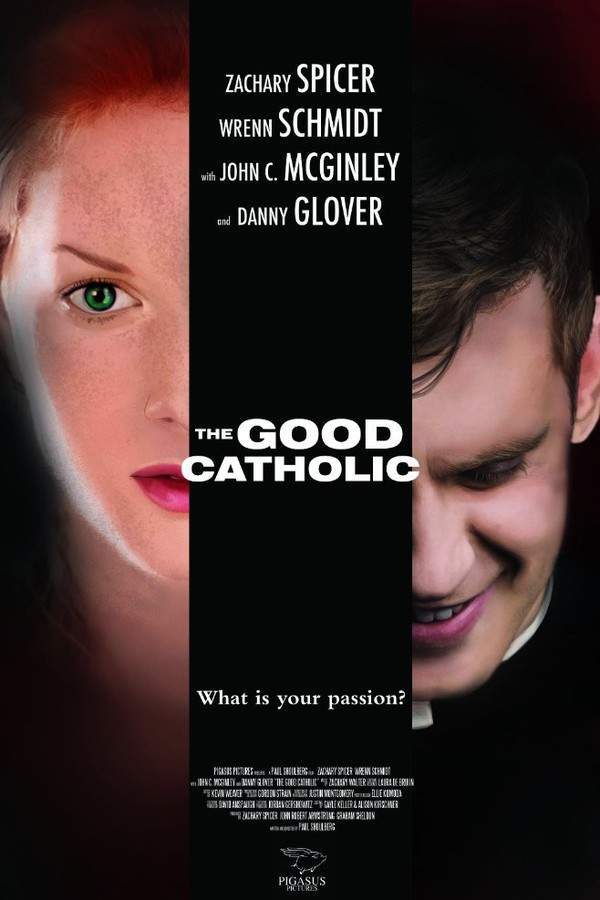
The Good Catholic (2017) movie poster

Plot Summary

The Good Catholic (2017) Plot Summary Explained

Release, runtime and language
2017 · 96 min · English
Echo score 48
JustWatch #30,423 8
Directed by
Paul Shoulberg
Starring
John C. McGinley, Danny Glover, Wrenn Schmidt, Zachary Spicer, Alex Miro, Callie Rekas

A young, idealistic priest named Daniel finds his faith tested when he encounters Jane, a captivating and mysterious woman. Torn between the guidance of his traditional mentor, Father Victor, and the more unconventional approach of Father Ollie, Daniel's beliefs are challenged. As he confronts Jane's influence and the complexities of his own emotions, he must re-examine his calling and face difficult choices about love, faith, and the true meaning of his vocation.

On this page (6)
  1. 1 Where to watch
  2. 2 What happens: full plot
  3. 3 Plot questions answered
  4. 4 Movie threads
  5. 5 Movies like The Good Catholic
  6. 6 Every angle

Where to watch

Where to Watch The Good Catholic (2017)

Where can you watch The Good Catholic? Stream, rent or buy it in the US, including on Amazon Prime Video, Xumo Play and YouTube Free: current JustWatch availability with up-to-date prices.

Streaming availability powered by JustWatch

Full plot summary · contains spoilers

What Happens in The Good Catholic: Full Plot Summary

The whole story of The Good Catholic (2017) explained, from the opening scene to the final frame: every key event, every twist and what it all adds up to. Read it as a quick recap before the sequel, to check a scene you missed, or to finally understand what really happened.

In a charming rectory that houses three Catholic priests, the rhythms of daily life are often intruded upon by moments of deep reflection. Young Father Daniel is still coming to terms with the recent loss of his father, a heartache that lingers nearly a year later. In contrast, Father Ollie approaches life with exuberance, driven by his passion for food and his loyalty to Indiana University basketball. The eldest of the trio, Father Victor, finds peace in his faith, dedicating his time to preparing for mass, a time-honored routine that provides him with a meaningful sense of direction. Together, the priests balance their responsibilities, from scheduling baptisms to leading church services, while engaging in spirited conversations about Scripture, engaging homilies, and the profound mysteries that surround divine existence.

As the narrative unfolds, a unique bond begins to develop between Father Dan and Jane, a troubled musician seeking refuge in the confessional. Jane’s heartfelt musings on life and mortality spark a connection, which blossoms as they partake in light-hearted games like "battleship" within the sacred confines of the church. As their friendship grows, Jane expresses her evolving wishes regarding her remains, revealing her vulnerability over time. When she invites Father Dan to one of her coffeehouse performances, she opens up about her artistic ambitions and her fears for the future. In turn, he shares his inner struggles, finding new purpose in his calling as a priest. However, their relationship faces a challenge when Jane reacts harshly to a gift from Father Dan - a Bible left behind during a lively rectory bingo night.

Throughout the film, each priest invests considerable effort into crafting their homilies, pouring their very essence into their spiritual messages. Meanwhile, the rectory becomes a backdrop for the deepening friendship between Father Dan and Jane. One notable evening, Father Dan extends an invitation to dinner at the rectory, where Ollie revels in the delightful meal while Victor takes the opportunity to delve into Father Dan's core passions—a conversation that ultimately leads to Jane feeling slighted and choosing to leave. Following this incident, Victor delivers a powerful homily reflecting on the delicate interplay between love and divinity, leading Father Dan to a moment of profound realization. In a significant turning point, we see him rushing to Jane’s home, removing his clerical collar before knocking on her door, symbolizing a new chapter in their relationship and the challenges that lie ahead.
Last updated: November 17, 2024 at 20:48

Was this helpful?

Plot questions answered

The Good Catholic Plot Explained: Your Questions Answered

The questions people ask most about The Good Catholic (2017): what happens in the confusing scenes, why the characters do what they do, the twists, hidden details and what the ending means. Each answer contains spoilers.

Q1

Why does Jane react harshly to the Bible gift from Father Dan?

Jane's harsh reaction to the Bible stems from her complicated relationship with faith and her fears about mortality. As a troubled musician who sought solace in the confessional, Jane has deep emotional wounds related to spirituality. The Bible, as a symbol of the very faith that has haunted her, triggers her inner turmoil. Additionally, the timing matters, she receives the gift during a lively rectory bingo night, a moment that feels disconnected from the serious spiritual conversations she's been having with Father Dan, making it feel dismissive of their deeper connection.

Foreshadowing: Earlier in the confessional, Jane's musings about life and mortality reveal her conflicted feelings about faith, hinting at why a religious gift would upset her.

  • jane
  • bible gift
  • reaction
  • faith
  • mortality
Q2

Why does Jane leave the dinner at the rectory?

Jane leaves because she feels overlooked during the dinner conversation. While Father Ollie enjoys the meal and Father Victor probes Father Dan about his true passions, Jane sits largely ignored. The conversation focuses entirely on Father Dan's calling and spiritual life, leaving her feeling like an outsider to the world she was trying to enter. This moment exposes the fundamental tension in her relationship with Father Dan, she wants to be part of his life, but his vocation and the rectory's world seem to have no space for her.

Foreshadowing: Their earlier interactions in the confessional established a private, intimate connection that exists separately from Father Dan's public role as a priest, foreshadowing the collision between these two worlds at dinner.

  • jane
  • dinner
  • rectory
  • leave
  • feeling overlooked
Q3

What does Father Victor's homily about love and divinity mean?

Father Victor's homily reflects on the delicate interplay between love and God, suggesting that love is not separate from divinity but is, in fact, a pathway to understanding the divine. This message directly addresses Father Dan's internal conflict, his growing feelings for Jane versus his priestly vows. Victor frames love as something sacred rather than as a distraction from faith, which prompts Father Dan to reconsider whether pursuing his relationship with Jane is a betrayal of his calling or an extension of it.

Foreshadowing: Victor's character has been established as finding peace in faith and routine, making this homily a genuine expression of his wisdom rather than mere platitude, and it comes immediately after Jane's departure, giving it personal relevance to Dan's situation.

  • father victor
  • homily
  • love
  • divinity
  • meaning
Q4

What does it mean when Father Dan removes his collar before knocking on Jane's door?

Removing his clerical collar represents Father Dan's symbolic rejection, at least temporarily, of his institutional role as a priest. The collar is the visible marker of his vocation, and by removing it before approaching Jane, he signals that he is coming to her not as Father Dan but as Daniel, a man with personal desires and emotional needs. This act signifies his willingness to choose their relationship over his religious duties, though the film leaves ambiguous whether this is a permanent departure or a moment of human weakness.

Foreshadowing: Throughout the film, Daniel's grief over his father and his conversations with Jane about life and mortality have been gradually pulling him away from the traditional understanding of his vocation, making this removal feel like a natural progression rather than a sudden decision.

  • collar
  • remove
  • priest
  • vocation
  • meaning
Q5

Why is Father Dan still struggling with his father's death nearly a year later?

Father Dan's extended grief over his father's death is central to his character arc. The film suggests he never properly processed this loss, as his coping mechanism has been to throw himself into his priestly duties. His conversations with Jane about mortality reopen these unhealed wounds. Jane's own fears about the future mirror Dan's unprocessed grief, creating a bond between them built on shared vulnerability about life's fragility.

Foreshadowing: The opening scenes establish Dan's quiet melancholy amid the daily rectory routines, establishing that his sadness is a constant presence that influences every interaction.

  • father death
  • grief
  • father dan
  • loss
  • mourning
Q6

What is the relationship dynamic between the three priests?

The three priests represent different approaches to faith and priesthood. Father Victor serves as the traditional, grounded mentor who finds peace in ritual and routine. Father Ollie brings warmth and levity through his love of food and basketball, acting as an emotional balance to the more serious aspects of rectory life. Father Dan, as the youngest, is still forming his identity, caught between Victor's traditionalism and Ollie's more liberal approach. Together they function as a found family, each supporting the others while also challenging their perspectives.

Foreshadowing: The opening introduction establishes each priest's distinct personality and coping mechanism, showing they have lived together long enough to understand and accommodate each other's quirks.

  • three priests
  • father victor
  • father ollie
  • relationship
  • dynamic
Q7

Why does Jane come to the confessional if she seems conflicted about faith?

Jane seeks the confessional as a space for emotional release rather than religious guidance. As a troubled musician dealing with fears about her future and mortality, she uses the anonymity and sacredness of the confessional to express feelings she cannot share elsewhere. Her conversations with Father Dan in this setting reveal her deepest vulnerabilities, her thoughts on life, death, and meaning, showing that she's searching for understanding and connection, even if she struggles with traditional faith.

Foreshadowing: Jane's initial appearance in the confessional establishes her as someone seeking solace rather than absolution, immediately setting her apart from typical penitents.

  • jane
  • confessional
  • musician
  • why comes
Q8

What is the significance of Father Dan and Jane playing battleship in the church?

The battleship game represents a crossing of boundaries, taking a secular, playful game into a sacred space signals the blurring of lines between their roles. It shows Jane's attempt to bring warmth and normalcy into the church, while also revealing Father Dan's willingness to bend the formal rules of his position for the sake of connection. This moment encapsulates their unique relationship: spiritual depth mixed with human intimacy, finding joy in unexpected places.

Foreshadowing: This playful scene early in their relationship establishes the unconventional nature of their bond, hinting at the eventual clash between Dan's vocation and his personal feelings.

  • battleship
  • church
  • game
  • significance
  • playful
Q9

Why is the ending of The Good Catholic ambiguous?

The ending remains ambiguous because the film is more interested in exploring the tension between faith and human connection than resolving it. By removing his collar but not explicitly leaving the priesthood, Father Dan's choice remains open to interpretation. The film suggests that love and vocation can coexist in conflict, and that sometimes the most honest thing a person can do is acknowledge uncertainty rather than make a definitive choice. This ambiguity reflects the real-life complexity of priests who struggle with the demands of their calling.

Foreshadowing: The entire film builds toward this moment of reckoning, Dan finding new purpose through Jane while simultaneously feeling the pull of his traditional vows creates the tension that the ambiguous ending honors without resolving.

  • ending
  • ambiguous
  • collar
  • choice
  • vocation
Q10

What challenges does Father Dan face regarding his vocation?

Father Dan's vocational crisis stems from two competing forces: his genuine calling to priesthood and his growing emotional connection to Jane. Throughout the film, he finds renewed purpose through his conversations with Jane, yet each step closer to her creates more conflict with his duties. The Bible gift incident, Jane's departure from dinner, and Victor's homily all force Dan to examine what his vocation truly means, whether it's about rules and ritual or about genuine love and connection. His final act of removing the collar doesn't answer this question but rather shows he's willing to risk everything to explore it.

Foreshadowing: Dan sharing his inner struggles with Jane early in the film establishes that his faith is already fragile, making his later decision to pursue her feel like an evolution of his character rather than a sudden change.

  • vocation
  • faith
  • priest
  • challenges
  • calling
Q11

Why does Jane invite Father Dan to her coffeehouse performance?

Jane invites Father Dan to her performance because she wants him to see her world, the artistic, vulnerable side of herself beyond the confessional. Her performance represents her true self: her fears, ambitions, and creative expression. By inviting him into this space, she's testing whether he can accept her fully, not just as someone she meets in church but as a complex person with her own struggles. This invitation deepens their bond by showing mutual vulnerability, Dan confides in her, and now she invites him into her world.

Foreshadowing: Jane's earlier expressions of her fears about the future during confessional conversations foreshadow this invitation, as she gradually lets Dan into her inner life.

  • jane
  • coffeehouse
  • performance
  • invite
  • musician

Movie threads

More Movies Like The Good Catholic, by Mood & Story

Curated lists built around what makes The Good Catholic tick: the same mood, the same kind of story or the same emotional payoff. Each list explains why these movies belong together.

Movies about faith crises like The Good Catholic

Character-driven dramas about questioning one's life path and deepest beliefs. For viewers who enjoyed the reflective, personal struggle in The Good Catholic, this collection features similar movies about questioning faith and vocation. These character-driven dramas explore themes of doubt, mentorship, and the search for personal truth in a gentle, thoughtful manner.

  • introspective
  • searching
  • melancholic
  • gentle
  • reflective
  • thoughtful
  • Tone: bittersweet, reflective
  • Pacing: slow, contemplative
Why these movies?

The story pattern: Stories in this thread follow protagonists who experience a deep questioning of their long-held beliefs or life's calling. The plot is driven by internal conflict and personal conversations, often featuring a mentor figure and an outside influence that catalyzes the crisis. The journey is less about external events and more about the character's evolving perspective.

Why they belong together: Movies are grouped here for their shared focus on a gentle, introspective exploration of faith and purpose. They share a low-key intensity, a bittersweet or melancholic tone, and a character-centered approach to serious thematic material.

Movies with bittersweet forbidden romance like The Good Catholic

Stories of meaningful but complicated relationships that defy conventions. If you liked the poignant, complicated relationship in The Good Catholic, this thread gathers movies featuring bittersweet forbidden love stories. These films explore meaningful connections that challenge social norms, focusing on emotional depth and character growth over simple resolutions.

  • bittersweet
  • melancholic
  • poignant
  • heartfelt
  • complicated
  • searching
  • Tone: bittersweet, melancholic
  • Pacing: slow, character-driven
Why these movies?

The story pattern: The narrative pattern involves a protagonist forming a profound bond with someone that is socially, professionally, or personally off-limits. The relationship serves as a catalyst for self-discovery and challenges the protagonist's established world. The story often builds a deep emotional connection, but concludes with an ambiguous or bittersweet ending, leaving the ultimate fate of the relationship open.

Why they belong together: This thread groups films that share a specific emotional mix: a high degree of heartfelt romance balanced with sadness and complexity. They feature a slow-burn development of a central, unconventional relationship that drives the protagonist's emotional journey, resulting in a poignant and thoughtful atmosphere.

If you liked this

Movies Like The Good Catholic

Similar movies to The Good Catholic: the same genre, themes or kind of story. Each one comes with its own plot summary, timeline and ending explained.

Browse all movie summaries

Every angle

The Good Catholic (2017) Explained: Plot, Timeline & Characters

Everything about The Good Catholic in one place: what happens in the plot summary, the timeline in chronological order, the characters and meaning and a spoiler-free summary. What's After the Movie adds the cast, box office and post-credit scenes.

Coming soon on iOS and Android

The Plot Explained Movie Summary App

Plot summaries, endings explained and timelines on your phone. Catch up on any movie in minutes, save your favorites and never miss a twist again.

Be the first to know when we launch. Your email stays private, always.

Learn more about the app