






Plot Explained Spoilers guaranteed!
Plot Explained

Browse by genre

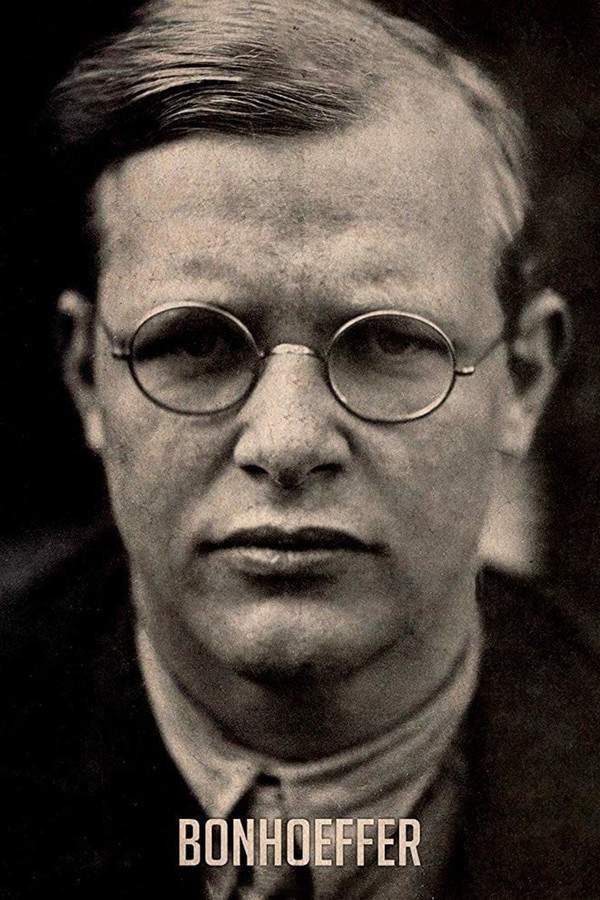
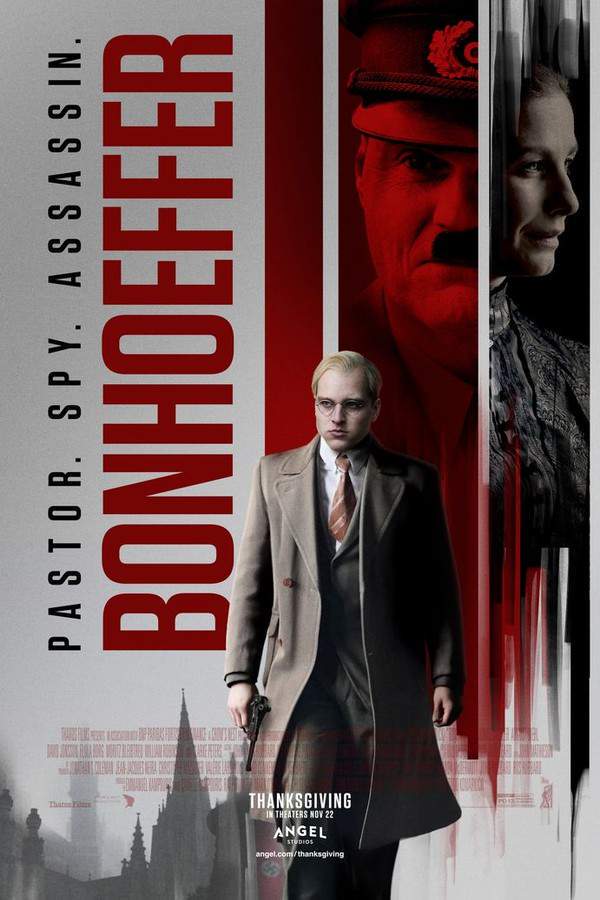
Bonhoeffer: Pastor. Spy. Assassin. (2024) movie poster

Plot Summary

Bonhoeffer: Pastor. Spy. Assassin. (2024) Plot Summary Explained

Release, runtime and language
2024 · 2 h 12 m · English
Echo score 45
JustWatch #22,529 4
Starring
Clarke Peters, Flula Borg, David Jonsson, August Diehl, Mark Wingett, Moritz Bleibtreu
Budget
$25M

During World War II, Dietrich Bonhoeffer, a prominent German pastor, becomes entangled in a dangerous conspiracy to assassinate Adolf Hitler. Torn between his deeply held moral convictions and the potential to save millions of Jewish people from genocide, he makes a pivotal shift from advocating peace to participating in a plot against the Nazi regime. His faith and ultimate fate hang in the balance as he navigates this perilous situation.

On this page (6)
  1. 1 Where to watch
  2. 2 What happens: full plot
  3. 3 Plot questions answered
  4. 4 Movie threads
  5. 5 Movies like Bonhoeffer: Pastor. Spy. Assassin.
  6. 6 Every angle

Where to watch

Where to Watch Bonhoeffer: Pastor. Spy. Assassin. (2024)

Where can you watch Bonhoeffer: Pastor. Spy. Assassin.? Stream, rent or buy it in the US, including on Angel Studios, Amazon Video and Apple TV Store: current JustWatch availability with up-to-date prices.

Streaming availability powered by JustWatch

Full plot summary · contains spoilers

What Happens in Bonhoeffer: Pastor. Spy. Assassin.: Full Plot Summary

The whole story of Bonhoeffer: Pastor. Spy. Assassin. (2024) explained, from the opening scene to the final frame: every key event, every twist and what it all adds up to. Read it as a quick recap before the sequel, to check a scene you missed, or to finally understand what really happened.

In 1914, the story begins with young Dietrich Bonhoeffer, an eight-year-old boy engrossed in a game of hide-and-seek with his older brother, Walter. However, the atmosphere changes when Walter reveals his intention to join the army, setting forth to fight in the Great War shortly thereafter. Tragically, by 1918, Walter loses his life in combat, and the Bonhoeffer family gathers to mourn his loss at his funeral.

Fast forward a few years, and Dietrich is now a theology student in the United States. During his time there, he meets Frank, an African-American seminarian who introduces him to the Abyssinian Baptist Church in Harlem. Under the powerful preaching of Adam Clayton Powell Sr., Dietrich develops a deep awareness of social justice and the harsh realities faced by minority communities. Upon returning to Germany, he finds his family increasingly concerned about the escalating power of the Nazi Party, particularly its encroachment on Germany's churches. Dietrich's strong opposition to the Nazis' influence in religious institutions leads him to view their alterations as fundamentally sacrilegious.

As tensions rise, Bonhoeffer takes a bold step by establishing an underground seminary in Finkenwalde dedicated to training pastors from the Confessing Church. However, in April 1943, his actions attract the attention of the Gestapo, leading to his arrest and subsequent imprisonment at Tegel Prison. Eventually, he is moved to the Flossenbürg concentration camp.

Throughout this harrowing period, Bonhoeffer is charged with connections to the 20 July plot, a failed attempt to assassinate Adolf Hitler. Ultimately, he faces execution, being hanged in 1945, just as the Nazi regime nears its collapse. Through his life and choices, Dietrich Bonhoeffer emerges not only as a theologian but as a courageous figure standing against tyranny and injustice.

Last updated: September 18, 2026 at 08:59

Was this helpful?

Plot questions answered

Bonhoeffer: Pastor. Spy. Assassin. Plot Explained: Your Questions Answered

The questions people ask most about Bonhoeffer: Pastor. Spy. Assassin. (2024): what happens in the confusing scenes, why the characters do what they do, the twists, hidden details and what the ending means. Each answer contains spoilers.

Q1

Why did Bonhoeffer, a pastor, agree to participate in a plot to assassinate Hitler?

Bonhoeffer's decision to support the assassination plot stemmed from his conviction that the Nazi regime had become so morally corrupt that passive resistance was no longer sufficient to protect innocent lives. His time in Harlem exposed him to the devastating effects of systemic injustice, reinforcing his belief that Christian ethics demanded active intervention against a government committing atrocities. He ultimately viewed the plot as a moral imperative to prevent the ongoing genocide and the destruction of the German churches.

Foreshadowing: Bonhoeffer's experience listening to Adam Clayton Powell Sr. preach about racial injustice in Harlem planted the early seeds for his conviction that the church must take a stand against oppression.

  • bonhoeffer motivation
  • assassination plot
  • theology and violence
  • moral dilemma
Q2

How did Bonhoeffer's experience in Harlem shape his resistance to the Nazis?

While studying theology in the United States, Bonhoeffer befriended Frank, an African-American seminarian who introduced him to the Abyssinian Baptist Church in Harlem. Listening to Adam Clayton Powell Sr.'s sermons about racial injustice gave Bonhoeffer a visceral understanding of how religious communities must stand against systemic oppression. This experience transformed his theology, convincing him that neutrality in the face of state-sponsored persecution was itself a moral failure.

Foreshadowing: Bonhoeffer's friendship with Frank at the Abyssinian Baptist Church is the pivotal moment where his faith begins to merge with a commitment to social justice.

  • harlem
  • abyssinian baptist church
  • adam clayton powell
  • social justice
Q3

What was the Finkenwalde seminary and why did Bonhoeffer create it?

Finkenwalde was an underground theological seminary Bonhoeffer established to train pastors for the Confessing Church, a movement that rejected Nazi interference in German religious institutions. He created it because the Nazis had corrupted mainstream German churches, imposing policies like the Aryan paragraph and aligning Christian doctrine with Nazi racial ideology. By operating outside state-sanctioned institutions, Bonhoeffer ensured that a new generation of clergy would resist the regime's attempts to co-opt Christianity for political purposes.

  • finkenwalde seminary
  • confessing church
  • aryan paragraph
  • pastor training
Q4

Why was Bonhoeffer arrested by the Gestapo in April 1943?

Bonhoeffer's arrest resulted from his growing involvement in anti-Nazi conspiratorial activities, particularly his connections to figures in the German military resistance working to overthrow the regime. His public opposition to Nazi interference in the church, combined with suspicions about his secret intelligence work through the Abwehr, made him a target for the Gestapo. The arrest reflected the regime's intensifying crackdown on dissidents as the war turned against Germany and internal resistance grew.

  • gestapo arrest
  • tegel prison
  • bonhoeffer arrested
  • abwehr
Q5

What was the 20 July plot and how was Bonhoeffer connected to it?

The 20 July plot was a failed attempt by a group of German military officers and conspirators to assassinate Adolf Hitler in 1944, culminating in the famous bombing at the Wolf's Lair. Bonhoeffer had been connected to this resistance network through his role as a courier and intelligence gatherer for figures like Hans Oster and Ludwig Beck. Although the plot failed, Bonhoeffer was later charged with complicity as part of the regime's sweeping reprisals against anyone linked to the conspirators.

  • 20 july plot
  • hitler assassination
  • wolf's lair
  • resistance conspirators
Q6

Why was Bonhoeffer executed in 1945 even as the Nazi regime was collapsing?

Bonhoeffer was executed because the Nazi regime, even in its final desperate months, prioritized eliminating political prisoners associated with resistance activities. As Allied forces closed in on Flossenbürg concentration camp, SS guards accelerated executions to prevent prisoners from being liberated or revealing what had happened inside the camps. His documented association with the 20 July plot conspirators made him a prime target for the regime's final acts of vengeance before Germany's surrender.

  • bonhoeffer execution
  • flossenbürg
  • 1945
  • final days of nazi regime
Q7

How did the death of his brother Walter shape Dietrich Bonhoeffer's life?

Walter's death in combat during World War I in 1918 was a formative trauma for the Bonhoeffer family, deeply affecting the young Dietrich's understanding of war's human cost. Growing up in the shadow of his brother's sacrifice made Dietrich acutely aware of how nationalist fervor and militarism destroyed ordinary families. This early loss contributed to his lifelong suspicion of state-sanctioned violence and his later moral struggle over whether supporting an assassination could ever be justified.

Foreshadowing: Walter's announcement that he was enlisting during their childhood game of hide-and-seek foreshadows the tragedy that would shape Dietrich's entire worldview.

  • walter bonhoeffer
  • world war i
  • family tragedy
  • pacifism
Q8

What made Bonhoeffer view Nazi influence on German churches as sacrilegious?

Bonhoeffer saw the Nazi attempt to align Christianity with its racial ideology as a fundamental corruption of Christian doctrine rather than a simple political dispute. Policies like the Aryan paragraph, which excluded Jewish Christians from church communities, directly contradicted the New Testament teaching that all people were equal before God. For Bonhoeffer, the church's capitulation to Nazi demands represented a spiritual betrayal that could not be justified under any theological framework, making active resistance a religious duty.

  • aryan paragraph
  • nazi church
  • german christian movement
  • religious persecution
Q9

How did Bonhoeffer go from being a theologian to becoming a spy?

Bonhoeffer's transition into espionage began through his connections in the German military intelligence bureau (Abwehr), where he was recruited to use his international theological contacts for intelligence gathering. This role provided him with cover to travel abroad and communicate with resistance figures and Allied contacts about potential anti-Nazi activities. His fluency in English and his earlier time studying in America made him particularly valuable for these covert operations, gradually blurring the line between his pastoral work and his conspiratorial activities.

  • bonhoeffer spy
  • abwehr
  • double life
  • intelligence work
Q10

Why was the Bonhoeffer family particularly alarmed by the Nazi Party's rise?

The Bonhoeffer family, as part of Germany's educated professional class with deep intellectual and moral traditions, recognized early that the Nazi movement posed a fundamental threat to the values they held dear. Several family members held academic and professional positions that gave them insight into the regime's persecution of minorities, political opponents, and dissident thinkers. Their concern was not only moral but also practical, as they understood that Nazi ideology would inevitably destroy institutional independence and lead to catastrophic violence.

  • bonhoeffer family
  • nazi rise
  • german intellectuals
  • political opposition
Q11

How did Bonhoeffer's stance on peace evolve into support for violent resistance?

Bonhoeffer began as a committed pacifist influenced by his Christian convictions and the trauma of his brother's death in World War I, but his perspective shifted as he witnessed the Nazi regime's escalating atrocities. The turning point came when he realized that the regime's persecution of Jewish people and its corruption of the churches could not be stopped through moral persuasion alone. He concluded that responsible action sometimes required Christians to take up responsibility for others' suffering, even if it meant abandoning strict pacifism.

  • bonhoeffer pacifism
  • ethics of violence
  • responsible action
  • theological shift
Q12

Why did Bonhoeffer return to Germany instead of staying safely in America?

Bonhoeffer returned to Germany because he felt a deep sense of responsibility to his people and his church during a time of national moral crisis. Although he had the opportunity to remain in the United States and build a safe academic career, he believed that abandoning Germany while its churches were being corrupted and its Jewish citizens persecuted would be a betrayal of his Christian calling. His decision reflected his conviction that faith required presence and action in the most dangerous places rather than retreat to safety.

  • bonhoeffer return germany
  • american exile
  • theological calling
  • moral responsibility

Movie threads

More Movies Like Bonhoeffer: Pastor. Spy. Assassin., by Mood & Story

Curated lists built around what makes Bonhoeffer: Pastor. Spy. Assassin. tick: the same mood, the same kind of story or the same emotional payoff. Each list explains why these movies belong together.

Movies like Bonhoeffer: Pastor. Spy. Assassin. — when faith meets impossible moral choices

Stories where believers and idealists confront violence they once condemned. Looking for movies like Bonhoeffer: Pastor. Spy. Assassin.? These are powerful dramas about people of conscience, faith, or principle who are pushed toward violence, resistance, or sacrifice they once rejected. Expect heavy themes, morally complex protagonists, and emotionally crushing journeys where standing by one's beliefs demands a terrible price. Ideal for viewers seeking serious, thought-provoking historical and moral drama.

  • morally complex
  • somber
  • contemplative
  • martyrdom
  • faith under pressure
  • weighty
  • Tone: dark, contemplative, morally heavy
  • Pacing: steady, reflective with rising stakes
Why these movies?

The story pattern: Stories in this thread typically begin with a principled protagonist living by a clear moral or spiritual code. A rising tide of injustice forces them into direct conflict with the system perpetrating the harm, often through an underground network or conspiracy. Internal struggle intensifies as action replaces reflection, and the narrative builds toward a moment of irreversible commitment. The climax usually carries the weight of martyrdom, exile, or execution, and the ending rarely offers clean redemption.

Why they belong together: These films share a consistent emotional architecture: grave atmosphere, morally serious protagonists, and a steady build toward sacrifice. They tend to foreground ethical and spiritual reflection, weigh violence against conscience, and refuse easy moral comfort. The pacing is patient, the tone somber, and the emotional impact comes from watching good people confront impossible choices in the shadow of historical atrocity.
WWII resistance and conspiracy movies like Bonhoeffer: Pastor. Spy. Assassin.

Gripping stories of ordinary people plotting against impossible odds. If you loved Bonhoeffer: Pastor. Spy. Assassin., explore more gripping WWII dramas and political thrillers about real or realistic resistance movements, assassination plots, and underground conspiracies against Nazi Germany and other fascist regimes. These films blend historical tension with spy thriller suspense, offering bleak but morally urgent portraits of those who risked execution to fight genocide and tyranny.

  • suspenseful
  • oppressive
  • haunting
  • historically grounded
  • espionage
  • dystopian regime
  • Tone: tense, dark, oppressive
  • Pacing: steady tension with escalating stakes
Why these movies?

The story pattern: Films in this thread usually unfold across a compressed wartime timeline, alternating between quiet clandestine planning and bursts of dangerous action. Protagonists often live double lives as ordinary citizens, clergy, or officials while secretly coordinating sabotage, intelligence gathering, or assassination. Surveillance, betrayal, and moral compromise loom at every turn. The story tightens toward exposure, capture, or execution, and the resolution typically acknowledges that resistance, however brave, unfolded alongside unfathomable loss.

Why they belong together: These films share a dark, weighty atmosphere rooted in real 20th-century history, with attention to political detail, surveillance, and the cost of dissent. They tend to move at a measured pace that lets dread accumulate, rather than relying on action set pieces. Common threads include conspiracies that fail or partially fail, protagonists caught between loyalty and conscience, and endings that feel tragic rather than victorious.

If you liked this

Movies Like Bonhoeffer: Pastor. Spy. Assassin.

Similar movies to Bonhoeffer: Pastor. Spy. Assassin.: the same genre, themes or kind of story. Each one comes with its own plot summary, timeline and ending explained.

Browse all movie summaries

Every angle

Bonhoeffer: Pastor. Spy. Assassin. (2024) Explained: Plot, Timeline & Characters

Everything about Bonhoeffer: Pastor. Spy. Assassin. in one place: what happens in the plot summary, the timeline in chronological order, the characters and meaning and a spoiler-free summary. What's After the Movie adds the cast, box office and post-credit scenes.

Coming soon on iOS and Android

The Plot Explained Movie Summary App

Plot summaries, endings explained and timelines on your phone. Catch up on any movie in minutes, save your favorites and never miss a twist again.

Be the first to know when we launch. Your email stays private, always.

Learn more about the app