Plot Explained Spoilers guaranteed!
Plot Explained

Browse by genre

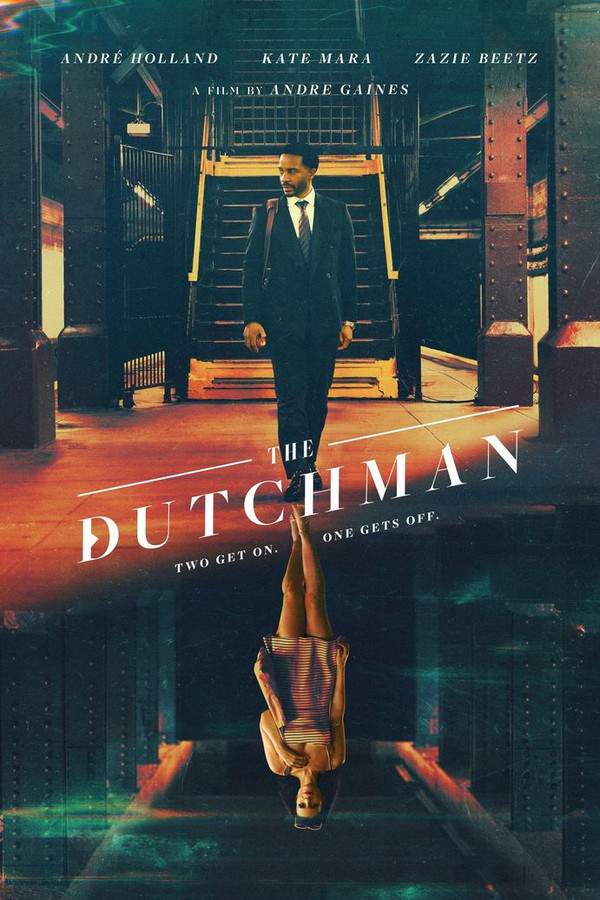
The Dutchman (2026) movie poster

Characters & Themes

The Dutchman (2026) Characters, Setting & Themes Explained

Release, runtime and language
2026 · 1 h 28 m · English
Echo score 64
Loading streaming availability…
Directed by
Andre Gaines
Starring
Zazie Beetz, Kate Mara, Aldis Hodge, Lauren E. Banks, Christopher McVay, Michael Laurence

Clay (André Holland), a successful yet troubled Black businessman, attends therapy with his wife, Kaya (Zazie Beetz), hoping to save their marriage. Their mysterious therapist soon appears outside the sessions, intruding on Clay’s daily life. The therapist even follows him onto a New York subway, where a tense encounter heightens the unease.

On this page (8)
  1. 1 Where to watch
  2. 2 Characters explained (6)
  3. 3 Where & when it takes place
  4. 4 Themes & meaning (4)
  5. 5 Character & meaning questions
  6. 6 Movie threads
  7. 7 Movies like The Dutchman
  8. 8 Every angle
Loading streaming availability…

6 main characters · contains spoilers

The Dutchman Characters Explained: Who Is Who

The main characters of The Dutchman (2026), heroes and villains: what drives them, how they change over the course of the story and what each of them reveals about the film's bigger ideas.

  • Clay — André Holland

    Clay is a cautious, plans-driven man whose life is shaped by a system that treats him as a racialized subject. The theater-model intrusion pushes him into moral and existential conflict, forcing him to choose between a prewritten path and a self-defined fate. He grapples with whether personal freedom can survive in a world governed by prejudice and violence.

    • 🧠 Intense
    • 🗽 Race
    • 🧩 Identity
  • Lula — Kate Mara

    Lula is volatile, manipulative, and provocative, using sexuality and fear to destabilize Clay. She embodies a projection of Clay's insecurities and racist anxieties, pushing events to a breaking point. Her threats and unpredictable behavior culminate in a violent confrontation and legal jeopardy.

    • 🔥 Volatile
    • 🗣️ Manipulative
    • 💥 Tension
  • Kaya — Zazie Beetz

    Kaya is a sharp, morally complex figure who challenges Clay and reflects the complicated dynamics of trust, fidelity, and power in intimate relationships. Her confrontation with Lula and the party's social dynamics escalate the conflict, while her later support helps Clay navigate consequences. She embodies resilience amid provocative social games.

    • 💔 Relationship
    • 🌆 City life
    • 🕊️ Trust
  • Warren — Aldis Hodge

    Warren is a city councilor with a political project to reshape Harlem, representing ambition, diplomacy, and the lure of progress. He serves as Clay’s ally and a conduit to public life, while also illustrating how political goals intersect with personal and racial tensions. His presence grounds the story in real-world power structures.

    • 🏛️ Politics
    • 🤝 Alliance
    • 🗺️ City planning
  • Dr. Amiri — Stephen McKinley Henderson

    Dr. Amiri Baraka appears as a mentor-like figure who introduces the magical theater model and spurs Clay's introspection. He frames the narrative as a dialogue between art and life, offering guidance while revealing the darker edge of Clay’s psyche. His appearances anchor the existential questions at the story’s core.

    • ✍️ Intellectual
    • 🧭 Guidance
    • 🧩 Theater
  • Gina — Lauren E. Banks

    Gina is a party guest whose presence and conversation expose the social dynamics around infidelity, loyalty, and rumor. She contributes to the escalating tension in the social circle and helps mirror the broader themes of trust and betrayal. Her interactions underscore how communal judgments shape individual choices.

    • 💬 Social dynamics
    • 🗣️ Gossip
    • 🧪 Tension

Last updated: August 28, 2026 at 07:33

Was this helpful?

Setting

Where and When Does The Dutchman Take Place?

The setting of The Dutchman (2026): the year and time period, the places and locations, and how they shape the characters, the mood and the tension of the story.

Time period

Location

New York City, Harlem

Set in New York City, the story unfolds largely around the subway and urban locales. Harlem emerges as a political backdrop with community tensions and projects in the works. The subway car becomes a recurring stage where power, fear, and prejudice collide, reflecting the city’s layered social dynamics.

  • 🗽 Urban setting
  • 🚇 Subway-centered
  • 🏙️ Dense cityscape

Last updated: August 28, 2026 at 07:33

Was this helpful?

4 major themes

The Dutchman Meaning: Themes & Message Explained

What is The Dutchman (2026) really about? The emotional, social and philosophical themes the film keeps returning to, its symbolism and the message beneath the surface.

  • Racism

    The film uses subway encounters and social gatherings to expose how racism informs behavior and choices. Public spaces become pressure cookers where stereotypes, entitlement, and fear shape interactions between Clay, Lula, Kaya, and bystanders. The theatrical conceit externalizes prejudice, making it a tangible force with consequences.

  • Identity

    Identity is performed and questioned as theater and reality blur. Clay confronts the pressure to fit a scripted role while Lula projects his darkest thoughts as if they were his own. The model of theatre reveals how perception and self-conception can determine actions and outcomes.

  • Freedom & Consequence

    Clay seeks personal agency in a world quick to judge and constrain him. The pursuit of emancipation clashes with violence, surveillance, and social expectations, highlighting that freedom often carries costs. The ending implies agency exists, but not without hard choices and repercussions.

  • Reality vs Illusion

    The magical theater model collapses boundaries between art and life, forcing characters to distinguish scripted lines from real danger. Lula's rhetoric appears as a crafted script that becomes a dangerous truth on the train and at the party. The story challenges what is real when a narrative can be used to control and justify acts.

Last updated: August 28, 2026 at 07:33

Was this helpful?

Character & theme questions

The Dutchman Characters & Meaning: Your Questions Answered

The questions people ask about The Dutchman (2026): who the characters really are, their relationships, what the symbols mean, where it takes place and what the movie is really about. Each answer contains spoilers.

Q1

Where is the story set?

The Dutchman takes place in New York City, with Harlem serving as a key neighborhood and political backdrop. The story moves through urban locales, but much of its most charged action unfolds on the subway system, where strangers are forced into close, unavoidable contact.

  • new york city
  • harlem
  • urban setting
  • subway
  • the dutchman
Q2

Why does so much of the story take place on the subway?

The subway car in The Dutchman functions as a recurring stage where power, fear, and prejudice collide. It is a confined, anonymous space that strips away social escape routes, turning a routine ride into the setting for the film's most intense confrontations between Clay and Lula.

  • subway
  • public space
  • confrontation
  • harlem
  • social tension
Q3

What are the main themes explored in the film?

The Dutchman is built around four intersecting themes: racism as a tangible social force, identity as something performed and questioned, the pursuit of freedom weighed against consequence, and the collapse of the boundary between reality and theatrical illusion. Each theme is surfaced through both intimate scenes and public confrontations.

  • themes
  • racism
  • identity
  • freedom
  • reality vs illusion
Q4

How does the film portray racism as a force in everyday life?

Racism in The Dutchman operates as a constant, shaping pressure in both public and private spaces. Lula weaponizes stereotypes, entitlement, and fear to destabilize Clay, turning ordinary encounters into loaded confrontations that show how prejudice dictates behavior and limits personal agency.

  • racism
  • prejudice
  • stereotypes
  • social pressure
  • lula
  • clay
Q5

How does the film blur the line between reality and performance?

The Dutchman introduces a magical theater model that collapses the boundary between scripted drama and lived experience. Characters drift between therapy sessions, social gatherings, and staged scenes, making it unclear whether events are spontaneous or performed, and forcing Clay to confront what is real when a narrative can be used to justify harm.

  • magical theater
  • reality
  • illusion
  • performance
  • play within a play
Q6

Who is Clay and what is his central conflict?

Clay is a cautious, plans-driven Black businessman whose marriage is straining under personal and racial pressures. His central conflict is existential: he must navigate a world that treats him as a racialized subject while trying to claim personal freedom, especially as outside forces push him toward violence he never planned for.

  • clay
  • andre holland
  • businessman
  • identity
  • personal freedom
Q7

Who is Lula and what role does she play?

Lula is a volatile, manipulative white woman who confronts Clay on the subway and inserts herself into his life. She functions as both a real threat and a symbolic projection of Clay's anxieties, using sexuality, fear, and provocation to destabilize him and expose the racist dynamics surrounding them.

  • lula
  • kate mara
  • manipulator
  • subway
  • racial tension
Q8

Who is Kaya and what does she represent in the story?

Kaya is Clay's wife, a sharp and morally complex woman who grounds the emotional stakes of the film. She represents trust, fidelity, and resilience, confronting both Lula and the social pressures of their circle while later helping Clay reckon with the consequences of his choices.

  • kaya
  • zazie beetz
  • wife
  • marriage
  • trust
  • resilience
Q9

Who is Dr. Amiri and what is his function in the story?

Dr. Amiri is a mentor-like figure who introduces Clay to the magical theater model that frames much of the narrative. He serves as a guide between art and life, encouraging Clay's introspection while revealing the darker edges of his psyche and anchoring the film's existential questions.

  • dr amiri
  • mentor
  • theater model
  • introspection
  • existential
Q10

Who is Warren and how does he fit into the story?

Warren is a city councilor working on a political project to reshape Harlem. He represents ambition, diplomacy, and the intersection of political progress with personal and racial tensions, acting as Clay's ally in navigating the public side of life while grounding the film in real-world power structures.

  • warren
  • aldis hodge
  • city council
  • harlem
  • politics
Q11

Is the film based on a play?

Yes, The Dutchman adapts Amiri Baraka's 1964 play "Dutchman," which also gave the film its title. The story preserves the original's theatrical structure while modernizing its setting to contemporary New York and layering in magical realism to deepen its exploration of race and identity.

  • amiri baraka
  • dutchman play
  • adaptation
  • literary source
  • theater
Q12

What is the overall tone of the film?

The Dutchman maintains a tense, psychologically charged atmosphere throughout, driven by dread, suspicion, and unresolved racial tension. Even seemingly calm therapy scenes carry an undercurrent of unease, and the pacing shifts between quiet reflection and sudden, escalating violence.

  • tone
  • psychological
  • tense
  • suspense
  • mood
  • dread
Q13

What genre does the film belong to?

The Dutchman is a drama and thriller built on psychological suspense and social commentary rather than action. Its tension comes from interpersonal confrontation, moral ambiguity, and the slow unraveling of its characters under social and racial pressure.

  • drama
  • thriller
  • psychological
  • social commentary
  • genre

Movie threads

More Movies Like The Dutchman, by Mood & Story

Curated lists built around what makes The Dutchman tick: the same mood, the same kind of story or the same emotional payoff. Each list explains why these movies belong together.

Psychological manipulation thrillers like The Dutchman

When ordinary life becomes a slow tightening noose of manipulation and dread. Movies like The Dutchman where everyday interactions with a partner, therapist, or stranger twist into gaslighting, paranoia, and identity collapse. If you liked The Dutchman's suffocating tension, these psychological thrillers deliver similar mind games, claustrophobic dread, and a sense that reality itself is being rewritten around the protagonist.

  • oppressive
  • claustrophobic
  • paranoid
  • gaslighting
  • unsettling
  • tense
  • Tone: tense, paranoid, oppressive
  • Pacing: variable, slow burn to sudden escalation
Why these movies?

The story pattern: These stories follow a character who enters a seemingly safe space, such as a marriage, a session, or a public routine, only to discover that every conversation is a setup. The antagonist may be charming or seductive at first, then slowly weaponizes intimacy, guilt, or social dynamics. Reality becomes unreliable, the protagonist's grip on truth loosens, and the climax forces a violent or shattering reckoning that often comes too late to undo the damage.

Why they belong together: They share an oppressive, paranoid atmosphere where dread builds in quiet moments and erupts into confrontation. Tone stays tense throughout, pacing is variable rather than action-driven, and complexity comes from layered psychological games. The emotional weight is heavy, and endings tend to leave moral ambiguity unresolved rather than neatly restoring safety.


Surreal racial dramas like The Dutchman

Literary stories that use surrealism to crack open racial tension and identity. If you liked The Dutchman's blend of literary adaptation, magical realism, and racial tension, these films use dreamlike imagery and symbolic structures to explore Black identity, interracial marriage, and social hostility. Expect complex narratives, mixed or ambiguous endings, and emotionally heavy stories that resist easy answers.

  • surreal
  • racially charged
  • existential
  • dreamlike
  • literary
  • philosophical
  • Tone: heavy, uneasy, philosophically charged
  • Pacing: variable, contemplative with sudden ruptures
Why these movies?

The story pattern: Characters drift through encounters that feel staged or symbolic, often trapped in recurring patterns that mirror generational or societal violence. Conversations double as philosophical arguments about freedom, performance, and survival. The story resists realism, settings shift in mood, antagonists shift in meaning, and the narrative culminates in a confrontation that exposes the rot beneath a polished surface, leaving moral questions unresolved.

Why they belong together: They share literary DNA and a willingness to use surreal or theatrical devices to talk about race and identity. Pacing is variable, complexity is high, and the tone tends toward heavy and uneasy. Endings often feel mixed or ambiguous, and viewers looking for race stories that go beyond social realism will find their company here.

If you liked this

Movies Like The Dutchman

Similar movies to The Dutchman: the same genre, themes or kind of story. Each one comes with its own plot summary, timeline and ending explained.

Browse all movie summaries

Every angle

The Dutchman (2026) Explained: Plot, Ending, Timeline & Characters

Everything about The Dutchman in one place: what happens in the plot summary, the timeline in chronological order, the characters and meaning, the ending explained and a spoiler-free summary. What's After the Movie adds the cast, box office and post-credit scenes.

Coming soon on iOS and Android

The Plot Explained Movie Summary App

Plot summaries, endings explained and timelines on your phone. Catch up on any movie in minutes, save your favorites and never miss a twist again.

Be the first to know when we launch. Your email stays private, always.

Learn more about the app