







Plot Explained Spoilers guaranteed!
Plot Explained

Browse by genre

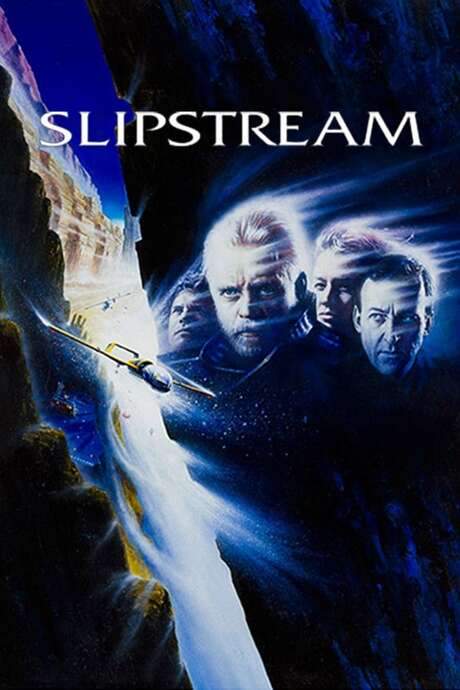
Slipstream (2007) movie poster

Plot Summary

Slipstream (2007) Plot Summary Explained

Release, runtime and language
2007 · 96 min · English
JustWatch #31,608

As acclaimed actor and screenwriter Felix Bonhoeffer struggles with his latest project, the boundaries between his fictional characters and reality begin to dissolve. He finds himself increasingly lost in a surreal world where dreams, time, and truth intertwine. The lines between his inner world and the tangible world blur, leading him on a disorienting journey through a vortex of fantasy and confusion.

On this page (6)
  1. 1 Where to watch
  2. 2 What happens: full plot
  3. 3 Plot questions answered
  4. 4 Movie threads
  5. 5 Movies like Slipstream
  6. 6 Every angle

Where to watch

Where to Watch Slipstream (2007)

Where can you watch Slipstream? Stream, rent or buy it in the US, including on fuboTV, Amazon Video and Apple TV Store: current JustWatch availability with up-to-date prices.

Streaming availability powered by JustWatch

Full plot summary · contains spoilers

What Happens in Slipstream: Full Plot Summary

The whole story of Slipstream (2007) explained, from the opening scene to the final frame: every key event, every twist and what it all adds up to. Read it as a quick recap before the sequel, to check a scene you missed, or to finally understand what really happened.

A low-budget thriller unfolds in the desolate desert as filmmakers attempt to capture a gripping sequence in a diner. The tension escalates when Ray, portrayed by Christian Slater, menaces the diner’s patrons with escalating psychosis, first through chilling dialogue and then with the threat of his firearm. However, the situation takes a tragic turn when the actor collapses and subsequently dies, apparently from a stroke, leaving the production team in utter chaos.

As disarray sets in, the team begins to challenge the authority of their director, who finds himself in a tight spot. In a desperate move to restore order, he calls upon the neurotic producer Harvey Brickman, played by John Turturro, whose reaction is a blend of hysteria and frustration at the unfolding madness. They make the decision to send Bonhoeffer, an overworked aging screenwriter, portrayed by Anthony Hopkins, to the desert set to revise the script and help navigate this unforeseen turmoil.

As Bonhoeffer immerses himself in his work, the mounting pressure to appease everyone morphs into an all-consuming stress that spirals into exhaustion. The boundaries of creativity blur, leading to moments of imagination intermingling with reality, causing confusion between the script's characters and the real-life individuals surrounding him. In this chaotic whirlpool of imagery, Bonhoeffer’s creative process is caught in a storm of hallucinations that further complicate his role in the production.

Despite an underappreciated reputation, this film merits a score of 7. While one might question the justification for the editing choices made in the initial fifteen minutes—which detracts from establishing Bonhoeffer's perspective effectively—the film ultimately finds its stride in a surreal, "natural born killers" fashion post the early disorientation. The performances are undeniably compelling, making for an engaging watch.

Last updated: November 03, 2024 at 13:26

Was this helpful?

Plot questions answered

Slipstream Plot Explained: Your Questions Answered

The questions people ask most about Slipstream (2007): what happens in the confusing scenes, why the characters do what they do, the twists, hidden details and what the ending means. Each answer contains spoilers.

Q1

Why does Ray collapse and die in the diner?

Ray collapses and dies from a stroke while threatening the diner's patrons. This sudden death throws the entire production into chaos, forcing the crew to abandon the shoot and creating the crisis that brings Bonhoeffer into the story.

Foreshadowing: Ray's menacing behavior and escalating psychosis earlier in the diner scene hint at something being seriously wrong with him.

  • ray stroke death christian slater diner scene production chaos
Q2

Why is Bonhoeffer sent to the desert set?

Bonhoeffer is called to the desert set because the production is in crisis after Ray's death. The director needs help revising the script to salvage the project, and Harvey Brickman decides to send the overworked screenwriter to handle the chaotic situation.

Foreshadowing: The earlier mention of Bonhoeffer being overworked establishes the pressure he already faces before arriving.

  • bonhoeffer desert set script revision production crisis Harvey Brickman
Q3

Why do the lines between fiction and reality start to blur for Bonhoeffer?

As Bonhoeffer immerses himself in revising the script under intense pressure, his exhaustion and stress cause his mind to mix his fictional characters with real people around him. The surreal desert environment and mounting demands compound his mental breakdown, making him unable to distinguish between his imagination and actual reality.

Foreshadowing: The narrative structure deliberately blurs these boundaries from the moment Bonhoeffer begins working, reflecting his deteriorating mental state.

  • fiction reality confusion hallucination bonhoeffer mental breakdown stress
Q4

What causes Bonhoeffer's mental breakdown?

Bonhoeffer's breakdown is caused by the overwhelming pressure to fix the troubled production while appeasing everyone involved. The combination of exhaustion, creative stress, and the chaotic atmosphere of the film set pushes him to a breaking point where hallucinations and disorientation take over.

Foreshadowing: His struggles begin immediately upon arriving at the set, with each escalating demand pushing him closer to breakdown.

  • bonhoeffer breakdown exhaustion stress hallucinations creative pressure
Q5

Is the ending real or all in Bonhoeffer's mind?

The ending remains ambiguous and intentionally leaves unclear whether what viewers see is actually happening or if it's a continuation of Bonhoeffer's hallucinations. The story deliberately maintains the blurred line between his script, his characters, and reality right until the final moments.

Foreshadowing: The entire narrative consistently hints that Bonhoeffer's perception of events may be unreliable, with reality and fiction intertwined throughout.

  • ambiguous ending reality vs fiction bonhoeffer hallucination interpretation
Q6

What happens to Ray in the diner scene?

Ray, played by Christian Slater, enters the diner and creates tension through menacing dialogue, eventually threatening patrons with a firearm. The scene escalates dramatically before taking a shocking turn when he suddenly collapses from a stroke and dies.

Foreshadowing: Ray's introduction establishes an ominous atmosphere that foreshadows the disturbance he will cause.

  • ray christian slater diner stroke death scene threat gun
Q7

Why does the director lose control of the production?

The director loses control after Ray's sudden death throws the crew into chaos. The production team begins questioning his authority, and the combination of the unexpected tragedy and the resulting disarray makes it impossible for him to maintain command of the situation.

Foreshadowing: The tension escalating in the diner directly leads to the breakdown of directorial authority.

  • director authority production chaos crew conflict ray death
Q8

What is Harvey Brickman's role in the movie?

Harvey Brickman is the neurotic producer called in to handle the crisis after Ray's death. He reacts with hysteria and frustration, ultimately deciding to send Bonhoeffer to the desert to revise the script and salvage the troubled production.

Foreshadowing: His introduction as a hysterical producer establishes the panicked tone that pervades the crisis.

  • harvey brickman producer john turturro neurotic crisis response
Q9

Why does the film shift to a surreal style after the chaotic opening?

The film shifts to a surreal style as Bonhoeffer's mental state deteriorates and the boundary between his script and reality collapses. The change reflects his psychological descent into madness, with the narrative adopting a dreamlike quality similar to 'Natural Born Killers' that mirrors his internal confusion.

Foreshadowing: The early disorientation in the first fifteen minutes establishes the foundation for this surreal transformation.

  • surreal style shift natural born killers visual transformation bonhoeffer mind
Q10

What does the title Slipstream refer to?

The title Slipstream metaphorically represents the blurring of realities and the disorienting flow between fiction and truth that Bonhoeffer experiences. Like a slipstream pulling objects into its current, the story drags the screenwriter deeper into confusion between his creative world and actual reality.

Foreshadowing: The entire narrative structure embodies this concept of being caught in an uncontrollable flow between different realities.

  • slipstream title meaning metaphor reality confusion stream

Movie threads

More Movies Like Slipstream, by Mood & Story

Curated lists built around what makes Slipstream tick: the same mood, the same kind of story or the same emotional payoff. Each list explains why these movies belong together.

Movies about psychological unraveling like Slipstream

Stories where a character's grip on reality dissolves into a disorienting dreamscape. If you liked the surreal confusion and psychological breakdown in Slipstream, you'll find similar stories here. These movies explore characters losing their sanity, where reality becomes a fluid and unreliable concept, creating an anxious and dreamlike viewing experience.

  • surreal
  • disorienting
  • anxious
  • dreamlike
  • claustrophobic
  • psychological
  • Tone: dark, anxious, surreal
  • Pacing: variable, often starting chaotic before a slower internal descent
Why these movies?

The story pattern: Narratives in this thread typically follow a character under extreme pressure—be it creative, traumatic, or existential—who begins to experience a breakdown. The story structure itself often becomes fragmented and subjective, mirroring the protagonist's disintegrating perception of the world, leading to an ambiguous and unresolved conclusion.

Why they belong together: Movies are grouped here based on their shared focus on a central character's psychological breakdown, a surreal and non-linear narrative style, and a heavy, disorienting mood that blurs the lines between internal and external realities.
Movies about the blurring of reality and fiction like Slipstream

Narratives about creators who become trapped within their own fictional universes. For viewers who enjoyed the meta-narrative of Slipstream, where a screenwriter's work invades his life, this section features similar films. Discover stories about creators lost in their own stories, exploring themes of authorship, identity, and the permeable nature of reality.

  • meta
  • cerebral
  • confusing
  • existential
  • unreliable narrator
  • creative struggle
  • Tone: dark, mysterious, cerebral
  • Pacing: variable, often building confusion steadily
Why these movies?

The story pattern: The narrative pattern involves a creator protagonist who is deeply immersed in their work. As the story progresses, elements of their creation—characters, plot points, or settings—begin to intrude upon their real life. This creates a layered conflict where the protagonist must navigate a world where the rules of fiction and reality are no longer distinct.

Why they belong together: These movies are linked by their central meta-fictional theme: the collapse of the barrier between a story and the storyteller. They share a complex structure, a tone of existential dread, and a focus on the creative process as a source of both inspiration and madness.

If you liked this

Movies Like Slipstream

Similar movies to Slipstream: the same genre, themes or kind of story. Each one comes with its own plot summary, timeline and ending explained.

Browse all movie summaries

Every angle

Slipstream (2007) Explained: Plot, Timeline & Characters

Everything about Slipstream in one place: what happens in the plot summary, the timeline in chronological order, the characters and meaning and a spoiler-free summary. What's After the Movie adds the cast, box office and post-credit scenes.

Coming soon on iOS and Android

The Plot Explained Movie Summary App

Plot summaries, endings explained and timelines on your phone. Catch up on any movie in minutes, save your favorites and never miss a twist again.

Be the first to know when we launch. Your email stays private, always.

Learn more about the app