Plot Explained Spoilers guaranteed!
Plot Explained

Browse by genre

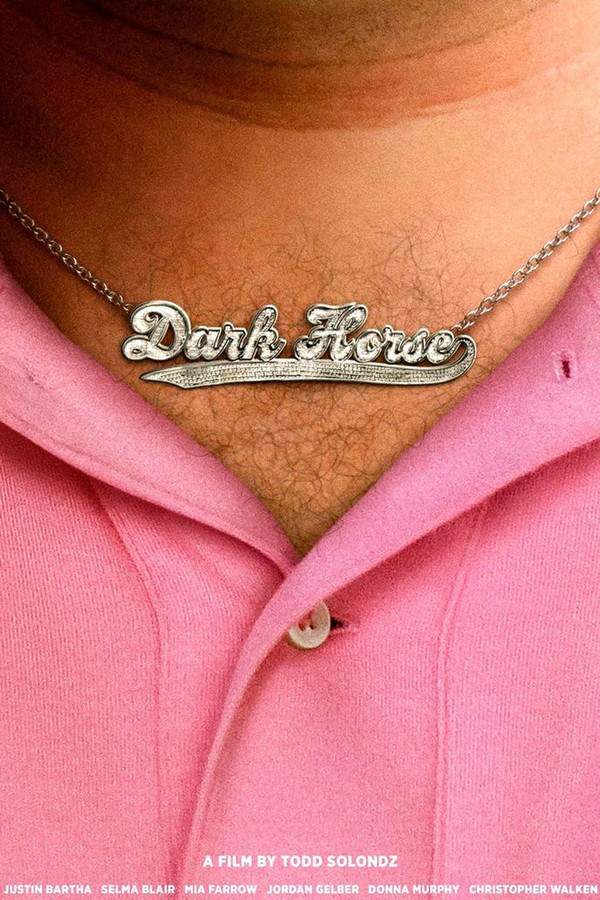
Dark Horse (2012) movie poster

Plot Summary

Dark Horse (2012) Plot Summary Explained

Release, runtime and language
2012 · 86 min · English
JustWatch #15,730
Directed by
Todd Solondz
Starring
Christopher Walken, Selma Blair, Mia Farrow, Jordan Gelber

Haunted by a difficult past, a man forms an unexpected bond with a carefree individual drifting through life. Their connection unexpectedly disrupts their routines and forces them to confront personal struggles. As they grapple with their inner demons, the strength of their fragile relationship is tested, offering a chance for healing and a path towards a brighter future.

On this page (6)
  1. 1 Where to watch
  2. 2 What happens: full plot
  3. 3 Plot questions answered
  4. 4 Movie threads
  5. 5 Movies like Dark Horse
  6. 6 Every angle

Where to watch

Where to Watch Dark Horse (2012)

Where can you watch Dark Horse? Stream, rent or buy it in the US, including on Amazon Prime Video, fuboTV and Philo: current JustWatch availability with up-to-date prices.

Streaming availability powered by JustWatch

Full plot summary · contains spoilers

What Happens in Dark Horse: Full Plot Summary

The whole story of Dark Horse (2012) explained, from the opening scene to the final frame: every key event, every twist and what it all adds up to. Read it as a quick recap before the sequel, to check a scene you missed, or to finally understand what really happened.

Abe, Jordan Gelber, a man in his thirties who still lives at home with his parents, becomes entangled with Miranda, Selma Blair, who has just moved back home after a failed literary/academic career and a divorce. While waiting outside Miranda's house for their first date, Marie, Mia Farrow, his secretary, runs up and tells him to give up on pursuing the girl as he has no shot, but then he wakes with a start revealing it was a dream.

Throughout the film, Marie keeps popping up in unexpected places, almost like reminders or warnings. She appears in the parking lot outside a bar where he has just hit Mahmoud, Christopher Walken; in Abe's bedroom as he parades through a quick study of his health and hepatitis; and on a street corner after an argument with his mother and brother, each appearance pulling him away from or toward Miranda. These encounters blur the line between reality and fantasy, turning Abe's quest for connection into a toxic, dreamlike pursuit that colors everything he does.

As the relationship unfolds, Miranda discloses she has hepatitis B, raising concerns that Abe may have already put himself at risk (since he used her toothbrush). He and Miranda eventually reconnect and Clara-faced moments occur at a bar where she is still connected to Mahmoud, who is on friendly terms with her. A growing suspicion takes root in Abe that Mahmoud is the source of the infection, and a confrontation escalates into violence when Abe beats Mahmoud, breaking his jaw. He fears he has ruined his chances with Miranda, yet she reaches out, calling him back into her life. Their fragile bond endures even as Abe faces familial rejection: his father fires him and replaces him with his cousin Justin, and his mother reveals they had long ago decided Abe was a failure.

The film shifts toward a desperate, almost cyclical motion. Abe races through the rain to the toy store where, at the start of the film, he had tried to return a damaged toy but was told the toy was open and the manager was out to lunch. This time the clerk refuses again, and the store manager arrives—revealed to be Mahmoud, now with a severe jaw injury and neck brace. Mahmoud delivers a pointed speech about Abe’s self-perceived status as a loser and about Miranda’s true feelings, ending with a sobering metaphor: life gives everyone a receipt that can be cut off mid-sentence.

The story cuts to Abe in the hospital, surrounded by family. He wakes to learn he has been in a coma for two months after being hit by a car in the office parking lot. Miranda is by his side and confesses that she did not know him and wasn’t initially attracted to him, but she says she cares—without clarifying what that care means. She denies being pregnant, despite Abe’s mother’s belief, and Abe flatlines again. He recovers only to develop hepatitis and jaundice. He shares a forceful, kiss with Marie, thereby contaminating her, and once more flatlines.

Returning to his parents’ house, Abe discovers the hollowed wall behind which lies his childhood height chart, labeled with his name as “Abe, Dad’s ‘Dark Horse.’” The moment of revelation culminates in a scene at a headstone where his family gathers with Marie, a young workmate, and Miranda, who is seen holding a baby and standing with Richard’s arm around her. Richard notes the death date is wrong, but Abe’s father asks him not to tell Richard’s mother. Marie then shares a quiet, candlelit dance with Abe to a saxophone rendition of “When I Fall in Love,” and the scene abruptly shifts to a final image of Marie at work, her face lost in a daydream as the narrative’s source remains uncertain and open to interpretation.
Last updated: October 09, 2025 at 16:23

Was this helpful?

Plot questions answered

Dark Horse Plot Explained: Your Questions Answered

The questions people ask most about Dark Horse (2012): what happens in the confusing scenes, why the characters do what they do, the twists, hidden details and what the ending means. Each answer contains spoilers.

Q1

Why does Marie keep appearing throughout the film?

Marie represents Abe's conscience and inner doubts manifesting as apparitions. She appears in surreal moments, at the parking lot, his bedroom, a street corner, each time trying to pull him away from his obsessive pursuit of Miranda. These appearances blur the line between reality and Abe's fantasies, suggesting his pursuit is self-destructive. The film uses Marie's visits to show Abe's internal conflict between his desires and his awareness of his own limitations.

Foreshadowing: Marie first appears in Abe's opening dream, foreshadowing her role as a recurring warning figure throughout his journey.

  • marie
  • apparitions
  • surreal
  • conscience
  • reality vs fantasy
Q2

How does Abe get hepatitis B?

Abe contracts hepatitis B through two possible routes: he used Miranda's toothbrush, which directly exposes him to her infected blood, and later he kisses Marie while infectious, contaminating her. The film connects his illness to both the toothbrush incident and his final kiss with Marie, showing how his reckless actions have consequences that spread beyond himself.

Foreshadowing: Miranda reveals she has hepatitis B early in their relationship, and Abe's use of her toothbrush happens shortly after, planting the seeds for his later illness.

  • hepatitis
  • infection
  • miranda
  • toothbrush
  • illness
Q3

Why does Abe attack Mahmoud at the bar?

Abe suspects Mahmoud is the one who infected Miranda with hepatitis B, viewing him as the source of her illness. When he sees Mahmoud at the bar with Miranda, his suspicion and rage escalate into violence. He beats Mahmoud severely, breaking his jaw, an act that stems from both his fear of illness and his insecurities about Miranda's connection to her ex-husband.

Foreshadowing: Miranda mentions her history with Mahmoud earlier, and Abe's growing jealousy builds as he watches them interact.

  • mahmoud
  • violence
  • bar fight
  • hepatitis
  • jealousy
Q4

Why does Abe's family reject him?

Abe's father fires him from the family business and replaces him with cousin Justin, showing professional rejection. His mother then reveals they had long ago decided Abe was a failure, confirming years of parental judgment. This rejection stems from Abe's inability to meet expectations, still living at home in his thirties, lacking independence, and represents the emotional neglect that has shaped his fragile self-image.

Foreshadowing: The opening dream sequence hints at Abe's low self-worth when Marie tells him he has no shot with Miranda.

  • family
  • father
  • mother
  • rejection
  • fired
  • failure
Q5

What happens at the toy store with Mahmoud?

Abe returns to the toy store in the rain, where Mahmoud, now working as manager with a jaw injury and neck brace from Abe's attack, delivers a cutting speech. He calls Abe a loser and claims Miranda would have been better off with Abe's brother. The speech ends with a metaphor about life giving everyone a receipt that gets cut off mid-sentence, suggesting life offers no true resolution or closure.

Foreshadowing: The toy store was introduced earlier when Abe tried to return a damaged toy, establishing it as a recurring location of failure.

  • toy store
  • mahmoud
  • receipt speech
  • rain
  • metaphor
Q6

Was Abe in a coma and what happened after?

After being hit by a car in the office parking lot, Abe spends two months in a coma. When he wakes, Miranda visits andconfesses she never knew him and wasn't attracted to him, though she claims to care. She denies being pregnant despite his mother's belief. Abe then develops hepatitis and jaundice, and after kissing Marie while infectious, he flatlines again, suggesting his survival remains tenuous.

Foreshadowing: The parking lot violence against Mahmoud earlier and Abe's general recklessness set up this dark turn of events.

  • coma
  • hospital
  • car accident
  • miranda
  • flatline
Q7

What is the significance of the height chart scene?

Abe discovers a hidden wall in his parents' house revealing his childhood height chart, labeled "Abe, Dad's 'Dark Horse'." This reveals his father had been tracking his growth like a project, and the "dark horse" label suggests expectations that Abe would exceed expectations. The discovery connects to the film's title and shows how parental pressure shaped Abe's fragile self-image from childhood.

Foreshadowing: The film's title and themes of failure suggest deep-seated parental expectations were always present.

  • height chart
  • wall
  • dark horse
  • childhood
  • father
  • parents
Q8

Is Abe dead by the end? What does the headstone mean?

The ending is deliberately ambiguous. A headstone with Abe's name appears at a cemetery gathering, and Richard notes the death date is wrong. This could mean Abe actually died from his complications, and the previous scenes were either his dying thoughts or Marie's grieving imagination. Alternatively, the headstone could be metaphorical, representing the death of his old self. The uncertainty is intentional.
Foreshadowing: Abe flatlines multiple times in the hospital, and the film consistently blurs reality with fantasy throughout.

  • headstone
  • death
  • cemetery
  • ambiguous ending
  • alive or dead
Q9

Is the entire story just Marie's imagination?

The ending suggests the story may be Marie's daydream or memory while at work, casting doubt on whether any of it was real. Her final faraway look implies she imagined the entire narrative, perhaps processing her feelings for Abe or grieving someone who never existed in the way depicted. This unreliable narration makes the entire plot potentially a construct of Marie's mind rather than objective events.

Foreshadowing: Marie appears as supernatural warnings from the beginning, and the film constantly blurs reality with fantasy sequences.

  • marie
  • imagination
  • unreliable narrator
  • ending
  • dream
  • reality
Q10

Why does Miranda deny being pregnant when Abe's mother believes she is?

In the hospital, Miranda tells the comatose Abe that she is not pregnant, directly contradicting his mother's belief that she was. This denial could be truthful, or Miranda may be lying to spare Abe's feelings or avoid commitment. Either way, it adds to the ambiguity about their relationship and whether Miranda ever truly intended to stay with Abe.

Foreshadowing: Abe's hopeful dreams about marriage and family were always fragile, and Miranda's earlier reversals on wanting to marry him set up this uncertainty.

  • pregnancy
  • miranda
  • denial
  • hospital
  • mother

Movie threads

More Movies Like Dark Horse, by Mood & Story

Curated lists built around what makes Dark Horse tick: the same mood, the same kind of story or the same emotional payoff. Each list explains why these movies belong together.

Slow-Burn Character Studies Like Dark Horse

Intimate portraits of men grappling with reality, failure, and their own delusions. Discover movies like Dark Horse that offer intimate, complex character studies. If you were captivated by the deep dive into a flawed man's psyche and his struggle with reality, this thread features similar films about unraveling protagonists, fractured identity, and unreliable narratives.

  • psychological
  • melancholic
  • anxious
  • unreliable narrator
  • lonely
  • oppressive
  • Tone: dark, melancholic, anxious
  • Pacing: variable, contemplative
Why these movies?

The story pattern: These stories often follow a central male character whose self-perception is at odds with the world around them. The narrative structure may be unconventional, using dream sequences or temporal shifts to mirror the protagonist's disoriented state, leading to a climax where their fragile reality is tested or shattered.

Why they belong together: Movies are grouped here for their shared focus on a deeply flawed, introspective male lead, a tone that blends melancholy with anxiety, and a narrative complexity that challenges the viewer to decipher what is real. The emotional weight is consistently heavy, centered on themes of failure and isolation.
Movies That Blur Reality Like Dark Horse

Stories where the line between memory, delusion, and truth becomes dangerously thin. Explore films similar to Dark Horse that masterfully blur the lines between reality and fantasy. If you enjoyed the ambiguous narrative and the challenge of distinguishing dream from reality, this list features dramas and psychological stories where perception is unreliable and the truth is subjective.

  • dreamlike
  • unreliable narrator
  • disorienting
  • psychological
  • surreal
  • ambiguous
  • Tone: dark, dreamlike, ambiguous
  • Pacing: variable, unsettling
Why these movies?

The story pattern: The narrative pattern hinges on ambiguity, consistently presenting events through a subjective lens. This creates a sense of unease and demands active interpretation from the viewer. The journey often involves a character using fantasy as a coping mechanism, leading to a climax that may or may not clarify the reality of their situation, frequently resulting in an ambiguous ending.

Why they belong together: These films are connected by their core narrative device of an unreliable perspective, a mood that is dreamlike yet oppressive, and themes centered on self-perception and emotional isolation. They share a complex structure and often leave the viewer with more questions than answers.
If you liked this

Movies Like Dark Horse

Similar movies to Dark Horse: the same genre, themes or kind of story. Each one comes with its own plot summary, timeline and ending explained.

Browse all movie summaries

Every angle

Dark Horse (2012) Explained: Plot, Timeline & Characters

Everything about Dark Horse in one place: what happens in the plot summary, the timeline in chronological order, the characters and meaning and a spoiler-free summary. What's After the Movie adds the cast, box office and post-credit scenes.

Coming soon on iOS and Android

The Plot Explained Movie Summary App

Plot summaries, endings explained and timelines on your phone. Catch up on any movie in minutes, save your favorites and never miss a twist again.
Be the first to know when we launch. Your email stays private, always.
Learn more about the app