







Plot Explained Spoilers guaranteed!
Plot Explained

Browse by genre

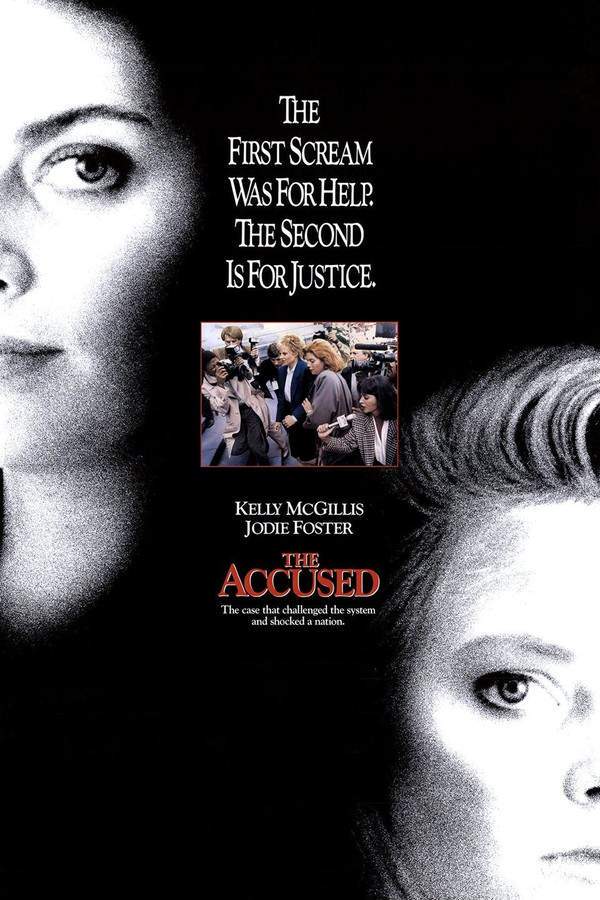
The Accused (1988) movie poster

Timeline

The Accused (1988) Timeline Explained – Every Event in Order

Release, runtime and language
1988 · 111 min · English
Directed by
Jonathan Kaplan
Starring
Jodie Foster, Kelly McGillis, Ann Hearn, Carmen Argenziano, Bernie Coulson, Leo Rossi

After a brutal attack shatters her life, a young woman struggles to reclaim her sense of safety and justice. A dedicated prosecutor fights to hold the perpetrators accountable, uncovering a disturbing pattern of negligence and indifference that allowed the crime to occur. The film explores themes of trauma, responsibility, and the fight for justice in the face of devastating violence.

On this page (6)
  1. 1 Where to watch
  2. 2 Events in order (15)
  3. 3 Timeline questions answered
  4. 4 Movie threads
  5. 5 Movies like The Accused
  6. 6 Every angle

Where to watch

Where to Watch The Accused (1988)

Where can you watch The Accused? Stream, rent or buy it in the US, including on Hoopla, Kanopy and Amazon Video: current JustWatch availability with up-to-date prices.

Streaming availability powered by JustWatch

15 events in order · contains spoilers

The Accused Timeline: Events in Chronological Order

Every key event of The Accused (1988) in order, scene by scene, with when and where it takes place. Use it to untangle flashbacks, time jumps and parallel storylines, to refresh your memory before the sequel or to find the exact scene you are thinking of.

  1. The Assault Begins

    The movie opens at The Mill bar, where Sarah Tobias experiences a horrifying gang rape. As she desperately screams for help, her ordeal unfolds in a crowded room where onlookers fail to intervene.

    Where
    The Mill Bar
  2. Police Notification

    Kenneth Joyce, a young man who witnesses Sarah's horrifying experience, rushes outside to inform the police. Their intervention leads to Sarah being rescued from the highway, marking the beginning of her fight for justice.

    Where
    Highway near The Mill
  3. Hospital Examination

    At the hospital, Sarah meets with various professionals, including Carol from the Rape Crisis Center. Extracting details about the assault, they learn about Sarah's state of intoxication during the incident.

    Where
    Hospital
  4. Identifying Assailants

    While still at the hospital, Sarah identifies two of her attackers to the police—Kurt and Danny. This crucial point in the investigation sets the stage for the legal battle to follow.

    Where
    Hospital
  5. Bail and Disappointment

    Despite being charged, the three rapists are released on a $10,000 bail. Sarah, grappling with their release, experiences further victimization when confronted by Kathryn, who questions her past behavior and choices.

  6. Witness Interviews

    Kathryn conducts interviews with witnesses to build a stronger case against the rapists. However, the reliability of the witnesses is undermined due to their intoxication and other issues, complicating the legal proceedings.

    Where
    Various locations
  7. Sarah's Fury

    In a moment of rage, Sarah confronts Kathryn regarding the lenient sentences given to her attackers. She articulates her frustration over being a victim in a society that seems to sympathize with the perpetrators instead.

    Where
    Kathryn's dinner party
  8. Encountering Cliff

    While shopping, Sarah is confronted by Cliff, one of the bystanders who did nothing to help her during the assault. This encounter reinforces her trauma and highlights the lack of support from those around her.

    Where
    Record store parking lot
  9. Determination to Prosecute

    Kathryn resolves to hold the spectators accountable for their inaction during the assault. Determined to create a legal precedent, she faces resistance from her colleagues who doubt her sanity and motives.

    Where
    District Attorney's office
  10. Kenneth's Testimony

    After initial reluctance, Kenneth agrees to testify about the events of that night. His testimony includes details that elucidate the twisted bystander mentality regarding Sarah's assault.

    Where
    Courthouse
  11. Sarah's Court Testimony

    In court, Sarah gives a detailed account of her assault. However, her inability to identify individual spectators weakens her position and she feels the weight of victim-blaming from the defense.

    Where
    Courthouse
  12. Flashback Sequence

    During Kenneth’s testimony, a flashback reveals what occurred in The Mill on the night of the assault. The horrific details of the gang rape are depicted, illustrating the callousness of the spectators.

    Where
    The Mill Bar
  13. Debate on Charges

    A heated discussion in court ensues regarding the responsibilities of the spectators. Kathryn argues that while silence is not a crime, their commands and encouragement of the crime warrant prosecution.

    Where
    Courthouse
  14. Verdict Delivered

    Kathryn ultimately wins the case against the spectators, marking a victory not only for Sarah but also for all victims of sexual violence. The verdict reinforces the accountability of those who choose to stand by in silence.

    Where
    Courthouse
  15. A New Beginning

    After the trial, Sarah returns home with a sense of closure, accompanied by her dog, Sadie. The resolution of her case offers a promising new beginning as she seeks to heal from her traumatic experience.

    Where
    Sarah's trailer home

Last updated: January 18, 2025 at 14:36

Was this helpful?

Timeline questions answered

The Accused Timeline Explained: Your Questions Answered

When does it happen, and why in that order? The questions people ask about the chronology of The Accused (1988): time jumps, flashbacks, cause and effect between scenes and the correct order of events, each answered with spoilers.

Q1

Why were the rapists released on $10,000 bail?

The rapists were released because Kenneth Joyce, one of the attackers, was a close friend of the police or had connections that allowed them to post bail quickly. This release on $10,000 bail shocked Sarah and highlighted how the legal system often fails sexual assault victims, especially when the perpetrators have social connections.

  • bail
  • rapists
  • release
  • Kenneth Joyce
  • legal system
Q2

Why does Deputy District Attorney Kathryn Murphy question Sarah's lifestyle choices?

Kathryn questions Sarah's lifestyle, including her past drug possession and her relationship with her boyfriend Larry, because the defense attorneys will likely use Sarah's character and choices against her in court. Kathryn is preparing Sarah for the harsh scrutiny she will face, though the questioning comes across as victim-blaming and adds to Sarah's trauma.

Foreshadowing: Earlier, the film establishes that Sarah's lifestyle will be used against her during the trial.

  • Kathryn Murphy
  • Sarah Tobias
  • victim-blaming
  • lifestyle
  • court
Q3

Why does Sarah interrupt Kathryn's dinner party?

Sarah storms Kathryn's dinner party because the three rapists received minimal sentences through a plea deal for reckless endangerment rather than facing full charges for sexual assault. Feeling betrayed by the legal system that was supposed to help her, Sarah confronts Kathryn directly, demanding justice and expressing fury that her attackers received such lenient treatment.

  • dinner party
  • confrontation
  • sentence
  • plea deal
  • rapists
Q4

Who is Cliff 'Scorpion' Albrect and why does he confront Sarah?

Cliff Albrect, nicknamed Scorpion, was one of the bystanders who watched Sarah's assault at The Mill bar and did nothing to help. He later confronts Sarah at a record store, attempting to taunt her and force her back into a victim role. This encounter further traumatizes Sarah and highlights the ongoing harassment victims face even after the initial attack.

Foreshadowing: The timeline establishes that spectators watched the assault without intervening.

  • Cliff Albrect
  • Scorpion
  • bystander
  • confrontation
  • harassment
Q5

Why does Kathryn decide to prosecute the bystanders instead of just the rapists?

Kathryn decides to prosecute the bystanders after witnessing Sarah's emotional breakdown at the dinner party and recognizing that the spectators who watched and did nothing share moral culpability. While acknowledging that silence alone is not a crime, Kathryn argues that the bystanders' commands and encouragement during the assault constitute criminal solicitation, making them legally responsible.

Foreshadowing: Sarah explicitly states at her dinner party confrontation that the spectators share in her guilt.

  • bystanders
  • prosecution
  • spectators
  • Kathryn Murphy
  • criminal solicitation
Q6

What does Kenneth Joyce's testimony reveal about the assault?

Kenneth Joyce's testimony is crucial because he was one of the rapists and a friend of the police, which explains how the attackers avoided immediate arrest. His account provides details about the twisted mentality of the bystanders, their commands, encouragement, and enjoyment of the assault. This testimony allows the prosecution to establish that the spectators were active participants rather than passive onlookers.

Foreshadowing: Kenneth was the one who initially notified police about the assault, raising questions about his true role.

  • Kenneth Joyce
  • testimony
  • spectators
  • assault details
  • court
Q7

What does Sarah's decision to cut her hair represent?

Sarah cuts her hair as a symbolic gesture of reclaiming her power and identity after the assault. The act represents her transformation from victim to survivor, taking control of her body and making a deliberate choice about her appearance. This moment occurs after her confrontation with Kathryn and before the trial, marking a psychological turning point in her healing journey.

  • Sarah Tobias
  • hair cut
  • symbolism
  • healing
  • empowerment
Q8

What is the outcome of the trial against the bystanders?

Kathryn wins the case against the bystanders, securing a verdict of criminal solicitation against them. This legal victory establishes that spectators who encourage or participate in a crime, even without directly committing it, can be held accountable. The verdict brings Sarah a sense of closure and represents a precedent for future cases involving bystander complicity in sexual violence.

  • verdict
  • bystanders
  • criminal solicitation
  • trial
  • accountability
Q9

Why does the film end with Sarah returning home to her dog Sadie?

The film ends with Sarah returning home to Sadie as a symbol of resilience and tentative healing. After the traumatic ordeal and exhausting legal battle, Sarah finds comfort in the simple normalcy of her trailer and her beloved dog. The ending is bittersweet, while she achieved legal justice against the bystanders, the film acknowledges that her healing is ongoing and her trauma does not simply disappear with a verdict.

  • Sadie
  • dog
  • home
  • healing
  • closure
  • ending
Q10

Why is The Mill bar significant to the story?

The Mill bar is significant because it is the location where Sarah's assault occurred in front of multiple witnesses who did nothing to help. The bar represents a space where sexual violence was witnessed but ignored, and its patrons' intoxication and complicity made them unreliable witnesses. The setting becomes central to Kathryn's case against the bystanders, as establishing what happened inside The Mill is essential to proving their culpability.

Foreshadowing: The film opens at The Mill, establishing it as the scene of the crime.

  • The Mill bar
  • assault location
  • witnesses
  • bystanders
  • spectators

Movie threads

More Movies Like The Accused, by Mood & Story

Curated lists built around what makes The Accused tick: the same mood, the same kind of story or the same emotional payoff. Each list explains why these movies belong together.

Movies with intense courtroom fights for justice like The Accused

Intense legal battles where fighting for justice is a personal and systemic struggle. Discover gripping legal dramas that share the tense, emotionally heavy atmosphere of The Accused. These movies like The Accused feature characters battling systemic injustice in the courtroom, creating suspenseful stories about trauma and the difficult pursuit of accountability.

  • courtroom drama
  • tense
  • gripping
  • harrowing
  • cathartic
  • suspenseful
  • Tone: tense, harrowing
  • Pacing: steady, methodical
Why these movies?

The story pattern: The narrative follows a protagonist, often a survivor or an underdog, who must navigate the complexities of the legal system to achieve a form of justice. The conflict extends beyond the courtroom, exposing societal flaws and prejudices, and the journey is defined by perseverance in the face of overwhelming emotional and systemic pressure.

Why they belong together: Movies in this thread are grouped by their focus on a high-intensity legal procedural structure, a tense tone driven by systemic opposition, and a heavy emotional weight centered on themes of trauma and societal accountability.


Movies about trauma recovery and resilience like The Accused

Stories of survivors confronting their trauma and fighting to reclaim their power. Explore powerful dramas about survival and reclaiming power, similar to The Accused. If you liked the harrowing yet resilient journey in The Accused, you'll find other films that focus on the emotional process of confronting trauma and fighting for personal justice.

  • harrowing
  • disturbing
  • resilient
  • cathartic
  • gripping
  • emotional
  • Tone: harrowing, resilient
  • Pacing: steady, deliberate
Why these movies?

The story pattern: The narrative is centered on a survivor's point of view, chronicling the immediate aftermath of a devastating event and the long, non-linear path toward healing. The story emphasizes the psychological impact, the confrontation with victim-blaming, and the slow, difficult process of reclaiming agency, often with a focus on internal strength over external victory.

Why they belong together: These films share a heavy emotional weight, disturbing themes centered on trauma, and a tone that balances harrowing intensity with a core of human resilience. The pacing is often steady, allowing for a deep exploration of the survivor's emotional state.

If you liked this

Movies Like The Accused

Similar movies to The Accused: the same genre, themes or kind of story. Each one comes with its own plot summary, timeline and ending explained.

Browse all movie summaries

Every angle

The Accused (1988) Explained: Plot, Timeline & Characters

Everything about The Accused in one place: what happens in the plot summary, the timeline in chronological order, the characters and meaning and a spoiler-free summary. What's After the Movie adds the cast, box office and post-credit scenes.

Coming soon on iOS and Android

The Plot Explained Movie Summary App

Plot summaries, endings explained and timelines on your phone. Catch up on any movie in minutes, save your favorites and never miss a twist again.

Be the first to know when we launch. Your email stays private, always.

Learn more about the app