Plot Explained Spoilers guaranteed!
Plot Explained

Browse by genre

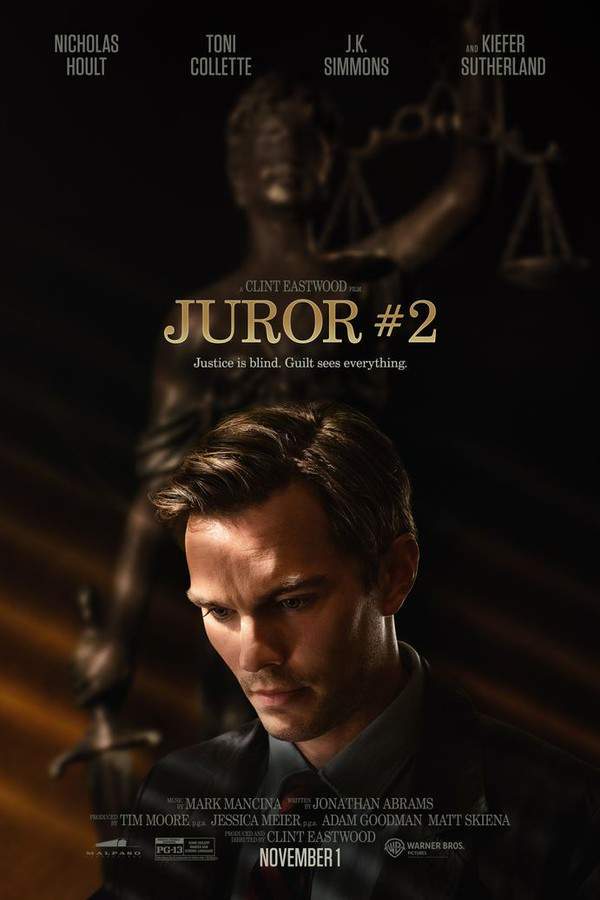
Juror #2 (2024) movie poster

Plot Summary

Juror #2 (2024) Plot Summary & Ending Explained

Release, runtime and language
2024 · 1 h 53 m · English
Echo score 65
Loading streaming availability…
Starring
Chris Messina, Leslie Bibb, J.K. Simmons, Zoey Deutch, Nicholas Hoult, Drew Scheid
Budget
$30M

While serving on a jury for a high-profile murder trial, family man Justin Kemp faces a significant moral conflict. He realizes the situation presents an opportunity to influence the jury's verdict, potentially leading to the conviction of an innocent person or the release of a guilty one.

On this page (7)
  1. 1 Where to watch
  2. 2 What happens: full plot
  3. 3 Plot questions answered
  4. 4 How it ends
  5. 5 Movie threads
  6. 6 Movies like Juror #2
  7. 7 Every angle
Loading streaming availability…

Full plot summary · contains spoilers

What Happens in Juror #2: Full Plot Summary

The whole story of Juror #2 (2024) explained, from the opening scene to the final frame: every key event, every twist and what it all adds up to. Read it as a quick recap before the sequel, to check a scene you missed, or to finally understand what really happened.

Journalist and recovering alcoholic, Justin Kemp, finds himself reluctantly summoned for jury duty in a troubling case centered around the tragic death of Kendall Carter. The circumstances surrounding Kendall's demise—discovered lifeless beneath a bridge in Savannah, Georgia—come into focus as her boyfriend, James Michael Sythe, stands accused of her murder. A year prior, a heated argument erupted between the couple at a nearby bar, leading to a fateful confrontation.

As the prosecutor, Faith Killebrew, pushes to cement her image in the community with a compelling case involving domestic violence, the courtroom fills with witnesses recounting an unruly Sythe, allegedly intoxicated and desperate, pursuing Kendall that night. Testimonies reveal that Kendall sustained injuries consistent with a blunt force. An eyewitness claims to have seen Sythe present at the scene of her death, causing the tension to escalate.

The plot thickens when, after an encounter at the bar, Justin recalls hitting something with his car the night before Kendall's death, leading him down a path of dread and self-doubt. Believing he might have accidentally killed Kendall, he feels compelled to seek counsel from Larry, his Alcoholics Anonymous sponsor and a seasoned defense attorney. Larry warns Justin that his past DUIs could taint the jury's view of his sobriety, putting him at risk for imprisonment should they discover his potential guilt.

Haunted by the thought of an innocent man facing conviction, Justin takes a bold step—he decides to advocate for a not-guilty verdict, illuminating Sythe's potential for reform by sharing his own journey to sobriety. Meanwhile, Eric Resnick, Sythe's overburdened public defender, stumbles through the trial, missing critical points such as the implications of poor nighttime visibility and neglecting to bring forward opposing medical opinions that could chance the outcome.

As jurors grapple with the evidence, retired detective Harold introduces the idea that confirmation bias could have skewed the eyewitness testimonies, urging a more thorough examination of the case. Observations from a medical student bring forth the possibility of Kendall's injuries being a product of a hit-and-run, igniting a flicker of doubt within the jury. However, this only intensifies Justin's fear of being implicated in the ordeal.

After engaging in questionable behavior—breaking jury rules to investigate body shop visits linked to the time of Kendall's death—Detective Harold narrows down the search to fifteen vehicles, including Justin’s. In response, Justin raises alarms about Harold's findings, resulting in the detective's removal from the jury, offering a momentary reprieve.

As the trial progresses, Killebrew faces her own moral quandary when she learns the police had prepped the eyewitness on how to identify Sythe, further complicating her professional ethics. Torn between her duty and the reality of the evidence, she opts against dismissing the charges, continuing her push for conviction, all the while collecting repair records for vehicles tied to the incident.

Both Justine and his wife, Ally, find their lives spiraling as Ally confronts Justin about his presence at the bar that fateful night. Pregnant and still grappling with the trauma of a previous miscarriage, she chooses to keep the truth from him for the sake of their family’s unity.

In a gripping turn of events, Justin draws on his influence to sway the jury toward a guilty verdict, even as he battles his own conscience and the fear of being discovered. Ultimately, Sythe is sentenced to life without parole, his fate sealed due to a convoluted web of truths and lies. Killebrew, now aware of Justin's connection to Ally, faces the repercussions of her decisions as they intersect in unforeseen ways.

In a poignant exchange following the verdict, Justin squares off with Killebrew over the injustice of punishing an innocent man for an accident that may have been caused by someone else. He highlights her motivations—protecting her DA position while sacrificing a good man's life. Desperate, he pleads for her to reconsider the case, emphasizing Sythe's violent past.

As time goes on, Justin takes drastic measures to sever ties with the incident by selling his car, and Ally safely delivers their child. Killebrew rises in her political career, now DA, yet their paths cross once more when she knocks on their door, leaving a lingering sense of unresolved tension. The intricacies of justice, morality, and personal redemption weave throughout this intense narrative, as the characters navigate the consequences of their choices amidst the backdrop of a legal battlefield.
Last updated: January 14, 2025 at 19:25

Was this helpful?

Plot questions answered

Juror #2 Plot Explained: Your Questions Answered

The questions people ask most about Juror #2 (2024): what happens in the confusing scenes, why the characters do what they do, the twists, hidden details and what the ending means. Each answer contains spoilers.

Q1

Why did Justin Kemp vote guilty at the end of the trial?

Justin voted guilty because he realized he could not prove his own potential involvement in Kendall's death. Fearing his car would be linked to the incident and exposed as the real killer, he manipulated the jury into convicting Sythe to ensure an innocent man went to prison rather than risk exposing himself. His confession would have freed Sythe but potentially incinated himself.

Foreshadowing: Earlier, Justin recalls hitting something with his car the night Kendall died, suggesting his guilt from the start.

  • justin kemp
  • vote guilty
  • jury verdict
  • sythe conviction
Q2

Did Justin Kemp actually kill Kendall Carter?

The film strongly implies Justin likely killed Kendall. While driving home drunk the night of her death, he hit something with his car that he initially thought was a deer. Kendall's injuries were consistent with a hit-and-run, and Justin's car was eventually identified among the vehicles being investigated. However, this is never definitively proven in the film.

Foreshadowing: Justin specifically recalls hitting an object with his car and hearing a thump, which he dismissed as a deer.

  • justin kemp
  • kendall carter
  • hit and run
  • car accident
Q3

Why did Justin initially want to vote not guilty for James Sythe?

Justin initially wanted Sythe acquitted because he believed Sythe might be innocent and didn't deserve prison for a crime he didn't commit. Justin's own conscience was burdened by possibly being the real killer, and he felt it would be unjust to let an innocent man take the fall for his accident. His sobriety gave him clarity about moral responsibility.

Foreshadowing: Justin consults his AA sponsor Larry about the moral implications of staying silent.

  • justin kemp
  • sythe not guilty
  • moral dilemma
  • jury duty
Q4

Why was Harold removed from the jury in Juror #2?

Harold was removed after Justin reported his unauthorized investigation into body shop records. Justin feared Harold was getting too close to discovering his car was involved in the case. By alerting authorities to Harold's rule-breaking, Justin ensured the detective was dismissed from jury duty, protecting himself from exposure.

Foreshadowing: Harold had begun narrowing down vehicles to fifteen cars, including Justin's.

  • harold
  • jury removal
  • detective
  • investigation
Q5

Why did prosecutor Faith Killebrew continue the case after learning about coached witnesses?

Killebrew continued the case despite knowing police had coached the eyewitness because she was campaigning for District Attorney and needed a conviction to advance her political career. Even when she discovered her own office had potentially corrupted the evidence, she chose to press forward rather than admit failure, prioritizing her career over justice.

Foreshadowing: Killebrew admits to Justin that she knows an innocent man has been punished but refuses to reopen the case.

  • faith killebrew
  • prosecutor
  • witness coaching
  • district attorney
Q6

Why did Justin Kemp sell his car after the trial?

Justin sold his car to destroy evidence connecting him to Kendall's death. By removing the vehicle from his possession, he eliminated the physical proof that could link him to the hit-and-run. This act symbolizes his attempt to sever his connection to the crime and move forward with his new family.

Foreshadowing: Justin knew his car was among the fifteen vehicles being investigated by Harold.

  • justin car
  • sell car
  • evidence
  • destroy
Q7

What happens when Killebrew visits Justin and Ally at the end?

The ending leaves the outcome of Killebrew's visit ambiguous. She arrives at Justin and Ally's home after they have their baby, creating tension about whether she has figured out Justin's involvement or is simply there to observe. The scene suggests potential future consequences but doesn't confirm if Justin will be exposed.

Foreshadowing: Earlier, Killebrew investigates vehicles and learns Ally's car is registered to their address.

  • killebrew visit
  • ally
  • kendall case
  • ending
Q8

Why was the eyewitness testimony unreliable in Sythe's trial?

The eyewitness testimony was unreliable because police had coached the witness on how to identify Sythe at the scene. This confirmation bias tainted the identification, as the witness was essentially told who to look for. Additionally, poor nighttime visibility made accurate identification difficult, and the defense failed to highlight these issues.

Foreshadowing: Retired detective Harold explicitly mentions confirmation bias affecting the witnesses during deliberations.

  • eyewitness
  • testimony
  • confirmation bias
  • sythe
Q9

Why didn't Justin just tell the court about his car accident?

Justin couldn't confess because doing so would likely expose his past DUIs and suggest he was driving drunk the night Kendall died, which could result in his own imprisonment. Additionally, he had already manipulated the jury into convicting Sythe. By the time the verdict came, confessing would have meant admitting his manipulation and potentially causing a mistrial that would have revealed his guilt.

Foreshadowing: Larry warned Justin that his previous DUIs would make him look guilty in the eyes of a jury.

  • justin confession
  • dui
  • admit guilt
  • jury manipulation
Q10

Was James Sythe actually innocent or guilty of killing Kendall?

The film leaves Sythe's guilt ambiguous. He was physically abusive to Kendall and was present at the bar the night she died, but there's no direct evidence he killed her. The prosecution's case relied on circumstantial evidence and flawed eyewitness testimony. The true killer was likely Justin, making Sythe technically innocent of murder, though he was a domestic abuser.

Foreshadowing: Killebrew argues that even if Sythe didn't kill Kendall, his violence toward her made him deserving of punishment.

  • james sythe
  • innocent
  • guilty
  • kendall murder
Q11

Why did Ally hide the truth from Justin about knowing where he was that night?

Ally concealed the truth because she was pregnant after previously experiencing a miscarriage, and she wanted to protect the stability of their family. She feared that revealing Justin had been at the bar drinking would trigger a relapse or destroy their marriage. Her silence was meant to protect both Justin and their unborn child.

Foreshadowing: The film establishes Ally's trauma from a previous miscarriage early in the story.

  • ally
  • pregnancy
  • miscarriage
  • marriage secrets
Q12

Why did the public defender Eric Resnick do such a poor job defending Sythe?

Eric Resnick was overburdened and under-resourced as a public defender, causing him to miss critical defense points. He failed to emphasize the poor nighttime visibility affecting eyewitness identification and didn't bring forward opposing medical opinions about Kendall's injuries. His incompetence contributed to the wrongful conviction despite these obvious weaknesses in the prosecution's case.

Foreshadowing: Justin grows increasingly frustrated with Resnick's missed opportunities during the trial.

  • eric resnick
  • public defender
  • sythe defense
  • incompetent

Ending explained

What Happens at the End of Juror #2?

How Juror #2 (2024) ends, in short: the final scene, the last twist and what it means for the characters. The full ending explained, with every spoiler, lives on its own page.

Read the full ending explained

At the end of Juror #2, the story leaves us with a sense of unresolved tension and moral ambiguity. Justin, who had initially believed he had hit Kendall with his car that night, is wracked with guilt and desperately tries to clear James’ name. The courtroom verdict finds James guilty of malice murder, and he is sentenced to life in prison without parole. While this seems like a resolution, the ending hints that the case is far from closed. Faith, the district attorney, shows up unannounced at Justin’s house, but she doesn’t speak; her presence suggests she’s either confronting him about his possible involvement or urging him to take responsibility. This ambiguous visit implies that new doubt remains about whether Justin really hit Kendall or if James’s guilt is truly certain. Justin’s memories are uncertain; the film strongly suggests there’s enough doubt about what really happened, including whether Justin’s account is truthful or if he’s hiding something. The final scene provokes questions about justice, truth, and the flaws in the legal system, emphasizing that real morality is complex and uncertain. Ultimately, the film ends on a note of moral reflection, with Faith potentially representing hope and integrity in a system riddled with bias and self-interest. The movie’s ending leaves viewers contemplating whether justice has truly been served or if the truth remains elusive, keeping the story open and thought-provoking long after the credits roll.

Juror #2 ending explained in full

Movie threads

More Movies Like Juror #2, by Mood & Story

Curated lists built around what makes Juror #2 tick: the same mood, the same kind of story or the same emotional payoff. Each list explains why these movies belong together.

Legal moral dilemma thrillers like Juror #2

Characters trapped by the law face impossible choices with heavy consequences. If you liked the intense ethical pressure in Juror #2, explore more movies where characters are trapped within the justice system. These films feature gripping moral conflicts, high-stakes legal proceedings, and heavy emotional weight, similar to the anxious and guilt-ridden journey in this thriller.

  • anxious
  • guilt-ridden
  • tense
  • morally conflicted
  • gripping
  • unsettling
  • Tone: tense, morally conflicted
  • Pacing: steady, procedural
Why these movies?

The story pattern: Narratives in this thread typically involve a protagonist who discovers a personal connection to a legal case, forcing them into a position where they can manipulate the outcome. The story unfolds as a steady procedural, building tension through ethical quandaries rather than action, often leading to a bittersweet resolution where justice is imperfect.

Why they belong together: These movies are grouped by their shared focus on the immense psychological pressure of the legal world. They create a specific kind of tension—ethical claustrophobia—where the central conflict is internal, the pacing is deliberate, and the emotional weight stems from grappling with guilt, responsibility, and the flaws of justice.

Bittersweet redemption thrillers like Juror #2

Thrillers where confronting the past brings a costly, incomplete peace. For viewers who appreciated the heavy emotional journey and bittersweet ending of Juror #2, this list features similar thrillers about personal redemption. These movies explore themes of guilt, confronting one's past, and the high cost of making things right, often leaving characters with a mixed sense of closure.

  • guilt-ridden
  • tense
  • gripping
  • unsettling
  • heavy
  • bittersweet
  • Tone: heavy, bittersweet
  • Pacing: steady, character-driven
Why these movies?

The story pattern: The narrative pattern follows a character haunted by a buried guilt that is unearthed by a current crisis. Their path to redemption is fraught with tension and moral compromises, leading to an outcome that provides personal safety or family stability but fails to fully correct the initial wrong, resulting in a poignant, bittersweet conclusion.

Why they belong together: Movies in this thread share a specific emotional arc: a heavy focus on guilt, a tense and gripping path toward redemption, and a conclusion that is realistically imperfect. The similarity lies in the mix of high emotional weight with a steady, character-driven pacing, ultimately delivering a catharsis that is undercut by lingering consequences.

If you liked this

Movies Like Juror #2

Similar movies to Juror #2: the same genre, themes or kind of story. Each one comes with its own plot summary, timeline and ending explained.

Browse all movie summaries

Every angle

Juror #2 (2024) Explained: Plot, Ending, Timeline & Characters

Everything about Juror #2 in one place: what happens in the plot summary, the timeline in chronological order, the characters and meaning, the ending explained and a spoiler-free summary. What's After the Movie adds the cast, box office and post-credit scenes.

Coming soon on iOS and Android

The Plot Explained Movie Summary App

Plot summaries, endings explained and timelines on your phone. Catch up on any movie in minutes, save your favorites and never miss a twist again.

Be the first to know when we launch. Your email stays private, always.

Learn more about the app