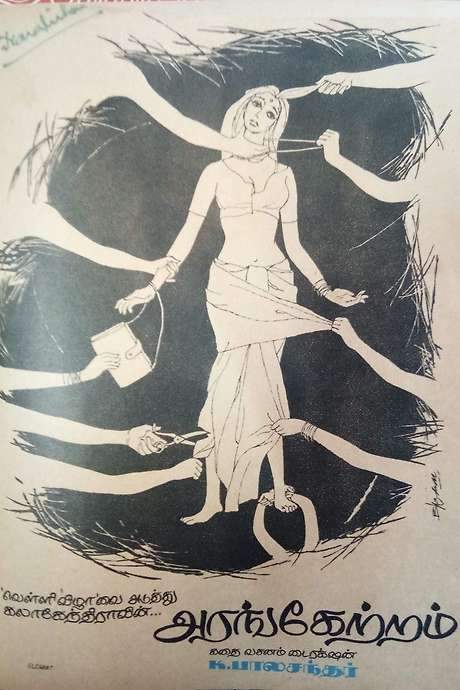
In a cramped neighbourhood where daily survival feels as precarious as the monsoon rains, a teenage girl shoulders the quiet weight of her family’s hopes. Saroja is the eldest of four children, living with her widowed mother and the lingering absence of a father who never returned. The modest home is barely kept afloat by her mother’s skill with a needle, while the children watch the world outside their doorway shift between ordinary chores and whispered anxieties. The film settles into this lived‑in world, painting each street, market stall, and shared kitchen table with a tenderness that makes the audience feel the thin line between dignity and desperation.
Parvathy, the mother, is portrayed with a blend of fierce protectiveness and weary resignation. When the ordinary avenues of work close, she confronts a stark moral crossroads, choosing a path that many would deem unacceptable in order to keep her children from hunger. The narrative never judges her outright; instead, it invites the viewer to sit beside her daughter and feel the sting of shame, the flicker of gratitude, and the conflicted love that fuels every decision. This intimate viewpoint turns the story into a meditation on how poverty can compress choices until they blur into sacrifice.
Adding another layer of quiet tension is the neighbour, a gentle drama writer whose affection for the girl is sincere but unrequited. Alagappan watches the household from his own modest doorway, eventually stepping into the lives of the family not as a hero, but as an observer who learns that love can be as messy and complicated as the circumstances that bind a community together. His presence hints at the broader social fabric—friends, acquaintances, and strangers whose small acts ripple through the fragile equilibrium of the household.
Through a restrained, almost documentary‑like visual style, the film keeps its tone grounded in realism, allowing moments of humor, tenderness, and quiet heartbreak to breathe. The story’s heart lies not in dramatic twists but in the everyday moral questions that arise when a mother’s love forces her into uncomfortable compromises, and a daughter must reconcile her admiration with the painful truth of their situation. This delicate balance creates an atmosphere both haunting and compassionate, inviting viewers to contemplate the quiet sacrifices made behind closed doors.