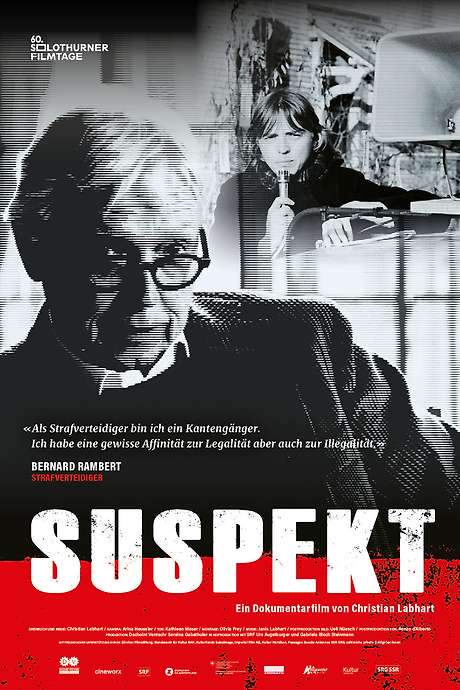
Bernard Rambert, known as "Red Beni," is a prominent and often controversial Swiss defense lawyer. The film explores the reflections of a man who has dedicated his life to advocating for radical change within the legal system, questioning the impact of his chosen path and the conclusions he’s drawn from it.
Find where to stream, rent, or buy Suspect (2025) in the US with current JustWatch availability, up-to-date pricing, and platform listings for subscription, rental, and digital purchase options.
Warning: spoilers below!
Haven’t seen Suspect yet? This summary contains major spoilers. Bookmark the page, watch the movie, and come back for the full breakdown. If you're ready, scroll on and relive the story!
Still thinking about how Suspect (2025) ended? Here’s a full breakdown of the ending, key final moments, major twists, and the deeper meaning behind the film’s conclusion.
In the final moments of Suspect the truth about the tube shooting is finally exposed, but the revelation is swallowed by a system determined to protect itself. After the armed officers mistakenly fire on Jean Charles, the police hierarchy scrambles to craft a story that paints the victim as a terrorist who ignored orders. The Metropolitan commissioner, eager to appear decisive, repeats this false narrative on television, while senior officers feed him fabricated details about the suspect’s behaviour and even present a doctored photograph to convince a jury that the man they shot could have been the wanted extremist.
Behind the scenes, a small group of officers and civil servants already knows that the victim was innocent. One of them, the IPCC secretary Lana Vandenberghe, steals the concealed evidence—a wallet, a mobile phone and the original surveillance images—and attempts to make the facts public. Her act creates a brief surge of media attention, but the Met and the Home Office quickly move to dampen the outcry, re‑framing the incident as an unavoidable mistake and offering the family a financial settlement instead of a criminal trial.
The inquest concludes with an “open verdict,” because the judges are unable to pin legal responsibility on any individual. The police are fined for health‑and‑safety breaches, but no officers are arrested and the commissioner’s reputation remains largely intact. The series ends on a bleak note: the family continues to demand accountability, the whistle‑blower’s courage has barely shifted the narrative, and the institutions that orchestrated the cover‑up walk away with the “perfect crime” still unsolved. This ending underscores how power, media pressure, and institutional self‑preservation can silence truth, leaving justice forever out of reach.
Last updated: August 19, 2025 at 19:41
Read frequently asked questions about the ending of Suspect (2025), including final-scene interpretation, twist explanations, character outcomes, and the deeper meaning behind the conclusion. This ending explained FAQ is designed for viewers searching for clear spoiler-heavy answers and ending breakdown insights.
The truth about the tube shooting is finally exposed in the final moments, Jean Charles was innocent and mistakenly shot by armed officers. However, the police hierarchy immediately scrambles to craft a false narrative painting the victim as a terrorist who ignored orders, and the Metropolitan commissioner repeats this fabricated story on television to appear decisive.
Earlier scenes establish the police's willingness to prioritize their reputation over justice, setting up the institutional cover-up that unfolds at the end.
Lana Vandenberghe is the IPCC secretary who steals the concealed evidence, including the victim's wallet, mobile phone, and original surveillance images, and attempts to make the facts public. Her act creates a brief surge of media attention before the Met and Home Office move quickly to silence the outcry.
Throughout the documentary, Lana is positioned as someone with access to sensitive information, hinting at her potential role as an internal critic.
The inquest concludes with an open verdict because the judges are unable to pin legal responsibility on any individual officer. This means the death remains officially unexplained in legal terms, allowing the police to avoid criminal accountability while technically acknowledging something went wrong.
The documentary builds toward this moment by showing how evidence was destroyed and testimony was coordinated to ensure no single person could be blamed.
No officers are arrested. The police are fined for health-and-safety breaches, but no criminal charges are brought against any individual officers. The commissioner's reputation remains largely intact despite his role in propagating the false narrative.
The documentary illustrates how the chain of command was deliberately blurred, making it impossible to hold anyone specifically accountable.
The cover-up succeeds because the police hierarchy acts quickly to craft a unified false narrative, senior officers fabricate details and present doctored photographs, and the commissioner repeats the story on television. When Lana Vandenberghe attempts to expose the truth, the Met and Home Office quickly dampen the outcry by reframing the incident as an unavoidable mistake and offering the family a financial settlement.
Earlier scenes demonstrate the institutional pressure to protect the force's reputation, showing how the cover-up becomes a coordinated effort rather than isolated actions.
Jean Charles' family is offered a financial settlement by the Met and Home Office instead of a criminal trial. They continue to demand accountability, but the institutions walk away largely unscathed. The ending shows the family left without justice, while the police avoid meaningful consequences.
The documentary establishes the family's grief and determination early on, making their ultimate lack of resolution a poignant throughline.
The ending underscores how power, media pressure, and institutional self-preservation can silence truth, leaving justice forever out of reach. The institutions that orchestrated the cover-up commit what the series calls the perfect crime, getting away with killing an innocent person while controlling the narrative. The whistle-blower's courage barely shifts the narrative, demonstrating the overwhelming power of institutional protection.
The documentary's title itself hints at the central irony: the true suspect, the system that protected itself, never faces accountability.
The truth does come out briefly when Lana Vandenberghe steals and releases the concealed evidence, creating a surge of media attention. However, this truth is quickly suppressed by the Met and Home Office, who reframe the incident and offer a settlement. While the truth exists, it fails to result in justice or accountability, the cover-up narrative ultimately prevails in the public eye.
The brief moment of truth surfacing serves to highlight how quickly and effectively institutional forces can reassert control over the narrative.
The commissioner's reputation remains largely intact. He appears on television repeating the false narrative about the victim being a terrorist, and despite the truth eventually emerging, he faces no significant consequences. The ending shows him walking away with his career and public image preserved.
Earlier scenes establish the commissioner's priority on appearing decisive and in control, which motivates his willingness to propagate the false story.
The financial settlement is offered as a way to quickly close the case without a criminal trial. By paying the family, the Met and Home Office can control the narrative and avoid the scrutiny of a public trial where more evidence might emerge. This represents institutional self-preservation taking precedence over actual justice.
The documentary hints at the institutional preference for silence and closure rather than transparency throughout.
Discover curated groups of movies connected by mood, themes, and story style. Browse collections built around emotion, atmosphere, and narrative focus to easily find films that match what you feel like watching right now.
High-stakes intellectual duels where the mind is the primary weapon.For viewers who enjoyed the strategic, high-stakes battle in Suspect, this collection features movies with similar intellectual intensity. These films are for those who like complex puzzles, tense legal or investigative procedures, and stories where intelligence is the ultimate power. If you liked Suspect, explore these cerebral journeys into the heart of the justice system.
Stories typically follow a high-IQ conflict, often between a prosecution and defense or two masterminds, unfolding through careful deduction and strategic moves. The plot is driven by a complex web of evidence and motive, demanding close attention from the audience as the truth is methodically unveiled, often with tragic personal costs.
They are grouped by their shared focus on intellectual tension, complex plotting, and a steady, methodical pace that prioritizes psychological depth over physical action. The emotional weight is heavy, stemming from the moral ambiguity and personal sacrifices inherent in the pursuit of justice.
Stories where uncovering the truth brings profound sorrow, not relief.If the emotionally heavy and bittersweet ending of Suspect resonated with you, this list features similar stories. These are films where the search for answers leads to a truth that is tragic and morally complex, leaving characters and viewers with a profound sense of melancholy. Discover more movies like Suspect that explore the painful cost of knowledge.
The narrative follows a search for answers—be it a crime, a mystery, or a personal secret—that promises closure. However, the resolution uncovers a deeply tragic reality, such as a noble sacrifice or a heartbreaking motive, transforming the victory into a personal defeat and leaving a lasting emotional impact.
They share a specific emotional arc: a journey from intense inquiry to a conclusion that is bittersweet or outright tragic. The pacing is often steady, allowing the emotional weight to build, culminating in an ending that feels heavy and contemplative, prioritizing emotional truth over tidy resolutions.
Don't stop at just watching - explore Suspect in full detail. From the complete plot summary and scene-by-scene timeline to character breakdowns, thematic analysis, and a deep dive into the ending - every page helps you truly understand what Suspect is all about. Plus, discover what's next after the movie.
Read a complete plot summary of Suspect, including all key story points, character arcs, and turning points. This in-depth recap is ideal for understanding the narrative structure or reviewing what happened in the movie.
Track the full timeline of Suspect with every major event arranged chronologically. Perfect for decoding non-linear storytelling, flashbacks, or parallel narratives with a clear scene-by-scene breakdown.
Discover the characters, locations, and core themes that shape Suspect. Get insights into symbolic elements, setting significance, and deeper narrative meaning - ideal for thematic analysis and movie breakdowns.