Plot Explained Spoilers guaranteed!
Plot Explained

Browse by genre

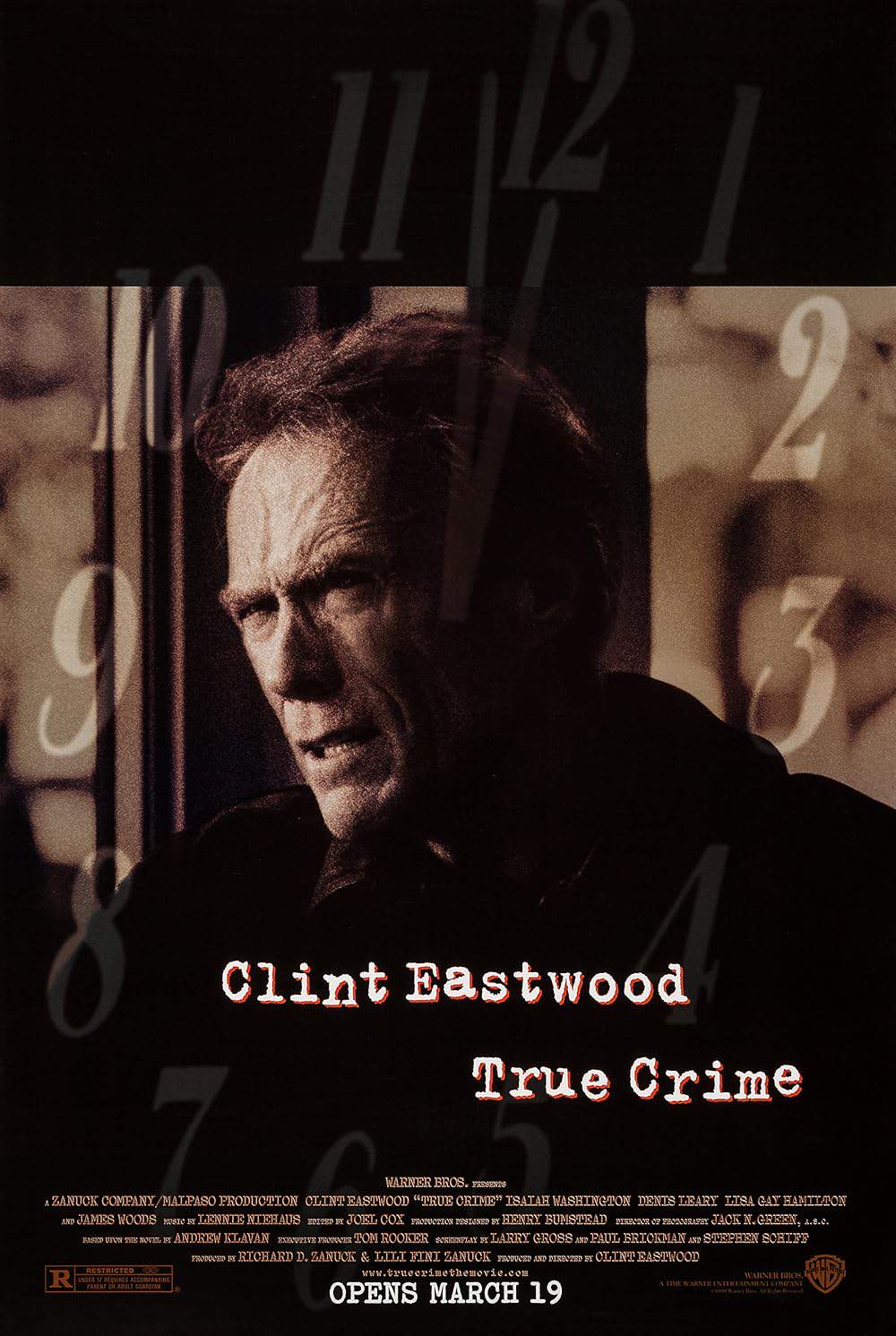
True Crime (1999) movie poster

Plot Summary

True Crime (1999) Plot Summary Explained

Release, runtime and language
1999 · 127 min · English
Loading streaming availability…
Starring
Clint Eastwood, Isaiah Washington
Budget
$55M

A brutal attack on a young detective ignites a relentless pursuit of justice. Palmerston North police delve into a complex case, uncovering a web of deceit and shocking truths that challenge the initial investigation. As they dig deeper, the detectives face unexpected obstacles and a twist that dramatically alters the course of the search.

On this page (6)
  1. 1 Where to watch
  2. 2 What happens: full plot
  3. 3 Plot questions answered
  4. 4 Movie threads
  5. 5 Movies like True Crime
  6. 6 Every angle
Loading streaming availability…

Full plot summary · contains spoilers

What Happens in True Crime: Full Plot Summary

The whole story of True Crime (1999) explained, from the opening scene to the final frame: every key event, every twist and what it all adds up to. Read it as a quick recap before the sequel, to check a scene you missed, or to finally understand what really happened.

Steve Everett, portrayed by Clint Eastwood, is an Oakland journalist struggling to overcome his battle with alcoholism. In a twist of fate, he is assigned to cover the imminent execution of Frank Beechum, played by Isaiah Washington, a convicted murderer whose case is shrouded in controversy. This assignment comes after the tragic death of Everett's colleague, Michelle Ziegler, who had been initially tasked with the story. Michelle's death, a result of a car accident following an evening of drinks with Steve at a bar, weighs heavily on him, compounded by the heavy rain and poor visibility that contributed to the tragic event.

Despite the trepidation of his editor, Bob, who fears that Everett will turn the assignment into an exploration of the complexities surrounding human rights and the death penalty, he is encouraged by Bob's superior, Alan, who recognizes Everett's talent. It’s known that Everett’s past work has included exposing high-profile corruption, such as the Mayor of New York, which had led him to quit a previous job to stand by the truth, making him a journalist respected for his integrity. Complicating matters further, Everett is engaged in an affair with Bob's wife, Patricia, adding layers of personal conflict to his already tumultuous life.

Frank Beechum, incarcerated in San Quentin State Prison, maintains his innocence regarding the murder of Amy Wilson, a young white woman who was tragically killed for a mere $96. The societal prejudices against Frank, an African American man, cast a long shadow over the case, as many leap to conclusions about his guilt based solely on race and the victim's profile. Everett's investigation unveils a dark tapestry of racial bias and wrongful conviction as he seeks to uncover the truth behind the murder that Beechum stands accused of.

In his quest for justice, Everett sifts through the testimony of witnesses like Dale Porterhouse, who claims to have witnessed Beechum at the scene of the crime but whose testimony raises red flags. The police records come into play as Everett uncovers discrepancies regarding Porterhouse's claims, leading him to suspect that Warren, an overlooked witness, might actually be the killer. This revelation sends him on a frantic search for evidence, carefully connecting the dots while racing against the clock—Beechum’s execution is set for midnight, giving Everett barely 12 hours to prove his theory.

Even as he grapples with the urgency of his investigation, Everett is torn by his obligations as a father. He has promised to take his daughter, Kate, to the zoo, showcasing the struggle he faces between personal commitments and professional duty. As time slips away, he confronts the moral dilemmas that define his character—does he risk everything to save a man potentially wrongfully convicted, while also trying to reconnect with his family?

The tension mounts as Everett's job hangs by a thread; he finds himself fired but cleverly reminds his superiors of his contractual rights, demanding just over six hours of notice. When he finally tracks down Angela Russel, the grandmother of Warren, the supposed eyewitness, a shocking truth comes to light that directly links her grandson to the murder. Gaining her reluctant trust, Everett races against nearly insurmountable odds to get her to the Governor's mansion to prevent an irreversible tragedy.

As the clock ticks down, the first lethal drug is administered to Frank, signifying the race against time. The heart-pounding climax juxtaposes his frantic efforts outside the Governor's mansion with Frank’s bleak fate inside the prison walls. Ultimately, as six months pass and Christmas approaches, Everett reflects on his journey and the people affected, while an unexpected encounter with Frank and his family leaves a haunting reminder of the real-life consequences of justice—something that he will always carry with him.

> "It’s all about the truth, even when it threatens to break you."
Last updated: January 14, 2025 at 19:25

Was this helpful?

Plot questions answered

True Crime Plot Explained: Your Questions Answered

The questions people ask most about True Crime (1999): what happens in the confusing scenes, why the characters do what they do, the twists, hidden details and what the ending means. Each answer contains spoilers.

Q1

Why was Steve Everett assigned to cover Frank Beechum's execution?

Steve Everett was assigned to cover Frank Beechum's execution because his colleague Michelle Ziegler, who was originally tasked with the story, died in a car accident. Despite his editor Bob's hesitation due to Everett's tendency to turn assignments into deeper investigations, Bob's superior Alan insisted on using Everett because of his reputation for exposing corruption, such as when he revealed the Mayor of New York's misconduct.

Foreshadowing: Earlier, Bob warns Alan that Everett will turn the execution story into a human rights investigation, which proves accurate.

  • Steve Everett
  • Frank Beechum
  • execution
  • assignment
  • Michelle Ziegler
  • death
Q2

Why does Frank Beechum claim he's innocent of Amy Wilson's murder?

Frank Beechum claims he is innocent because he was only at the store to buy steak sauce when Amy Wilson was killed. He maintains that he was in the wrong place at the wrong time and never committed the murder, despite being convicted primarily based on racial bias and circumstantial evidence.

Foreshadowing: The summary notes that societal prejudices against Frank, an African American man, cast a long shadow over the case.

  • Frank Beechum
  • innocence
  • Amy Wilson
  • murder
  • steak sauce
  • racial bias
Q3

What did Steve discover in Michelle Ziegler's investigation files?

When Steve broke into Michelle's house, he discovered her file on Warren, a witness who was never called to testify by the prosecution. This led Steve to suspect that Warren might actually be the real killer, connecting Michelle's hidden investigation to the potential cover-up in the case.

Foreshadowing: Michelle's death occurred after an evening of drinking with Steve, suggesting she may have been close to a breakthrough.

  • Michelle Ziegler
  • Warren
  • witness
  • investigation
  • file
  • cover-up
Q4

Who is Warren and why is he important to Frank Beechum's case?

Warren was an overlooked witness in the murder of Amy Wilson who was never called to testify during the trial. District Attorney Cecelia Nissbaum revealed Warren's existence to Everett, who then connected Warren to the actual crime. Angela Russel, Warren's grandmother, eventually helped identify that her grandson could not be the murderer, redirecting the investigation.

Foreshadowing: The DA mentions another witness was never called, which initially raises Everett's suspicion.

  • Warren
  • witness
  • Amy Wilson
  • murder
  • testimony
  • Angela Russel
Q5

What does the locket reveal about the real killer?

When Everett mentions a locket similar to one worn by Warren, it triggers a realization in Angela Russel that helps confirm her grandson's connection to the murder. This revelation shifts Angela's perspective and convinces her to help Everett get to the Governor's mansion to prevent the execution.

Foreshadowing: Everett strategically uses the locket detail to gain Angela's trust and cooperation.

  • locket
  • Warren
  • killer
  • murder
  • Angela Russel
  • evidence
Q6

How does Steve Everett prove Frank Beechum's innocence?

Steve proves Frank Beechum's innocence by tracking down Angela Russel, Warren's grandmother, and obtaining her testimony about her grandson's true involvement in the crime. He races against the clock to get her to the Governor's mansion to secure a stay of execution, presenting the evidence that points to Warren as the actual killer.

Foreshadowing: Earlier, Everett discovers discrepancies in Dale Porterhouse's testimony and connects Warren to the case.

  • Steve Everett
  • innocence
  • proof
  • Angela Russel
  • Governor
  • stay of execution
Q7

What happens to Frank Beechum at the end of the movie?

As Everett and Angela rush to the Governor's mansion, the first lethal drug is administered to Frank Beechum inside the prison. However, the medical team attempts to resuscitate him after he loses consciousness, creating a last-minute opportunity for the Governor to intervene and stop the execution.

Foreshadowing: The countdown to midnight creates the tense race against time throughout the film.

  • Frank Beechum
  • execution
  • lethal injection
  • rescue
  • Governor
  • midnight
Q8

How does racial prejudice affect Frank Beechum's conviction?

Racial prejudice plays a central role in Frank Beechum's wrongful conviction. As an African American man accused of murdering a young white woman, society immediately assumed his guilt based solely on race. The prosecution's case relied heavily on witness testimony influenced by these biases, while the real killer went overlooked.

Foreshadowing: The summary explicitly notes that many leap to conclusions about Frank's guilt based solely on race and the victim's profile.

  • racial prejudice
  • conviction
  • racial bias
  • Frank Beechum
  • Amy Wilson
  • justice system
Q9

Why is the 12-hour deadline so critical to the story?

The 12-hour deadline creates the movie's intense ticking clock structure. Frank Beechum's execution is scheduled for midnight, giving Steve Everett barely twelve hours to investigate, gather evidence, and prove Beechum's innocence. This compressed timeframe drives every decision and creates constant urgency throughout the investigation.

Foreshadowing: The timeline establishes noon as the starting point with execution at midnight.

  • 12 hours
  • deadline
  • midnight
  • execution
  • time pressure
  • race against time
Q10

How does Steve Everett's affair with Patricia affect the story?

Steve Everett is having an affair with Bob's wife, Patricia, adding layers of personal conflict to his already turbulent life. This extramarital relationship creates moral tension and complicates his professional standing, especially as his boss Bob is the one who gave him the assignment.

Foreshadowing: Steve's personal entanglements create additional obstacles during his already time-pressed investigation.

  • Steve Everett
  • affair
  • Patricia
  • Bob
  • personal conflict
  • moral dilemma
Q11

What is the significance of Steve Everett's promise to take his daughter to the zoo?

Steve promises to take his daughter Kate to the zoo, representing his struggle between personal commitments and professional duty. As the investigation intensifies and the clock ticks down, he must choose between his obligation to save an innocent man's life and his promise to reconnect with his family.

Foreshadowing: The zoo promise highlights Everett's conflicting roles as both a determined journalist and a father trying to repair his relationship with his daughter.

  • Steve Everett
  • daughter Kate
  • zoo
  • promise
  • family
  • father
Q12

How does Steve Everett's alcoholism affect his work on the case?

Steve Everett is struggling to overcome his battle with alcoholism, which is complicated by the guilt he feels over Michelle Ziegler's death, she died in a car accident after an evening of drinking with Steve. This personal struggle adds emotional weight and heightens his determination to prove Beechum's innocence as a form of redemption.

Foreshadowing: Michelle's fatal accident occurred during rainy conditions while she was distracted fiddling with the car radio after drinking with Steve.

  • alcoholism
  • Steve Everett
  • Michelle Ziegler
  • car accident
  • guilt
  • battle
Q13

What happens to Steve Everett after the case is resolved?

Six months after the execution drama, Steve is seen shopping for a gift for his daughter just before Christmas. He learns that his investigative efforts may have earned him recognition, potentially leading to a Pulitzer Prize. He also unexpectedly encounters Frank Beechum and his family at a shopping center, where they share a moment of acknowledgment.

Foreshadowing: The epilogue shows the bittersweet outcome of Everett's fight for justice.

  • Steve Everett
  • Pulitzer Prize
  • Frank Beechum
  • aftermath
  • Christmas
  • reunion

Movie threads

More Movies Like True Crime, by Mood & Story

Curated lists built around what makes True Crime tick: the same mood, the same kind of story or the same emotional payoff. Each list explains why these movies belong together.

Race Against the Clock Thrillers like True Crime

Investigative stories where every second counts and lives hang in the balance. If you liked the high-pressure investigation in True Crime, you'll find similar tension in these movies. This thread gathers films with journalists and detectives working against a strict deadline, where uncovering the truth becomes a frantic battle against time, creating a uniquely stressful and gripping viewing experience.

  • urgent
  • tense
  • investigative
  • high-stakes
  • morally gray
  • gritty
  • Tone: tense, urgent, morally conflicted
  • Pacing: fast, relentless
Why these movies?

The story pattern: These narratives typically follow a flawed protagonist uncovering a deeper conspiracy or correcting a miscarriage of justice. The plot is propelled by a ticking clock—an execution, a publishing deadline, or an impending disaster—forcing rapid-fire decisions and creating a structure of escalating stakes and constant forward momentum.

Why they belong together: Movies in this thread share a potent mix of investigative procedural elements and intense deadline pressure. They feature fast pacing, heavy emotional weight, and morally complex protagonists, resulting in a consistently tense and urgent viewing experience that mirrors the high-stakes pressure of real-world journalism.

Morally Complex Crime Dramas like True Crime

Stories where finding the truth comes with a heavy personal and ethical cost. Fans of the ethical struggles and bittersweet ending in True Crime will appreciate these films. This collection features crime stories where the investigation challenges the protagonist's morality, and victory is tinged with sadness, reflecting the complex reality of justice and sacrifice.

  • somber
  • morally conflicted
  • gritty
  • thought-provoking
  • redemptive
  • heavy
  • Tone: somber, tense, morally conflicted
  • Pacing: steady, character-driven
Why these movies?

The story pattern: The narrative journey involves a protagonist, often flawed, confronting a deeply rooted injustice. The path to truth forces them to grapple with their own demons and the limitations of the system they operate within. The conclusion provides a measure of justice but is rarely a clean victory, emphasizing the cost and complexity of truth.

Why they belong together: These films are united by their heavy emotional weight, focus on moral conflict, and a bittersweet emotional payoff. They explore themes like wrongful conviction, institutional failure, and personal redemption, creating a thoughtful and emotionally resonant experience that lingers long after the credits roll.

If you liked this

Movies Like True Crime

Similar movies to True Crime: the same genre, themes or kind of story. Each one comes with its own plot summary, timeline and ending explained.

Browse all movie summaries

Every angle

True Crime (1999) Explained: Plot, Timeline & Characters

Everything about True Crime in one place: what happens in the plot summary, the timeline in chronological order, the characters and meaning and a spoiler-free summary. What's After the Movie adds the cast, box office and post-credit scenes.

Coming soon on iOS and Android

The Plot Explained Movie Summary App

Plot summaries, endings explained and timelines on your phone. Catch up on any movie in minutes, save your favorites and never miss a twist again.

Be the first to know when we launch. Your email stays private, always.

Learn more about the app