Year: 2025
Runtime: 82 mins
Language: German
Director: Christian Labhart
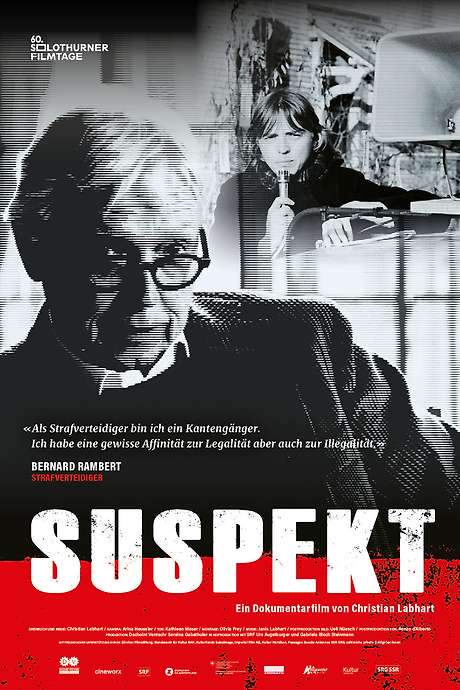
Bernard Rambert, known as "Red Beni," is a prominent and often controversial Swiss defense lawyer. The film explores the reflections of a man who has dedicated his life to advocating for radical change within the legal system, questioning the impact of his chosen path and the conclusions he’s drawn from it.
Warning: spoilers below!
Haven’t seen Suspect yet? This summary contains major spoilers. Bookmark the page, watch the movie, and come back for the full breakdown. If you're ready, scroll on and relive the story!
Read the complete plot breakdown of Suspect (2025), including all key story events, major twists, and the ending explained in detail. Discover what really happened—and what it all means.
When a murder occurs and the police find no clear hole in the main suspect’s alibi, the investigation stalls and nerves tighten around the case. In a quiet neighborhood, Yasuko Matsuyuki plays Yasuko Hanaoka, a divorced, single mother who runs a small restaurant and is trying to keep life steady for her teenage daughter Misato. Nearby, the reclusive yet brilliant mathematics teacher Shinichi Tsutsumi—Tetsuya Ishigami—lives a careful, almost ascetic life. His morning exchanges with Yasuko at the restaurant, through which he buys lunch, are described as the brightest part of his day, a small, human anchor in a world that otherwise moves by the precise logic of numbers.
The peace of their routine is shattered when Togashi, Yasuko’s abusive ex-husband, suddenly appears one night to extort money and threaten both Yasuko and Misato. The confrontation grows violent, and Togashi ends up dead in the couple’s apartment. From his room, Ishigami overhears the commotion and, despite his natural reserve, steps into the breach. He offers his help and immediately takes control of the situation, guiding Yasuko and her daughter through a chilling plan: he disposes of the body and lays out a meticulous sequence of moves to keep the crime out of the police’s hands. The math-minded man’s calm, methodical approach contrasts sharply with the chaos of the moment, creating a tension that threads through every subsequent action.
When the body is found and identified, Yasuko becomes the central suspect. Detective Kaoru Utsumi, played by Kō Shibasaki, and her superior Detective Shunpei Kusanagi seek to unravel the truth. They turn to Professor Manabu Yukawa, a famed physicist whose talents in physics do not immediately appear to translate to crime-solving. Yukawa, portrayed by Masaharu Fukuyama, initially declines involvement because the case does not seem connected to his field. Yet the fact that his former classmate Ishigami is Yasuko’s neighbor pulls him back in; the old friendship and professional respect rekindle, and Yukawa agrees to take another look—driven by a blend of curiosity, nostalgia, and a deep-seated belief in rational reasoning.
What follows is a high-stakes, cerebral duel. Yukawa reunites with Ishigami and, through this reunion, begins to see not just a clever neighbor but a formidable opponent who understands every possible angle of the crime. The two men engage in a silent contest of wits, each move weighed with care as Ishigami tries to shield Yasuko from suspicion and Yukawa attempts to keep the truth contained—yet clear in its implications. The investigation unfolds as a battle of intellects, with Ishigami’s plan evolving in real time, and Yukawa steadily narrowing down the paths that could explain the dead man’s fate.
The tension intensifies as Yukawa starts to see the depth of Ishigami’s calculation and that the truth is more delicate—and more painful—than either man anticipated. Yukawa’s usual detachment in solving crimes gives way to a rare emotional response, underscoring the story’s quiet meditation on guilt, loyalty, and the consequences of genius applied to human vulnerability. As the clues accumulate, the film refrains from flashier resolutions; instead, it reveals a truth that, while carefully deduced, does little to ease anyone traumatized by the events.
Throughout this tense journey, the characters grapple with ethical lines and the cost of protecting those we love. Yasuko’s every decision is a balancing act between fear and responsibility, between protecting her daughter and facing the consequences of the past. Ishigami, who uses his logical prowess to navigate moral grey areas, becomes a mirror for Yukawa’s own evolution: a scientist who finally confronts the limits of deduction when hearts are on the line. The dialogue between them—calm, precise, and sometimes almost clinical—highlights the central theme: intellect alone is insufficient when human stakes are so deeply personal.
In the midst of the investigation, a cameo by Bernard Rambert as himself adds a touch of quiet realism to the narrative, reminding the audience that even in the most intricate crimes, ordinary lives—seen and unseen—continue to unfold beyond the case file. The film remains grounded in its emotional core: individuals who must bear the consequences of choices made under pressure, and a system that, no matter how sharp, sometimes delivers truths that damage more than they reveal.
By the end, the truth emerges not as a triumph but as a sobering reconciliation with what has been lost. The narrative honors the intelligence on display without sensationalizing the outcome, offering a thoughtful, morally complex conclusion. The result is a story that lingers: a testament to how far reason can take us, and how far it must sometimes bend to honor the humanity at its center.
Last Updated: December 06, 2025 at 16:32
Still wondering what the ending of Suspect (2025) really means? Here’s a spoiler-heavy breakdown of the final scene, major twists, and the deeper themes that shape the film’s conclusion.
In the final moments of Suspect the truth about the tube shooting is finally exposed, but the revelation is swallowed by a system determined to protect itself. After the armed officers mistakenly fire on Jean Charles, the police hierarchy scrambles to craft a story that paints the victim as a terrorist who ignored orders. The Metropolitan commissioner, eager to appear decisive, repeats this false narrative on television, while senior officers feed him fabricated details about the suspect’s behaviour and even present a doctored photograph to convince a jury that the man they shot could have been the wanted extremist.
Behind the scenes, a small group of officers and civil servants already knows that the victim was innocent. One of them, the IPCC secretary Lana Vandenberghe, steals the concealed evidence—a wallet, a mobile phone and the original surveillance images—and attempts to make the facts public. Her act creates a brief surge of media attention, but the Met and the Home Office quickly move to dampen the outcry, re‑framing the incident as an unavoidable mistake and offering the family a financial settlement instead of a criminal trial.
The inquest concludes with an “open verdict,” because the judges are unable to pin legal responsibility on any individual. The police are fined for health‑and‑safety breaches, but no officers are arrested and the commissioner’s reputation remains largely intact. The series ends on a bleak note: the family continues to demand accountability, the whistle‑blower’s courage has barely shifted the narrative, and the institutions that orchestrated the cover‑up walk away with the “perfect crime” still unsolved. This ending underscores how power, media pressure, and institutional self‑preservation can silence truth, leaving justice forever out of reach.
Last Updated: August 19, 2025 at 19:41
Discover curated groups of movies connected by mood, themes, and story style. Browse collections built around emotion, atmosphere, and narrative focus to easily find films that match what you feel like watching right now.
High-stakes intellectual duels where the mind is the primary weapon.For viewers who enjoyed the strategic, high-stakes battle in Suspect, this collection features movies with similar intellectual intensity. These films are for those who like complex puzzles, tense legal or investigative procedures, and stories where intelligence is the ultimate power. If you liked Suspect, explore these cerebral journeys into the heart of the justice system.
Stories typically follow a high-IQ conflict, often between a prosecution and defense or two masterminds, unfolding through careful deduction and strategic moves. The plot is driven by a complex web of evidence and motive, demanding close attention from the audience as the truth is methodically unveiled, often with tragic personal costs.
They are grouped by their shared focus on intellectual tension, complex plotting, and a steady, methodical pace that prioritizes psychological depth over physical action. The emotional weight is heavy, stemming from the moral ambiguity and personal sacrifices inherent in the pursuit of justice.
Stories where uncovering the truth brings profound sorrow, not relief.If the emotionally heavy and bittersweet ending of Suspect resonated with you, this list features similar stories. These are films where the search for answers leads to a truth that is tragic and morally complex, leaving characters and viewers with a profound sense of melancholy. Discover more movies like Suspect that explore the painful cost of knowledge.
The narrative follows a search for answers—be it a crime, a mystery, or a personal secret—that promises closure. However, the resolution uncovers a deeply tragic reality, such as a noble sacrifice or a heartbreaking motive, transforming the victory into a personal defeat and leaving a lasting emotional impact.
They share a specific emotional arc: a journey from intense inquiry to a conclusion that is bittersweet or outright tragic. The pacing is often steady, allowing the emotional weight to build, culminating in an ending that feels heavy and contemplative, prioritizing emotional truth over tidy resolutions.
Don't stop at just watching — explore Suspect in full detail. From the complete plot summary and scene-by-scene timeline to character breakdowns, thematic analysis, and a deep dive into the ending — every page helps you truly understand what Suspect is all about. Plus, discover what's next after the movie.
Track the full timeline of Suspect with every major event arranged chronologically. Perfect for decoding non-linear storytelling, flashbacks, or parallel narratives with a clear scene-by-scene breakdown.
Discover the characters, locations, and core themes that shape Suspect. Get insights into symbolic elements, setting significance, and deeper narrative meaning — ideal for thematic analysis and movie breakdowns.
What really happened at the end of Suspect? This detailed ending explained page breaks down final scenes, hidden clues, and alternate interpretations with expert analysis and viewer theories.
Get a quick, spoiler-free overview of Suspect that covers the main plot points and key details without revealing any major twists or spoilers. Perfect for those who want to know what to expect before diving in.
Visit What's After the Movie to explore more about Suspect: box office results, cast and crew info, production details, post-credit scenes, and external links — all in one place for movie fans and researchers.