Plot Explained Spoilers guaranteed!
Plot Explained

Browse by genre

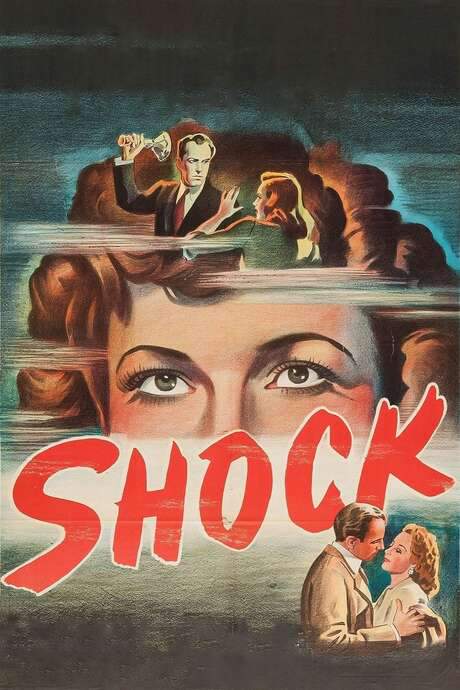
Shock (1946) movie poster

Plot Summary

Shock (1946) Plot Summary Explained

Release, runtime and language
1946 · 70 mins · English
Directed by
Alfred L. Werker
Starring
Vincent Price, George E. Stone, Anabel Shaw, Charles Trowbridge, Harry Carter, Ruth Nelson

A seemingly ordinary psychiatrist, Dr. Cross, murders his wife believing he will escape detection. However, his next‑door neighbor, Janet Stewart, witnesses the crime. When Janet tries to alert her husband, Cross insinuates that she requires serious counseling, manipulating the situation to conceal his guilt.

On this page (6)
  1. 1 Where to watch
  2. 2 What happens: full plot
  3. 3 Plot questions answered
  4. 4 Movie threads
  5. 5 Movies like Shock
  6. 6 Every angle

Where to watch

Where to Watch Shock (1946)

Where can you watch Shock? Stream, rent or buy it in the US, including on Artiflix, Bloodstream and fuboTV: current JustWatch availability with up-to-date prices.

Streaming availability powered by JustWatch

Full plot summary · contains spoilers

What Happens in Shock: Full Plot Summary

The whole story of Shock (1946) explained, from the opening scene to the final frame: every key event, every twist and what it all adds up to. Read it as a quick recap before the sequel, to check a scene you missed, or to finally understand what really happened.

Janet Stewart arrives at the Belmont Arms Hotel hoping to find her husband, Paul Stewart, already checked in, only to discover that he hasn’t appeared and has been presumed dead for two years after being a prisoner of war. The front desk can’t locate her reservation, and the hotel’s manager, Blake, ultimately finds her a room. That first night, she falls into a troubled sleep on the couch and experiences a vivid, unsettling dream: she sees Paul arrive, but she cannot reach him through a closed door as he cries out for help. When she wakes, the sound of a distant airplane lures her to the window, and she overhears a heated argument in a nearby room. In the glow of the hallway, she glimpses a man at a window who proclaims he wants a divorce and is involved with someone called “Elaine.” The wife threatens to expose him for his affair, and in a sudden surge of rage he grabs a candlestick and strikes her, leaving Janet horrified and emotionally drained.

The next morning, Paul Stewart returns, intending to surprise Janet, but she remains seated on the couch, transported and unresponsive. A hotel doctor is summoned and notes that she seems to be in shock and needs a specialist. He suggests contacting Dr. Cross, who is staying at the hotel, and it soon becomes clear that Dr. Richard Cross is the very man Janet witnessed murdering his wife. Paul explains that Janet has had a rough couple of years since learning he had survived the war, and that his plane was delayed. After examining Janet, Cross is troubled by the sightlines to his own private room and recommends that she be taken to his private sanatorium rather than a regular hospital, fearing exposure or a breakdown in a standard setting.

At the sanatorium, Cross confronts Janet with what she said she saw, and he confides in his assistant and lover, Elaine Jordan, that Janet’s account confirms his crime in the eyes of others. He laments that the killing wasn’t intentional and that he once wished he had turned himself in, yet he carried the body away and had it hidden in a trunk bound for his lodge. Elaine pushes him to manipulate Janet into believing she imagined the whole scene, and Cross vacillates between moral restraint and his own fear of exposure.

Tension rises when a disturbed inmate, Mr. Edwards, wanders into Janet’s room. Elaine tries to remove him, they struggle, and Janet, seeing the commotion, panics and mistakes Edwards for Cross. Elaine realizes they now have leverage to declare Janet insane and commit her, reasoning that no one would believe her story if she’s deemed delusional by others.

News then shifts to a darker turn: Mrs. Cross’s body is found in a mountain ravine and initially ruled an accident. Yet District Attorney O'Neill visits Cross to reveal that a hotel break-in with a beating matches a potential pattern and that a formal autopsy may uncover another victim of Cross. The threat of exposure intensifies Cross’s reluctance to act against Janet, and he contemplates a drastic insulin shock treatment as a way to reveal the truth—though he privately resists carrying it out.

As the DA presses on, Cross faces the reality that the coroner has labeled Mrs. Cross’s death a murder and identifies the candlestick as the weapon. He finds himself cornered between his fear of punishment and his growing guilt. Paul, pursuing a second medical opinion from Dr. Harvey, learns that insulin therapy can unmask a patient’s truth, especially when administered in a controlled sequence. Harvey notices that Janet remains convinced of what she saw, and he and Paul race toward the sanatorium to intervene.

Cross proceeds with the fourth insulin dose, but as Janet resists and the tension peaks, he alters course and urges Elaine to bring dextrose to save Janet. Elaine refuses to help him save her, and in the ensuing struggle Cross ends up strangling Elaine. Help arrives just in time: Dr. Harvey administers adrenalin to revive Janet, who recovers quickly. With no escape from culpability left, Cross resigns himself to arrest as District Attorney O'Neill leads him away, and Janet’s perilous ordeal comes to a tense close—leaving her to confront the aftermath of a case built on manipulation, fear, and the blurred lines between sanity and crime.

Last updated: October 05, 2025 at 12:22

Was this helpful?

Plot questions answered

Shock Plot Explained: Your Questions Answered

The questions people ask most about Shock (1946): what happens in the confusing scenes, why the characters do what they do, the twists, hidden details and what the ending means. Each answer contains spoilers.

Q1

Why did Dr. Cross recommend taking Janet to his private sanatorium instead of a regular hospital?

Dr. Cross recommended his own sanatorium because he recognized that Janet had witnessed him murder his wife through the window. Taking her to a regular hospital would expose him to police investigation and questioning. At his private facility, he could control her narrative and potentially manipulate her into believing she imagined the entire event.

Foreshadowing: Earlier, Cross noted the sightlines from Janet's room to his private room, revealing his immediate concern about being exposed.

  • dr cross
  • janet
  • sanatorium
  • cover up
  • witness
Q2

How did Dr. Cross plan to make Janet believe she imagined seeing him kill his wife?

Cross planned to convince Janet through psychological manipulation that her account of witnessing the murder was a delusion or hallucination brought on by shock. His assistant and lover Elaine Jordan pushed him to pursue this approach, reasoning that if medical professionals deemed Janet mentally unstable, no one would believe her story about the murder.

  • manipulation
  • delusion
  • elaine
  • counseling
  • psychological
Q3

What was the insulin shock treatment and why was it dangerous for Janet?

Insulin shock treatment involved administering controlled doses of insulin to induce hypoglycemia. Dr. Harvey explained that the treatment could potentially force a patient to reveal hidden truths. However, the fourth dose risked fatal insulin overdose, and Cross initially hesitated because it could kill Janet or cause permanent brain damage. In the climax, Cross tried to stop the treatment but Elaine refused to provide the dextrose that would save Janet's life.

  • insulin
  • overdose
  • treatment
  • medical
  • danger
Q4

Why did Dr. Cross strangle Elaine at the climax of the movie?

Cross strangled Elaine because she refused to bring dextrose to save Janet's life during the insulin shock treatment. When Janet began suffering from the overdose, Cross ordered Elaine to administer dextrose to reverse the dangerous condition. Elaine's refusal, motivated by her desire to let Janet die and eliminate the witness, forced Cross to kill her to prevent exposure of his crimes.

Foreshadowing: Earlier, Elaine pressured Cross to manipulate Janet into insanity, showing she was willing to go to dangerous lengths to protect them both.

  • elaine
  • strangled
  • murder
  • dextrose
  • insulin
Q5

How did District Attorney O'Neill discover that Mrs. Cross was murdered?

District Attorney O'Neill initially visited Cross about a separate hotel break-in case, but the investigation took a turn when Mrs. Cross's body was found in a mountain ravine. Initially ruled an accident, the case was reopened after investigators noted a possible pattern. The coroner eventually ruled her death a murder and identified a candlestick as the weapon, matching the very candlestick Janet witnessed Cross使用 to kill his wife.

Foreshadowing: Janet had witnessed the murder through the window and saw the candlestick used as the weapon, providing the crucial evidence link.

  • district attorney
  • candlestick
  • murder investigation
  • mountain ravine
Q6

Why did Janet mistake the inmate Mr. Edwards for Dr. Cross?

Janet mistook Mr. Edwards for Dr. Cross because she was already in a highly traumatized state, having witnessed a murder and being manipulated into questioning her own sanity. When the disturbed inmate entered her room at night and a struggle ensued with Elaine, Janet panicked and identified Edwards as her attacker. This incident gave Elaine the justification to declare Janet insane and have her officially committed.

  • edwards
  • mistaken identity
  • panic
  • insanity
  • inmate
Q7

What happened to Janet after Dr. Harvey administered adrenaline?

After Dr. Harvey administered adrenaline, Janet recovered quickly from the insulin overdose. She was revived just in time before the treatment could cause permanent damage or death. The adrenaline counteracted the dangerous hypoglycemia caused by the insulin, allowing her to survive the ordeal.

  • adrenaline
  • revived
  • overdose
  • recovery
  • dr harvey
Q8

Why did Dr. Cross hesitate to go through with the insulin treatment?

Cross hesitated because he was torn between his fear of exposure and his growing guilt over what he was doing to Janet. He contemplated using insulin as a way to uncover the truth from Janet, but also feared the consequences of the treatment, specifically the fourth dose which could kill her. Despite pressure from Elaine, Cross showed reluctance, even mentioning he once wished he had turned himself in for his wife's murder.

  • hesitation
  • guilt
  • conscience
  • treatment
  • moral
Q9

What clue linked the candlestick to Mrs. Cross's murder?

The candlestick was the murder weapon Janet witnessed Cross使用 to strike his wife during the argument she overheard. When Mrs. Cross's body was found and the autopsy was performed, the coroner identified the candlestick as the weapon used to kill her. This forensic evidence directly connected Cross to the murder, confirming Janet's account was real rather than a delusion.

Foreshadowing: Janet had seen the entire confrontation through the window, including the moment Cross grabbed the candlestick and struck his wife.

  • candlestick
  • weapon
  • forensic evidence
  • murder weapon
  • autopsy
Q10

How did Paul and Dr. Harvey realize Janet was in danger?

Paul and Dr. Harvey realized Janet was in danger when Paul sought a second medical opinion from Dr. Harvey about Janet's condition. Harvey recognized that Cross's insulin therapy could be used to manipulate Janet into a confession, and that she remained convinced of what she saw. This led them to rush to the sanatorium to intervene before Cross could complete his dangerous plan.

  • paul
  • dr harvey
  • intervention
  • insulin
  • rescue

Movie threads

More Movies Like Shock, by Mood & Story

Curated lists built around what makes Shock tick: the same mood, the same kind of story or the same emotional payoff. Each list explains why these movies belong together.

Psychological Gaslighting Thrillers like Shock

Stories where a character's sanity is systematically undermined by a manipulator. If you liked the intense psychological manipulation in Shock, explore more movies where a character's sanity is the battleground. These films feature cunning villains who use psychological warfare, creating a claustrophobic atmosphere of doubt and fear for the isolated protagonist.

  • psychological
  • manipulative
  • paranoid
  • claustrophobic
  • tense
  • anxious
  • Tone: tense, paranoid, disturbing
  • Pacing: steady, escalating
Why these movies?

The story pattern: The narrative follows a protagonist who possesses a dangerous truth or becomes a threat to a manipulative individual. The antagonist, often in a position of trust or authority, then launches a covert campaign to discredit and destabilize the protagonist, making them doubt their own mind while the external threat grows.

Why they belong together: Movies are grouped here based on their core conflict: a battle of wits where the weapon is psychological manipulation. They share a tense, paranoid tone, a focus on the erosion of a character's mental state, and a claustrophobic feeling of being trapped with a hidden enemy.

Claustrophobic Domestic Suspense Movies like Shock

Thrillers where the home becomes a prison of fear and hidden danger. Fans of Shock's tense atmosphere, where the murderer lives next door, will appreciate these domestic suspense films. They explore the horror of betrayal in close quarters, turning everyday settings like apartments and neighborhoods into landscapes of psychological terror and imminent threat.

  • claustrophobic
  • suspenseful
  • ominous
  • tense
  • anxious
  • domestic thriller
  • Tone: ominous, tense, anxious
  • Pacing: steady, building dread
Why these movies?

The story pattern: These narratives often begin with an idyllic or ordinary domestic life shattered by a discovery or an act of violence committed by someone nearby. The plot revolves around the protagonist's attempts to survive and expose the threat while being physically or socially trapped in the same confined space, leading to a tense cat-and-mouse game.
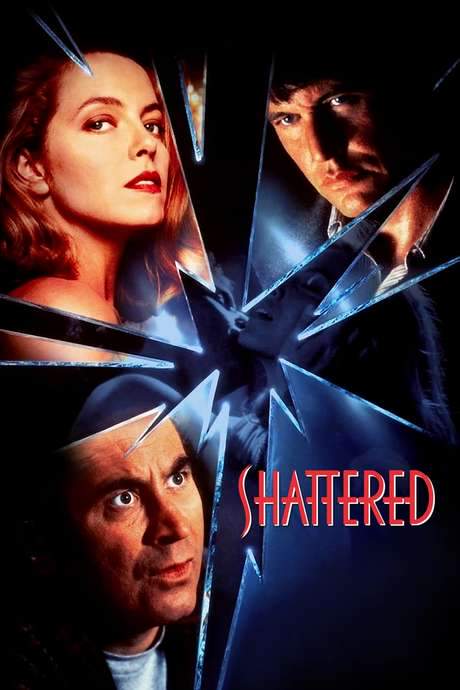
Why they belong together: These movies are connected by their setting-driven tension. The proximity of the threat—literally next door or within the home—creates a unique, claustrophobic vibe. They share a steady, anxious pacing and a high intensity derived from the inescapable nature of the danger.

If you liked this

Movies Like Shock

Similar movies to Shock: the same genre, themes or kind of story. Each one comes with its own plot summary, timeline and ending explained.

Browse all movie summaries

Every angle

Shock (1946) Explained: Plot, Timeline & Characters

Everything about Shock in one place: what happens in the plot summary, the timeline in chronological order, the characters and meaning and a spoiler-free summary. What's After the Movie adds the cast, box office and post-credit scenes.

Coming soon on iOS and Android

The Plot Explained Movie Summary App

Plot summaries, endings explained and timelines on your phone. Catch up on any movie in minutes, save your favorites and never miss a twist again.

Be the first to know when we launch. Your email stays private, always.

Learn more about the app