Plot Explained Spoilers guaranteed!
Plot Explained

Browse by genre

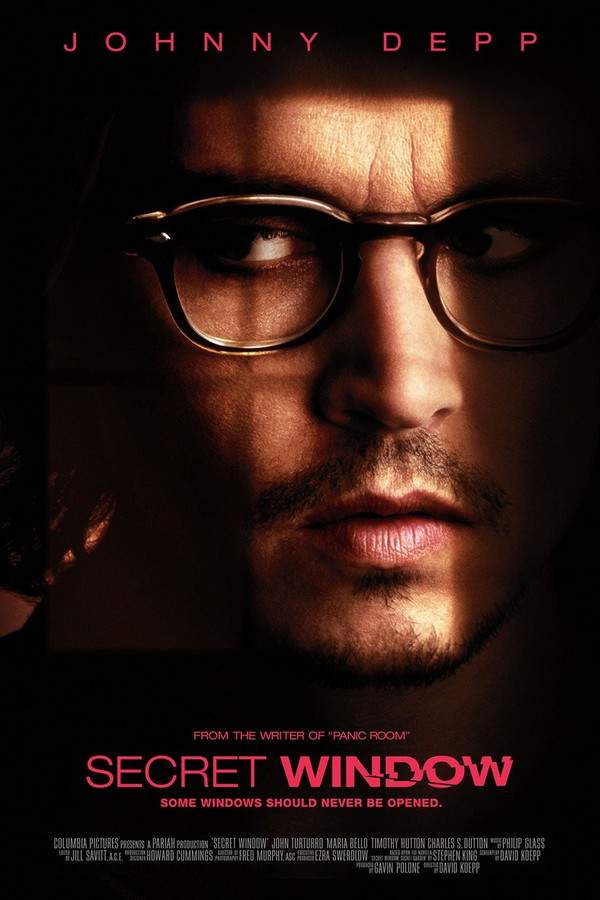
Secret Window (2004) movie poster

Plot Summary

Secret Window (2004) Plot Summary Explained

Release, runtime and language
2004 · 96 min · English
JustWatch #21,521 4
Directed by
David Koepp
Starring
Maria Bello, John Turturro, Johnny Depp
Budget
$40M

Haunted by a failing marriage and seeking refuge in a remote lakeside cabin, writer Mort Rainey is confronted by the unsettling John Shooter. Shooter accuses Rainey of plagiarism, claiming he stole his story. As Shooter’s accusations escalate, Rainey’s sense of reality fractures, and he finds himself increasingly isolated and fearing for his safety, unsure if Shooter is a genuine threat or a figment of his unraveling mind.

On this page (7)
  1. 1 Where to watch
  2. 2 What happens: full plot
  3. 3 Plot questions answered
  4. 4 The book behind the movie
  5. 5 Movie threads
  6. 6 Movies like Secret Window
  7. 7 Every angle

Where to watch

Where to Watch Secret Window (2004)

Where can you watch Secret Window? Stream, rent or buy it in the US, including on fuboTV, Philo and Fawesome: current JustWatch availability with up-to-date prices.

Streaming availability powered by JustWatch

Full plot summary · contains spoilers

What Happens in Secret Window: Full Plot Summary

The whole story of Secret Window (2004) explained, from the opening scene to the final frame: every key event, every twist and what it all adds up to. Read it as a quick recap before the sequel, to check a scene you missed, or to finally understand what really happened.

Famed mystery writer, Mort Rainey, portrayed by Johnny Depp, finds himself facing a troubling encounter when a stranger appears at his doorstep. This enigmatic figure, John Shooter, played by John Turturro, accuses Mort of stealing his story idea. While Mort insists that he can provide proof of his own work, the situation escalates as Shooter's behavior turns increasingly aggressive.

Initially, Mort perceives Shooter as unstable and dismisses the manuscript thrown out by his housekeeper, only for it to resurface in his thoughts, leading him to read it. To his shock, he discovers that the content closely resembles his own novel, albeit with altered names and phrasing. This revelation sparks a tense battle for Mort, as he struggles to demonstrate to Shooter — and himself — that he has not plagiarized.

As the plot unfolds, Shooter’s harassment intensifies, culminating in the heartbreaking death of Mort's dog, an Australian Cattle Dog named Chico. Mort, desperate for assistance, recruits a private investigator, played by Charles S. Dutton, and seeks help from the local sheriff, Dave Newsome, portrayed by Len Cariou. Unfortunately, the sheriff is skeptical of Mort’s claims. When Mort recollects that a local man witnessed them together, it appears that hope is not lost. Yet, the situation grows dire as Shooter takes matters into his own hands, murdering both the investigator and the witness, leaving their bodies in a car. Fearing that he will be framed for these crimes, Mort decides to dispose of the car by pushing it into a river.

The plot thickens as Shooter retaliates by burning down the house belonging to Mort's soon-to-be ex-wife. Mort believes that his estranged wife’s lover, Ted, is involved in this deceit. In a twist of fate, Mort uncovers the magazine that serves as crucial evidence proving he published "Secret Window" before Shooter's "Sowing Season." However, upon retrieving the magazine, he faces a chilling confrontation with the sheriff, who seems to know more than he lets on.

Further revelations lead Mort to an unsettling conclusion about Shooter — he is not a real person but rather a manifestation of Mort's own psyche, representing the darker parts of himself, a product of undetected dissociative identity disorder. This realization strikes Mort during a pivotal moment in front of a mirror, echoing themes from Magritte's surrealism. Just as Mort's wife arrives at their cabin and begins searching for him, she stumbles upon ominous signs of his split personality. In a tragic turn of events, Mort succumbs to the darker side of himself, leading to the brutal murders of his wife and her lover, Ted, before burying their bodies in a garden where he later plants corn.

As Mort's character transforms, he emerges from a crippling writer's block, rekindling his passion for life — albeit at a horrific cost. The film culminates in a chilling exchange with the sheriff, who ominously hints at the impending discovery of the bodies. Mort dismisses the threat with a calm confidence, declaring, > "The ending is the most important part of the story. This one is very good. This one is perfect." It becomes clear to the audience that the bodies rest beneath the very cornfield that now flourishes.
Last updated: October 27, 2024 at 18:20

Was this helpful?

Plot questions answered

Secret Window Plot Explained: Your Questions Answered

The questions people ask most about Secret Window (2004): what happens in the confusing scenes, why the characters do what they do, the twists, hidden details and what the ending means. Each answer contains spoilers.

Q1

Why does Mort Rainey kill his wife and Ted?

Mort kills his wife and Ted because he has succumbed to his darker split personality. Throughout the film, John Shooter has been revealed to be a manifestation of Mort's own psyche, a product of his undetected dissociative identity disorder. When his wife arrives at the cabin and discovers disturbing signs of his mental unraveling, Mort's darker side takes complete control, leading him to murder them both and bury their bodies in the garden.

Foreshadowing: Earlier scenes show Mort's mental state deteriorating as Shooter's behavior becomes increasingly aggressive, foreshadowing the moment Mort fully embraces his violent alter ego.

  • mort rainey kills wife
  • ted murder
  • secret window ending
  • mort identity disorder
Q2

Is John Shooter a real person or in Mort's mind?

John Shooter is not a real person, he is a manifestation of Mort Rainey's own psyche, representing the darker aspects of his personality. This explains why Shooter appears to know things only Mort would know, why no one else seems to have seen him clearly, and why he is able to commit crimes that benefit Mort's interests. The revelation comes during a pivotal moment in front of a bathroom mirror when Mort realizes he has been confronting himself all along.

Foreshadowing: The manuscript Shooter claims Mort stole closely resembles Mort's own work with altered names, a clue that the story originated from Mort's own mind.

  • john shooter identity
  • secret window twist
  • shooter's real nature
  • dissociative identity disorder
Q3

Who actually killed Mort's dog Chico?

While the film implies Shooter killed Chico as a way to escalate his harassment of Mort, the revelation that Shooter is Mort's split personality means Mort himself is ultimately responsible for the dog's death. This reflects the film's exploration of how Mort's darker side uses increasingly violent acts to push him further toward embracing his violent impulses.
Foreshadowing: Chico's death occurs shortly after Shooter's harassment escalates, marking a turning point in Mort's psychological deterioration.

  • chico death
  • who killed dog
  • mort's dog killed
Q4

Who killed the private investigator and the witness?

Mort's split personality (John Shooter) is responsible for murdering both the private investigator and the local witness who could vouch for Mort. These murders were committed to eliminate people who were helping Mort and to frame him for crimes he didn't commit, further demonstrating how Mort's darker side works to isolate him and push him toward desperation.

Foreshadowing: After killing them, the bodies are left in a car that Mort later disposes of in the river, an act that only benefits the killer's goal of making Mort appear guilty.

  • pi killed
  • witness murdered
  • secret window murders
  • who killed investigator
Q5

Why does Mort push the car with bodies into the river?

Mort disposes of the car containing the bodies of the investigator and witness because he fears he will be framed for their murders. Believing Shooter is a real threat and wanting to eliminate evidence that could link him to the crimes, Mort acts desperately to protect himself, unaware that he is actually destroying evidence of his own crimes committed through his split personality.
Foreshadowing: This act of desperation follows the investigator and witness being killed, directly connecting Mort to the cover-up of murders he will later be implicated in.

  • car river
  • dispose evidence
  • secret window climax
Q6

What is the significance of the cornfield at the end?

The cornfield where Mort plants corn is where he buried the bodies of his wife and her lover Ted. The film's chilling conclusion reveals that the flourishing cornfield grows directly over the hidden graves. Mort's final dialogue about 'the perfect ending' takes on horrific meaning as the audience realizes he is literally tending to crops planted over the corpses of his victims.

Foreshadowing: After burying the bodies, Mort plants corn in that exact garden location, and the healthy crops subtly hint at what lies beneath the soil.

  • cornfield bodies
  • secret window ending
  • buried bodies
  • perfect ending
Q7

Why does the sheriff act suspiciously around Mort?

The sheriff's suspicious behavior likely stems from his own suspicions about Mort's involvement in the crimes, though he never fully articulates what he knows. His confrontations with Mort, especially after the magazine evidence is found, suggest he is building a case against Mort while playing along with his story about Shooter. By the film's end, the sheriff ominously hints that the bodies will soon be discovered, indicating he has connected Mort to the murders.

Foreshadowing: The sheriff's skepticism of Mort's Shooter story from the beginning, combined with his later confrontations about the evidence, establishes him as an antagonist who may know more than he reveals.

  • sheriff newsome
  • suspicious sheriff
  • secret window sheriff
Q8

Why does Mort's writer's block end after the murders?

Mort emerges from his crippling writer's block after embracing his darker side and committing the murders. This twisted renewal of his creativity represents the film's bleak thematic conclusion, Mort finds inspiration and passion for writing through acts of violence and murder, suggesting his creative success comes at the horrific cost of his humanity.

Foreshadowing: Throughout the film, Mort struggles with his inability to write, and his last known work before the murders was his successful novel 'Secret Window.' After the killings, he regains his creative spark, albeit through darkest inspiration.

  • writer's block
  • mort creativity
  • secret window writing
  • dark inspiration
Q9

What does the magazine prove about the plagiarism claim?

The magazine Mort finds serves as crucial evidence that he published 'Secret Window' before Shooter's 'Sowing Season,' which should theoretically prove Mort didn't plagiarize. However, the twist that Shooter is a manifestation of Mort's psyche makes this evidence meaningless in the external world, the true 'plagiarism' was Mort copying from his own subconscious mind, blurring the line between inspiration and identity.

Foreshadowing: The manuscript Shooter presents closely resembles Mort's work with minor alterations, hinting that both stories share a common origin: Mort's own mind.

  • magazine evidence
  • plagiarism proof
  • secret window published
  • sowing season
Q10

Was Ted actually working with John Shooter?

Ted was not actually working with John Shooter because Shooter doesn't exist as a real person. Mort's suspicion that Ted was involved in the conflict was part of his paranoid mental state. When Shooter burns down Mort's wife's house, Ted appears to be an adversary, but this was actually Mort's own split personality directing violence against his perceived enemies, including his wife's lover.

Foreshadowing: Mort's escalating paranoia leads him to suspect multiple people, including Ted, but these suspicions reflect his inability to recognize that the true threat comes from within himself.

  • ted involvement
  • mort wife lover
  • secret window characters

Movie threads

More Movies Like Secret Window, by Mood & Story

Curated lists built around what makes Secret Window tick: the same mood, the same kind of story or the same emotional payoff. Each list explains why these movies belong together.

Movies about psychological unraveling in isolation like Secret Window

Characters trapped in remote settings confront the darkness within themselves. If you liked Secret Window's depiction of a writer's mind collapsing in a remote cabin, you'll find similar tension in these movies. This thread gathers psychological thrillers and horror films where characters in isolated settings face a battle against their own deteriorating sanity, often with dark and bleak outcomes.

  • claustrophobic
  • paranoid
  • unsettling
  • isolating
  • psychological
  • tense
  • Tone: dark, paranoid, unsettling
  • Pacing: steady, methodical build
Why these movies?

The story pattern: The narrative centers on a protagonist, often an artist or intellectual, who retreats to an isolated location only to have their solitude become a prison for their mind. External threats or strange occurrences force them to confront repressed memories, guilt, or a fragmented identity, culminating in a shocking revelation about the true nature of their reality.

Why they belong together: These films are grouped together because they share a core theme of psychological decay fueled by physical or emotional isolation. They create a deeply claustrophobic and unsettling atmosphere, using the setting as a crucible to test the protagonist's sanity, resulting in a tense and often tragic character study.

Unreliable narrator thrillers with a twist like Secret Window

Stories where the protagonist's perception of reality is dangerously flawed. Fans of Secret Window's major twist will enjoy these movies that center on an unreliable narrator. These psychological stories keep you guessing by presenting events from a skewed perspective, often culminating in a revelation that redefines everything you thought you knew about the protagonist and the plot.

  • mind-bending
  • twist ending
  • psychological
  • unreliable
  • mysterious
  • tense
  • Tone: dark, tense, mysterious
  • Pacing: steady, building to a reveal
Why these movies?

The story pattern: The story is presented from the viewpoint of a character who is lying, delusional, or suffering from a dissociative condition. Clues are sprinkled throughout that hint at the narrator's unreliability, building towards a climax where the true reality is exposed, forcing a re-evaluation of the entire narrative and the protagonist's role within it.

Why they belong together: These movies are connected by their shared narrative structure, which relies on the deception of the central character. They create a unique form of suspense where the audience is actively questioning what is real, leading to a satisfying and often mind-bending payoff that is the hallmark of the genre.

If you liked this

Movies Like Secret Window

Similar movies to Secret Window: the same genre, themes or kind of story. Each one comes with its own plot summary, timeline and ending explained.

Browse all movie summaries

Every angle

Secret Window (2004) Explained: Plot, Timeline & Characters

Everything about Secret Window in one place: what happens in the plot summary, the timeline in chronological order, the characters and meaning and a spoiler-free summary. What's After the Movie adds the cast, box office and post-credit scenes.

Coming soon on iOS and Android

The Plot Explained Movie Summary App

Plot summaries, endings explained and timelines on your phone. Catch up on any movie in minutes, save your favorites and never miss a twist again.

Be the first to know when we launch. Your email stays private, always.

Learn more about the app