Plot Explained Spoilers guaranteed!
Plot Explained

Browse by genre

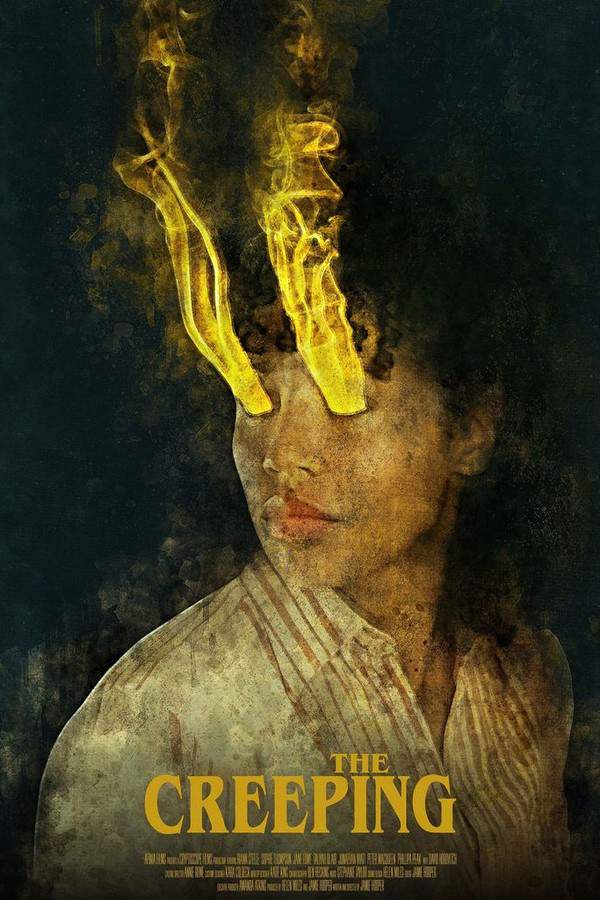
The Creeping (2023) movie poster

Plot Summary

The Creeping (2023) Plot Summary Explained

Release, runtime and language
2023 · 94 min · English
Echo score 48
JustWatch #9,138 23
Directed by
Jamie Hooper
Starring
Taliyah Blair, Peter MacQueen, David Horovitch, Angie Joy, Denise Horan, Dorothy Miles

A lone caregiver finds herself battling an ancient evil that endangers her and her vulnerable grandmother. As night descends, they are trapped within their decaying home, forced to confront the sinister forces and unsettling shadows that surround them. The caregiver must find a way to protect her grandmother and fight back against the encroaching darkness.

On this page (6)
  1. 1 Where to watch
  2. 2 What happens: full plot
  3. 3 Plot questions answered
  4. 4 Movie threads
  5. 5 Movies like The Creeping
  6. 6 Every angle

Where to watch

Where to Watch The Creeping (2023)

Where can you watch The Creeping? Stream, rent or buy it in the US, including on Amazon Prime Video, Fandango at Home Free and Plex: current JustWatch availability with up-to-date prices.

Streaming availability powered by JustWatch

Full plot summary · contains spoilers

What Happens in The Creeping: Full Plot Summary

The whole story of The Creeping (2023) explained, from the opening scene to the final frame: every key event, every twist and what it all adds up to. Read it as a quick recap before the sequel, to check a scene you missed, or to finally understand what really happened.

In a shadowy laboratory, Prof. Emmanuel Hildern (Peter MacQueen) eagerly divulges his revolutionary findings to a young doctor, admitting that he has unwittingly awakened an ancient evil far earlier than anticipated. As he narrates the events leading to this shocking discovery, it becomes apparent that his journey to New Guinea in 1894 was not solely focused on exploration but also driven by a deep desire for validation and recognition in his scientific community.

The flashback unfolds with Hildern’s jubilant return from his expedition, where he unearthed an unusually large humanoid skeleton, unlike any previously identified specimens. The skeleton’s sophisticated features and unexpected youth caused a whirlwind of emotions within Hildern — a blend of pride for his remarkable find accompanied by grief as he learns of his wife's death. This bittersweet moment is intensified when his half-brother James Hildern (David Horovitch), who managed the asylum where Hildern's wife was confined, informs him of his plans to publish a study on her mental health conditions while withholding support for future explorations.

As Hildern immersed himself deeper into his studies, his fixation on the skeleton grew, spurred by the mind-boggling idea that contact with water could cause the bones to rapidly develop flesh, reminiscent of age-old legends of malicious giants awakened by rain. With his theory taking form, Hildern determined that this skeleton was a remnant of such a nefarious creature, buried for centuries, now revealed as erosion exposed its resting site. By then, the local tribes would have attained the necessary knowledge to confront this terrifying evil.

Hildern's remarkable find ignited a fresh zeal in his research. He speculated that if evil could be treated as a living organism, it might be biologically contained and eradicated like a virus. Using cells from the flesh of the skeleton's finger, he created what he thought might be a serum to combat evil. In a nerve-wracking moment, he tested the serum on a monkey, observing impressive results that boosted his confidence in this inventive solution.

Meanwhile, as news of her mother's death reaches her, Penelope (Angie Joy), grappling with the painful truth she was kept from, is injected with Hildern's serum, aiming to suppress any signs of inherited insanity. However, this decision sets off a cascade of chaos, ensnaring Hildern in a series of unsettling events.

The next day, the formerly docile monkey from his lab has transformed wildly, using its new strength to escape and wreak havoc in the facility. In a surge of raw emotion, Penelope wanders off into the city, unleashing her pent-up feelings by assailing several men in a tavern and escalating her fury by fatally injuring someone in a nearby warehouse. The authorities swiftly respond to reports of the asylum's escaped patient, apprehending Penelope and returning her to her father's institution.

As the fallout from Penelope's violent outbursts becomes public, James grows increasingly worried about the fallout from his brother's experiments on their daughter. With his own research stalling and his hopes of earning the prestigious Richter Prize slipping away, he resorts to stealing Hildern’s findings, including the skeletal remains. Unwittingly, this choice propels a chain of events destined for calamity.

A careless accomplice inadvertently exposes the skeleton to the rain, triggering its imminent reanimation. When the carriage transporting the skeleton tips over, the revived corpse escapes, setting out on a vengeful path. Desperate to retrieve his misappropriated research, Hildern pursues the skeleton but is thwarted by a menacing figure lurking nearby. Upon his return home, he finds the resurrected entity has already begun to establish its evil influence, taking Hildern’s finger as a grim trophy while sparing his life, for the moment.

As Hildern concludes his cryptic tale, the focus shifts back to the laboratory seen earlier in the film. However, it becomes increasingly evident that this is not merely a place of research, but rather a confined space within an asylum — with Hildern himself trapped in a reality of his own making. The visiting physician engages James in a discussion that casts doubt on the legitimacy of Hildern’s claims of familial relations and whether Penelope, now a victim of madness, is truly his daughter. James, embodying the authority figure, observes that it’s typical for his patients to forge connections with him, given their fragile mental states and his role as their keeper.

Reflecting on how Hildern arrived at the institution around the time he was awarded the illustrious Richter Prize, James dismisses any familial links between them. As the camera focuses on Hildern’s cell, now morphed from a hub of scientific curiosity to a grim and unfeeling prison, Hildern's desperation mounts as his cries for help elude response.

The film ends with a chilling image of Hildern's left hand, its index finger absent — an unsettling reminder of the digit he had once removed from the skeleton in his "laboratory." Ultimately, it falls to the audience to piece together the tangled nuances of reality and illusion, as the dangerous intersections of truth and madness threaten to engulf them all.
Last updated: November 17, 2024 at 20:50

Was this helpful?

Plot questions answered

The Creeping Plot Explained: Your Questions Answered

The questions people ask most about The Creeping (2023): what happens in the confusing scenes, why the characters do what they do, the twists, hidden details and what the ending means. Each answer contains spoilers.

Q1

Why was the skeleton Hildern found in New Guinea so important to him

Hildern discovered an unusually large humanoid skeleton in New Guinea in 1894. He believed it was the remnant of an ancient evil creature from local legends, malevolent giants said to be awakened by rain. This discovery represented his chance to prove himself to the scientific community and achieve the recognition he desperately sought after years of feeling overlooked.

  • hildern
  • skeleton
  • new guinea
  • ancient evil
  • giant
Q2

Why did Hildern inject his daughter Penelope with the serum

Hildern created a serum from cells taken from the skeleton's finger, theorizing that evil could be treated as a biological organism and eradicated like a virus. After learning of his wife's death, Hildern injected Penelope, who was fighting inherited insanity, with the serum, hoping to suppress any signs of mental illness. This decision set off a chain of violent events.

  • hildern
  • serum
  • penelope
  • inherited insanity
  • virus theory
Q3

How did the skeleton come back to life in the film

The skeleton reanimated when it was accidentally exposed to rain during transport. James Hildern had stolen the skeleton and research from his brother, and when the carriage tipped over, the rain triggered the reanimation. According to Hildern's theory, water causes the bones of these ancient evils to rapidly develop flesh, matching the old legends of giants awakened by rainfall.

  • skeleton
  • rain
  • reanimation
  • transport
  • awakened
Q4

What happened to Penelope after she left the asylum

After being injected with Hildern's serum, Penelope experienced violent side effects. She wandered into the city and assaulted several men in a tavern, then fatally injured someone in a warehouse. Authorities responded to reports of an escaped patient, apprehended Penelope, and returned her to her father's institution at the asylum.

  • penelope
  • arrest
  • warehouse
  • tavern
  • violence
Q5

Why did James steal Hildern's research and the skeleton

James Hildern was worried about the public fallout from his brother's dangerous experiments, especially after Penelope's violent outburst became known. With his own research stalling and hopes of winning the prestigious Richter Prize slipping away, James resorted to stealing Hildern's findings and the skeleton remains, unwittingly triggering the catastrophe when the skeleton was exposed to rain.

  • james
  • stealing
  • research
  • skeleton
  • richter prize
Q6

What is the twist ending of The Creeping

The film's twist reveals that Professor Hildern is actually an asylum patient, not a professor. The "laboratory" where he conducted his experiments is actually a confined space within the asylum. His claims of familial relations are dismissed as typical fabrications made by mentally ill patients. The entire story of the skeleton discovery and reanimation may be a delusion, a product of his madness rather than actual events.

  • twist
  • asylum
  • hildern
  • patient
  • madness
  • unreliable narrator
Q7

What did the reanimated skeleton do after escaping

After the skeleton reanimated and escaped, it went to Hildern's home and took his index finger as a trophy, matching the finger Hildern had removed from the skeleton for his serum. The skeleton spared Hildern's life, leaving him alive as a grim reminder of what he had awakened. The severed finger connects directly to the film's final image of Hildern's missing digit.

  • skeleton
  • escaped
  • finger
  • trophy
  • reanimated
Q8

Why is Hildern missing his finger at the end of the film

Hildern removed his own index finger from the skeleton's hand in his laboratory to obtain cells for creating the serum. At the film's end, his finger is missing, matching the skeleton's. This visual parallel confirms the connection between Hildern's actions and the skeleton's "trophy" taken from him, suggesting either supernatural retribution or a symbolic merging of Hildern's identity with the creature.

  • hildern
  • missing finger
  • serum
  • symbiosis
  • trophy
Q9

What was the actual relationship between James and Hildern

James Hildern is Hildern's half-brother, though this familial connection is questioned at the end. James managed the asylum where Hildern's wife was confined and later where Hildern himself became a patient. The visiting physician suggests James's claims of family ties may be false, pointing out that patients often forge connections with their keepers. Whether they are truly half-brothers remains ambiguous.

  • james
  • half-brother
  • asylum
  • family
  • relationship
Q10

Were the supernatural events in the film real or imagined

Given the twist ending that reveals Hildern as an asylum patient, the supernatural elements, including the reanimating skeleton and its violent actions, are highly ambiguous. The film uses an unreliable narrator structure, forcing viewers to question whether the skeleton truly reanimated or if these events were manifestations of Hildern's fractured mind. This ambiguity is central to the film's exploration of truth versus madness.

  • supernatural
  • delusion
  • madness
  • unreal
  • narrator
  • ambiguity

Movie threads

More Movies Like The Creeping, by Mood & Story

Curated lists built around what makes The Creeping tick: the same mood, the same kind of story or the same emotional payoff. Each list explains why these movies belong together.

Gothic psychological horror movies like The Creeping

Stories where decaying settings mirror a character's psychological collapse. If you liked the gothic dread and psychological unraveling of The Creeping, explore more movies where ancient evil, inherited trauma, and a decaying setting conspire to shatter a character's sanity. These films share a dark tone, heavy emotional weight, and a focus on psychological terror over jump scares.

  • gothic
  • unsettling
  • madness
  • claustrophobic
  • somber
  • psychological
  • Tone: dark, somber, unsettling
  • Pacing: steady, methodical
Why these movies?

The story pattern: Narratives in this thread often follow a protagonist, sometimes an unreliable narrator, confronting a sinister force—real or imagined—in a confined, gothic space. The story methodically questions reality, leading to a climax where madness often triumphs, resulting in a bleak or ambiguous ending that leaves the nature of the threat unresolved.

Why they belong together: Movies are grouped here for their shared emphasis on gothic atmosphere as a catalyst for psychological horror. They blend themes of madness, inherited curses, and claustrophobic settings to create a specific vibe of intellectual and emotional dread, prioritizing a somber, unsettling mood over visceral action.

Slow burn home horror movies similar to The Creeping

Terror that seeps slowly into the supposed safety of home. Fans of The Creeping's slow-building dread within a confined home will find more chilling tales here. These movies feature characters trapped by a creeping evil, battling psychological terror and unseen forces in a place that should be safe, leading to high-tension, emotionally heavy experiences.

  • claustrophobic
  • paranoid
  • unsettling
  • slow burn
  • tense
  • confinement
  • Tone: dark, tense, paranoid
  • Pacing: steady, slow burn
Why these movies?

The story pattern: The narrative pattern involves characters—often caregivers or family members—becoming aware of a sinister presence in their home. The pacing is steady, methodically building paranoia and fear as the characters become trapped, both physically and psychologically. The conflict is typically a battle against an encroaching darkness that threatens to consume them from the inside out.

Why they belong together: These movies share a core premise of a home under siege by a slow, insidious threat, creating a potent mix of claustrophobia and paranoia. They are united by a steady pacing that builds unbearable tension, a high intensity of fear, and a dark, heavy tone focused on psychological survival.

If you liked this

Movies Like The Creeping

Similar movies to The Creeping: the same genre, themes or kind of story. Each one comes with its own plot summary, timeline and ending explained.

Browse all movie summaries

Every angle

The Creeping (2023) Explained: Plot, Timeline & Characters

Everything about The Creeping in one place: what happens in the plot summary, the timeline in chronological order, the characters and meaning and a spoiler-free summary. What's After the Movie adds the cast, box office and post-credit scenes.

Coming soon on iOS and Android

The Plot Explained Movie Summary App

Plot summaries, endings explained and timelines on your phone. Catch up on any movie in minutes, save your favorites and never miss a twist again.

Be the first to know when we launch. Your email stays private, always.

Learn more about the app