Plot Explained Spoilers guaranteed!
Plot Explained

Browse by genre

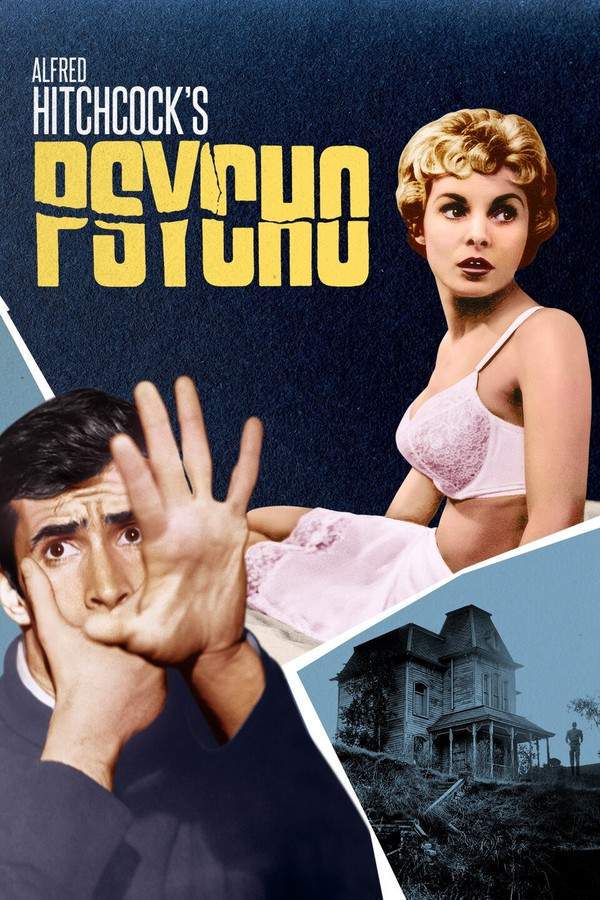
Psycho (1960) movie poster

Plot Summary

Psycho (1960) Plot Summary Explained

Release, runtime and language
1960 · 109 min · Tamil
JustWatch #259 21
Directed by
Alfred Hitchcock
Starring
Anthony Perkins, Janet Leigh
Budget
$806.9K

A young secretary fleeing from her employer seeks refuge at a remote motel run by a peculiar man. As she delves deeper into the motel's mysteries, she uncovers disturbing secrets and becomes caught in a complex relationship with the enigmatic owner and his controlling mother, leading to a shocking and unforgettable encounter.

On this page (7)
  1. 1 Where to watch
  2. 2 What happens: full plot
  3. 3 Plot questions answered
  4. 4 The book behind the movie
  5. 5 Movie threads
  6. 6 Movies like Psycho
  7. 7 Every angle

Where to watch

Where to Watch Psycho (1960)

Where can you watch Psycho? Stream, rent or buy it in the US, including on AMC+, Peacock Premium and Peacock Premium Plus: current JustWatch availability with up-to-date prices.

Streaming availability powered by JustWatch

Full plot summary · contains spoilers

What Happens in Psycho: Full Plot Summary

The whole story of Psycho (1960) explained, from the opening scene to the final frame: every key event, every twist and what it all adds up to. Read it as a quick recap before the sequel, to check a scene you missed, or to finally understand what really happened.

In a quaint Phoenix hotel room on a Friday afternoon, Marion Crane (Janet Leigh) and her illicit lover Sam Loomis (John Gavin) find themselves in yet another heated argument regarding their uncertain future. While Marion desires to marry Sam, financial burdens rooted in his father's debts alongside his alimony obligations hinder his ability to provide the life she dreams of. This recurring discord leads to their parting once more, shrouded in ambiguity.

Returning to her job as a secretary at a real estate office, Marion arrives just in time to witness her boss, Mr. Lowery (Vaughn Taylor), closing a deal with a client named Cassidy (Frank Albertson), who pays $40,000 in cash for a house. Mr. Lowery instructs Marion to deposit this significant sum into the bank's safe until Monday. Feeling unwell, she requests the remainder of the day off after her bank run.

However, instead of heading to the bank, Marion impulsively decides to take the money for herself. Packing her bags and driving out of town, she catches her boss’s suspicious gaze at an intersection, which heightens her anxiety about being caught. Nevertheless, she continues her journey to Fairvale, California, where Sam resides, constantly glancing behind her in fear of a potential pursuit. After a long night of driving, she pulls over to catch some sleep along the roadside.

The following morning, a highway patrolman (Mort Mills) awakens her from slumber as he checks on her parked car. Startled and nervous, Marion unwittingly raises his suspicions when he examines her license and vehicle registration before letting her continue her journey, keeping a watchful eye on her departure. Realizing the risk of her car being traced back to her, Marion makes the impulsive decision to trade it in at a used car lot, quickly paying $700 in cash for a new one, all while the watchful patrolman observes from across the street.

As night falls on this second day, Marion's anxiety grows, compounded by a sudden rainstorm that hampers her visibility. Spotting a flickering light from the Bates Motel, she decides to stay the night. Upon her arrival, she is greeted by Norman Bates (Anthony Perkins), a soft-spoken young man who lives alone in the large house with his mother. Norman informs her that the motel seldom receives guests anymore since the new interstate bypassed the local highway, awakening in Marion the realization that she might have missed her intended turn due to the storm.

Harboring a growing nervousness about being pursued, Marion registers under an alias and is shown to Cabin 1, conveniently located next to the office. When she inquires about food, Norman graciously offers her dinner at the parlor to spare her a trip into town for a meal. As they share a simple meal, Marion notices the peculiar decor—a collection of stuffed birds resulting from Norman's taxidermy hobby. Their conversation turns introspective; both express feelings of entrapment, with Norman revealing, "We all go a little mad sometimes." This moment serves as a reflection for Marion, who resolves to return to Phoenix, hoping to reconcile the chaos she has invited into her life.

As Marion prepares for bed, unbeknownst to her, Norman is peering at her through a peephole from the house, intensifying his own internal conflict. Later, while she calculates her expenditures and finally finds some peace, she slips into the tub for a relaxing shower. A chilling turn occurs when an ominous figure bursts through the bathroom door—the shadowy outline of an old woman wielding a formidable kitchen knife. As Marion screams, the blade descends repeatedly, marking the end of her fleeting hopes.

Reacting in horror, Norman cries out, "Mother! Oh, God! Mother! Blood! Blood!" as he rushes down the hill to Marion's cabin only to discover the grim aftermath of the brutal attack. In a panicked frenzy, he cleans the scene of the crime, wrapping Marion's body in the shower curtain and tossing her into the trunk of her vehicle. Just before leaving, he unknowingly discards the newspaper containing the stolen money, as he drives to a nearby swamp where he submerges the car into its murky depths.

In the aftermath of Marion’s disappearance, a week later in Fairvale, Sam Loomis finds himself desperate to reconnect with her. He writes a note confessing his desire to marry her, despite his financial limitations. However, distress looms as Lila Crane (Vera Miles), Marion’s sister, arrives in search of her sister’s whereabouts. Their concerns grow when a private investigator named Arbogast (Martin Balsam) arrives, seeking the missing Marion, especially regarding the stolen $40,000 she was last seen with.

Arbogast’s investigation leads him to the Bates Motel, where he queries Norman about Marion's presence. Initially denying have seen her, Norman ultimately slips, recalling her registration for a brief stay. Despite Norman's insistence on his mother being an invalid and refusing to let anyone see her, Arbogast grows suspicious and determines to speak with Mrs. Bates. His determination, however, leads to a fatal encounter as he ascends the stairs of the Bates house, only to be violently attacked by the unseen figure of Mother Bates.

Meanwhile, Lila and Sam's concern escalates as Arbogast fails to return. The pair approach Sheriff Chambers (John McIntire) to report their fears. Chambers, however, reveals the shocking truth that Norman's mother has been dead for years, leading Sam and Lila to conclude that something sinister is transpiring at the Bates residence. Driven by urgency, they resolve to investigate the motel themselves, disguised as a married couple.

Checking into Cabin 10, Lila quickly becomes suspicious of Norman. As Sam engages him in conversation, Lila examines Cabin 1, where she discovers clues that indicate a more intimate connection to the missing cash. While Lila prepares to confront Norman’s mother, she stumbles across the horrid truth: the mummified corpse of Mrs. Bates. In a thrilling moment, as Lila realizes the horrifying reality of her situation, Norman charges toward the cabin, fully donned in his mother’s persona, knife in hand.

As they subdue him, the local sheriff uncovers the fragmented psyche of Norman Bates: a man who, after horrific childhood trauma and a twisted bond with his mother, lost himself to the identity of "Mother." A convoluted tale surfaces, revealing that Norman had poisoned his mother and her lover, then preserved her body to maintain the illusion that she was still alive, further fracturing his psyche.

In the end, with the shrouded truth finally unraveled, the haunting image of the lifeless body of Marion is captured as her car is pulled from the bog, cementing the tragic and chilling legacy of Norman Bates and the horrors that lurk beneath the surface.
Last updated: October 28, 2024 at 17:48

Was this helpful?

Plot questions answered

Psycho Plot Explained: Your Questions Answered

The questions people ask most about Psycho (1960): what happens in the confusing scenes, why the characters do what they do, the twists, hidden details and what the ending means. Each answer contains spoilers.

Q1

Why does Marion Crane steal the $40,000?

Marion steals the money because she sees it as her only chance to escape her difficult life and marry Sam Loomis. Sam cannot afford to marry her due to his father's debts and alimony obligations, leaving Marion desperate. The $40,000 represents financial freedom she believes she and Sam need to build a life together.

Foreshadowing: Earlier, Marion and Sam argue about their uncertain future, with Marion expressing her frustration at being unable to marry the man she loves.

  • marion crane
  • stealing
  • money
  • 40
  • 000
  • sam loomis
  • financial desperation
  • marriage
Q2

Why does Norman Bates kill Marion?

Norman kills Marion because when he watches her through the peephole, he experiences a psychotic episode where his 'Mother' personality takes over. Norman suffers from dissociative identity disorder, and the Mother persona views any woman staying with Norman as a threat to their relationship. The Mother personality perceives Marion as a rival for Norman's affection.

Foreshadowing: During dinner, Norman tells Marion, "We all go a little mad sometimes," hinting at his unstable mental state.

  • norman bates
  • marion crane
  • killing
  • mother personality
  • psychosis
Q3

Who kills Marion in the shower scene?

The killer is Norman Bates himself, disguised as his deceased mother. Norman experiences a psychological break where the Mother personality takes control of his body. He puts on his mother's clothes, wig, and knife, and attacks Marion. This is revealed later when Lila Crane discovers the mummified body of the real Mrs. Bates.

Foreshadowing: Norman tells Marion that his mother is an invalid who refuses to let anyone see her, and he becomes visibly agitated when Arbogast insists on meeting her.

  • shower scene
  • killer identity
  • norman bates
  • mother disguise
  • mummified body
Q4

Why does Norman Bates keep his mother's mummified body?

After poisoning his mother and her lover years earlier, Norman could not accept her death. He preserved her body to maintain the illusion that she was still alive, allowing him to continue their relationship in his fractured mind. The Mother personality became a separate entity within Norman, and keeping her body allowed him to literally embody her when the Mother persona took over.

Foreshadowing: Norman insists that his mother is alive but refuses to let anyone see her, claiming she is reclusive.

  • mummified body
  • mother
  • preservation
  • psychosis
  • norman bates childhood trauma
Q5

Why is Arbogast killed at the Bates house?

Arbogast is killed because he insists on speaking with Mrs. Bates, threatening to expose Norman's secret. When Arbogast ascends the stairs to find Mrs. Bates, the Mother personality takes over Norman and attacks the investigator to prevent him from discovering the truth about the dead mother.

Foreshadowing: Norman repeatedly tells Arbogast that his mother will not allow anyone to see her, and Arbogast grows suspicious of this refusal.

  • arbogast
  • private investigator
  • bates house
  • death
  • mother persona
Q6

What happens to the $40,000 Marion stole?

The money ends up discarded in the swamp along with Marion's car. When Norman cleans up the crime scene, he wraps Marion's body in the shower curtain and places it in the trunk of her car. He then drives to a nearby swamp and submerges the vehicle. Unknowingly, he leaves the newspaper containing the cash on the car seat before pushing it into the murky water.

Foreshadowing: After the murder, Norman is in a panicked frenzy, trying to cover up the evidence of Marion's presence.
  • 40
  • 000 money
  • swamp
  • car
  • norman bates cleanup
  • evidence
Q7

Why does Norman Bates dress as his mother?

Norman dresses as his mother because he has dissociative identity disorder stemming from childhood trauma. After poisoning his mother and her lover, Norman developed a split personality where the Mother persona controls his body at times of stress. When the Mother personality emerges, he puts on her clothes, wig, and uses her knife to commit the murders, believing he is acting as she would.

Foreshadowing: Norman tells Marion that he and his mother have a close, perhaps too close relationship, saying she depends on him entirely.

  • norman bates
  • mother costume
  • dissociative identity disorder
  • split personality
  • cross-dressing
Q8

Why doesn't Sheriff Chambers know Mrs. Bates is dead?

Sheriff Chambers did not investigate thoroughly because Norman maintained a convincing illusion that his mother was still alive. Norman lived alone in the house with the mummified corpse, keeping up the pretense that she was a reclusive invalid who refused to see visitors. The sheriff accepted Norman's story without verification, allowing the deception to continue for years.
Foreshadowing: Norman consistently claims his mother is an invalid who will not see anyone, using this explanation to isolate himself.

  • sheriff chambers
  • norman bates
  • mothers death
  • cover-up
  • neglect investigation
Q9

What is the significance of Norman's stuffed birds?

The collection of stuffed birds in Norman's parlor serves as both character exposition and foreshadowing. The taxidermy hobby reveals Norman's fascination with preserving dead things, connecting to his later preservation of his mother's body. The birds also create an unsettling, macabre atmosphere that hints at the darkness lurking within Norman and the motel.

Foreshadowing: The birds foreshadow Norman's relationship with death and his need to preserve things he loves in a preserved, static state.

  • stuffed birds
  • taxidermy
  • foreshadowing
  • norman bates character
  • decoration
Q10

Why does Norman clean up Marion's murder scene?

After discovering Marion's body, Norman enters a panicked state and attempts to cover up the murder. He wraps Marion in the shower curtain, places her in the car trunk, and drives the vehicle to a swamp to dispose of it. This frantic cleanup shows Norman trying to protect both himself and the illusion of his mother, though his mental state is clearly unraveling.

Foreshadowing: Norman cries out "Mother! Oh, God! Mother! Blood! Blood!" revealing his horror at what the Mother personality has done.

  • cleanup
  • crime scene
  • norman bates
  • panic
  • evidence disposal
  • murder covering up
Q11

What triggers Marion's decision to return to Phoenix?

During dinner with Norman, Marion experiences a moment of self-reflection when he shares his own feelings of being trapped. Norman says, "We all go a little mad sometimes," which resonates with Marion's guilt over stealing the money. This conversation awakens her conscience, and she decides to return to Phoenix to fix the chaos she has caused, planning to mail back the money and face the consequences.

Foreshadowing: Marion notices they both feel trapped, she by her circumstances, Norman by living with his mother.

  • marion crane
  • decision to return
  • conscience
  • self-reflection
  • guilt
  • reconciliation
Q12

Why does Norman initially deny seeing Marion?

When Arbogast asks about Marion, Norman initially lies and says no one has stayed at the motel recently. However, he soon slips up and mentions that Marion registered for a single night, inadvertently revealing that she was there. This mistake fuels Arbogast's suspicion and leads him to investigate further, ultimately confronting Norman about seeing Mrs. Bates.

Foreshadowing: Norman's nervousness and contradictions during questioning reveal his inability to maintain his careful deception under pressure.

  • norman bates
  • denial
  • arbogast
  • inadvertent confession
  • mistake lying
Q13

Why does the Mother personality target Marion specifically?

The Mother personality sees any woman who shows interest in Norman as a threat to their exclusive relationship. Marion's dinner conversation with Norman, her staying overnight in the motel, and the apparent intimacy between them triggers the Mother's jealousy and protective rage. In Norman's fractured psyche, any woman who might take Norman away from his mother must be eliminated.

Foreshadowing: Norman tells Marion that his mother gets jealous of the time he spends with guests, saying she feels replaced.

  • mother personality
  • jealousy
  • marion crane
  • threat
  • rivalry
  • elimination
Q14

How did Norman Bates develop his split personality?

Norman developed his split personality as a result of severe childhood trauma. After discovering his mother having an affair, Norman poisoned both her and her lover, killing them both. Unable to accept this act and the loss of his mother, his psyche fractured, creating a separate Mother personality that Norman converses with and eventually embodies. This allowed him to psychologically survive the guilt of killing the person he loved most.

Foreshadowing: The film reveals Norman killed his mother and her lover years before the story takes place, establishing his capacity for violence driven by love and jealousy.

  • norman bates
  • psychosis
  • childhood trauma
  • split personality
  • murder of mother
  • psychological development

Movie threads

More Movies Like Psycho, by Mood & Story

Curated lists built around what makes Psycho tick: the same mood, the same kind of story or the same emotional payoff. Each list explains why these movies belong together.

Claustrophobic thrillers of psychological unraveling like Psycho

Stories where a confined space becomes a stage for a fractured mind. For viewers seeking movies like Psycho, this list features tense thrillers and psychological horrors where characters unravel in isolated settings. These films share a similar feel of claustrophobic dread, exploring themes of fractured identity and deep-seated trauma within confined spaces.

  • claustrophobic
  • unsettling
  • paranoid
  • psychological
  • oppressive
  • chilling
  • Tone: dark, unsettling, oppressive
  • Pacing: variable, building to intense shocks
Why these movies?

The story pattern: Narratives in this thread often center on an isolated location—a motel, a house, an apartment—that becomes a pressure cooker for psychological breakdown. A character, often an outsider, enters this space and uncovers disturbing secrets, triggering a chain of events that exposes a deeply troubled mind and shatters their sense of safety.

Why they belong together: Movies are grouped here based on their shared atmosphere of claustrophobic dread, their focus on psychological horror over physical gore, and their use of a confined setting to explore themes of identity fragmentation, paranoia, and the terrifying unpredictability of a breaking psyche.

Unsettling character studies of crime and guilt like Psycho

Intense explorations of guilt, crime, and the psychology of the perpetrator. If you liked the deep character focus of Psycho, this collection features movies with similarly complex and disturbed protagonists. These films explore the heavy psychological fallout of crime, featuring tense investigations and bleak, emotionally weighty conclusions that linger with the viewer.

  • suspenseful
  • anxious
  • heavy
  • unsettling
  • psychological
  • guilty
  • Tone: dark, heavy, suspenseful
  • Pacing: steady, deliberately tense
Why these movies?

The story pattern: The narrative pattern follows a character, often both perpetrator and victim of their own psyche, as they grapple with a terrible act. The story may shift perspectives, blending a tense investigation with an intimate, unsettling character portrait that reveals the motivations and mental fragmentation behind the crime.

Why they belong together: These films are connected by their primary focus on a deeply troubled central character, the heavy emotional weight of guilt and crime, a dark and suspenseful tone, and a narrative that prioritizes psychological depth over straightforward plot, often leading to a bleak resolution.

If you liked this

Movies Like Psycho

Similar movies to Psycho: the same genre, themes or kind of story. Each one comes with its own plot summary, timeline and ending explained.

Browse all movie summaries

Every angle

Psycho (1960) Explained: Plot, Timeline & Characters

Everything about Psycho in one place: what happens in the plot summary, the timeline in chronological order, the characters and meaning and a spoiler-free summary. What's After the Movie adds the cast, box office and post-credit scenes.

Coming soon on iOS and Android

The Plot Explained Movie Summary App

Plot summaries, endings explained and timelines on your phone. Catch up on any movie in minutes, save your favorites and never miss a twist again.

Be the first to know when we launch. Your email stays private, always.

Learn more about the app