









Plot Explained Spoilers guaranteed!
Plot Explained

Browse by genre

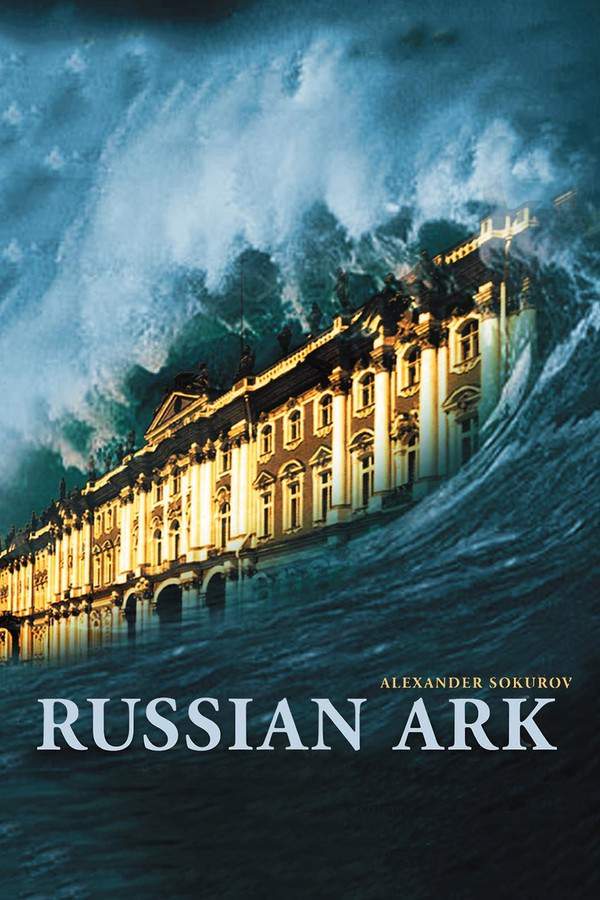
Russian Ark (2002) movie poster

Timeline

Russian Ark (2002) Timeline Explained – Every Event in Order

Release, runtime and language
2002 · 99 min · Russian
JustWatch #18,074 8
Directed by
Aleksandr Sokurov

A captivating French aristocrat finds himself on a unique and dreamlike journey through the opulent Peterhof Palace. He travels through time, witnessing pivotal moments and figures in Russian history as he moves through a lavish masquerade ball. The film offers a breathtaking visual experience, seamlessly blending historical reenactments with a single, continuous take, creating a truly mesmerizing cinematic odyssey.

On this page (6)
  1. 1 Where to watch
  2. 2 Events in order (15)
  3. 3 Timeline questions answered
  4. 4 Movie threads
  5. 5 Movies like Russian Ark
  6. 6 Every angle

Where to watch

Where to Watch Russian Ark (2002)

Where can you watch Russian Ark? Stream, rent or buy it in the US, including on Kino Film Collection, Klassiki and Hoopla: current JustWatch availability with up-to-date prices.

Streaming availability powered by JustWatch

15 events in order · contains spoilers

Russian Ark Timeline: Events in Chronological Order

Every key event of Russian Ark (2002) in order, scene by scene, with when and where it takes place. Use it to untangle flashbacks, time jumps and parallel storylines, to refresh your memory before the sequel or to find the exact scene you are thinking of.

  1. Arrival at the Winter Palace

    On a cold winter's day, a group of men and women arrives at the Winter Palace in a horse-drawn carriage. They gather at a lesser-known entrance, excited to partake in the grand ball hosted by Emperor Alexander I.

    When
    Winter
    Where
    Winter Palace
  2. Encounter with the European

    The narrator meets a mysterious figure known as 'the European.' This ethereal character disdainfully comments on the Russian essence, declaring that Russians cannot appreciate beauty as Europeans do, in stark contrast to the palace's luxurious surroundings.

  3. Exploring the Splendid Rooms

    As the group navigates through the splendid rooms of the palace, each chamber reveals a distinct chapter of Russian history. The journey is a blend of aesthetics and narrative, with history unfolding in a non-linear sequence.

    Where
    Winter Palace
  4. Peter the Great's Confrontation

    Among the historical scenes, one depicts Peter the Great confronting one of his generals. This moment highlights the authoritative nature of Peter's rule and the ongoing struggles within the Russian empire during his reign.

  5. Catherine the Great's Era

    The audience enjoys an extraordinary showcase of operas and performances from the era of Catherine the Great. This section highlights the cultural richness and artistic accomplishments of Russia during her reign.

  6. Tsar Nicholas I and the Shah of Persia

    A significant ceremonial audience unfolds as Tsar Nicholas I receives an apology from Khosrow Mirza, the Shah of Persia's grandson. This encounter revolves around the tragic events surrounding Ambassador Alexander Griboyedov's death in 1829.

    When
    1829
  7. Childhood of Tsar Nicholas II's Children

    The idyllic childhood of Tsar Nicholas II’s children is lovingly portrayed, showing glimpses of their life and upbringing. This moment contrasts the burdens of leadership with the innocence of youth in a royal household.

  8. Changing of the Imperial Guard

    A traditional ceremony depicting the changing of the regiments of the Imperial Guard takes place. It serves as a representation of the continuity of the monarchy and the structured military tradition in Russia.

  9. Contemporary Tourists

    In a poignant juxtaposition, contemporary tourists wander the majestic halls of the palace. Their presence signifies the ongoing legacy of Russian history and the admiration it attracts in modern times.

    Where
    Winter Palace
  10. Director's Concerns During Stalin's Reign

    The museum's director can be heard murmuring about the needed repairs during Joseph Stalin's period. This reflection conveys the struggles faced by the nation and the cultural heritage during turbulent political times.

  11. Siege of Leningrad

    Amidst the turbulent backdrop of World War II, a desperate resident of Leningrad is seen crafting his own coffin. This harrowing moment illustrates the grim realities faced by civilians during the 900-day siege, highlighting human resilience amidst suffering.

    When
    World War II
    Where
    Leningrad
  12. The Magnificent Ball in Nicholas Hall

    The narrative culminates in a breathtaking ball held in Nicholas Hall, where attendees showcase exquisite period costumes. A full orchestra, conducted by Valery Gergiev, enchants the guests with compositions by Mikhail Glinka, creating a magical atmosphere.

    Where
    Nicholas Hall
  13. Desire to Remain in 1913

    The European expresses a longing to remain in the beautiful world of 1913, captivated by the elegance and sophistication of the era. This sentiment underscores a desire to preserve beauty amidst the weight of history.

    When
    1913
  14. The Narrator's Departure

    As the evening unfolds, the narrator retraces his steps, observing a diverse assembly of individuals from different time periods departing the palace together. This gathering illustrates the timeless connection between past and present.

  15. Gaze upon the River Neva

    In a reflective moment, the narrator quietly exits through a side door and gazes upon the serene River Neva. This fleeting interaction with nature offers a tranquil conclusion and symbolizes a bridge between history and the ongoing flow of time.

    Where
    River Neva

Last updated: November 16, 2024 at 18:10

Was this helpful?

Timeline questions answered

Russian Ark Timeline Explained: Your Questions Answered

When does it happen, and why in that order? The questions people ask about the chronology of Russian Ark (2002): time jumps, flashbacks, cause and effect between scenes and the correct order of events, each answered with spoilers.

Q1

Who is the European character in the film?

The European is an ethereal, mysterious figure who appears to embody the spirit of 19th-century French diplomat Marquis de Custine, known for his critical writings about Russia. He expresses strong disdain for Russian culture, claiming Russians lack the ability to appreciate or create beauty, contrasting this with European sophistication. His presence serves as both a guide and a critical observer of Russian history throughout the journey.

Foreshadowing: His dismissive attitude toward Russian beauty is established early when he comments on the luxurious treasures surrounding them.

  • marquis de custine
  • european character
  • russian history
  • critic
Q2

Why does the European want to remain in 1913?

The European expresses a deep longing to stay in the elegant world of 1913 because he is captivated by its beauty, sophistication, and the opulent ball atmosphere. His desire reflects a broader theme of clinging to beauty and perfection while being acutely aware of the approaching historical catastrophe, the Russian Revolution that would destroy this world within just a few years. He represents those who can see the beauty in what is about to be lost.

Foreshadowing: His constant praise of European beauty and his comments about Russian inability to create it foreshadow his attachment to this final moment of imperial grandeur.

  • 1913
  • imperial russia
  • beautiful world
  • elegance
  • final ball
Q3

What is the narrator's role in the film?

The first-person narrator serves as the viewer's surrogate, moving through the Winter Palace and witnessing various historical moments. Unlike the European, he is more of an observer who doesn't openly criticize or comment. At the end, he chooses to step away from the grand procession and exits through a side door to gaze upon the River Neva, suggesting a more grounded connection to reality and time's continuous flow rather than clinging to the past.

Foreshadowing: His quiet, observant nature is established from the beginning as he follows the European through the palace rooms.

  • narrator
  • observer
  • river neva
  • departure
  • journey
Q4

Why are the historical events shown out of chronological order?

The non-linear structure is intentional, reflecting the dreamlike, almost hallucinatory quality of the narrative. By jumping across centuries, from Peter the Great through the 1913 ball to World War II, the film creates a meditation on time, memory, and the persistent presence of history. This approach suggests that all these moments coexist in the collective memory of the palace, rather than existing as isolated historical facts.

Foreshadowing: The opening scenes immediately establish this time-jumping pattern by moving between different eras without transition.

  • non-chronological
  • time jumps
  • history
  • dreamlike
  • continuous take
Q5

Why does the film show the Leningrad siege scene?

The Leningrad siege sequence serves as a stark contrast to the opulent ball atmosphere, depicting a desperate resident crafting his own coffin during the 900-day WWII siege. This moment injects stark historical reality into the otherwise dreamlike narrative, showing the grim human cost of Russia's turbulent 20th century. It emphasizes the film's theme of impermanence, beauty and tragedy coexist across time, and the luxury of the past cannot shield against future suffering.

Foreshadowing: The melancholic tone established early, particularly the European's wistful longing, foreshadows this collision with historical tragedy.

  • leningrad siege
  • world war 2
  • coffin
  • historical tragedy
  • impermanence
Q6

What is the significance of the single continuous take?

The entire film was shot in one unbroken take, creating an immersive, fluid journey through time and space. This technical achievement mirrors the narrator's uninterrupted journey through the palace, making viewers feel they are physically moving alongside him. It also symbolizes the continuous flow of time and history, past, present, and future all existing in the same continuous space. The technical challenge reinforces the film's themes of connection across eras.

Foreshadowing: The opening carriage arrival sets up this unbroken visual journey from the very first moment.

  • continuous take
  • technical achievement
  • one shot
  • cinematic technique
  • immersion
Q7

Why does Tsar Nicholas I receive an apology from Khosrow Mirza?

During a ceremonial audience, Tsar Nicholas I receives Khosrow Mirza, the Shah of Persia's grandson, who formally apologizes for the 1829 murder of Russian ambassador Alexander Griboyedov in Persia. This historical event is depicted to show the complex diplomatic relations between Russia and Persia in the 19th century. The scene demonstrates how historical conflicts and their resolutions are woven into the palace's history.

Foreshadowing: The formal, ceremonial nature of this scene establishes early that the palace witnessed significant diplomatic moments.

  • tsar nicholas i
  • khosrow mirza
  • alexander griboyedov
  • persia
  • diplomacy
Q8

What is the meaning of the narrator's final gaze upon the River Neva?

At the film's conclusion, the narrator quietly steps away from the grand procession, exits through a side door, and gazes upon the serene River Neva. This moment represents a return to reality and the present moment, contrasting with the European's desire to remain trapped in the beautiful past. The river symbolizes the continuous flow of time, history moves forward regardless of human attachment to particular moments. The narrator's choice suggests acceptance of time's passage rather than resistance.

Foreshadowing: His quiet, observant presence throughout the journey foreshadows his willingness to step back and reflect rather than cling to the past.

  • river neva
  • ending
  • reflection
  • time flow
  • acceptance
Q9

Why is Peter the Great shown confronting one of his generals?

The scene depicting Peter the Great confronting one of his generals illustrates the autocratic and often harsh nature of his rule. This moment highlights the power dynamics and struggles within the Russian empire during Peter's reign, showing the palace as a stage for both cultural achievement and authoritative control. It represents one of the many historical moments that defined Russian imperial power.

Foreshadowing: The authoritative tone of early historical scenes establishes the palace as a place of both beauty and authority.

  • peter the great
  • general
  • imperial power
  • confrontation
  • 18th century
Q10

Why are contemporary tourists shown wandering the palace?

The presence of modern tourists walking through the palace creates a poignant juxtaposition between past grandeur and present-day reality. Their wandering symbolizes how history remains accessible and relevant today, transforming what was once a seat of imperial power into a museum where visitors from around the world can experience the legacy of Russian history. This connects the historical vignettes to the contemporary world.

Foreshadowing: The transition from elaborate historical scenes to modern visitors emphasizes the film's theme of time's continuous passage.

  • tourists
  • modern day
  • palace museum
  • present day
  • historical legacy
Q11

What is the significance of the museum director's concerns during Stalin's reign?

The museum director is heard murmuring about needed repairs during Joseph Stalin's period, reflecting the struggles faced by Russian cultural heritage during the turbulent 20th century. This moment highlights how political upheaval and neglect threatened the preservation of imperial treasures, adding another layer to the film's meditation on the fragility of beauty and culture amid political chaos.

Foreshadowing: The contrast between the pristine historical scenes and this mention of decay foreshadows the Leningrad siege scene.

  • stalin
  • repairs
  • museum director
  • soviet era
  • preservation
Q12

What is the purpose of the Catherine the Great opera performance?

The extraordinary showcase of operas and performances from Catherine the Great's era demonstrates the cultural richness and artistic accomplishments of Russia during her reign. This scene highlights the palace as a center of artistic patronage and refinement, showcasing the sophistication that the European claims Russians cannot appreciate, though the contradiction is implicit in the magnificent performance itself.

Foreshadowing: The European's earlier comments about Russian inability to create beauty are directly contradicted by this display of artistic achievement.

  • catherine the great
  • opera
  • cultural richness
  • artistic achievement
  • 18th century

Movie threads

More Movies Like Russian Ark, by Mood & Story

Curated lists built around what makes Russian Ark tick: the same mood, the same kind of story or the same emotional payoff. Each list explains why these movies belong together.

Meditative Historical Journeys like Russian Ark

Films that guide you on a contemplative, non-linear voyage through time. If you enjoyed the dreamlike, time-traveling atmosphere of Russian Ark, explore more movies that offer a similar meditative journey through history. These films prioritize mood and contemplation over conventional narrative, creating a feeling of walking through a living museum or a stream of collective memory.

  • contemplative
  • dreamlike
  • atmospheric
  • nostalgic
  • meditative
  • melancholic
  • Tone: melancholic, contemplative, nostalgic
  • Pacing: slow, lingering, observational
Why these movies?

The story pattern: Narratives in this thread are typically fragmented and associative, unfolding as a series of vignettes or impressions linked by a central theme, location, or an observer's perspective. The journey is intellectual and emotional, inviting the audience to reflect on the passage of time, the weight of history, and the nature of memory itself.

Why they belong together: Movies are grouped here for their shared focus on creating a contemplative, atmospheric experience of history. They utilize a slow, observational pace, a melancholic or bittersweet tone, and a complex, often non-linear structure to evoke a sense of profound nostalgia and philosophical reflection.
Single-Take Immersion Movies like Russian Ark

Movies that use a continuous, unbroken shot to create a uniquely immersive experience. For viewers captivated by the technical marvel of Russian Ark's single continuous shot, this section gathers other films that use similar long-take techniques. These movies offer a unique, immersive viewing experience that feels like you are walking alongside the characters in real time.

  • immersive
  • claustrophobic
  • tense
  • atmospheric
  • technical
  • real-time
  • Tone: tense, immersive, atmospheric
  • Pacing: real-time, fluid, variable
Why these movies?

The story pattern: The narrative pattern is defined by its form: an unbroken, real-time flow. This can create heightened tension, a dreamlike fluidity, or a profound sense of intimacy. The story unfolds without the conventional safety net of edits, making the viewer a constant, immediate witness to the action.

Why they belong together: These films are connected by their groundbreaking use of cinematography to shape the viewer's experience. The shared technical approach results in a specific pacing and intensity, creating a unique sense of immersion and a distinctive, often demanding, viewing rhythm that prioritizes atmosphere over traditional plot mechanics.

If you liked this

Movies Like Russian Ark

Similar movies to Russian Ark: the same genre, themes or kind of story. Each one comes with its own plot summary, timeline and ending explained.

Browse all movie summaries

Every angle

Russian Ark (2002) Explained: Plot, Timeline & Characters

Everything about Russian Ark in one place: what happens in the plot summary, the timeline in chronological order, the characters and meaning and a spoiler-free summary. What's After the Movie adds the cast, box office and post-credit scenes.

Coming soon on iOS and Android

The Plot Explained Movie Summary App

Plot summaries, endings explained and timelines on your phone. Catch up on any movie in minutes, save your favorites and never miss a twist again.

Be the first to know when we launch. Your email stays private, always.

Learn more about the app