Plot Summary
Tsar (2009) Plot Summary Explained
- Release, runtime and language
- 2009 · 119 mins · Russian
- Directed by
- Pavel Lungin
- Starring
- Oleg Yankovskiy, Sergey Garmash, Ville Haapasalo, Ivan Okhlobystin, Дмитрий Сорокин, Alexandr Domogarov
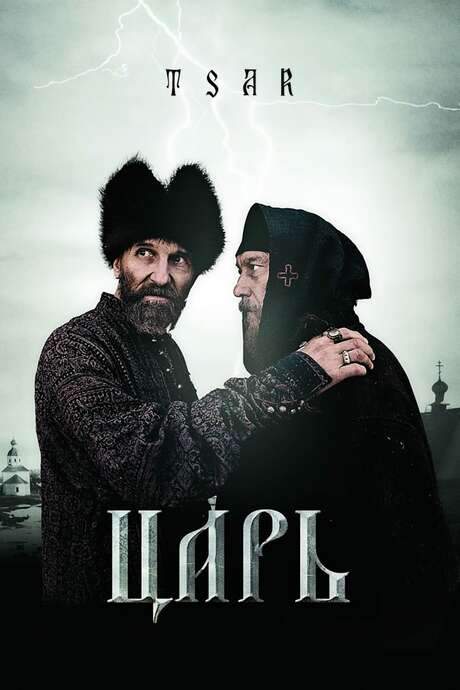
Set in 16th‑century Russia, the film follows Ivan the Terrible, convinced of a divine mission and the imminent Last Judgment, as he seizes absolute power and ruthlessly eliminates opposition. His close friend, Philip, the abbot of the Solovetsky monastery, challenges Ivan’s mystical tyranny, sparking a clash of opposing worldviews that pits morality against autocracy. Mamonov and Yankovsky deliver strong performances in this grand‑scale allegory of Stalinist Russia.
On this page (4)
Full plot summary · contains spoilers
What Happens in Tsar: Full Plot Summary
The whole story of Tsar (2009) explained, from the opening scene to the final frame: every key event, every twist and what it all adds up to. Read it as a quick recap before the sequel, to check a scene you missed, or to finally understand what really happened.
The film unfolds during the turbulent period between 1566 and 1569, marked by the Oprichnina and the Livonian War. The story begins with the death of the Russian Orthodox Metropolitan Afanasii, prompting Tsar Ivan IV to call upon his childhood acquaintance, Hegumen Philip Kolychev of Solovetsky Monastery, to take up the mantle of Metropolitan of Moscow. The narrative is structured into four distinct parts, each shedding light on the fraught dynamics between power, faith, and moral courage.
As the Tsar fervently prays in his cell, seeking divine assistance for his reign, Hegumen Philip makes his way to Moscow. On his journey, he unexpectedly rescues a young girl named Masha, who is escaping from a band of guardsmen. Upon his arrival, the Tsar warmly welcomes Philip and urges him to accept the position of Metropolitan. However, Philip hesitates, initially declining the offer. During this time, he encounters his nephew, who is preparing for battle and implores Philip to distance himself from the Tsar, as the fate of those around the ruler often ends in tragedy.
Reluctantly swayed by the Tsar's insistence, Philip eventually agrees to take on the role, and the Tsar presents Masha with a sacred icon of the Mother of God. The influence of this icon becomes significant when it plays a pivotal role in a bloody confrontation during a battle at Polotsk, where Philip’s nephew bravely fights against Polish and Lithuanian forces. Amid the chaos, Masha brings the icon to the battlefield, which leads to a catastrophic event for the opposing cavalry. Despite the Tsar's ambitions, news soon arrives that the governor of Polotsk has surrendered, igniting the Tsar’s wrath and his desire for retribution.
Confronting the Tsar's violent tendencies, Metropolitan Philip boldly advocates for mercy towards the captured soldiers, but his plea only stirs the Tsar's anger further. In a fit of rage, the Tsar arrests the governor, leading to a trial that is steeped in injustice, where torture yields false confessions. Philip, witnessing this grave misconduct, cannot bring himself to endorse the death sentences, which incites the Tsar's fury even more. The tragic climax unfolds as the Tsar forces the condemned men to fight for their lives against a bear, resulting in horrifying casualties, including the death of Philip's nephew.
In a moment of despair, Masha rushes into the arena with the icon, desperate to halt the violence, but her brave act ultimately leads to her demise. Overwhelmed by the brutality and realizing the futility of trying to sway the Tsar towards compassion, Philip resolves to stand against the violence. During a solemn church service, Philip withholds his blessing from the Tsar, provoking the Tsar's ire and leading to his expulsion from the court, where he is condemned to live out his days in a monastery as a common prisoner, stripped of his dignity.
The plot thickens as the brutal Heinrich von Staden constructs a "torture camp" where public spectacles of suffering are held. The Tsar's jester, Vassian, despite the danger, dares to draw parallels between the Tsar’s wife, Maria Temryukovna, and the figure of the Whore of Babylon from scripture. This audacious comment costs him his life as he is burned at the stake. Meanwhile, in captivity, Philip experiences a miraculous loosening of his chains and is endowed with the powers of healing and foresight. He uses this gift to warn Archbishop Pimen of impending blame for his eventual fate, urging those around him to flee in order to survive, though many, including the abbot and most of the monks, choose to remain loyal to him.
As the Tsar makes an ominous appearance at the monastery, Philip again condemns his violent actions and refuses to offer the blessing he seeks. In a tragic turn, he is ultimately strangled by Malyuta Skuratov on the Tsar's command. Even after death, Philip's legacy endures, as the monks clandestinely bury him within a wooden church and secure it, thwarting the Tsar's orders to surrender his remains. However, the Tsar's wrath persists, resulting in the burning of the church with the monks trapped inside.
In the film’s haunting conclusion, the Tsar, consumed by a relentless thirst for revenge, awaits the start of his torturous entertainments. Yet, to his dismay, not a single person appears, leaving him to ponder, "Where are my people?" He questions the void that surrounds him, even as he prays for divine intervention, reaffirming his isolation in a world steeped in cruelty.
Last updated: September 30, 2026 at 11:09
Plot questions answered
Tsar Plot Explained: Your Questions Answered
The questions people ask most about Tsar (2009): what happens in the confusing scenes, why the characters do what they do, the twists, hidden details and what the ending means. Each answer contains spoilers.
Q1 Why did Philip initially refuse to become Metropolitan of Moscow?
Hegumen Philip Kolychev hesitated because he understood the moral dangers of serving inside Ivan IV's increasingly tyrannical court. His nephew warned him that those close to the Tsar often met tragic ends, and Philip himself sensed that accepting the role meant potentially endorsing acts of cruelty. He only relented after the Tsar insisted that a trusted friend was needed to restrain him, hoping his spiritual influence could moderate the ruler's worst impulses.
Foreshadowing: His nephew's warning about the fate of those around the Tsar foreshadows the deaths of Masha and Philip's own nephew later in the film.
- Philip
- Metropolitan
- Ivan
- hesitation
- Solovetsky
- nephew warning
Q2 What role does the icon of the Mother of God play in the battle at Polotsk?
The icon, originally presented by the Tsar to Masha, becomes a symbol of divine intervention during the Russian army's fight against Polish and Lithuanian forces. When Masha brings it to the battlefield, its presence coincides with the collapse of a bridge beneath enemy cavalry, causing catastrophic losses for the opposing troops. This event intertwines religious faith with the brutality of warfare, suggesting that the sacred object channels divine protection for the Russian side.
- icon
- Mother of God
- Masha
- Polotsk
- battle
- bridge collapse
Q3 Why did the Tsar force condemned soldiers to fight a bear?
Ivan IV chose the bear fight as punishment because the governor of Polotsk had surrendered the city to Polish and Lithuanian forces, a humiliation the Tsar could not forgive. The execution was staged as a public spectacle of suffering, orchestrated by Heinrich von Staden, to demonstrate the consequences of military failure. For Ivan, this cruel entertainment was also a way to reassert absolute authority and pressure Philip into validating the proceedings as Metropolitan.
- bear
- execution
- Polotsk surrender
- Heinrich von Staden
- spectacle
Q4 Why did Metropolitan Philip refuse to sign the death warrants?
Philip could not lend the spiritual authority of the Church to executions that had been secured through torture and forced confessions. By signing, he would have implicitly endorsed both the injustice of the trial and the brutality that followed. His refusal marked the beginning of his open resistance to the Tsar's regime and the start of his personal downfall.
- Philip
- death warrants
- confession
- torture
- Metropolitan
- conscience
Q5 How does Masha die in the execution arena?
Masha rushed into the execution grounds carrying the icon of the Mother of God, hoping to halt the violence and plead for the lives of the condemned men, including Philip's nephew. Her intervention could not stop the bear's attack, and she was killed in the chaos along with many of the prisoners. Her death serves as a turning point that deepens Philip's horror and resolves him to openly defy the Tsar.
Foreshadowing: The icon given to her by the Tsar is the same object she brings back into the arena, transforming a protective gift into a symbol of futile sacrifice.
- Masha
- arena
- icon
- bear
- death
- nephew
Q6 Why was the Tsar's jester Vassian burned at the stake?
Vassian was executed for daring to compare the Tsar's wife, Maria Temryukovna, to the Whore of Babylon from the Book of Revelation. Even as a jester whose role permitted provocative speech, this comparison crossed a line because it attacked the sanctity of the royal family through scripture. The burning served as a warning that no voice of dissent, however ritualized, would be tolerated under Ivan's regime.
- Vassian
- jester
- Whore of Babylon
- Maria Temryukovna
- execution
Q7 What does Philip's miraculous loosening of chains symbolize?
When Philip's chains fall from his body in captivity, the film presents it as a sign of divine favor and spiritual freedom despite physical imprisonment. The accompanying gifts of healing and foresight elevate Philip into a martyr-like figure whose moral authority transcends earthly power. This supernatural event reinforces the contrast between the Tsar's worldly tyranny and the Church's inviolable spiritual legitimacy.
- Philip
- chains
- miracle
- healing
- foresight
- martyrdom
Q8 Why was Philip strangled by Malyuta Skuratov?
Despite first exiling Philip rather than executing him, Ivan IV ultimately ordered his death because the Metropolitan remained an irreconcilable symbol of moral opposition. The Tsar could not tolerate Philip's continued criticism or the possibility that monks might rally around him as a living conscience. Malyuta Skuratov, one of Ivan's most brutal oprichnina enforcers, carried out the strangling, making clear that the Tsar would extinguish spiritual resistance by any means.
- Philip
- Malyuta Skuratov
- strangling
- exile
- oprichnina
Q9 Why did the monks burn with Philip's body inside the church?
The monks secretly buried Philip inside a wooden church to defy the Tsar's order to surrender the remains for public display, preserving him as a martyr rather than a defeated rebel. When Ivan discovered their defiance, he had the church set ablaze with the monks trapped inside, annihilating the last community loyal to Philip. The destruction eliminates every trace of spiritual opposition the Tsar could not coerce into silence.
Foreshadowing: Philip had earlier warned Archbishop Pimen to flee, predicting that those who remained loyal would perish with him.
- monks
- burial
- church
- fire
- defiance
- Philip remains
Q10 What does the Tsar's final question 'Where are my people?' mean?
The closing scene finds Ivan alone as he awaits spectators for his cruel entertainments, but no one appears. His cry of 'Where are my people?' reveals that his systematic elimination of opposition, including the burning of the loyal monks, has left him in total isolation. The question underscores the film's allegory of Stalinist totalitarianism, suggesting that absolute power ultimately destroys the very community and loyalty that sustains a ruler.
- Ivan
- ending
- isolation
- allegory
- Stalinist
- loneliness
Q11 Why did the Tsar exile Philip to a monastery instead of executing him immediately?
Ivan chose to strip Philip of his rank and confine him to a monastery rather than order an immediate execution because of their personal history as childhood friends. Exile neutralized Philip's moral authority within the court without forcing Ivan to bear the spiritual consequences of killing a Metropolitan. It was a fragile compromise that bought time, but that restraint ultimately collapsed when Philip would not stop condemning the regime.
- exile
- monastery
- Ivan
- Philip
- childhood friendship
- restraint
Q12 What was Heinrich von Staden's role in the Tsar's executions?
Heinrich von Staden, a Western mercenary in Ivan's service, orchestrated the brutal public spectacles ordered by the Tsar, including the forced bear fight that killed Philip's nephew. He constructed what the film depicts as a 'torture camp' where suffering was staged as entertainment for the court. Von Staden embodies the apparatus of state terror that enabled Ivan's paranoia to translate into mass violence.
- Heinrich von Staden
- torture
- spectacle
- oprichnina
- executions
If you liked this
Movies Like Tsar
Similar movies to Tsar: the same genre, themes or kind of story. Each one comes with its own plot summary, timeline and ending explained.

The Russian Revolution
2017

Russia, Land of the Tsars
2003

1612: Chronicles of the Dark Time
2007

Tsar Ivan the Terrible
1991

Assassin of the Tsar
1991

The Last Days of the Last Tsar
1992

Boris Godunov
1986

Boris Godounov
1989

The Czarina Commands
1933

Peter the First, Part I
1937
Rasputin
1996

Ivan the Terrible, Part I
1944
Every angle
Tsar (2009) Explained: Plot, Timeline & Characters
Everything about Tsar in one place: what happens in the plot summary, the timeline in chronological order, the characters and meaning and a spoiler-free summary. What's After the Movie adds the cast, box office and post-credit scenes.
- Tsar Timeline Every key event in chronological order, ideal for flashbacks and time jumps.
- Tsar Characters & Themes Who is who, where it takes place and what the movie really means.
- Tsar Spoiler-Free Summary What it is about and whether it is worth watching, without spoilers.
- Tsar on What's After the Movie Cast and crew, box office, post-credit scenes and more.
Coming soon on iOS and Android
The Plot Explained Movie Summary App
Plot summaries, endings explained and timelines on your phone. Catch up on any movie in minutes, save your favorites and never miss a twist again.
Be the first to know when we launch. Your email stays private, always.
Learn more about the app