Plot Explained Spoilers guaranteed!
Plot Explained

Browse by genre

Richard III (1956) movie poster

Timeline

Richard III (1956) Timeline Explained – Every Event in Order

Release, runtime and language
1956 · 161 min · English
Loading streaming availability…
Starring
John Gielgud, Claire Bloom, Ralph Richardson, Laurence Olivier, Cedric Hardwicke, Mary Kerridge

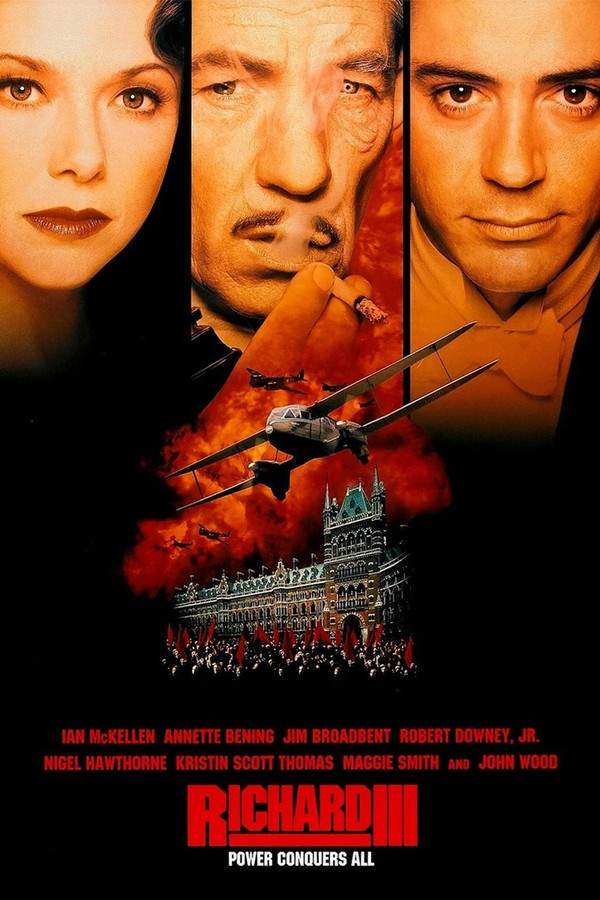
Amidst the civil war between the York and Lancaster houses in 1930s England, Richard III’s ambition fuels a ruthless power struggle. Driven by an insatiable desire for the throne, he orchestrates a plot to seize control. His ascent is challenged by rivals, including his own brother, nephews, and their mother. As betrayals mount, Richard’s calculated schemes spiral into a descent into chaos, threatening his carefully laid plans.

On this page (7)
  1. 1 Where to watch
  2. 2 Events in order (10)
  3. 3 Timeline questions answered
  4. 4 The book behind the movie
  5. 5 Movie threads
  6. 6 Movies like Richard III
  7. 7 Every angle
Loading streaming availability…

10 events in order · contains spoilers

Richard III Timeline: Events in Chronological Order

Every key event of Richard III (1956) in order, scene by scene, with when and where it takes place. Use it to untangle flashbacks, time jumps and parallel storylines, to refresh your memory before the sequel or to find the exact scene you are thinking of.

  1. Introduction of London

    The film opens with the iconic London Films logo, featuring the famous Big Ben. As the clock strikes the hour, the sound of its bells announces the beginning of a historic tale.

    When
    Time unspecified
    Where
    London
  2. The Beginning of the Story

    The narrative sets the stage for the latter half of the 15th Century in England, highlighting the end of a tumultuous period known as the Wars of the Roses. This conflict featured two prominent factions, symbolized by the Red Rose of Lancaster and the White Rose of York.

    When
    15th Century
    Where
    England
  3. Crowning of Edward IV

    The film transitions to the grand coronation of Edward IV, emphasizing his ascension to the throne amid a full court of nobles and family members. The image of the English crown over the throne signifies the weight of leadership.

    When
    Time unspecified
    Where
    Throne Room
  4. Richard's Reflection

    As Edward IV is crowned, Richard, Duke of Gloucester, shares a moment of contemplation with the audience. This introspective moment reveals his feelings about power and familial loyalty amidst the royal celebrations.

    When
    Time unspecified
    Where
    Throne Room
  5. The Duke of Buckingham's Presence

    Throughout the coronation, Richard exchanges meaningful glances with the Duke of Buckingham, suggesting an underlying tension and unspoken thoughts between the two. Their relationship hints at political maneuvering that will unfold later.

    When
    Time unspecified
    Where
    Throne Room
  6. Family Dynamics

    After the crowning, Richard observes his brother, George, Duke of Clarence, as he interacts affectionately with the children of Edward IV. This tableau underscores the familial bonds that exist within the fraught world of royal politics.

    When
    Time unspecified
    Where
    Throne Room
  7. Departure to the Streets

    With the formalities concluded, the court, excluding Richard, takes to the streets in celebration of Edward IV's coronation. The public display is a vivid demonstration of Royal favor and the enthusiasm of the populace.

    When
    Time unspecified
    Where
    Streets of London
  8. Richard's Isolation

    As the celebrations proceed outside, Richard remains in the throne room, isolated from the joyous throng. This separation symbolizes his unique position in the hierarchy and sets the foundation for his future actions.

    When
    Time unspecified
    Where
    Throne Room
  9. The Reflective Monologue

    Richard addresses the audience directly, expressing his thoughts on ambition, envy, and his desire for power. This monologue provides deep insight into his character and foreshadows his forthcoming machinations.

    When
    Time unspecified
    Where
    Throne Room
  10. Beneath the Surface

    As the festivities continue, Richard's musings reveal a darker undercurrent to the merriment. His reflections pose haunting questions about legitimacy, power, and betrayal, hinting at the chaos that will ensue.

Last updated: May 28, 2025 at 19:07

Was this helpful?

Timeline questions answered

Richard III Timeline Explained: Your Questions Answered

When does it happen, and why in that order? The questions people ask about the chronology of Richard III (1956): time jumps, flashbacks, cause and effect between scenes and the correct order of events, each answered with spoilers.

Q1

Why does Richard stay behind while the court celebrates Edward's coronation?

Richard remains in the throne room because he feels alienated from the celebration and his family. While the rest of the court joins Edward in the streets to celebrate with the common people, Richard's internal turmoil and resentment keep him isolated. This moment establishes his role as an outsider within his own family and foreshadows his future machinations against his brother.

Foreshadowing: This isolation at the coronation sets the stage for Richard's later manipulation of the court and his progressive separation from his family.

  • richard
  • coronation
  • isolation
  • celebration
  • throne room
Q2

What does Richard reveal about his character in his first monologue?

In his opening soliloquy, Richard directly addresses the audience to reveal his innermost thoughts about power and family. He speaks of his ambition, his envy of his brother's position, and his desire for the throne. This monologue establishes Richard as a cunning, ambitious character who is willing to manipulate and scheme to achieve his goals, while also presenting himself as an outsider who perceives himself as overlooked despite his noble status.

Foreshadowing: The themes of ambition and resentment introduced here drive Richard's entire arc throughout the film.

  • richard
  • monologue
  • ambition
  • power
  • desire for throne
Q3

What is the significance of Richard exchanging glances with the Duke of Buckingham?

The meaningful glances exchanged between Richard and Buckingham during the coronation signal the beginning of their political alliance. Buckingham, a powerful nobleman, is already aligned with Richard's interests despite Edward being the newly crowned king. This subtle communication suggests they share secret intentions and that Richard has already begun cultivating important relationships to further his schemes.

Foreshadowing: This initial connection between Richard and Buckingham foreshadows their partnership in the political maneuvers and murders that will follow.

  • richard
  • buckingham
  • glances
  • coronation
  • political alliance
Q4

What is the Wars of the Roses and why does it matter for the story?

The Wars of the Roses was a series of civil wars in 15th century England fought between two rival houses: the House of Lancaster, symbolized by the Red Rose, and the House of York, symbolized by the White Rose. The film takes place as the White Rose of York is reaching its peak power with Edward IV's coronation. This historical context establishes the volatile political environment where power constantly shifts through murder, betrayal, and marriage alliances, providing the backdrop for Richard's ruthless ascent.

  • wars of the roses
  • lancaster
  • york
  • historical context
  • civil war
Q5

How does Richard feel about his brother Edward becoming king?

Richard's feelings about Edward's coronation are complex and deeply resentful. While he appears at the coronation and participates in the formal court proceedings, his internal monologue reveals jealousy and ambition. He resents that Edward, not himself, sits on the throne, and he clearly believes he is more deserving of power. This resentment fuels his willingness to scheme against his own family to seize the crown.

Foreshadowing: Richard's envy of Edward's position is the driving force behind his future actions against his brother and nephews.

  • richard
  • edward
  • king
  • envy
  • brother
  • resentment
Q6

Why is Richard isolated despite being part of the royal family?

Richard's isolation stems from both his physical appearance, which he references as having been mocked or seen as unkingly, and his psychological separation from his family. While his brothers Edward and George are celebrated and surrounded by courtly favor, Richard stands apart. His introspective nature and his willingness to think beyond the surface celebrations create a divide between him and the rest of the court. This isolation also reflects his own choice to remove himself from the festivities, deepening his role as an outsider.

  • richard
  • isolation
  • royal family
  • outsider
  • brothers
Q7

What is Richard's relationship with his brother George, Duke of Clarence?

Richard's relationship with George, Duke of Clarence, appears complex. During the coronation, Richard watches George affectionately interacting with Edward's children, which may indicate both genuine familial bonds and strategic observation. While Richard and George both share discontent, they are not outright allies at this point. Richard will later manipulate circumstances to have Clarence imprisoned and eventually murdered, showing how quickly familial bonds can dissolve in pursuit of power.

Foreshadowing: The tension between Richard and Clarence foreshadows the betrayal and murder of Clarence that occurs later in the film.

  • richard
  • clarence
  • george
  • brother
  • duke of clarence
Q8

What role does the Queen play at Edward's coronation?

Queen Elizabeth (played by Mary Kerridge) observes the familial display during the coronation, particularly the interactions between the royal brothers and Edward's children. As Edward's wife and future mother to his heirs, she occupies a position of significant influence. Her presence and observations hint at the political vulnerabilities that Richard will later exploit, as the Queen represents both the current royal lineage and potential competition for power.

  • queen
  • elizabeth
  • coronation
  • observation
  • political role
Q9

Why does Richard speak directly to the audience in his opening scene?

Richard's direct address to the audience is a Shakespearean convention that serves multiple purposes. It immediately establishes him as the protagonist of the story despite being its villain. It allows the audience into his psychological world, revealing his ambitions, resentments, and schemes before other characters become aware of them. This narrative technique creates dramatic irony, as the audience knows Richard's true intentions while the other characters remain oblivious.

Foreshadowing: The soliloquy sets up the audience's awareness of Richard's scheming, creating tension for what unfolds.

  • richard
  • soliloquy
  • audience
  • shakespearean convention
  • psychology
Q10

What motivates Richard's desire for the throne beyond simple ambition?

Richard's desire for the throne appears driven by a combination of legitimate grievance and twisted logic. He believes himself overlooked despite his abilities, and he views his physical differences from his handsome brothers as having cost him the crown. His monologue suggests he sees taking the throne not merely as ambition but as a form of justice for perceived wrongs against him. This psychological justification makes him more dangerous, as he views his schemes as righteous rather than merely corrupt.

  • richard
  • ambition
  • throne
  • motivation
  • power
  • desire

Movie threads

More Movies Like Richard III, by Mood & Story

Curated lists built around what makes Richard III tick: the same mood, the same kind of story or the same emotional payoff. Each list explains why these movies belong together.

Ruthless Power Grabs like in Richard III

Stories chronicling a character's ruthless and methodical climb to power. Explore movies like Richard III that delve into the dark psychology of a character's ruthless ascent to power. If you enjoyed the calculated schemes and moral collapse in Richard III, you'll find similar stories of ambition, betrayal, and tyranny here.

  • ambitious
  • devious
  • power-hungry
  • grim
  • solemn
  • calculating
  • Tone: dark, grim, ominous
  • Pacing: steady, methodical
Why these movies?

The story pattern: The narrative follows an anti-hero's single-minded pursuit of a goal, often a throne or position of absolute authority. Their journey is marked by a series of cold, calculated moves against friends and family, leading to a climax where their newfound power is threatened by the very chaos they created.

Why they belong together: Movies are grouped here for their shared focus on a character-driven narrative of ambition and moral corruption. They share a dark tone, steady pacing that builds tension, and a heavy emotional weight stemming from the protagonist's destructive actions.

Bleak Historical Dramas like Richard III

High-stakes stories of power struggles ending in devastating collapse. Find movies similar to Richard III that capture the grim atmosphere of political decay and tragic endings. If you liked the high-stakes betrayal and somber mood of Richard III, this collection features other heavy historical and political tragedies.

  • grim
  • solemn
  • ominous
  • tragic
  • political
  • betrayal
  • Tone: dark, tragic, ominous
  • Pacing: steady, building
Why these movies?

The story pattern: These narratives unfold in politically charged settings, often royal courts or governments, where the quest for dominance leads to a chain of betrayals and murders. The story builds steadily towards an inevitable downfall, leaving a trail of destruction and a somber, sad conclusion.

Why they belong together: These films are united by their dark, heavy tone and focus on the tragic mechanics of power. They share a high intensity driven by life-or-death stakes, a steady pacing that allows schemes to unfold, and a ultimately sad or bleak ending feel.

If you liked this

Movies Like Richard III

Similar movies to Richard III: the same genre, themes or kind of story. Each one comes with its own plot summary, timeline and ending explained.

Browse all movie summaries

Every angle

Richard III (1956) Explained: Plot, Timeline & Characters

Everything about Richard III in one place: what happens in the plot summary, the timeline in chronological order, the characters and meaning and a spoiler-free summary. What's After the Movie adds the cast, box office and post-credit scenes.

Coming soon on iOS and Android

The Plot Explained Movie Summary App

Plot summaries, endings explained and timelines on your phone. Catch up on any movie in minutes, save your favorites and never miss a twist again.

Be the first to know when we launch. Your email stays private, always.

Learn more about the app