Plot Explained Spoilers guaranteed!
Plot Explained

Browse by genre

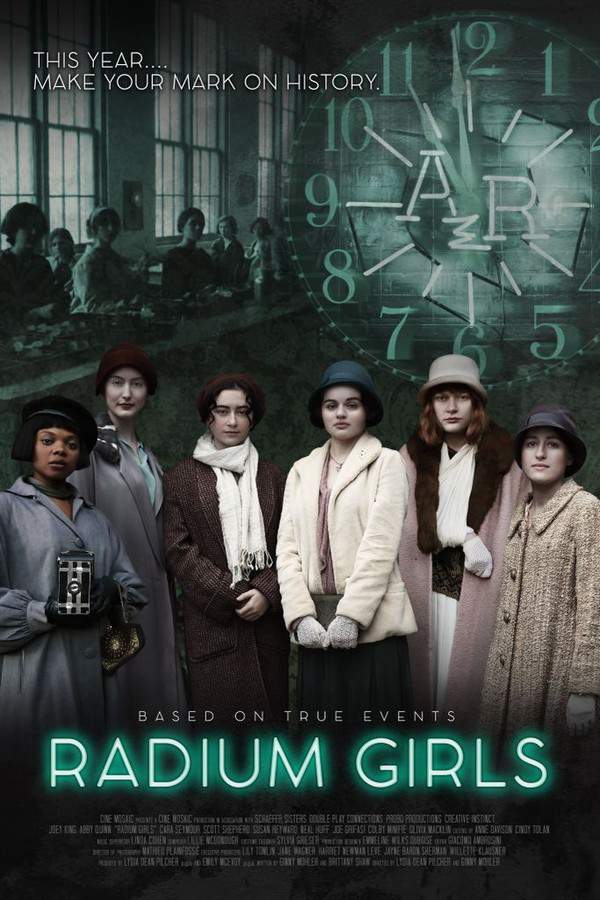
Radium Girls (2018) movie poster

Timeline

Radium Girls (2018) Timeline Explained – Every Event in Order

Release, runtime and language
2018 · 102 mins · English
Echo score 56
Directed by
Ginny Mohler, Lydia Dean Pilcher
Starring
Neal Huff, Joey King, Abby Quinn, Colby Minifie, Scott Shepherd, Steven Hauck

Young women toiling in a factory are exposed to hazardous material which takes a disastrous toll on their health.

On this page (5)
  1. 1 Events in order (12)
  2. 2 Timeline questions answered
  3. 3 Movie threads
  4. 4 Movies like Radium Girls
  5. 5 Every angle

12 events in order · contains spoilers

Radium Girls Timeline: Events in Chronological Order

Every key event of Radium Girls (2018) in order, scene by scene, with when and where it takes place. Use it to untangle flashbacks, time jumps and parallel storylines, to refresh your memory before the sequel or to find the exact scene you are thinking of.

  1. Bessie Meets Walter White

    Bessie Cavallo meets Walter White, a young communist photographer, when he comes to photograph the workers at American Radium. They quickly fall for each other and begin to rely on one another as their lives intertwine with politics and risk. The budding romance pulls Bessie into a broader world that will soon clash with the factory's secrecy.

    When
    early 1920s
    Where
    American Radium factory, New Jersey
  2. Walter Introduces Bessie to Ms. Wiley

    Walter introduces Bessie to his world of counter-culture ideas and to Ms. Wiley, leader of the Consumer's League of New Jersey. Wiley explains the potential dangers of radium exposure and the possibility of standing up to American Radium. The alliance plants the seeds for the forthcoming legal fight.

    When
    early 1920s
    Where
    Wiley's meetings, New Jersey
  3. Jo Falls Ill

    Jo Cavallo falls ill, prompting serious concern from the sisters. They seek medical help to understand the cause of her worsening condition. The illness becomes the catalyst for challenging the factory's safety practices.

    When
    early 1920s
    Where
    Home and factory, New Jersey
  4. The Company Doctor Finds No Problem at First

    Mr. Roeder sends the factory doctor, Dr. Flint, who initially finds no problem with Jo. The sisters insist on more tests to uncover the truth. This delay underscores the resistance they face from the company.

    When
    early 1920s
    Where
    American Radium factory, New Jersey
  5. Diagnosis of Syphilis and Mary's Past

    Dr. Flint returns with a diagnosis of syphilis, echoing the earlier diagnosis given to Mary Cavallo before her death. The sisters refuse to accept this explanation, especially since Jo is a virgin. They seek help from Wiley, who warns them that the process won't be easy.

    When
    early 1920s
    Where
    Factory clinic and Mary's memory
  6. Wiley Warns of a Difficult Fight

    Wiley warns the Cavallo sisters that confronting American Radium will be a hard battle. She urges them to get tested and push for transparency at the factory. The sisters vow to persevere despite the risks.

    When
    early 1920s
    Where
    Wiley's office, New Jersey
  7. Exhumation Confirms Radioactivity

    Mary Cavallo's body is exhumed and her bones are found to be radioactive, strengthening the case against American Radium. The discovery validates the sisters' suspicions and fuels public support for action. The factory's defenses tighten in response.

    When
    1920s
    Where
    Mary's grave
  8. More Dial Painters Join the Case

    Two additional girls join the Cavallo sisters as victims, expanding the collective case against the factory. American Radium responds with intimidation, coercing silence and following the women to scare them away. Public attention begins to turn more decisively toward accountability.

    When
    mid-1920s
    Where
    New Jersey factory floor and streets
  9. The Legal Battle Begins

    Mr. Henry Berry agrees to represent the dial painters, and the state trial gets underway in New Jersey. Early testimony suggests the case could set a landmark precedent for workers' safety. The courtroom atmosphere is tense as the plaintiffs press for accountability.

    When
    1920s
    Where
    Courthouse, New Jersey
  10. Leech's Testimony and Betrayal

    Bessie tracks down Mr. Leech, the branch supervisor who had a secret relationship with Mary, hoping for his testimony. Leech is hospitalized with radium poisoning and ultimately lies on the stand, denying the relationship and warning signs. His decision reflects the personal costs of the company’s efforts to survive.

    When
    1920s
    Where
    Hospital and courtroom
  11. Settlement Negotiations and Closure

    A federal judge negotiates a deal on behalf of the Radium Girls after a long extension. The settlement awards $10,000 to each plaintiff and results in the factory's closure in New Jersey. Bessie worries the gains may be limited, but Wiley reminds her that the struggle continues in other ways.

    When
    late 1920s
    Where
    Federal court/negotiations; New Jersey
  12. Epilogue: Legacy and Later Impact

    The epilogue notes that radium was used to paint luminous clocks until the 1970s and reveals the complexities of justice, including a stockholding judge. It shows how the Radium Girls case reshaped U.S. labor law and hints that a Geiger counter over a Radium Girl's grave would click for centuries. The sisters' story remains a reminder that progress requires ongoing vigilance.

    When
    post-1920s to present
    Where
    Epilogue; United States

Last updated: February 18, 2026 at 23:43

Was this helpful?

Timeline questions answered

Radium Girls Timeline Explained: Your Questions Answered

When does it happen, and why in that order? The questions people ask about the chronology of Radium Girls (2018): time jumps, flashbacks, cause and effect between scenes and the correct order of events, each answered with spoilers.

Q1

Why was Jo diagnosed with syphilis instead of radium poisoning?

Dr. Flint, the company doctor, initially found no problem with Jo. When he returned with a syphilis diagnosis, it was a deliberate cover-up by American Radium to hide the real cause of the illness, radium poisoning. The company knew that admitting radium poisoning would expose their illegal handling of radioactive materials and expose them to liability. The sisters rejected this diagnosis because Jo was a virgin, making it medically impossible.

  • jo syphilis diagnosis
  • radium poisoning
  • company cover-up
  • dr flint
Q2

Why did the sisters exhume Mary's body?

The sisters exhumed Mary's body to prove that her death was caused by radium poisoning, not syphilis as the company doctor had claimed. When Mary's bones were tested, they were found to be radioactive, this concrete scientific evidence directly contradicted the company's diagnosis and became crucial evidence in the legal case against American Radium.

Foreshadowing: Earlier, Dr. Flint had attributed Mary's death to syphilis, a diagnosis the family had always doubted.

  • mary exhumed
  • radioactive bones
  • evidence
  • legal case
Q3

Why did Mr. Leech lie on the stand during the trial?

Mr. Leech was the branch supervisor who had a secret relationship with Mary Cavallo. While he knew about the dangers of radium and had tried to warn her, he collapsed under pressure from American Radium's attorneys during cross-examination. Rather than admit his relationship with Mary and acknowledge that he had warned her about the dangers, he denied everything. His betrayal was driven by fear of public shame and the overwhelming pressure from the company's legal team.

Foreshadowing: Earlier scenes showed Leech's genuine affection for Mary and his knowledge of the radium dangers.

  • mr leech testimony
  • lies
  • court
  • betrayal
  • mary relationship
Q4

Why was the settlement considered bittersweet for Bessie?

While the settlement awarded $10,000 to each plaintiff and closed the New Jersey plant, Bessie felt the fight was incomplete. The epilogue reveals that radium continued to be used in clock factories until the 1970s, and one of the judges who helped negotiate the settlement was actually a stockholder in American Radium, a clear conflict of interest that undermined true justice. Katherine Wiley's words, "It is never over," echoed this incompleteness.

  • settlement
  • $10000
  • factory closure
  • judge conflict of interest
Q5

How did Walter White influence Bessie's journey?

Walter White, a young communist photographer, introduced Bessie to counterculture ideas and political activism. He brought her into the world of labor rights and connected her with Katherine Wiley, the leader of the Consumer's League of New Jersey. His influence transformed Bessie from a factory worker into an advocate for justice, giving her the framework and support network needed to challenge American Radium.

Foreshadowing: Their romance began when Walter arrived to photograph the workers, pulling Bessie into his world.

  • walter white
  • influence
  • activism
  • katherine wiley
  • consumer's league
Q6

What was the lasting impact of the Radium Girls case?

The Radium Girls case became a landmark in U.S. labor law, establishing important precedents for workplace safety and worker's compensation. It was one of the first times corporations were held accountable for knowingly exposing workers to hazardous conditions. However, the epilogue notes that radium continued to be used in luminous dial painting until the 1970s, and a Geiger counter over a Radium Girl's grave would still click today, over a thousand years later, showing the long-lasting consequences of the poisoning.

  • labor law
  • workplace safety
  • precedent
  • legacy
  • radium poisoning
Q7

How did American Radium try to suppress the workers' case?

American Radium used multiple intimidation tactics against the workers. The company sent Dr. Flint to misdiagnose Jo's illness as syphilis to hide the radium poisoning. They also shadowed and followed the women to scare them away from testifying. During the trial, their attorneys put intense pressure on Mr. Leech to deny any knowledge of the dangers. Additionally, a state judge granted the company a long extension to delay the case, giving them more time to wear down the plaintiffs.

  • company intimidation
  • coercion
  • legal tactics
  • suppression
Q8

Why did Jo's illness trigger the lawsuit?

Jo's illness was the catalyst because it forced the sisters to seek answers when the company refused to acknowledge the true cause. After Dr. Flint's false syphilis diagnosis, the sisters turned to Katherine Wiley for help. This led to the discovery that Mary had died under similar circumstances two years earlier, and eventually to the exhumation of Mary's body which provided the scientific proof of radium poisoning. Without Jo's illness, the sisters may never have uncovered the full scope of the company's wrongdoing.

Foreshadowing: Mary's earlier death and diagnosis of syphilis had Plant the seeds of suspicion.

  • jo illness
  • catalyst
  • lawsuit
  • discovery
  • radium poisoning
Q9

Why was the judge's involvement in the settlement problematic?

The epilogue reveals that one of the federal judges who helped negotiate the settlement had been a stockholder in American Radium. This represented a clear conflict of interest, a judge supposed to oversee fair proceedings actually had financial stakes in the company's outcome. This undermined the integrity of the settlement and helps explain why Bessie felt the victory was incomplete despite the $10,000 compensation and factory closure.

  • judge stockholder
  • conflict of interest
  • settlement
  • fairness
Q10

What role did Katherine Wiley play in the case?

Katherine Wiley was the leader of the Consumer's League of New Jersey who became the sisters' primary advocate. Walter White introduced Bessie to Wiley, who provided legal support, information about radium dangers, and guidance throughout the difficult fight. Wiley warned the sisters that confronting American Radium would be arduous but supported their decision to get tested and push for transparency. Her organization provided the infrastructure for the workers to challenge the powerful corporation.

Foreshadowing: Wiley's meetings with counterculture figures positioned her as a natural ally for the workers.

  • katherine wiley
  • consumer's league
  • advocate
  • support
  • legal fight

Movie threads

More Movies Like Radium Girls, by Mood & Story

Curated lists built around what makes Radium Girls tick: the same mood, the same kind of story or the same emotional payoff. Each list explains why these movies belong together.

Movies about fighting systemic injustice like Radium Girls

Stories of ordinary people taking on powerful, corrupt institutions. Discover powerful films similar to Radium Girls that depict the grueling fight against corporate or institutional exploitation. These movies explore the high-stakes battles of ordinary people challenging powerful, corrupt systems.

  • corporate greed
  • legal battle
  • tense
  • defiant
  • grieving
  • oppressive
  • Tone: dark, defiant, tense
  • Pacing: steady, meticulous
Why these movies?

The story pattern: These narratives typically begin with the discovery of a hidden danger or injustice perpetrated by a trusted institution. The protagonists face an uphill battle against powerful adversaries who use intimidation and legal maneuvering to evade accountability, culminating in a legal or moral confrontation that is costly but significant.

Why they belong together: Movies in this thread are united by their focus on themes of corporate greed, whistleblowing, and the immense personal toll of seeking accountability. They share a tone of grim determination and a steady pacing that builds tension through procedural details and emotional weight.

Somber historical hardship dramas like Radium Girls

Gripping tales of real-life suffering and resilience from the past. If you appreciated the somber tone and historical focus of Radium Girls, explore more movies that uncover powerful stories of suffering, resilience, and the fight for dignity against a backdrop of historical hardship.

  • somber
  • oppressive
  • grieving
  • historical
  • tense
  • frustrating
  • Tone: somber, oppressive, grieving
  • Pacing: steady, deliberate
Why these movies?

The story pattern: These stories are often anchored in a specific historical injustice, following characters whose lives are irrevocably damaged by forces beyond their control. The narrative is driven by the gradual unveiling of the truth and the characters' struggle to be heard, often ending with a bittersweet acknowledgment of their sacrifice.

Why they belong together: This thread groups films that share a heavy, oppressive mood, a focus on historical truth, and a deep emotional resonance centered on themes of illness, death, and the fight for recognition. The pacing is often steady, allowing the emotional weight of the situation to build methodically.

If you liked this

Movies Like Radium Girls

Similar movies to Radium Girls: the same genre, themes or kind of story. Each one comes with its own plot summary, timeline and ending explained.

Browse all movie summaries

Every angle

Radium Girls (2018) Explained: Plot, Timeline & Characters

Everything about Radium Girls in one place: what happens in the plot summary, the timeline in chronological order, the characters and meaning and a spoiler-free summary. What's After the Movie adds the cast, box office and post-credit scenes.

Coming soon on iOS and Android

The Plot Explained Movie Summary App

Plot summaries, endings explained and timelines on your phone. Catch up on any movie in minutes, save your favorites and never miss a twist again.

Be the first to know when we launch. Your email stays private, always.

Learn more about the app