Plot Explained Spoilers guaranteed!
Plot Explained

Browse by genre

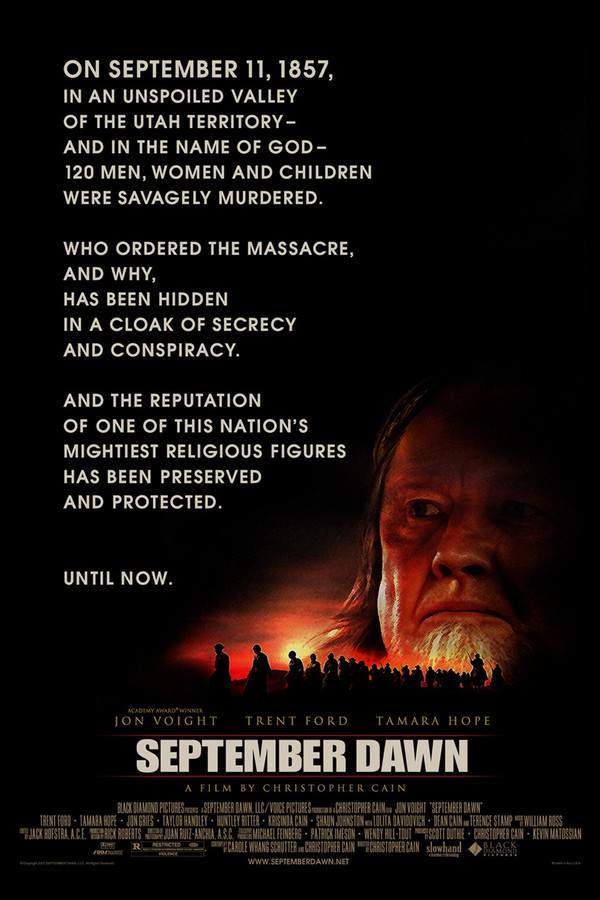
September Dawn (2023) movie poster

Plot Summary

September Dawn (2023) Plot Summary Explained

Release, runtime and language
2023 · 25 mins · Serbian
Loading streaming availability…
Directed by
Ivan Đurović
Starring
Teodor Vučkovac, Darija Vučko

A gawky teen hatches a ridiculous scheme to win over his crush, but the plan backfires and leaves them marooned on a remote island. As their ill‑conceived stunt falls apart, they confront wild hazards and their own insecurities, turning the ordeal into a darkly comic journey of survival and self‑discovery.

On this page (5)
  1. 1 Where to watch
  2. 2 What happens: full plot
  3. 3 Plot questions answered
  4. 4 Movie threads
  5. 5 Every angle
Loading streaming availability…

Full plot summary · contains spoilers

What Happens in September Dawn: Full Plot Summary

The whole story of September Dawn (2023) explained, from the opening scene to the final frame: every key event, every twist and what it all adds up to. Read it as a quick recap before the sequel, to check a scene you missed, or to finally understand what really happened.

Starring Teodor Vučkovac and Darija Vučko, this drama centers on a tender, forbidden romance set against the chilling prelude to a brutal tragedy. The story follows Emily Hudson, the daughter of the wagon train’s pastor, and Jonathan Samuelson, the son of the local Mormon bishop, as their quiet bond begins to bloom amid mounting religious and political pressures in Utah.

The plot unfolds with the Baker–Fancher party making its way across Utah toward California. Their presence unsettles local authorities, and they are advised to move on by a group of Mormon militiamen. Bishop Jacob Samuelson steps in to defuse the tense moment, yet his unease grows when he learns unsettling details about the travelers: a woman wearing men’s clothing among the party, and the delivery of racehorses meant for gambling in California. He also discovers that some travelers hail from Missouri, a population he blames for past persecutions of Mormons and for the death of Joseph Smith. In response, he orders his sons, Jonathan and Micah, to keep a careful watch over the group.

A subsequent sequence contrasts a moment of outward deliverance with the darker currents beneath the surface: the pastor of the Fancher party offers thanks for their apparent relief, while Brigham Young’s leadership speaks of divine punishment and the fate of the gentiles in their hands. As Utah braces for a possible federal confrontation, Jonathan grows closer to Emily, adding a personal stake to the larger tensions tearing the community apart.

In a fateful turn, Brigham Young directs local Mormons, aided by their Paiute allies, to carry out a massacre framed as divine will. John D. Lee, Brigham Young’s adopted son, becomes a key figure in steering the Paiutes toward this brutal mission by presenting it as God’s plan. Jonathan struggles with the plan and its implications, and his resistance lands him in imprisonment. His inner conflict intensifies as he recalls a traumatic memory: his mother’s forced removal by a senior religious figure who then takes her as his wife, only for her to be executed in front of Jonathan and his father when she returns to claim her children.

The conflict intensifies as the Fancher party fights back against an Indian assault, while the Mormon militia completes the grim directive themselves. John D. Lee orders the killings to proceed, and an ambush seals the migrants’ fate. Although Jonathan escapes imprisonment, he arrives too late to stop the massacre, and his beloved Emily is killed by his own father. In the aftermath, John D. Lee is executed in 1877, and Brigham Young denies any knowledge or involvement in the events that unfolded.

This film weaves a complex portrait of loyalty, faith, and moral courage in the face of zealotry. It keeps a tightly wound focus on personal consequences—the way love is tested, families are strained, and individuals are forced to confront the violent consequences of a community’s beliefs. The result is a stark, contemplative look at a historical tragedy that asks audiences to weigh devotion against humanity, and to consider how ordinary people respond when they are asked to choose between faith and compassion.

Last updated: October 01, 2025 at 10:23

Was this helpful?

Plot questions answered

September Dawn Plot Explained: Your Questions Answered

The questions people ask most about September Dawn (2023): what happens in the confusing scenes, why the characters do what they do, the twists, hidden details and what the ending means. Each answer contains spoilers.

Q1

Why does Brigham Young order the massacre of the Fancher party?

Brigham Young orders the massacre after learning unsettling details about the Fancher party: a woman wearing men's clothing, racehorses bound for gambling in California, and travelers from Missouri, a state he holds responsible for past persecutions of Mormons and the death of Joseph Smith. He frames the attack as divine punishment, telling local Mormons that the fate of the gentiles is in their hands.

Foreshadowing: Earlier scenes establish the growing tension as Bishop Samuelson reports these details to church leadership, setting the stage for Young's decision.

  • brigham young
  • mountain meadows massacre
  • divine punishment
  • fancher party
  • mormon leadership
Q2

Why is Jonathan Samuelson imprisoned during the massacre planning?

Jonathan is imprisoned because he openly opposes the planned massacre. When the Mormon leadership decides to eliminate the Fancher party, Jonathan refuses to participate and challenges the order. His father, Bishop Jacob Samuelson, has him seized and locked away to prevent interference with the plan.

Foreshadowing: Jonathan's growing relationship with Emily Hudson has already begun to shift his loyalties away from his father's commands.

  • jonathan samuelson
  • imprisonment
  • opposition
  • massacre plan
  • bishop samuelson
Q3

What motivates Jonathan Samuelson to resist the massacre?

Jonathan's resistance stems from both his forbidden love for Emily Hudson and a traumatic childhood memory. A flashback reveals his mother was taken away by a senior religious leader who made her his wife, then executed in front of Jonathan and his father when she returned to claim her children. This personal tragedy fuels his moral opposition to the violence being committed in the name of faith.

Foreshadowing: The flashback appears earlier in the film, establishing Jonathan's deep ambivalence toward the religious authority that shaped his life.

  • jonathan samuelson
  • childhood trauma
  • mother
  • resistance
  • moral conflict
Q4

How does John D. Lee convince the Paiutes to join the massacre?

John D. Lee persuades the Paiutes by presenting the massacre as God's will and framing it as a unified action against rival tribes. He tells them that the migrants are enemies of all native peoples and that God has sanctioned their destruction. This manipulation convinces the Paiute allies to participate in the initial attack on the Fancher party.

Foreshadowing: Brigham Young's council meeting explicitly directs local Mormons to act with their Paiute allies, establishing the planned coordination.

  • john d lee
  • paiutes
  • manipulation
  • divine will
  • massacre planning
Q5

Why is Emily Hudson killed during the massacre?

Emily Hudson is killed by Jonathan's own father, Bishop Jacob Samuelson, during the ambush. She is among the Fancher party members selected for execution once the migrants' initial resistance is overcome. Her death represents the tragic personal consequence of the massacre's realization, occurring despite Jonathan's efforts to prevent it.

Foreshadowing: Earlier dialogue establishes that those old enough to speak will be killed, singling out adults like Emily.

  • emily hudson
  • death
  • bishop samuelson
  • massacre
  • jonathan samuelson
Q6

What triggers the attack on the Fancher party?

The attack is triggered by Mormon leadership's decision that the Fancher party poses a threat to Utah's religious and political stability. After the migrants refuse to abandon their journey and continue through Mormon territory, Brigham Young authorizes local Mormons and their Paiute allies to eliminate the group. The initial assault is launched by Paiutes, but when the Fanchers fight back successfully, the Mormon militia intervenes directly to complete the killing.

Foreshadowing: The scene where religious leaders thank God for delivering the gentiles into their hands foreshadows the imminent violence.

  • fancher party
  • attack
  • mormon militia
  • paiute assault
  • mountain meadows
Q7

Why does John D. Lee set up the ambush on the migrants?

John D. Lee betrays the Fancher party by luring them into a false sense of safety. After the initial fighting, he approaches the migrants offering safe passage through the canyon. The migrants accept his offer, believing they would be protected. Instead, Lee leads them directly into an ambush where the Mormon militia and their Paiute allies systematically murder them.

Foreshadowing: Lee's earlier role in steering the Paiutes toward the mission establishes his central part in the conspiracy.

  • john d lee
  • ambush
  • betrayal
  • canyon
  • migrants
Q8

Why can't Jonathan stop the massacre despite escaping imprisonment?

Jonathan escapes from imprisonment but arrives at the massacre site after the killings have already been completed. By the time he reaches the Fancher party, Emily and the others have been executed. His escape comes too late to save anyone he loved, emphasizing the tragic inevitability of the tragedy despite his personal resistance.

Foreshadowing: Jonathan's imprisonment removes him from the scene at the critical moment when the massacre occurs.

  • jonathan samuelson
  • escape
  • too late
  • massacre
  • emily death
Q9

What happens to John D. Lee and Brigham Young after the massacre?

John D. Lee is executed in 1877 for his role in orchestrating the massacre. Brigham Young, however, denies any knowledge or involvement in the events, maintaining that he did not order or authorize the killings. This denial becomes part of the historical controversy surrounding the tragedy.

Foreshadowing: The opening deposition of Brigham Young establishes his central role in the events, making his later denial more significant.

  • john d lee
  • brigham young
  • execution
  • denial
  • accountability
  • 1877
Q10

Why do Mormon authorities view the Fancher party as a threat?

Mormon authorities view the Fancher party as threatening due to several factors: they carry unusual cargo including racehorses for gambling and a woman wearing men's clothing, they are traveling through strategically sensitive Mormon territory, and some members come from Missouri, a state Mormon leaders associate with historical persecution and Joseph Smith's death. Bishop Samuelson's discovery of these details triggers increased surveillance and ultimately the massacre order.

Foreshadowing: The scene where Bishop Samuelson reports these details to his sons establishes the escalating suspicion.

  • mormon authorities
  • fancher party
  • threat
  • surveillance
  • utah territory

Movie threads

More Movies Like September Dawn, by Mood & Story

Curated lists built around what makes September Dawn tick: the same mood, the same kind of story or the same emotional payoff. Each list explains why these movies belong together.

Historical Tragedies with Moral Conflict like September Dawn

Stories of ordinary people crushed by the weight of extremist beliefs and history. If you were moved by the heavy emotional weight and moral dilemmas of September Dawn, explore these other movies. This collection features historical dramas centered on true or fictionalized tragedies, where characters are caught between personal conviction and violent extremism, leading to sobering, powerful conclusions.

  • tragic
  • somber
  • bleak
  • harrowing
  • oppressive
  • tense
  • Tone: dark, somber, tragic
  • Pacing: steady, methodical build
Why these movies?

The story pattern: These narratives typically follow characters who find their personal loyalties and beliefs tested within a volatile historical context. The plot often builds steadily towards a known or inevitable tragic event, focusing on the moral collapse of a community and the personal cost of survival or resistance.

Why they belong together: Movies in this thread share a somber, oppressive atmosphere and a high emotional intensity derived from their serious subject matter. They are united by a steady pacing that builds tension towards a tragic climax, a dark tone, and a deep exploration of complex moral themes within a historical framework.

Bleak Survival Dramas like September Dawn

Grim journeys of endurance where the external struggle mirrors an internal collapse. For viewers who appreciated the harrowing survival elements and tragic outcome of September Dawn, this list curates similar movies. These films depict characters pushed to their limits, facing wild hazards and human brutality, often culminating in a somber reflection on loss and the high cost of enduring.

  • bleak
  • harrowing
  • tense
  • oppressive
  • tragic
  • somber
  • Tone: bleak, harrowing, oppressive
  • Pacing: steady, grim progression
Why these movies?

The story pattern: The narrative pattern involves characters being thrust into a hostile situation—be it a remote location or a violent conflict—where their primary goal is simply to endure. The journey is less about triumph and more about the slow erosion of hope, often ending with profound loss and a lingering sense of trauma.

Why they belong together: These films are grouped by their oppressive, heavy mood and high intensity. They share a dark tone, a steady or slow pacing that accentuates the dread of the situation, and a narrative that prioritizes the psychological weight of survival over action-oriented thrills, leading to profoundly sad conclusions.

Every angle

September Dawn (2023) Explained: Plot, Timeline & Characters

Everything about September Dawn in one place: what happens in the plot summary, the timeline in chronological order, the characters and meaning and a spoiler-free summary. What's After the Movie adds the cast, box office and post-credit scenes.

Coming soon on iOS and Android

The Plot Explained Movie Summary App

Plot summaries, endings explained and timelines on your phone. Catch up on any movie in minutes, save your favorites and never miss a twist again.

Be the first to know when we launch. Your email stays private, always.

Learn more about the app