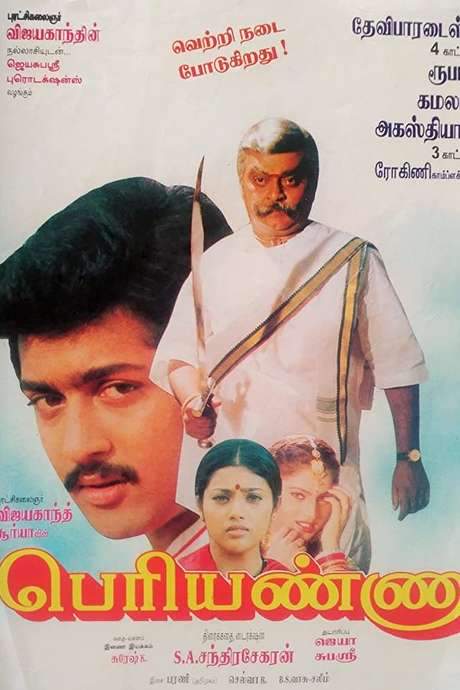
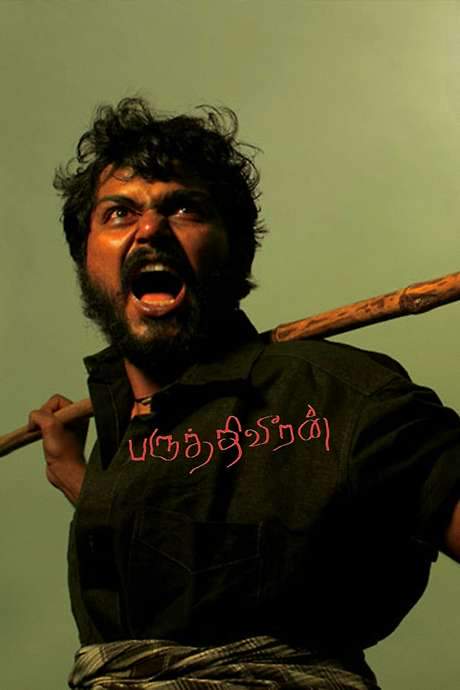
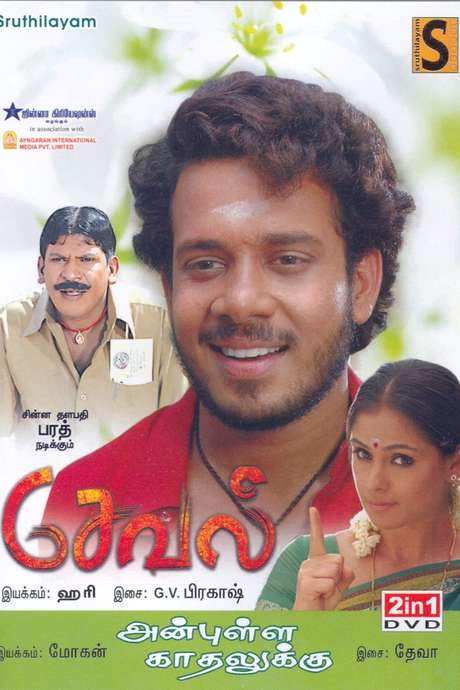
Suriya kills the villains who murder his family and is sent to jail. During his time behind bars, a well-respected minister marks his daughter's birthday by visiting the prison, a rare moment of warmth that hints at a different kind of world beyond the cell walls. The daughter's life takes an unexpected turn when she becomes drawn to the jailed man, not by anger or pity, but by the quiet depth behind his eyes and the rhythm of his music. She witnesses his skill and discipline, and her admiration grows into a bold belief that talent, like justice, should not be denied.
Her name is Shenbagam, Shenbagam, and she is drawn to the violin and percussion he plays with such restraint and passion. The connection between them deepens as she begs her father to allow music lessons with him, an unusual request that she earns with a mixture of charm and sincerity. The lessons become a bridge between two lives that have known pain and restraint, and slowly their bond blossoms into something more intimate and dangerous. The minister’s protection over his daughter rides an unstable edge as he weighs tradition, family honor, and the palpable pull of a love that defies the barriers of their circumstances.
Opposition arrives from every direction: Shenbagam’s parents raise objections, and the authorities scrutinize the improvised romance with growing suspicion. Yet the couple persists, choosing a path that must outrun not just disapproval but the risk of legal consequences. In a bold act of defiance, they elope, stepping into a world where rules are looser and dangers closer. Their journey leads them to a remote town, far from the scrutinizing eyes of the capital, where the daylight lays bare truths that underground quarrels often keep hidden.
In the bustle of this new place, they witness a shocking event at the railway station: a collector is murdered in full view of a crowded platform, and the crowd seems to move on as though nothing had happened. The gravity of the act lands on them as they realize the violence around them is connected to the town’s power structure. The killer is the village chief, Periyanna, whose grip over the community is as visible as it is unsettling. This discovery sets them on a dangerous path: they cannot simply walk away from a town where justice is muddled and fear is a currency.
As they spend time in the village, they learn about Periyanna’s past, a reveal that reframes their understanding of him. The man they once saw as a brutal ruler begins to emerge as a more complex figure, and their impressions shift from simple enmity to cautious curiosity. Yet the shadow of his authority lingers, and he promises to do what it takes to see them married, presenting a counterpoint to their lover’s vow: a future secured through the means of a powerful ally rather than through the ordinary channels of society.
The film builds toward a gripping climax that tests loyalty, courage, and the power of love. The central question remains: will the village chief succeed in orchestrating a marriage for the lovers, using the leverage of his influence and the town’s unwritten codes? Or will the girl’s father, aided by the formal machinery of the law, prevail in separating them against their will? The tension of this choice drives every decision, every risk, and every moment of hope.
Ultimately, the story threads together romance, social conflict, and moral ambiguity in a way that invites the audience to weigh duty against desire. With a richly drawn rural backdrop, the narrative leaves room for reflection on power, forgiveness, and the possibility of redemption even within a community defined by its own rules. The result is a measured, emotionally resonant drama that keeps the focus on the choices the lovers must make, and the costs those choices incur in a world where justice is rarely simple.