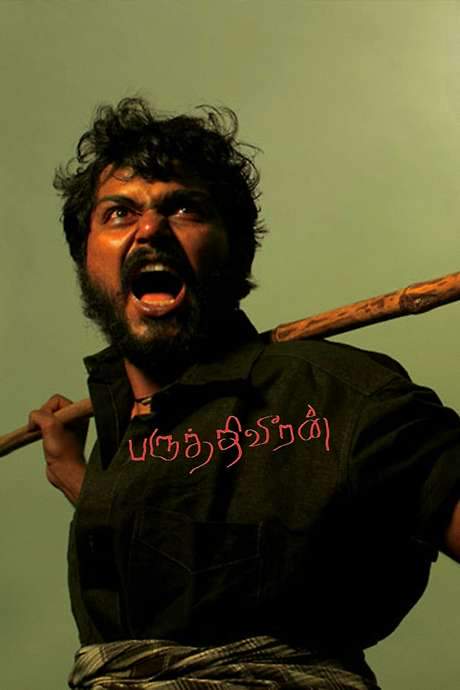
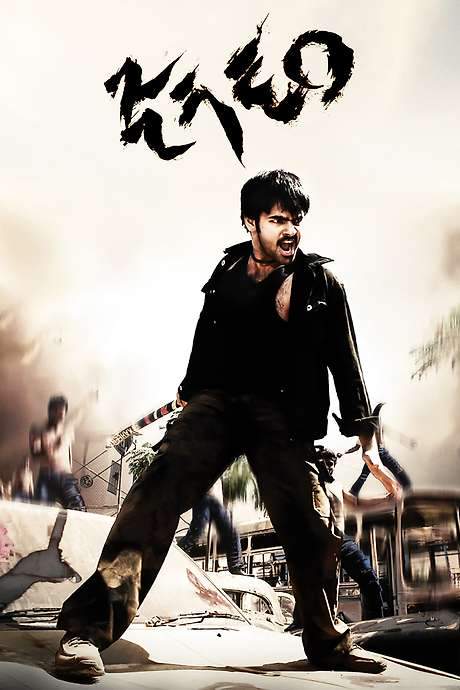
Murugesan is released from the Central Jail in Palayamkottai after serving a 17-year sentence, and the film immediately pulls us back to 1991 in the village of Sivasailam near Tenkasi. In this earlier chapter, Murugesan grows up as an unruly young man, surrounded by the simple life of his flower-seller parents. The story paints a picture of a boy who treats life like a bright, sunlit playground, letting energy and reckless confidence carry him forward. He wrestles with authority, pushes the boundaries of what’s allowed, and treats danger like a familiar companion. His days are filled with bold acts that earn both admiration and a growing storm of disapproval from his father, whose worry about his son’s future becomes almost a prophecy of a grim end. Yet Murugesan moves through this landscape with a fearless grin, the rooster of the title seeming to crow in his wake as he vaults from rooftop to rooftop and from one misadventure to the next.
It is in this volatile mix of defiance and desire that a woman enters his world: Parijatham, a demure and beautiful Iyer girl who embodies gentleness against the roughness of village life. Parijatham is the daughter of Panjami Iyer and the younger sister of Gayatri Iyer, a detail that ties the threads of local family ties and loyalties even tighter. The meeting between Murugesan and Parijatham is not just a spark; it becomes a delicate crossing where attraction strains the boundaries of Murugesan’s wild heart and the more orderly world Parijatham occupies. As their paths begin to entwine, the village itself seems to shift around them, offering moments of tenderness even as the air grows thick with the unseen costs of their bond.
Into this already tense equation steps Periyavar, a village bigwig who is outwardly magnanimous but inwardly a tyrant at home. He is the kind of antagonist who does not shout or snatch away the heroine in flashy fashion; instead, he plays a more nuanced game, carefully placing his pawns and steering events from behind the scenes so that his true power remains hidden. Periyavar’s calculated moves create a pressure that neither Murugesan nor Parijatham can easily dodge, and his presence casts a long shadow over everything the couple tries to build.
As the story unfolds, twists accumulate in a way that keeps the tale from tacking in a single, simple direction. The narrative tightens around the lives of Murugesan and Parijatham, pulling them into a complex net from which escape feels increasingly unlikely. The plot threads weave through moments of humor, danger, tenderness, and fear, maintaining a steady rhythm that never rushes the consequences but never lets the pace stall either. Through shifting loyalties, unexpected alignments, and a series of nearly inescapable circumstances, the couple finds themselves navigating a path that is at once deeply personal and governed by the unyielding social currents around them.
In the end, the film remains faithful to its core while allowing room for reflection on choices, family pressure, and the price of passion. The combination of a fiercely independent protagonist, a love that must contend with powerful local forces, and a village that never fully lets go of its own old codes renders a story that is both intimate and expansive. With its grounded performances and a portrayal of fate that seems almost inevitable, the film leaves viewers with a lingering sense of how desire can clash with duty—and how, sometimes, the heart’s most hopeful horizons are found where the web of fate tightens the most.