Plot Explained Spoilers guaranteed!
Plot Explained

Browse by genre

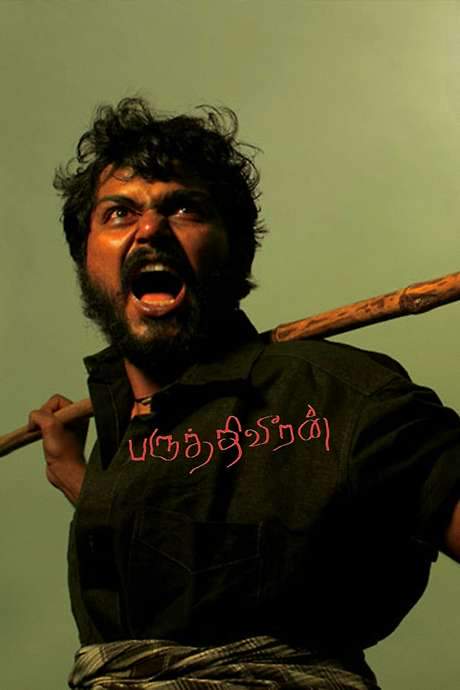
Paruthiveeran (2007) movie poster

Plot Summary

Paruthiveeran (2007) Plot Summary Explained

Release, runtime and language
2007 · 160 mins · Tamil
Loading streaming availability…
Directed by
Ameer
Starring
Samuthirakani, Karthi, Priyamani, Sampath Raj, Sujatha Sivakumar, Ganja Karuppu

A defiant young man from a rural village falls deeply for his gentle, angelic cousin, but their budding romance is battered by relentless family resistance, his own reckless, delinquent behavior, and the harsh realities of village life, and the unforgiving social norms that bind them.

On this page (6)
  1. 1 Where to watch
  2. 2 What happens: full plot
  3. 3 Plot questions answered
  4. 4 Movie threads
  5. 5 Movies like Paruthiveeran
  6. 6 Every angle
Loading streaming availability…

Full plot summary · contains spoilers

What Happens in Paruthiveeran: Full Plot Summary

The whole story of Paruthiveeran (2007) explained, from the opening scene to the final frame: every key event, every twist and what it all adds up to. Read it as a quick recap before the sequel, to check a scene you missed, or to finally understand what really happened.

Paruthiveeran Karthi grows up in a rural Madurai village, Paruthiyur, in 2005, a place where caste boundaries still shape daily life. After his parents’ death, Paruthi is raised by his paternal uncle, Chevvaazhai Saravanan, and Chevvazhai’s mother, who indulge his rough behavior to keep him entertained. He grows into a brash, impulsive figure who flouts norms and often finds himself in trouble for petty crimes, driven by a stubborn hunger for notoriety and a burning wish to see his name in the news, even if it lands him behind bars.

His world becomes even more tangled when his paternal cousin, Muththazhagu Priyamani, the daughter of Kazhuvathevan Ponvannan, a respected village elder, falls in love with Paruthi. Muththazhagu has cherished Paruthi since childhood, and she pursues the pairing despite her parents’ strong objections to an inter-caste union. She goes to great lengths to secure their future together, including deliberately underperforming in school so she can stay in the same grade in the hope of marrying him. Paruthi’s temperament oscillates between affection and aggression as their bond deepens, yet her devotion remains unwavering even when he lashes out at times.

Determined to wed, Paruthi finally asks Kazhuvathevan for her hand, but faces renewed scorn from his family. In the heat of the confrontation, he issues a violent threat if she ever considers marrying someone else. Undeterred, Muththazhagu’s parents press ahead with an arranged match to another suitor, prompting her to escape and run away with Paruthi to elope. The lovers hide out in an abandoned building, but tragedy strikes when four of Paruthi’s acquaintances mistake Muththazhagu for a prostitute and brutally gang-rape her, leaving her mortally wounded.

When Paruthi returns, he finds her bleeding and dying. She begs him to end her life rather than let her be found in such a state, and in a moment of overwhelming despair he tries to move her, only to realize that the townspeople are closing in. He locks the door from inside, his grief and rage boiling over as he mutilates her body to shield her from further violation, shouting that he will not let her be taken by anyone else. Kazhuvathevan and his henchmen break in, and they mete out brutal punishment to Paruthi as he clings to the memory of the brief time they shared. The scene closes with Paruthi’s last breath, his thoughts of Muththazhagu flashing before him as he dies.

In one quieter note within the turmoil, Samuthirakani makes a cameo appearance, adding a secondary texture to the village’s tense atmosphere. The film also features Mu Ramaswamy in the song “Iayyayo,” a moment that punctuates the raw, rustic energy of Paruthi’s world.

This tale unfolds as a stark portrait of rural life where caste not only divides families but also animates cycles of violence, loyalty, and heartbreak. It is a story told with restrained candor, letting the tragedy of two young people—bound by love yet shackled by tradition—unfold in a landscape where every choice carries a consequence.

Last updated: October 09, 2025 at 16:29

Was this helpful?

Plot questions answered

Paruthiveeran Plot Explained: Your Questions Answered

The questions people ask most about Paruthiveeran (2007): what happens in the confusing scenes, why the characters do what they do, the twists, hidden details and what the ending means. Each answer contains spoilers.

Q1

Why does Paruthi want to go to Madras Jail?

Paruthi grows up seeking notoriety after being raised without parental guidance by his indulgent uncle Chevvaazhai. His hunger for fame is so intense that he deliberately commits petty crimes hoping his name will appear in newspapers, even if it means landing in Madras Jail. This reckless pursuit of recognition is his way of establishing an identity in a society that marginalizes him due to his caste and family circumstances.

Foreshadowing: Early scenes establish his pattern of causing trouble just to hear his name mentioned in the village.

  • paruthi
  • madras jail
  • notoriety
  • village troublemaker
Q2

Why does Muththazhagu purposely fail in school?

Muththazhagu intentionally underperforms in school to remain in the same grade as Paruthi, delaying her parents' ability to arrange a marriage for her. By staying at the same academic level, she hopes to keep open the possibility of marrying Paruthi instead of accepting a match chosen by her family. This desperate academic sabotage reflects how strongly she prioritizes her childhood love over societal expectations.

Foreshadowing: Her school performance directly correlates with her determination to wait for Paruthi.

  • muththazhagu
  • school
  • exams
  • marriage delay
Q3

Why does Paruthi threaten to cut Muththazhagu into pieces?

During his confrontation with Kazhuvathevan to ask for Muththazhagu's hand, Paruthi is publicly shamed and rejected. In a moment of rage and desperation, he threatens to cut her into pieces if she marries someone else, essentially claiming her life rather than letting another man have her. This violent threat reveals both his possessive love and the toxic masculinity shaped by his upbringing and the village's honor-based culture.

Foreshadowing: This threat foreshadows the actual mutilation that occurs later.

  • paruthi
  • kazhuvathevan
  • threat
  • marriage proposal
Q4

Why do Paruthi's own acquaintances gang-rape Muththazhagu?

When Muththazhagu hides with Paruthi in an abandoned building, four of Paruthi's own acquaintances encounter her there. They mistakenly believe she is a prostitute due to her presence in a secluded location with Paruthi's connection to him. This tragic misunderstanding leads them to brutally assault her, leaving her mortally wounded. The irony is devastating, Paruthi's own associates become the instruments of his greatest tragedy.

Foreshadowing: Paruthi's reputation as a troublemaker attracts a questionable circle of associates.

  • rape
  • abandoned building
  • muththazhagu
  • prostitute misunderstanding
Q5

Why does Paruthi mutilate Muththazhagu's body after finding her dying?

When Paruthi returns to find Muththazhagu bleeding and near death, she begs him to cut her body into pieces so that no one can find her in her violated state. Overwhelmed by grief, rage, and the urgent approach of the townspeople, he complies with her dying wish. His act serves two purposes: honoring her final request to preserve her dignity, and preventing the shame of her assault from becoming public spectacle.

Foreshadowing: His earlier threat to cut her foreshadows this traumatic fulfillment of her wish.

  • paruthi
  • muththazhagu
  • mutilation
  • dying wish
  • dignity
Q6

Why does Paruthi say he won't let Muththazhagu marry anyone else even after death?

After mutilating her body, Paruthi rushes toward the approaching mob led by Kazhuvathevan, declaring he will not let her be married to anyone else, even in death. This final act represents his ultimate defiance against the caste system and family opposition that denied their union. He would rather claim her life and death entirely than allow her family to claim her corpse for their own honor-driven purposes.

Foreshadowing: His earlier threat at Kazhuvathevan's house establishes this possessive loyalty.

  • paruthi
  • kazhuvathevan
  • marriage
  • defiance
  • caste
Q7

Why does Muththazhagu stay devoted to Paruthi despite his violent behavior?

Muththazhagu has loved Paruthi since childhood when he saved her from drowning at a well, and she made a promise to marry him. Her devotion is rooted in that formative bond and her belief in their destined connection. Even when Paruthi lashes out at her during his emotional volatility, she remains unwavering because she views their love as preordained and worth sacrificing everything for, including her family's approval and her own safety.

Foreshadowing: The childhood well scene establishes the depth of her lifelong commitment.

  • muththazhagu
  • paruthi
  • childhood love
  • promise
  • devotion
Q8

How does the caste system drive the tragedy in the story?

The entire narrative unfolds because Paruthi and Muththazhagu belong to different castes, making their love socially forbidden. Kazhuvathevan, as a respected village elder, cannot accept an inter-caste union and opposes their marriage at every turn. This caste-driven opposition forces the couple to elope, leading them to hide in the abandoned building where the assault occurs. The village's rigid caste hierarchy creates the conditions that make their tragedy inevitable.

Foreshadowing: The opening establishes Paruthiyur as a place where caste boundaries dictate daily life.

  • caste
  • inter-caste
  • paruthiyur
  • village
  • forbidden love
Q9

Why does Kazhuvathevan strongly oppose Muththazhagu's relationship with Paruthi?

Kazhuvathevan is a respected village elder who upholds traditional caste boundaries. As the father of Muththazhagu, he views Paruthi as an unsuitable match purely because of his lower-caste background and notorious reputation. Allowing their marriage would mean violating the social norms he represents and protecting his family's honor within the village hierarchy. His opposition is rooted in maintaining status rather than any personal grievance against Paruthi.

Foreshadowing: His position as village elder establishes his investment in maintaining caste divisions.

  • kazhuvathevan
  • caste
  • village elder
  • family honor
Q10

Why is Paruthi raised by his uncle Chevvaazhai instead of his parents?

Paruthi's parents die when he is young, leaving him orphaned. His paternal uncle Chevvaazhai and grandmother take him in, but Chevvaazhai spoils him rather than providing discipline. Rather than channeling Paruthi's energy constructively, Chevvaazhai indulges his rough behavior and joins him in petty mischief. This permissive upbringing shapes Paruthi's rebellious, notoriety-seeking personality.

Foreshadowing: Chevvaazhai's indulgence directly contributes to Paruthi's troubled adult behavior.

  • paruthi
  • chevvaazhai
  • uncle
  • orphan
  • upbringing
Q11

Why doesn't anyone help Muththazhagu after the assault?

After the four men assault Muththazhagu, they leave her bleeding in the abandoned building, showing no concern for her survival. When Paruthi finally returns, he is too late, she is already dying from her injuries. The isolation of the abandoned building location means no one witnesses the assault or comes to her aid. Her desperate plea for Paruthi to end her suffering reflects how completely abandoned she is in her final moments.

Foreshadowing: The secluded location of the abandoned building ensures their isolation.

  • muththazhagu
  • bleeding
  • abandoned building
  • no help
Q12

What happens in the final scene when Paruthi dies?

After confronting Kazhuvathevan's mob while still clutching parts of Muththazhagu's body, Paruthi is brutally beaten by the henchmen. As he lies dying, the film shows his final thoughts flickering between memories of Muththazhagu and their childhood promise at the well. The film ends with Paruthi taking his last breath, his life extinguished by the violence that the caste-driven feud unleashed.

Foreshadowing: The earlier memory of the well promise returns as his life fades.

  • paruthi
  • death
  • final breath
  • memory
  • beating

Movie threads

More Movies Like Paruthiveeran, by Mood & Story

Curated lists built around what makes Paruthiveeran tick: the same mood, the same kind of story or the same emotional payoff. Each list explains why these movies belong together.

Oppressive rural tragedies like Paruthiveeran

Love and life are crushed by the unforgiving weight of tradition and social norms. If the tragic fate of Paruthiveeran's lovers resonated with you, explore more movies like it. This collection features similar stories of forbidden love and desperate struggles against the harsh, unchangeable realities of rural life and social hierarchy, all ending in bleak devastation.

  • tragic
  • oppressive
  • raw
  • desperate
  • gritty
  • heartbreaking
  • Tone: dark, bleak
  • Pacing: steady, deliberate
Why these movies?

The story pattern: The narrative typically centers on a doomed romance or a personal ambition that clashes violently with traditional village life. The conflict is not with individual antagonists but with the entire social fabric, which acts as an immovable force. The story progresses steadily towards a catastrophic conclusion, emphasizing the futility of resistance against entrenched norms.

Why they belong together: These movies are grouped together because they share a specific setting and conflict dynamic. They all use the rural world not just as a backdrop but as an active, oppressive character that dictates a tragic outcome. The shared vibe is one of raw desperation and a haunting commentary on social injustice.

Inevitable doom love stories like in Paruthiveeran

Romances where the ending is tragic and feels fated from the very beginning. For viewers seeking movies with a similar devastating romantic arc as Paruthiveeran. These films feature couples whose love is doomed from the start, facing insurmountable obstacles like family conflict, violence, and harsh social rules, leading to a profoundly bleak and heartbreaking conclusion.

  • tragic romance
  • forbidden love
  • heartbreaking
  • tense
  • fated
  • desperate
  • Tone: dark, heartbreaking
  • Pacing: steady, tense build
Why these movies?

The story pattern: The narrative pattern is defined by a love that blooms brightly but is immediately threatened. The obstacles are external, systemic, and overwhelming—such as feuding families, societal taboos, or cyclical violence. The plot doesn't offer twists of salvation; instead, it methodically tightens the noose, making the tragic ending feel like the only possible outcome.

Why they belong together: These films are united by their specific emotional trajectory. They are not just sad love stories; they are stories where hope is systematically extinguished, creating a unique mix of high romance and profound sadness. The similarity lies in the palpable sense of inevitable tragedy that hangs over the entire narrative.

If you liked this

Movies Like Paruthiveeran

Similar movies to Paruthiveeran: the same genre, themes or kind of story. Each one comes with its own plot summary, timeline and ending explained.

Browse all movie summaries

Every angle

Paruthiveeran (2007) Explained: Plot, Timeline & Characters

Everything about Paruthiveeran in one place: what happens in the plot summary, the timeline in chronological order, the characters and meaning and a spoiler-free summary. What's After the Movie adds the cast, box office and post-credit scenes.

Coming soon on iOS and Android

The Plot Explained Movie Summary App

Plot summaries, endings explained and timelines on your phone. Catch up on any movie in minutes, save your favorites and never miss a twist again.

Be the first to know when we launch. Your email stays private, always.

Learn more about the app