Year: 1994
Runtime: 150 mins
Language: Malayalam
Director: T. K. Rajeev Kumar
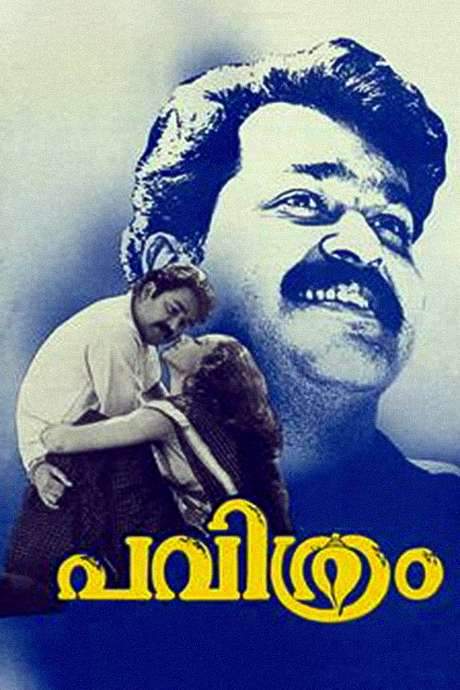
When an unexpected sister is born, Unnikrishnan’s carefully balanced life—his career, his fiancée, and his bond with his brother—goes under pressure. The story focuses on the sibling bond between Unnikrishnan and his much younger sister Meenakshi, who are about thirty years apart, and how their relationship changes as family duties and personal goals collide.
Warning: spoilers below!
Haven’t seen Pavithram yet? This summary contains major spoilers. Bookmark the page, watch the movie, and come back for the full breakdown. If you're ready, scroll on and relive the story!
Read the complete plot breakdown of Pavithram (1994), including all key story events, major twists, and the ending explained in detail. Discover what really happened—and what it all means.
The film opens with an older man’s dream, and Unnikrishnan is stirred from his home, urged to hurry to a moment that might reveal a truth he has long refused to admit. A chorus of onlookers mocks him as the scene dissolves, and an astrologer interprets the dream as a harbinger of Easwara Pillai’s death, urging him to perform the last rites for a father he believes is already gone. As the somber rituals begin, the weight of doubt grows heavier on Unni, and he falters, stepping away from the ceremony with the unsettling conviction that the man he thought dead may still be alive.
The narrative then shifts into a rich flashback to Unni’s youth, spent at the family’s ancestral home. There, he grows up under the gaze of his parents, Easwara Pillai and Devakiyamma, while his heart leans toward a life far from hollow ambition. He is courting Meera, a bright and book-loving woman whose presence promises warmth and shared stories. Meera’s father envisions a more worldly path for him—an MBA in England that would eventually steer the family business—yet Unni’s own dreams remain smaller and more intimate, rooted in love, loyalty, and the simplicity of village life. The household also includes his brother, Ramakrishnan, a city-based doctor, whose wife adds another layer of complexity to a family already wrestling with expectations and tradition.
In a twist that will chart the family’s fate, Devakiyamma and Easwara Pillai share an affair, and Devakiyamma becomes pregnant. The news shatters the household’s equilibrium, casting a pall of shame over the parents and forcing them to confront judgments from within and around. Despite the social tremors, Unni meets the situation with quiet, steadfast support for the unborn child and a growing, protective bond with Meenakshi, the child who will soon change everything. Devakiyamma gives birth to a girl but dies in childbirth, leaving a void that Ramakrishnan’s wife—who herself has little interest in children—cannot fill. With no ready guardian, Unni steps forward to raise Meenakshi, becoming a brother and a father in one fragile, improvisational role. The burden reshapes his life: he falls into a stern, almost protective reserve, and a broken, wrenching moment when he accuses Easwara Pillai of causing the rupture drives the elder man away from town, severing the last connections that could have kept the family intact.
Years pass, and Meenakshi grows into a young woman who stands at the crossroads of two worlds. In the village, Unni remains the steady, if increasingly solitary, anchor of her life; in the city, Meenakshi is exposed to new cultures, fashions, and possibilities that awaken a different sense of self. The city lights lure her with opportunities and temptations alike, and soon she crosses paths with influences that push her toward a modern, cosmopolitan rhythm. This tension between the old life and the new pulls at Unni as he watches the young girl who has long been the center of his world begin to chart her own path, a path that may finally pull her away from the shelter he has provided for so long.
As Meenakshi ventures further into city life, she encounters a spectrum of experiences, including interactions with Ramakrishnan’s wife, who plays a part in shaping her sensibilities and driving her toward competitions and beauty pageants. The pressures of this new exposure ignite conflict between Meenakshi and Unni, who struggles to reconcile the changing Meenashi with the life he has built around her. Meenakshi eventually leaves the village to pursue her studies in the city, and Unni follows, hoping to mend what has become frayed. But an accident changes the course of everything, drawing a sharp line between care and catastrophe and forcing Unni to confront the fragility of the life he has crafted.
Meenakshi survives the accident, and Ramakrishnan confronts her about ignoring Unni, who sacrificed so much of his own dreams for her. The crisis leaves Unni wavering on the edge of stability, and Meenakshi comes to see the depth of the trauma he carries from the years of responsibility and loss. She returns to the village with a renewed sense of duty, recognizing that her uncle’s love has pushed him toward a precarious emotional state that needs care and steadiness. In the quiet after the storm, she makes a lifelong resolve: to stay by his side, to soothe his nerves, and to shoulder the burden with him—the difficult, compassionate choice that defines their bond and frames the final act of their shared journey.
Last Updated: October 09, 2025 at 09:20
Discover curated groups of movies connected by mood, themes, and story style. Browse collections built around emotion, atmosphere, and narrative focus to easily find films that match what you feel like watching right now.
Stories where love comes with the heavy cost of personal sacrifice.If you were moved by the heavy emotional burden and familial responsibilities in Pavithram, this collection features similar dramas. These movies focus on characters who sacrifice their personal goals for family, exploring themes of duty, obligation, and the bittersweet nature of love.
The narrative typically follows a central character, often a sibling or child, who shoulders unexpected or overwhelming family responsibilities. Their personal journey is defined by a series of sacrifices, creating internal conflict between their own desires and the needs of their family. The story unfolds over a significant period, examining the long-term emotional toll of their choices.
Movies are grouped here because they share a heavy emotional weight centered on familial obligation. They feature a melancholic tone, a steady, character-driven pace, and protagonists burdened by duty, creating a cohesive and emotionally resonant experience for viewers interested in complex family dynamics.
Exploring deep, complicated relationships between characters decades apart.Fans of the complex sibling relationship in Pavithram will appreciate these films. They feature strong, protective bonds between characters of different generations, often exploring how duty, love, and personal growth create a poignant and bittersweet dynamic.
These narratives focus on the formation and evolution of a deep, non-romantic bond between characters separated by a large age difference. The story often begins with a sense of reluctant responsibility that blossoms into profound love, but is tested by external pressures, personal ambitions, and the inevitable conflicts that arise from their different stages in life, leading to a bittersweet resolution.
These films share a specific focus on the dynamics of age-gap relationships within families. They combine a tender, protective mood with underlying tension, a steady pacing that allows the relationship to develop naturally, and a narrative arc that typically results in a emotionally complex, bittersweet conclusion.
Don't stop at just watching — explore Pavithram in full detail. From the complete plot summary and scene-by-scene timeline to character breakdowns, thematic analysis, and a deep dive into the ending — every page helps you truly understand what Pavithram is all about. Plus, discover what's next after the movie.
Track the full timeline of Pavithram with every major event arranged chronologically. Perfect for decoding non-linear storytelling, flashbacks, or parallel narratives with a clear scene-by-scene breakdown.
Discover the characters, locations, and core themes that shape Pavithram. Get insights into symbolic elements, setting significance, and deeper narrative meaning — ideal for thematic analysis and movie breakdowns.
Get a quick, spoiler-free overview of Pavithram that covers the main plot points and key details without revealing any major twists or spoilers. Perfect for those who want to know what to expect before diving in.
Visit What's After the Movie to explore more about Pavithram: box office results, cast and crew info, production details, post-credit scenes, and external links — all in one place for movie fans and researchers.
Discover movies like Pavithram that share similar genres, themes, and storytelling elements. Whether you’re drawn to the atmosphere, character arcs, or plot structure, these curated recommendations will help you explore more films you’ll love.
Pavithram (1994) Scene-by-Scene Movie Timeline
Pavithram (1994) Movie Characters, Themes & Settings
Pavithram (1994) Spoiler-Free Summary & Key Flow
Movies Like Pavithram – Similar Titles You’ll Enjoy
Anandham (2001) Movie Recap & Themes
Namma Veettu Pillai (2019) Movie Recap & Themes
Vaanathaippola (2000) Complete Plot Breakdown
Thilakkam (2003) Detailed Story Recap
Paruthiveeran (2007) Complete Plot Breakdown
Puthu Kavithai (1982) Complete Plot Breakdown
Aan Paavam (1985) Complete Plot Breakdown
Padikkadavan (1985) Ending Explained & Film Insights
Kallan Pavithran (1981) Movie Recap & Themes
Kakkothikkavile Appooppan Thadikal (1988) Story Summary & Characters
Prakashan Parakkatte (2022) Spoiler-Packed Plot Recap
Kannupada Poguthaiya (1999) Detailed Story Recap
Pandhayam (2008) Story Summary & Characters
Paithrukam (1992) Full Movie Breakdown
Pavithra Bandham (1996) Movie Recap & Themes