Plot Explained Spoilers guaranteed!
Plot Explained

Browse by genre

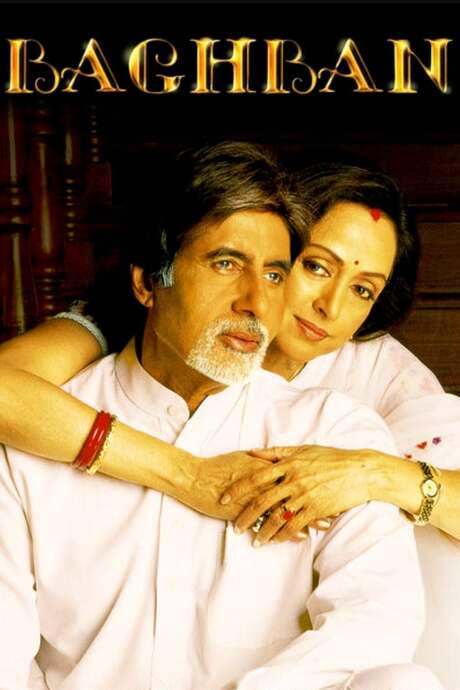
Baghban (2003) movie poster

Plot Summary

Baghban (2003) Plot Summary Explained

Release, runtime and language
2003 · 183 mins · Hindi
Loading streaming availability…
Directed by
Ravi Chopra
Starring
Sanjeeda Sheikh, Lillete Dubey, Amitabh Bachchan, Paresh Rawal, Samir Soni, Salman Khan

After spending a lifetime caring for their children, the elderly Raj Malhotra and Pooja find themselves without a home. Their grown‑up children, seeing them as a burden, offer little support, leaving the couple to confront abandonment and the painful question of whether they can truly rely on family.

On this page (6)
  1. 1 Where to watch
  2. 2 What happens: full plot
  3. 3 Plot questions answered
  4. 4 Movie threads
  5. 5 Movies like Baghban
  6. 6 Every angle
Loading streaming availability…

Full plot summary · contains spoilers

What Happens in Baghban: Full Plot Summary

The whole story of Baghban (2003) explained, from the opening scene to the final frame: every key event, every twist and what it all adds up to. Read it as a quick recap before the sequel, to check a scene you missed, or to finally understand what really happened.

Raj Malhotra, Amitabh Bachchan, and his wife Pooja Malhotra, Hema Malini, have spent four decades together and raised a large, loving family. They are proud parents to four sons—Ajay Malhotra, Aman Verma; Sanjay Malhotra, Samir Soni; Rohit Malhotra, Saahil Chadha; and Karan Malhotra, Nasirr Khan—and they also adopt Alok Raj Malhotra, Salman Khan. Alok’s devotion to his adoptive father deepens after he falls in love with Arpita Raj, Mahima Chaudhry. Raj’s generosity shapes Alok’s sense of loyalty, and when Raj retires, the couple face a new challenge: their grown children are unable or unwilling to support them in their old age.

The shift in circumstances drives a dramatic decision. The children propose a jarring plan to the aging couple: they will split their parents up, with each parent living for the next six months with one of the sons. The parents accept the arrangement, hoping that their endurance and dignity will speak for themselves, even as they fear the emotional toll this separation will take. The order of the rotations is clear: Raj will stay first with Sanjay Malhotra and then with Rohit Malhotra, while Pooja will stay first with Ajay Malhotra and then with Karan Malhotra. This forced separation reveals the fragility of family bonds, as the elder couple navigates unfamiliar living spaces and the new rhythms of a life that no longer centers around their own home.

During Raj’s time with Sanjay, the warmth of family life is scarce except for one bright exception: his grandson Rahul provides a rare moment of affection in an otherwise strained episode. The estrangement weighs heavily on Raj, who begins to reflect in his writings on how he spent his life trying to fulfill his children’s dreams and how painful the current separation feels in light of the love he and Pooja share.

Meanwhile, Pooja endures harsh treatment at the hands of Ajay, along with his wife Kiran and their daughter Payal. The cruelty is heavy, but Payal’s attitude shifts after a defining moment: Pooja helps save her from a rape attempt by Payal’s boyfriend, and Payal slowly comes to show genuine love and gratitude for her grandmother. This complicated web of affection and abuse adds layers of tension to the family’s complicated dynamics.

After six months, Pooja and Raj reunite in Vijaynagar. There they encounter Alok, who brings them into his home and treats them with a level of care and respect they had not found with their own sons. The emotional rewards of this reunion are reinforced when Raj learns that his writings have been published as a novel called Baghban, thanks to Hemant — a café owner he befriended during his stay with Sanjay — along with two teenagers, Kapil and Nilli. The novel’s success provides the money Raj and Pooja need to support themselves, a turn of fortune that does not go unnoticed by their children.

As the book’s popularity grows, the four sons and their wives decide to attend the book’s ceremony to seek forgiveness. Yet not everyone can bring themselves to forgive: Rahul and Payal stay away, choosing not to participate in a ceremony that feels, to them, like a performance for money rather than true reconciliation. The remaining family members arrive to face Raj and Pooja’s demand for genuine accountability, and when the air clears, Raj and Pooja refuse to grant the forgiveness demanded by those who caused them so much pain.

In the end, the story circles back to the enduring bond between Raj and Pooja. Their decision to disown those who hurt them is not a triumphant proclamation but a measured, dignified stance that preserves the integrity of their own relationship. The film closes with Raj and Pooja reuniting with Payal and Rahul, reaffirming that, despite the fractures within the family, a stubborn, stubbornly hopeful love can endure and outlast even the hardest trials.
Last updated: October 09, 2025 at 15:16

Was this helpful?

Plot questions answered

Baghban Plot Explained: Your Questions Answered

The questions people ask most about Baghban (2003): what happens in the confusing scenes, why the characters do what they do, the twists, hidden details and what the ending means. Each answer contains spoilers.

Q1

Why do Raj and Pooja's children force them to live separately for six months each?

After Raj retires and the couple can no longer support themselves, they ask their children to let them live with them. The four sons propose a rotation plan where Raj lives with two sons and Pooja with the other two, each for six months. The children present this as a practical solution, but it effectively abandons the elderly couple by splitting them apart despite their 40-year marriage.

  • six month rotation
  • children abandon parents
  • elderly parents split
Q2

What makes Payal change her attitude toward Pooja after the abuse?

Payal's cruelty toward Pooja shifts when Pooja saves her from a rape attempt by Payal's boyfriend. This act of protection from her grandmother transforms Payal's heart, and she begins showing genuine love and gratitude toward Pooja, eventually remaining loyal even when the other grandchildren skip the book ceremony.

  • payal change
  • pooja saves payal
  • rape attempt
  • granddaughter transformation
Q3

How does Raj's diary become the novel Baghban?

During his stay with Sanjay, Raj befriends Hemant, a café owner, and shares his writings about his life, dreams, and love for Pooja. Hemant helps publish the manuscript as a novel titled Baghban, with assistance from two teenagers named Kapil and Nilli. The book's success provides Raj and Pooja with financial security they lacked after retirement.

  • raj writings published
  • baghban novel
  • hemant cafe
  • manuscript publication
Q4

Why do the four sons attend the book ceremony to ask for forgiveness?

When the sons learn about the novel's success and upcoming ceremony, they all decide to attend together seeking forgiveness from Raj and Pooja. Their motives appear mixed, they genuinely need reconciliation, but the timing suggests they also hope to benefit from the book's success and public attention.

  • sons seek forgiveness
  • book ceremony
  • reconciliation attempt
Q5

Why do Rahul and Payal refuse to attend the Baghban book ceremony?

Rahul and Payal choose not to attend the ceremony because they believe the forgiveness sought by their fathers (the four sons) is insincere and motivated by money rather than genuine remorse. They see through what they perceive as a performance and refuse to participate in what feels like a public relations exercise.

Foreshadowing: Rahul showed rare affection for Raj during his stay with Sanjay, while Payal's change came after Pooja saved her, these bonds made them more discerning about false reconciliation.

  • rahul payal absent
  • skip ceremony
  • grand children not attend
Q6

Why do Raj and Pooja refuse to forgive their sons at the ceremony?

Raj and Pooja refuse to grant forgiveness because they insist that trust cannot be simply demanded, it must be rebuilt over time. The couple sets a firm boundary, choosing to disown the sons who caused them such pain and humiliation, prioritizing their own dignity over forced reconciliation.

  • refuse forgiveness
  • disown children
  • set boundary
  • parents stand firm
Q7

How did Alok become successful enough to care for his adoptive parents?

Alok was adopted by Raj and Pooja and received their full support, including money and education, that enabled him to build a successful life. Grateful for this opportunity, he becomes financially stable and when he reconnects with his adoptive parents in Vijaynagar, he brings them into his home and provides the care and respect their own biological sons denied them.

  • alok success
  • adopted son
  • raj support education
  • alok care parents
Q8

Why does Raj start writing his personal diary during his stay with Sanjay?

Raj begins writing as an emotional outlet during his lonely stay at Sanjay's home, where he receives little warmth from his sons. His diary captures his reflections on fulfilling his children's dreams throughout his life, his deep love for Pooja, and the pain of being separated from her. These writings eventually become the novel Baghban.

  • raj diary
  • raj writings
  • separation pain
  • fulfill children dreams
Q9

Why can't Raj and Pooja support themselves after retirement?

After working for decades raising their five children, four biological sons and one adopted son, Raj retires and finds they have no savings left. The couple cannot afford to stay in their own home and must ask their grown children for shelter, which leads to the heartbreaking rotation plan.

  • retirement no savings
  • parents financial struggle
  • children support parents
Q10

What happens at the end of Baghban when Raj and Pooja reunite with Payal and Rahul?

In the ending, Raj and Pooja reunite with their grandchildren Payal and Rahul, who chose not to attend the book ceremony. This reunion represents a fragile peace and suggests that love can persist beyond years of hurt. The couple maintains hope for a more honoring future while firmly distancing themselves from their ungrateful sons.

  • final reunion
  • payal rahul
  • hopeful ending
  • chosen family

Movie threads

More Movies Like Baghban, by Mood & Story

Curated lists built around what makes Baghban tick: the same mood, the same kind of story or the same emotional payoff. Each list explains why these movies belong together.

Family estrangement dramas like Baghban

Heartbreaking stories where family bonds are fractured by neglect and selfishness. Discover movies like Baghban that explore the heartbreaking theme of family estrangement and elderly neglect. If you were moved by the emotional conflict between parents and their ungrateful children, these similar sentimental family dramas will resonate with you.

  • heartbreaking
  • sentimental
  • infuriating
  • emotional
  • reflective
  • dignified
  • Tone: bittersweet, infuriating, sentimental
  • Pacing: steady, deliberate
Why these movies?

The story pattern: The narrative typically follows a linear, steady progression, building from a place of established family unity to a gradual, painful unraveling. The central conflict arises from the children's perceived ingratitude and neglect, forcing the elderly parents to confront their vulnerability and fight for their self-worth, often finding unexpected support and a bittersweet resolution.

Why they belong together: These movies are grouped by their shared focus on the intense emotional pain of family betrayal, their dignified yet infuriating tone, and their direct, accessible storytelling that aims for a powerful, sentimental impact on the viewer.

Movies about elderly resilience like Baghban

Emotional stories of elderly characters reclaiming their dignity against all odds. Explore films similar to Baghban that focus on the bittersweet journeys of elderly characters. If you appreciated the story of an older couple reclaiming their dignity after being cast aside, these movies about late-life reckoning and resilience will capture the same heartfelt and reflective mood.

  • heartbreaking
  • hopeful
  • dignified
  • reflective
  • emotional
  • resilience
  • Tone: bittersweet, hopeful, reflective
  • Pacing: steady, character-driven
Why these movies?

The story pattern: The plot follows elderly characters as a central pillar, often a couple, whose stable world is shattered by the actions of others or changing circumstances. Their struggle is not for grand victory but for respect, independence, and emotional closure. The arc is one of survival and moral victory, achieving a measure of peace that is tempered by the losses endured along the way.

Why they belong together: These films share a specific mood blend of heartbreak and hope, a steady pacing that allows for deep emotional engagement with the characters' plights, and a consistent bittersweet tone that acknowledges pain while celebrating the human capacity for endurance.

If you liked this

Movies Like Baghban

Similar movies to Baghban: the same genre, themes or kind of story. Each one comes with its own plot summary, timeline and ending explained.

Browse all movie summaries

Every angle

Baghban (2003) Explained: Plot, Timeline & Characters

Everything about Baghban in one place: what happens in the plot summary, the timeline in chronological order, the characters and meaning and a spoiler-free summary. What's After the Movie adds the cast, box office and post-credit scenes.

Coming soon on iOS and Android

The Plot Explained Movie Summary App

Plot summaries, endings explained and timelines on your phone. Catch up on any movie in minutes, save your favorites and never miss a twist again.

Be the first to know when we launch. Your email stays private, always.

Learn more about the app