Plot Explained Spoilers guaranteed!
Plot Explained

Browse by genre

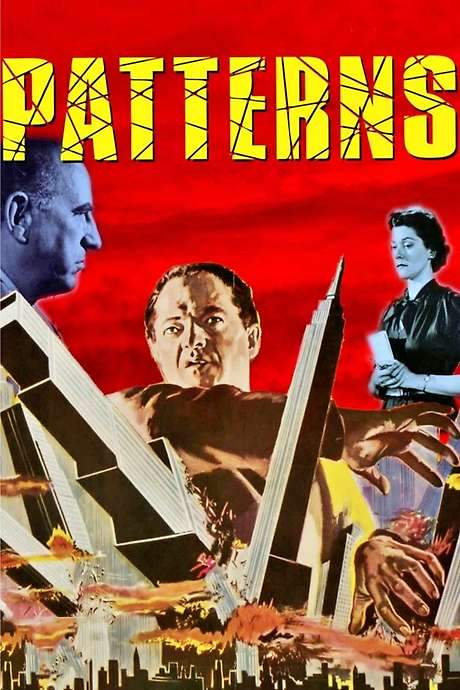
Patterns (1956) movie poster

Timeline

Patterns (1956) Timeline Explained – Every Event in Order

Release, runtime and language
1956 · 83 mins · English
Loading streaming availability…
Directed by
Fielder Cook
Starring
Edward Binns, Van Heflin, Joanna Roos, Ed Begley, Andrew Duggan, Beatrice Straight

Ruthless men and ambitious women battle for control of a billion‑dollar empire. Ohio plant operator Staples is hired as an executive at Ramsey & Co. in New York, befriending longtime VP Briggs. CEO Walter Ramsey, who inherited the firm, eyes Staples as Briggs’s replacement but refuses to fire Briggs, humiliating and sabotaging him until he quits.

On this page (6)
  1. 1 Where to watch
  2. 2 Events in order (12)
  3. 3 Timeline questions answered
  4. 4 Movie threads
  5. 5 Movies like Patterns
  6. 6 Every angle
Loading streaming availability…

12 events in order · contains spoilers

Patterns Timeline: Events in Chronological Order

Every key event of Patterns (1956) in order, scene by scene, with when and where it takes place. Use it to untangle flashbacks, time jumps and parallel storylines, to refresh your memory before the sequel or to find the exact scene you are thinking of.

  1. Ramsey inherits the company and sets sights on a successor

    Walter Ramsey preserves the family business in Manhattan after inheriting Ramsey & Company. He signals a desire for a younger, more aggressive leader to carry the modern approach forward. This marks the beginning of a planned leadership transition.

    Where
    Manhattan - Ramsey & Company HQ
  2. Staples is brought in after impressing at an Ohio factory

    Ramsey recruits Fred Staples, a bright industrial engineer who impressed at an Ohio factory. Staples is placed in a top executive role with the possibility of becoming the successor to Briggs. He is initially unaware that he is part of a grooming plan.

    Where
    Manhattan - Ramsey & Company HQ
  3. Briggs, a forty-year veteran, clashes with Ramsey's modern approach

    Briggs is a forty-year veteran who cares deeply about the firm’s work. His loyalty puts him at odds with Ramsey’s heartless, modern methods. The tension between legacy and innovation grows as their philosophies collide.

    Where
    Ramsey & Company offices, Manhattan
  4. Ramsey sabotages Briggs to push him toward resignation

    Ramsey begins a calculated campaign to push Briggs into resigning rather than firing him outright. He uses humiliation and pressure to erode Briggs’s standing. The maneuver reveals Ramsey’s ruthless leadership style and risk to loyal employees.

    Where
    Office/boardroom, Ramsey & Company
  5. Briggs's health deteriorates as stress takes its toll

    Stress from the conflict takes a toll on Briggs, who starts drinking and sees his health deteriorate. The personal cost of the power struggle becomes evident to colleagues and family. His decline foreshadows the imminent leadership shake-up.

    Where
    Briggs's home and hospital
  6. Staples faces a moral dilemma, torn between Briggs and ambition

    Staples is torn between sympathizing with Briggs and chasing advancement. His wife supports his career ambitions but worries about the cost of staying. The internal conflict hints at his ultimate decision.

    Where
    Staples's home
  7. Board meeting reveals the clash of old ideas and new practicality

    In a pivotal board meeting, Briggs and Staples present a joint report that attempts to bridge old ideals with practical execution. Ramsey praises Staples for turning Briggs’s concepts into workable strategies, sparking a heated exchange. The moment signals a major shift in control within the company.

    Where
    Boardroom, Ramsey & Company
  8. Briggs collapses after leaving the room and dies in hospital

    Briggs collapses after leaving the room and dies soon after in the hospital. His death ends a long era and intensifies the push for a leadership succession. The board is left to confront the power vacuum he leaves behind.

    Where
    Hospital
  9. Staples confronts Ramsey and contemplates quitting

    Fed up with the manipulative dynamics, Staples goes to tell Ramsey he intends to quit. He argues that the firm needs both loyalty and stronger leadership, not just ambition. The confrontation tests his resolve and future at Ramsey & Company.

    Where
    Ramsey & Company's offices
  10. Ramsey offers Briggs's job with incentives, Staples resists

    Ramsey counters by offering Staples the Briggs position with double salary, stock options, and an unlimited expense account. Staples resists, insisting he would not be Ramsey’s whipping boy. The exchange demonstrates how far Ramsey is willing to go to secure loyalty.

    Where
    Ramsey's office, Ramsey & Company
  11. Ramsey doubles down, proposing a flexible path forward

    Ramsey indicates he is willing to continue the arrangement if Staples can meet his challenge. Staples weighs the terms, signaling a possible uphill road to reform. The dialogue marks the last crystallized moment of decision in this phase of the power struggle.

    Where
    Ramsey's office, Ramsey & Company
  12. Staples tells his wife he will stay on to influence change

    Staples leaves Ramsey & Company to tell his wife that he will stay on, believing there is at least a chance to influence things for the better. He commits to trying to steer the firm from within rather than walking away. The plan for reform begins to take shape, even as uncertainty remains.

    Where
    Staples's home

Last updated: December 10, 2025 at 12:33

Was this helpful?

Timeline questions answered

Patterns Timeline Explained: Your Questions Answered

When does it happen, and why in that order? The questions people ask about the chronology of Patterns (1956): time jumps, flashbacks, cause and effect between scenes and the correct order of events, each answered with spoilers.

Q1

Why doesn't Walter Ramsey just fire Bill Briggs instead of humiliating him?

Ramsey refuses to fire Briggs directly because he inherited the company and wants to maintain his reputation as a fair leader. Instead, he deliberately sabotages and humiliates Briggs to force him to quit, giving Ramsey plausible deniability. This approach allows him to appear generous while still removing a man he views as outdated and unwilling to adapt to his ruthless modern methods.

  • walter ramsey
  • bill briggs
  • firing
  • humiliation
  • corporate manipulation
Q2

Why does Fred Staples decide to stay at Ramsey & Company after confronting Ramsey?

Staples decides to stay because he realizes that quitting would only give Ramsey complete control. By accepting the position, he believes he can influence the company from within and prevent it from becoming completely corrupt. His wife Nancy supports this decision, recognizing that walking away would mean losing any chance at making positive changes.

  • fred staples
  • staying
  • corporate reform
  • ambition
  • moral choice
Q3

What causes Bill Briggs to collapse and die after the board meeting?

Briggs collapses from the cumulative stress of months of psychological pressure from Ramsey. At the board meeting, Ramsey publicly praises Staples for transforming Briggs' old ideas into practical ones, humiliating Briggs in front of his colleagues. The stress and emotional toll trigger a physical breakdown, and he dies shortly after reaching the hospital.

  • bill briggs
  • death
  • stress
  • board meeting
  • collapse
Q4

Why is Fred Staples torn between loyalty to Briggs and his own ambition?

Staples genuinely admires Briggs' dedication and principled approach to business, recognizing that Briggs truly cares about the company and its workers. At the same time, Staples is ambitious and sees the opportunity to rise quickly at Ramsey & Company. This internal conflict intensifies as he watches Briggs being systematically destroyed while he benefits from the situation.

  • fred staples
  • bill briggs
  • loyalty
  • ambition
  • conflict
Q5

What does Walter Ramsey mean by his "modern" business approach?

Ramsey's modern method refers to a ruthless, heartless approach to corporate leadership that prioritizes profits and efficiency over loyalty and employee wellbeing. He dismisses Briggs' people-centric philosophy as outdated and unworkable, believing that successful corporations need aggressive, cutthroat leaders willing to make difficult decisions without sentiment.

  • walter ramsey
  • modern method
  • ruthless
  • corporate culture
Q6

Why does Bill Briggs start drinking during the film?

Briggs begins drinking as a response to the relentless psychological pressure and humiliation he faces from Ramsey. Rather than resigning, he tries to endure the torment, but the stress erodes his health and leads him to alcohol as a coping mechanism. This drinking worsens his already declining physical condition.

  • bill briggs
  • drinking
  • stress
  • coping mechanism
Q7

What happens at the board meeting that leads to Briggs' collapse?

During the board meeting, Briggs and Staples present a joint report. Ramsey deliberately praises Staples for taking Briggs' well-intentioned but unworkable ideas and making them practical. This public dismissal of Briggs' contributions sparks a heated exchange, and the humiliation proves too much for Briggs, who collapses shortly after leaving the room.

Foreshadowing: Earlier scenes show Ramsey praising Staples in front of Briggs, building toward this moment of public embarrassment.

  • board meeting
  • humiliation
  • report
  • collaboration
Q8

Why does the movie end with a mixed or bittersweet conclusion?

The ending is bittersweet because Staples chooses to stay in a corrupt system he despises. While he tells Ramsey he hates him and would constantly fight to take the presidency, his decision to remain means accepting the very power structure that destroyed Briggs. There's hope for reform, but also a grim acceptance that meaningful change may be impossible.

  • ending
  • mixed conclusion
  • reform
  • hope
  • corruption
Q9

Why does Walter Ramsey want Fred Staples to replace Briggs so badly?

Ramsey sees Staples as the ideal embodiment of his modern approach - someone talented enough to run the company but willing to operate within his ruthless framework. Unlike Briggs, Staples can be shaped into the aggressive leader Ramsey wants. Additionally, replacing a 40-year veteran with a younger man aligns with Ramsey's vision for transforming the company.

  • walter ramsey
  • fred staples
  • succession
  • younger leader
Q10

How does Nancy Staples influence Fred's decision to stay?

Nancy Staples shares her husband's internal conflict - she sympathizes with Briggs but also wants Fred to succeed. When Fred goes to quit, she doesn't try to stop him from leaving. However, when he returns and explains he will stay to fight for change from within, she accepts this reasoning, recognizing that staying offers at least some possibility of influencing the company for the better.

  • nancy staples
  • wife
  • support
  • decision making

Movie threads

More Movies Like Patterns, by Mood & Story

Curated lists built around what makes Patterns tick: the same mood, the same kind of story or the same emotional payoff. Each list explains why these movies belong together.

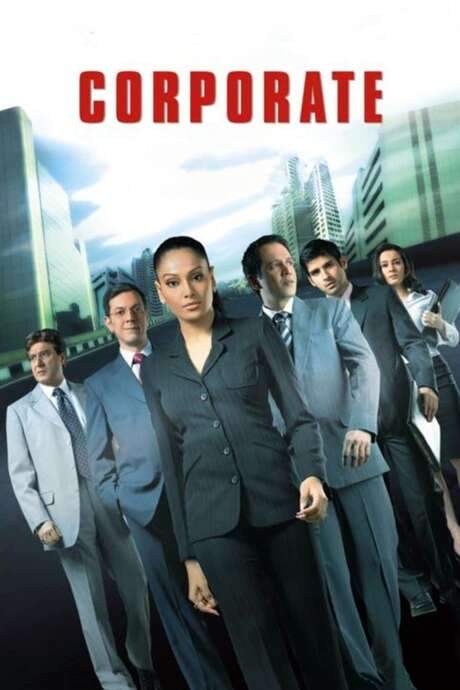
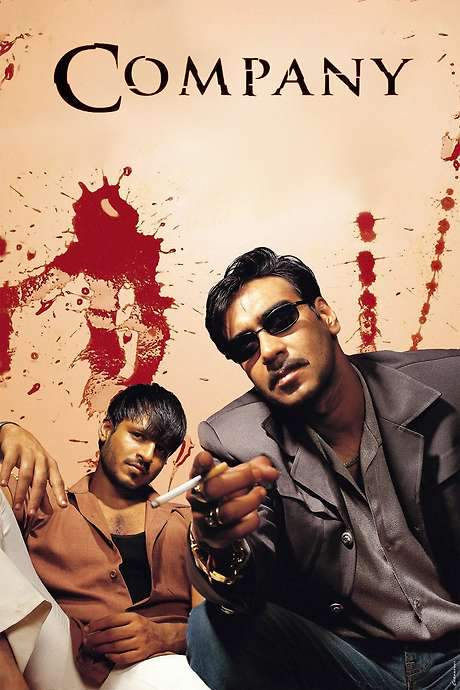
Ruthless corporate dramas like Patterns

Stories of ambition and moral decay within high-stakes business empires. If you were captivated by the cutthroat world of Patterns, explore more movies that dive into the dark side of corporate ambition. These films feature intense power struggles, moral compromises, and high-stakes psychological drama in the boardroom.

  • cutthroat
  • morally conflicted
  • oppressive
  • tense
  • stressful
  • ambitious
  • Tone: dark, tense, morally conflicted
  • Pacing: steady, methodical
Why these movies?

The story pattern: Stories in this thread typically follow an individual entering a powerful, established system, only to become entangled in a ruthless power struggle. The central conflict is often psychological, pitting personal integrity against institutional pressure, and culminating in a moral crisis or a bleak acceptance of the system's corrupt nature.

Why they belong together: These movies are grouped by their shared focus on the dark, often soul-crushing nature of corporate life. They share a high-intensity, oppressive mood, a steady pacing that builds psychological pressure, and a heavy emotional weight derived from themes of manipulation, ambition, and ethical erosion.
High-tension moral dilemmas like in Patterns

Narratives where relentless psychological pressure forces impossible choices. For viewers who appreciated the unbearable tension and moral oppression of Patterns, this collection highlights movies with similar slow-building psychological pressure. These stories focus on characters facing systematic manipulation and heavy ethical choices.

  • anxious
  • oppressive
  • somber
  • stressful
  • tense
  • morally conflicted
  • Tone: dark, oppressive, somber
  • Pacing: steady, building pressure
Why these movies?

The story pattern: The narrative pattern involves a character being subjected to steady, increasing psychological strain from a powerful antagonist or system. There are no physical escapes; the conflict is internal and moral, often resulting in the breakdown of a character's well-being or principles, and leaving the audience with a somber, mixed-feeling resolution.

Why they belong together: These films are united by their ability to create a sustained, anxious mood through psychological tension rather than action. They share a dark tone, steady pacing that amplifies unease, straightforward storytelling focused on internal conflict, and a heavy emotional weight centered on moral dilemmas and their distressing consequences.

If you liked this

Movies Like Patterns

Similar movies to Patterns: the same genre, themes or kind of story. Each one comes with its own plot summary, timeline and ending explained.

Browse all movie summaries

Every angle

Patterns (1956) Explained: Plot, Timeline & Characters

Everything about Patterns in one place: what happens in the plot summary, the timeline in chronological order, the characters and meaning and a spoiler-free summary. What's After the Movie adds the cast, box office and post-credit scenes.

Coming soon on iOS and Android

The Plot Explained Movie Summary App

Plot summaries, endings explained and timelines on your phone. Catch up on any movie in minutes, save your favorites and never miss a twist again.

Be the first to know when we launch. Your email stays private, always.

Learn more about the app